
Web Design & Development

Shopify Web Design for Luxury Retailers

Your website is where a $15,000 purchase either happens or does not. For luxury retailers, the gap between a site that converts and one that leaks revenue is not about adding features. It is about building something that earns the same level of trust your physical store does.

Get a Shopify Proposal

Trusted By

Didi Hirsch
Aqua Lounge
Life Alert
B Couture
Insurance Insight
Insurative Solutions
Microdea
Adlib
Alex Moss New York
Paloma Blanca
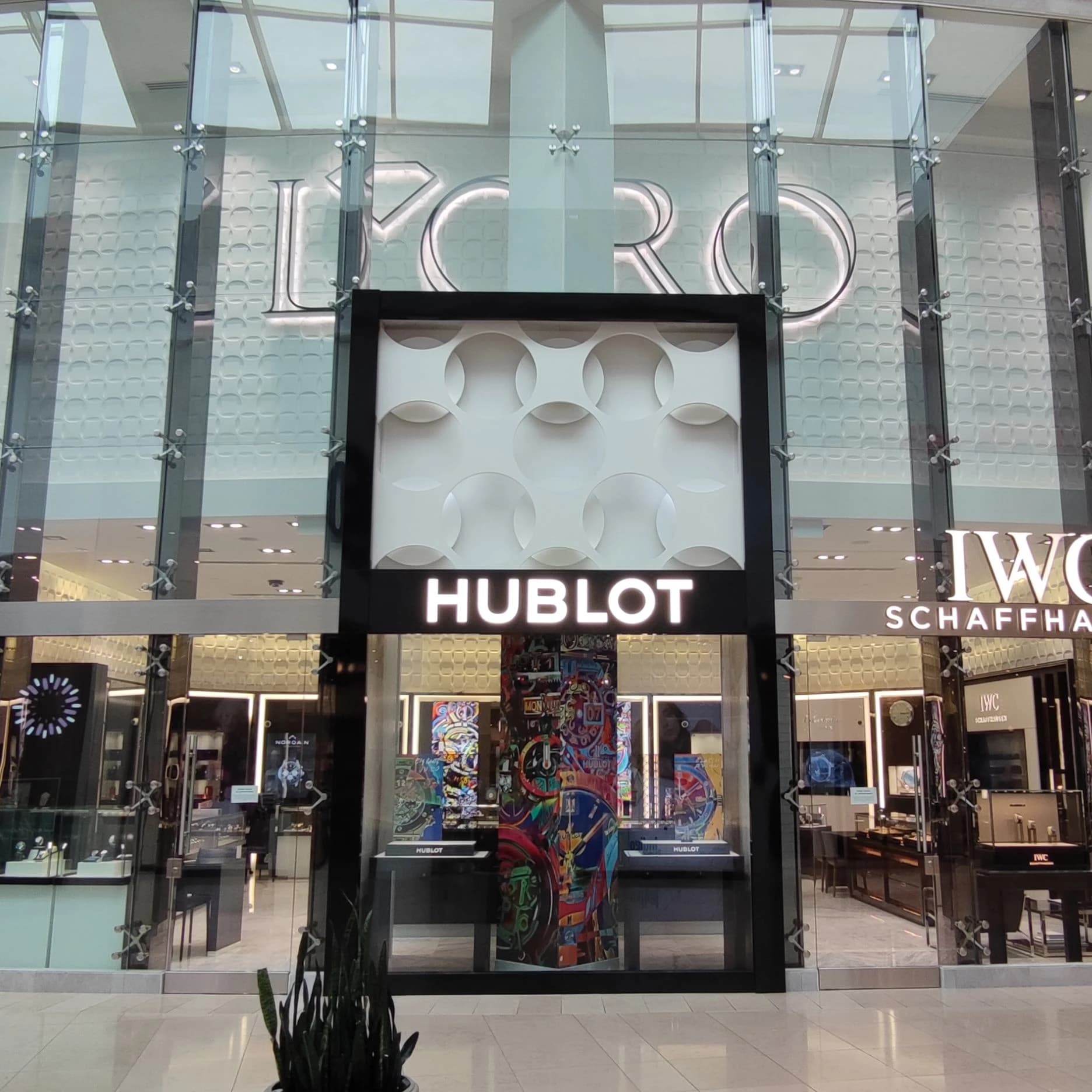
L'ORO Jewellery
Vosgi Honey
The Rebel Mama
Garen T Plumbing
cloudCENTRX
Shiny Jewellers
Toronto Electric
iAm21 Entertainment
Didi Hirsch
Aqua Lounge
Life Alert
B Couture
Insurance Insight
Insurative Solutions
Microdea
Adlib
Alex Moss New York
Paloma Blanca
L'ORO Jewellery
Vosgi Honey
The Rebel Mama
Garen T Plumbing
cloudCENTRX
Shiny Jewellers
Toronto Electric
iAm21 Entertainment

Your website is where a $15,000 purchase either happens or does not. For luxury retailers, the gap between a site that converts and one that leaks revenue is not about adding features. It is about building something that earns the same level of trust your physical store does.

We build exclusively on Shopify. Every luxury retail site we produce is designed around two things: how high-ticket buyers actually behave online, and what the ad performance data tells us about where those buyers land and what they do next.

This is a web design and development practice built specifically for retailers selling products that require research, consideration, and trust before someone enters a credit card number.

We Build on Shopify. We Do Not Build on WordPress.

This is not a debate we entertain anymore.

WordPress and WooCommerce require constant plugin updates, security patching, and server management. Every plugin is a potential vulnerability. Every update risks breaking something. For a retailer selling $5,000+ products online, that liability is not worth the supposed flexibility.

We moved off WordPress years ago. We will not maintain, redesign, or build new features on a WordPress site. If you are currently on WordPress or WooCommerce, we migrate you to Shopify. That is the starting point, not a recommendation you can decline.

Shopify vs. BigCommerce: Shopify wins on app ecosystem, theme flexibility, POS integration depth, and developer availability. BigCommerce is a fine platform. Shopify is better for luxury retail, and the gap widens every year as Shopify invests in its enterprise offering.

Shopify vs. custom builds: Custom platforms cost 5-10x more to build and maintain. Iteration is slower. Finding developers who can work on your proprietary codebase is harder and more expensive than finding Shopify developers. Unless you have a technical requirement that Shopify genuinely cannot meet (rare for retail), custom is a bad investment.

What Shopify handles natively: Multi-currency support for cross-border sales. Tax calculation across all US states and Canadian provinces. PCI compliance out of the box, no annual audits or security certifications you need to manage. 99.99% uptime SLA on Shopify Plus. These are problems you should not be solving yourself.

Shopify Plus for High-Volume Luxury Retailers

Standard Shopify handles most luxury retailers well. Shopify Plus makes sense when you are doing $1M+ in online revenue and need capabilities that standard plans do not offer.

Checkout customization is the most visible difference. Standard Shopify gives you a generic checkout. Plus lets you brand the entire checkout experience to match your site, add trust signals, display financing options, and control the flow in ways that reduce abandonment for high-ticket purchases.

Shopify Flow automates operational workflows that luxury retailers need. Abandoned cart sequences tailored by product value. VIP customer tagging based on purchase history. Inventory alerts when one-of-a-kind pieces sell. Fraud flagging for orders above certain thresholds. These automations run in the background and save your team hours per week.

Wholesale channel is built into Plus for retailers who also sell B2B. Separate pricing, password-protected catalogs, net payment terms. If you sell to other retailers or interior designers alongside your direct-to-consumer business, this eliminates the need for a separate wholesale platform.

Expansion stores let you run multiple storefronts from one backend. Different regions, different brands, different languages. One inventory system, one order management view, multiple customer-facing experiences.

Launchpad schedules product drops and collection releases. If you time your launches around events, seasons, or brand releases, Launchpad automates the coordination so nothing goes live early or late.

When is standard Shopify enough? If you are doing under $1M online, have a single storefront, and do not need checkout customization, standard Shopify with a well-built theme covers you. We will tell you honestly which tier makes sense.

Themes That Look Like a Luxury Store, Not a Template

Most Shopify themes are designed for general retail. They work fine for a $50 t-shirt brand. They do not communicate the trust required for a $10,000 purchase.

The problem is not that Shopify themes are bad. It is that they are designed for volume retail, fast browsing, quick add-to-cart, high-conversion funnels optimized for impulse purchases. Luxury buying behavior is different. Your customer spends time on a product page. They scroll through images deliberately. They read about materials, provenance, craftsmanship. They might visit the page three times before contacting you.

What a luxury theme needs: Generous white space that lets the product breathe. Typography hierarchy that guides the eye without competing with imagery. Image-first layouts where the photography does the heavy lifting. Minimal navigation clutter so the experience feels curated, not overwhelming.

Custom theme development vs. premium theme customization. A custom theme built from scratch runs $15,000-$40,000 depending on complexity. A premium theme customized for your brand runs $7,000-$15,000. The right choice depends on how differentiated your brand experience needs to be. Most single-location retailers get excellent results from a well-customized premium theme. Multi-location or multi-brand operations often need custom.

Brand consistency between physical and digital. Your website should feel like walking into your store. Same color palette, same photography style, same sense of space and attention to detail. Customers who visit your store and then go to your website (or the reverse) should feel like they are interacting with the same brand. That alignment is a design decision we make early and enforce throughout the build.

Layout patterns that convert for high-ticket items. Editorial product pages that tell a story, not just list specs. Brand story integration so a first-time visitor understands who you are. Appointment booking CTAs positioned where a buyer who needs to see the piece in person can act on that impulse. These patterns are not guesses. They come from years of watching how luxury retail traffic actually behaves.

Product Pages That Sell $10,000 Items Online

The product page is where everything either comes together or falls apart. For high-ticket items, the page needs to do the job your best salesperson does in the store: answer questions, build confidence, and remove friction.

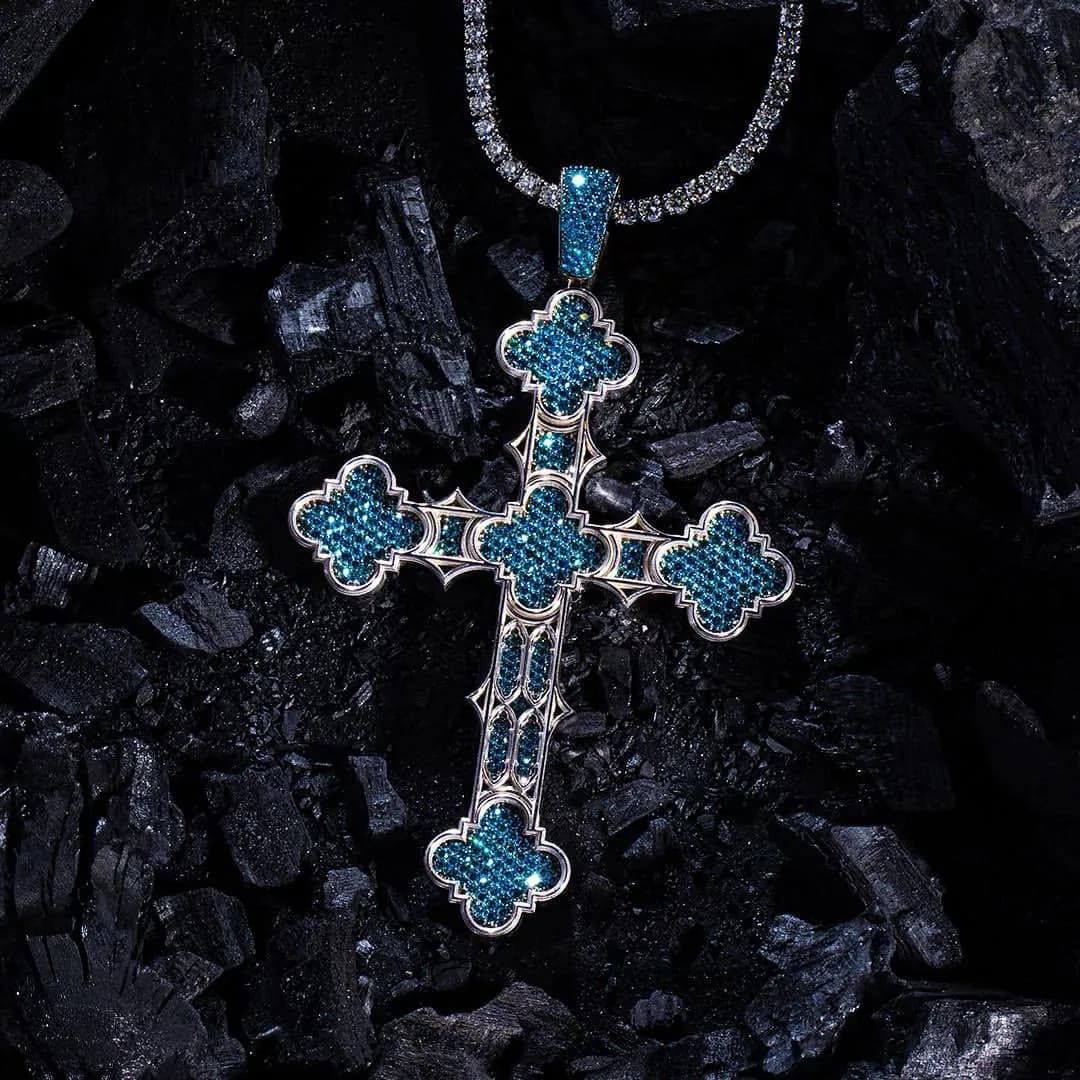
Photography standards are non-negotiable. High-resolution images, consistent lighting, clean backgrounds for detail shots, lifestyle context for hero images. Minimum six images per product for anything above $1,000. For jewelry and watches, include macro shots that show detail the customer cannot see in a standard photo. 360-degree product views and video walkthroughs are not optional for high-ticket goods. They reduce returns and increase conversion by giving the buyer confidence in what they are purchasing.

Variant handling gets complicated fast for luxury goods. Sizes, materials, finishes, stone configurations, metal choices. Shopify’s native variant system handles straightforward options. For complex configurations (a ring available in 4 metals, 6 stone sizes, with or without side stones), we use apps that extend Shopify’s variant limits without breaking the user experience.

Product descriptions need to answer the questions your sales staff would answer in person. Not marketing copy. Practical information: materials, dimensions, care instructions, what makes this piece different from similar items. For watches, that means movement details, water resistance, case dimensions, strap options. For jewelry, that means metal weight, stone grades, setting type, sizing guidance. Write for someone who knows what they are looking at.

Trust signals placed where they matter. Certifications near the price. Return policy visible without scrolling. Financing callouts next to the add-to-cart button. Live chat positioned so a hesitant buyer can ask one question without navigating away. These placements are not arbitrary. They follow the decision sequence a high-ticket buyer goes through.

Schema markup on every product page, covering price, availability, condition, and reviews. This drives rich results in Google, which improves click-through rates from organic search. We implement Product, Offer, and AggregateRating schemas as part of every build.

Fast Load Times With Hundreds of High-Resolution Images

Luxury sites are image-heavy by necessity. You cannot sell a $20,000 watch with a thumbnail and a paragraph. But slow load times kill conversions just as effectively as bad photography.

Google’s data shows that 53% of mobile visitors abandon a site that takes longer than 3 seconds to load (Google/SOASTA Research, 2017). That number gets worse for luxury buyers who have less tolerance for a subpar digital experience.

Image compression and lazy loading are the first line of defense. We compress every image to the smallest file size that maintains visual quality on retina displays. Lazy loading ensures that images below the fold do not load until the user scrolls to them. The product page loads fast, and the full gallery populates seamlessly as they browse.

App audits are something we do on every existing Shopify store we take over. Most stores accumulate 15-20 apps over time. Each one injects JavaScript and CSS into your pages. Half of them are redundant or unused. We audit every app, remove what is not earning its keep, and replace bloated apps with lighter alternatives where possible.

Theme code optimization goes deeper. Unused CSS and JavaScript that shipped with the theme but does not apply to your site. Inefficient Liquid rendering that slows server response times. Third-party scripts loading synchronously when they should be deferred. We clean all of it.

Target metrics: Under 3 seconds on mobile. All Core Web Vitals passing. Largest Contentful Paint under 2.5 seconds. These are not aspirational targets. They are requirements for every site we launch.

Mobile-First Because That Is Where Browsing Starts

Over 70% of luxury browsing traffic comes from mobile devices (Statista, 2024). The store visit or desktop purchase happens after. If your mobile experience is poor, you are losing people before they ever see your inventory at full resolution.

Touch-friendly navigation for deep catalogs with dozens of brands and hundreds of products. Flyout menus that work with a thumb. Filter options that do not require precision tapping. Category structures that get someone to the right product in three taps or fewer.

Mobile product image galleries need to work properly. Swipe between images. Pinch-to-zoom on details. Video that plays inline without redirecting to YouTube. These interactions feel basic, but a surprising number of Shopify stores get them wrong, especially after theme customization breaks default behaviors.

Tap-to-call and tap-to-directions placed where they generate store visits. A mobile user browsing engagement rings at 10pm is not going to fill out a contact form. They will tap a phone number to call tomorrow. They will tap directions to visit this weekend. Those buttons need to be visible, not buried in a footer.

Mobile checkout optimization directly affects revenue. Reducing form fields, enabling autofill, supporting Apple Pay and Google Pay, displaying financing options clearly on a small screen. Every unnecessary step in mobile checkout costs you completed purchases.

SEO Built Into the Store From Day One

A Shopify store without SEO architecture is a store that depends entirely on paid traffic. We build organic visibility into every site from the start, so your store earns traffic that does not require an ad budget.

Shopify’s URL structure has limitations. Every product URL includes /products/. Every collection includes /collections/. You cannot change that. But you can work within those constraints intelligently, with clean slugs, logical hierarchy, and proper internal linking that tells search engines what matters.

Collection page SEO is where most Shopify stores leave organic traffic on the table. Default collections have no unique content, duplicate title tags, and no internal linking strategy. We write unique content for every collection page, set proper H1s, and build internal links between related collections. A collection page for “Men’s Luxury Watches” should rank for that term. It will not if it is just a grid of products with no supporting content.

Blog strategy inside Shopify drives top-of-funnel organic traffic directly into your store. Educational content about buying guides, care instructions, style advice, and brand histories brings people to your domain months before they are ready to purchase. That traffic builds your site’s authority, improves rankings for commercial pages, and creates retargeting audiences you can use across your ad campaigns.

Schema markup goes beyond products. We implement LocalBusiness schema for your store location, Organization schema for your brand, and BreadcrumbList schema for navigation. Each one gives search engines more context about your business and improves how your pages appear in results.

Technical SEO foundations: Canonical tags to prevent duplicate content issues. Sitemap management so new products get indexed quickly. Redirect handling so every old URL points somewhere useful. Site architecture designed so brand pages and category pages complement each other instead of competing.

Connecting Your Online Store to Your Physical Location

For luxury retailers with a physical store, the website is not a separate business. It is an extension of the same operation. Inventory, customer data, and purchase history need to flow between online and in-store without manual reconciliation.

Unified inventory means your online stock and in-store stock live in one system. When you sell a one-of-a-kind piece in the store, it disappears from the website immediately. When someone buys online, your sales floor knows. No overselling, no awkward “sorry, that sold yesterday” emails.

Shopify POS handles this for most luxury retailers. Customer profiles that track purchase history across both channels. Wish list functionality your sales team can use during clienteling appointments. Transaction history that gives your associates context when a returning customer walks in.

Edge POS deserves mention for jewelry retailers specifically. It handles layaway, custom orders, repair tracking, and consignment, functions that generic POS systems do not support. We integrate Edge with Shopify so inventory syncs between the platforms while each handles what it does best.

Hardware setup for luxury retail means barcode scanners for inventory management, receipt printers, payment terminals that support contactless and chip. We spec and configure the hardware as part of the build so your team is not troubleshooting equipment on launch day.

Buy online, pick up in store (BOPIS) works well for luxury retailers with local customer bases. Someone buys online at midnight, picks up at the store the next day. Implementation is straightforward on Shopify. The operational considerations, staff notifications, hold periods, display versus stock inventory, are where the planning matters.

Payments and Financing for High-Ticket Purchases

How your customers pay affects whether they buy. For luxury price points, the payment experience needs to be frictionless and confidence-building.

Shopify Payments vs. third-party gateways is a math problem. Shopify Payments charges 2.4-2.6% + $0.30 per transaction on Plus plans with no additional platform fee. Third-party gateways add a 0.5-2% surcharge on top of their own processing fees. Unless your gateway offers functionality Shopify Payments cannot match (rare), the numbers favor staying native.

Financing options like Affirm and Klarna make sense at luxury price points. A $12,000 watch displayed as “$334/month for 36 months” converts browsers who were not ready to pay in full. We configure financing callouts on product pages so the monthly payment is visible before someone clicks “add to cart.” Retailers who add financing to high-ticket product pages see average order value increases of 15-30% (Affirm Merchant Data, 2023).

Payment security messaging needs to be visible without being anxious. A padlock icon and “Secure Checkout” near the payment form. Accepted payment method logos. A brief note about encryption. Enough to reassure, not so much that it makes the buyer wonder why you are trying so hard.

International payment methods matter for retailers with cross-border customers. Shopify supports local payment methods in dozens of countries. If you sell to international buyers, enabling their preferred payment method removes friction that generic “Visa/Mastercard” acceptance does not cover.

Migrating From Your Current Platform

If you are on WordPress, WooCommerce, Magento, BigCommerce, or a custom-built platform, we migrate you to Shopify. We have done hundreds of these. The process is predictable, and the risk is manageable if you plan it correctly.

What transfers cleanly: Product data, customer records, order history, and gift card balances. We map every field from your current platform to Shopify’s structure before we start.

What requires careful handling: URL structures. Your current URLs will not match Shopify’s URL format. Every old URL needs a 301 redirect to its new location. The redirect map is the most important deliverable in a migration. Get it wrong and you lose years of SEO equity overnight. We treat redirect mapping as the first major milestone, not an afterthought.

Custom functionality does not transfer automatically. If your current site has custom features, configurators, appointment systems, wishlists, loyalty programs, we evaluate each one and either find a Shopify app equivalent or build custom functionality in the new theme.

Timeline expectations: 8-12 weeks for a standard migration with a catalog under 1,000 products. 12-16 weeks for larger catalogs, extensive custom functionality, or multi-location setups. We run a parallel period where both sites are live so your team can test the new store under real conditions before cutting over.

SEO preservation is non-negotiable. Beyond redirects, we verify that title tags, meta descriptions, schema markup, and internal linking all carry over or get rebuilt. We monitor organic traffic for 90 days post-migration and fix anything that slips. A migration should not cost you organic rankings. If it does, someone did it wrong.

We Build Stores Informed by What Your Ads Tell Us

Here is what separates us from a typical Shopify agency.

Most web designers build pages based on aesthetics and best practices. We build them based on what your ad traffic actually does when it arrives. Because we manage paid advertising and web development under one roof, we have data that standalone design shops never see.

We know which campaigns send the most traffic to which pages. We know which product pages have high bounce rates from paid traffic and why. We know which landing pages convert and which ones lose people after three seconds.

That data informs every design decision. Which pages get rebuilt first. Where CTAs get repositioned. Which product pages need better imagery or different information hierarchy. Conversion rate optimization is not a separate project we pitch after the site launches. It is built into the design process from day one.

When your ad team and your web team share data, you stop building pages based on opinions and start building them based on evidence. That is how a Shopify store goes from looking good to actually performing.

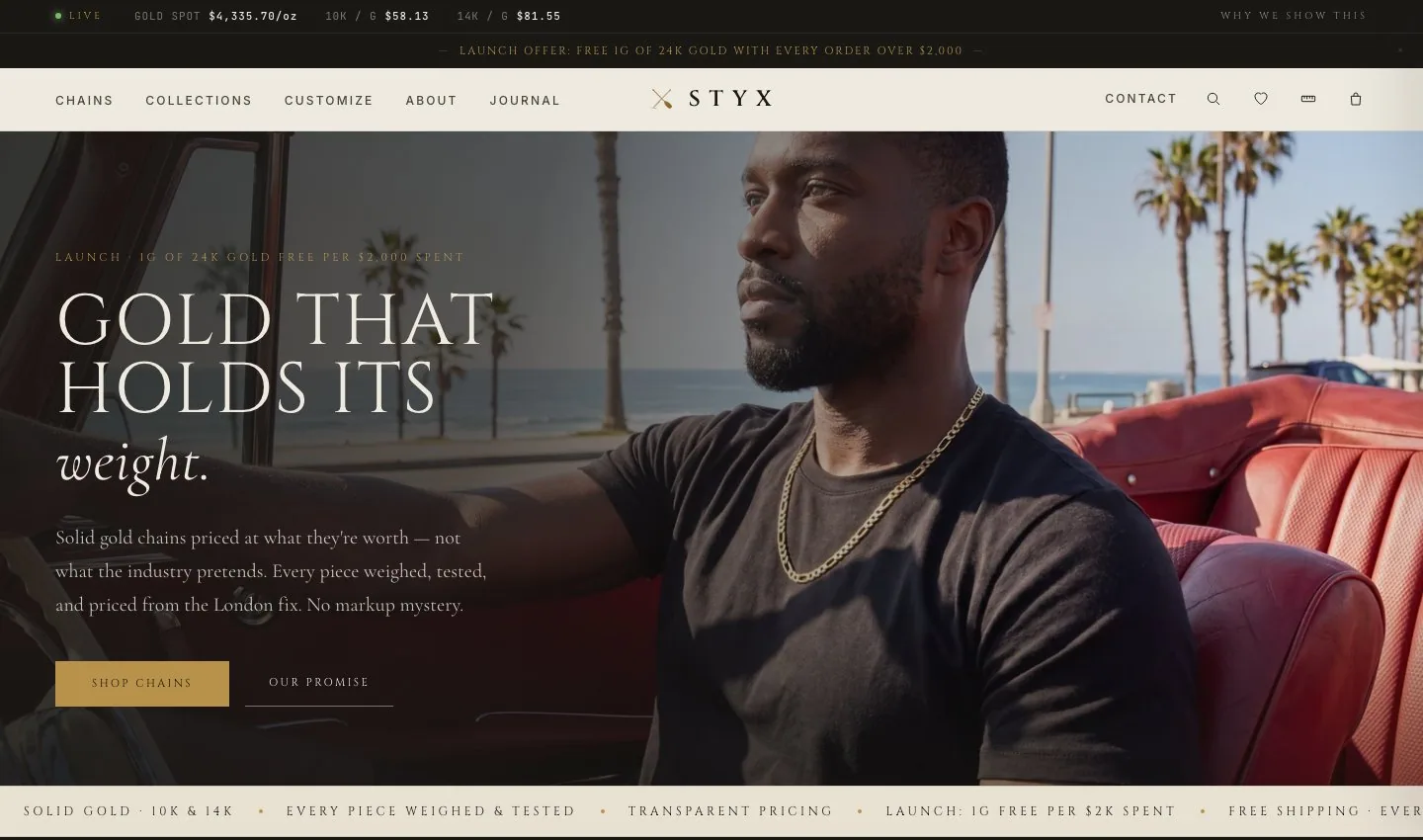
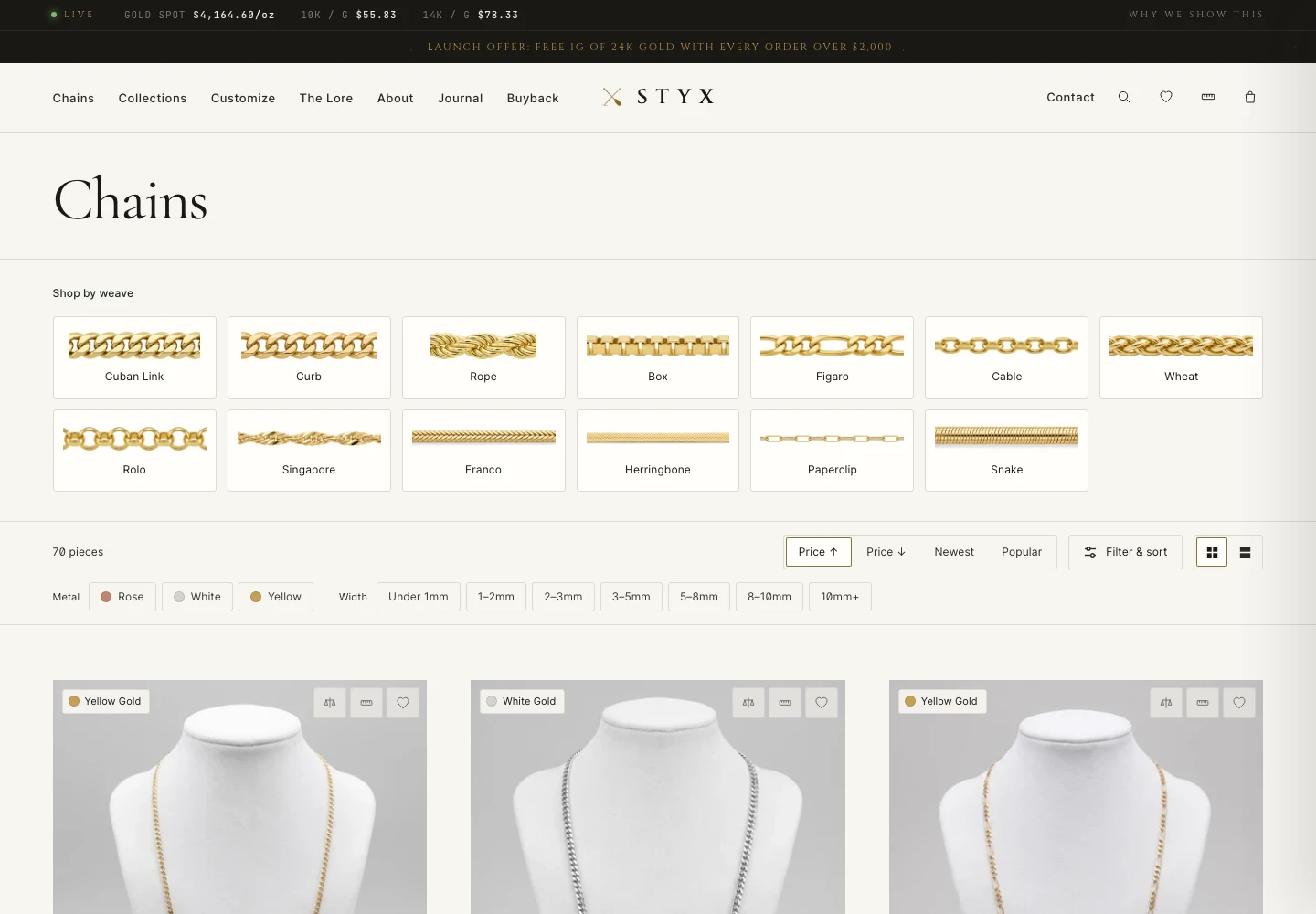
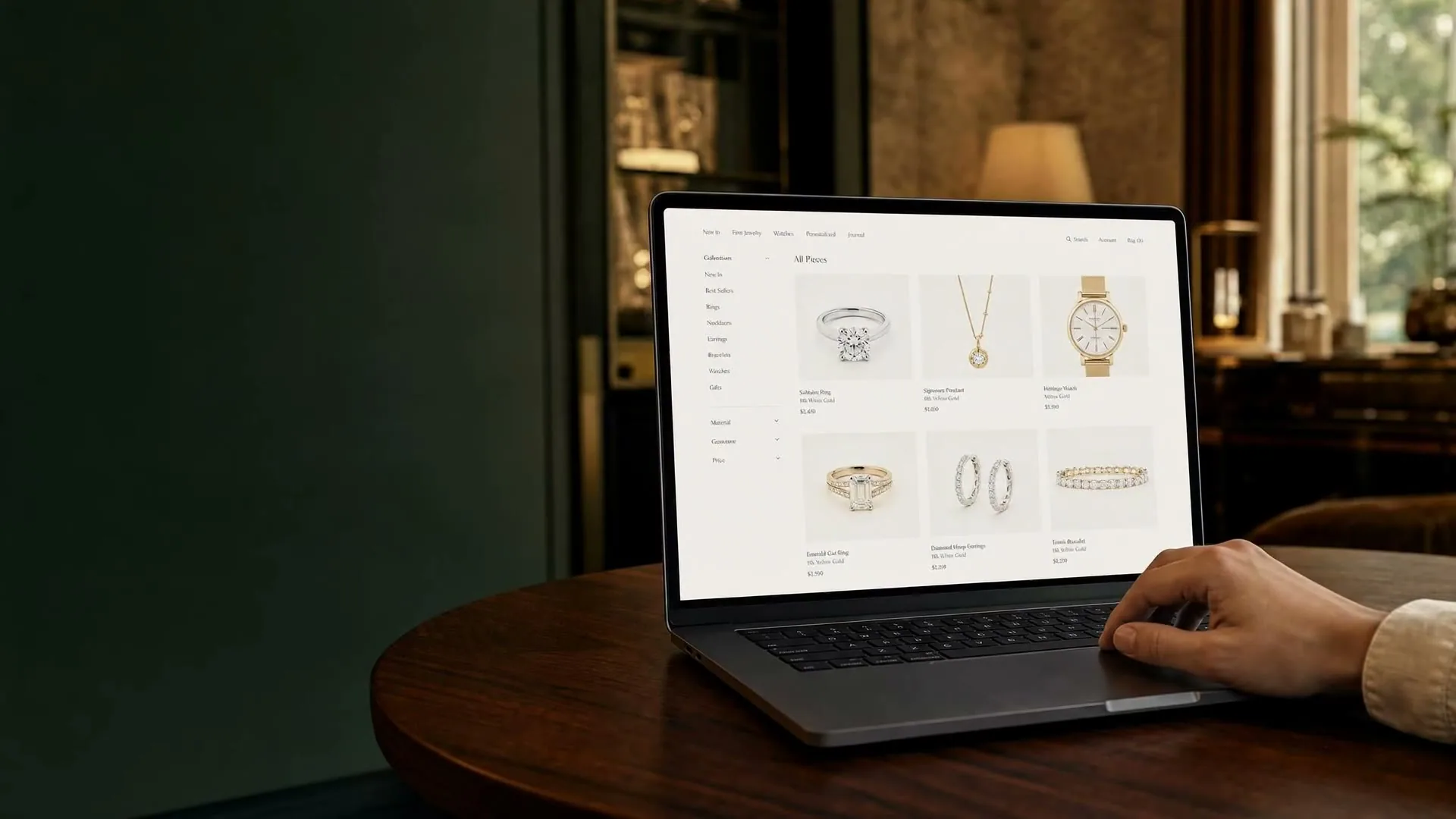
Luxury e-commerce website displayed on a large monitor in a premium office

Built for Luxury

Sites Informed by Ad Performance Data

We know which pages your ads send traffic to, which products get browsed, and where visitors drop off. Your site is built around that data, not a template.

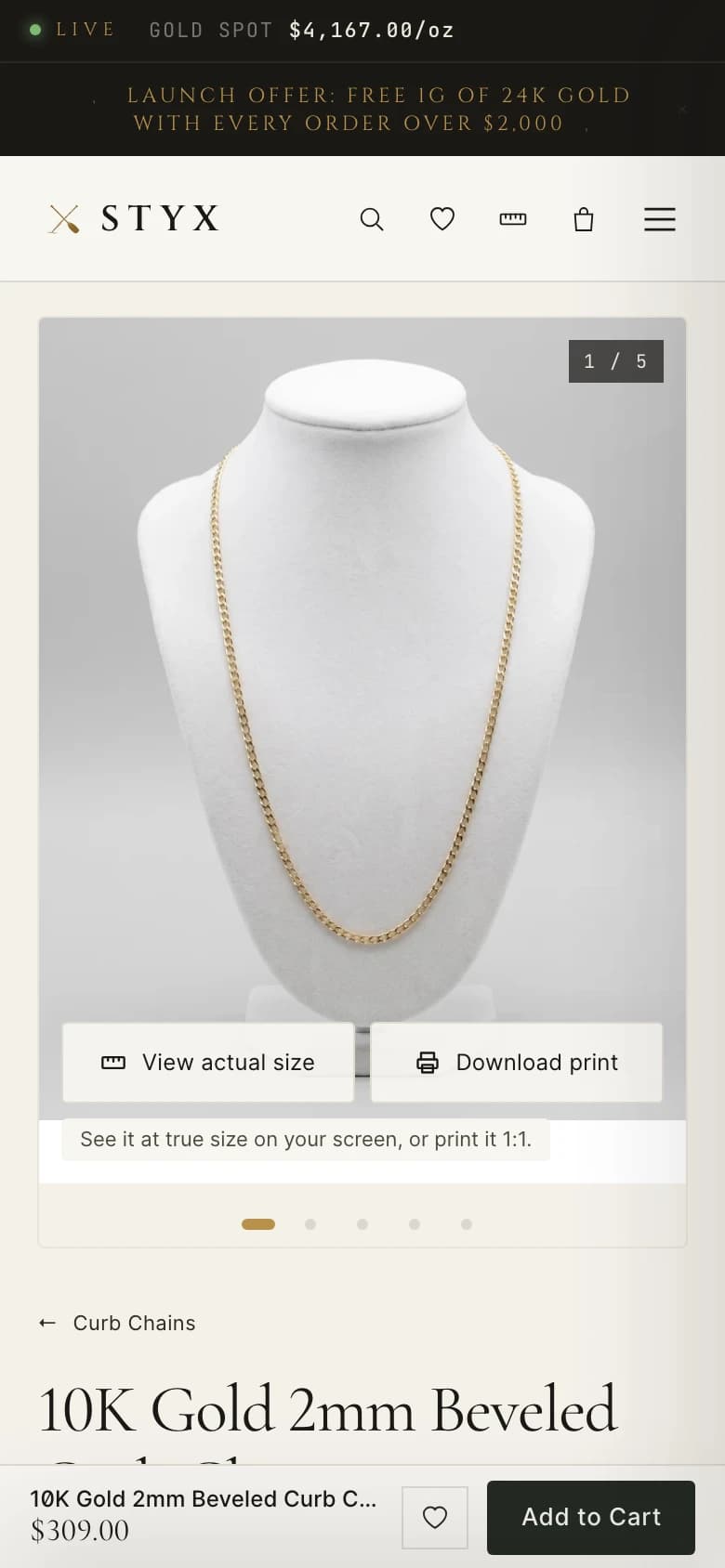
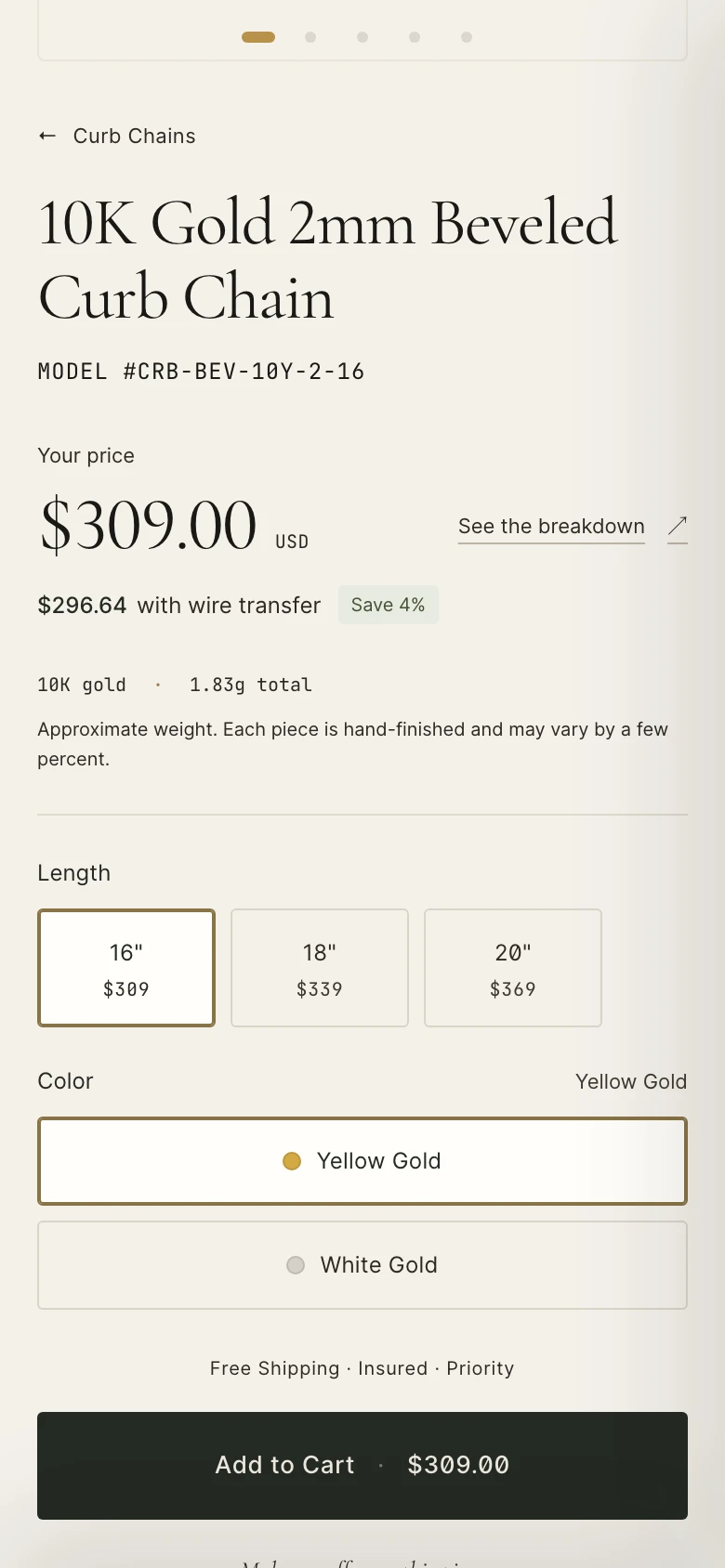
Luxury jewelry product page on a mobile phone

Mobile-First

75% of Your Traffic Is on a Phone

Every page, every product, every checkout step designed for the device your customers actually use. Speed optimized for image-heavy catalogs.

Related Services

Other Services

Search Engine Optimization

SEO

Technical SEO, local search, and content strategy that brings qualified traffic to your luxury retail site.

Learn More

Social Media Marketing

Social Media

Organic and paid social strategy built for luxury retailers who need followers that actually buy.

Learn More

FAQ

Shopify Web Design FAQ

Let's Build Your Shopify Store Whether you are launching a new store or migrating from another platform, start with a conversation about what you need. We will scope the full build, map out the timeline, spec the right Shopify tier, and give you a fixed price before any work begins.

Get a Shopify Proposal