

Social Media Marketing
Social Media Marketing for Luxury Retailers
Your customers scroll past 300 feet of content every day. Most of it looks the same. The jewelers who win on social media are not the ones posting the most. They are the ones posting with intent, measuring what matters, and converting attention into store visits and sales.
Get a Social Media AuditTrusted By
Which Platforms Actually Matter for Luxury Retail
Not every platform deserves your time. Some will move product. Others will burn hours your team does not have. Here is where to focus and why.
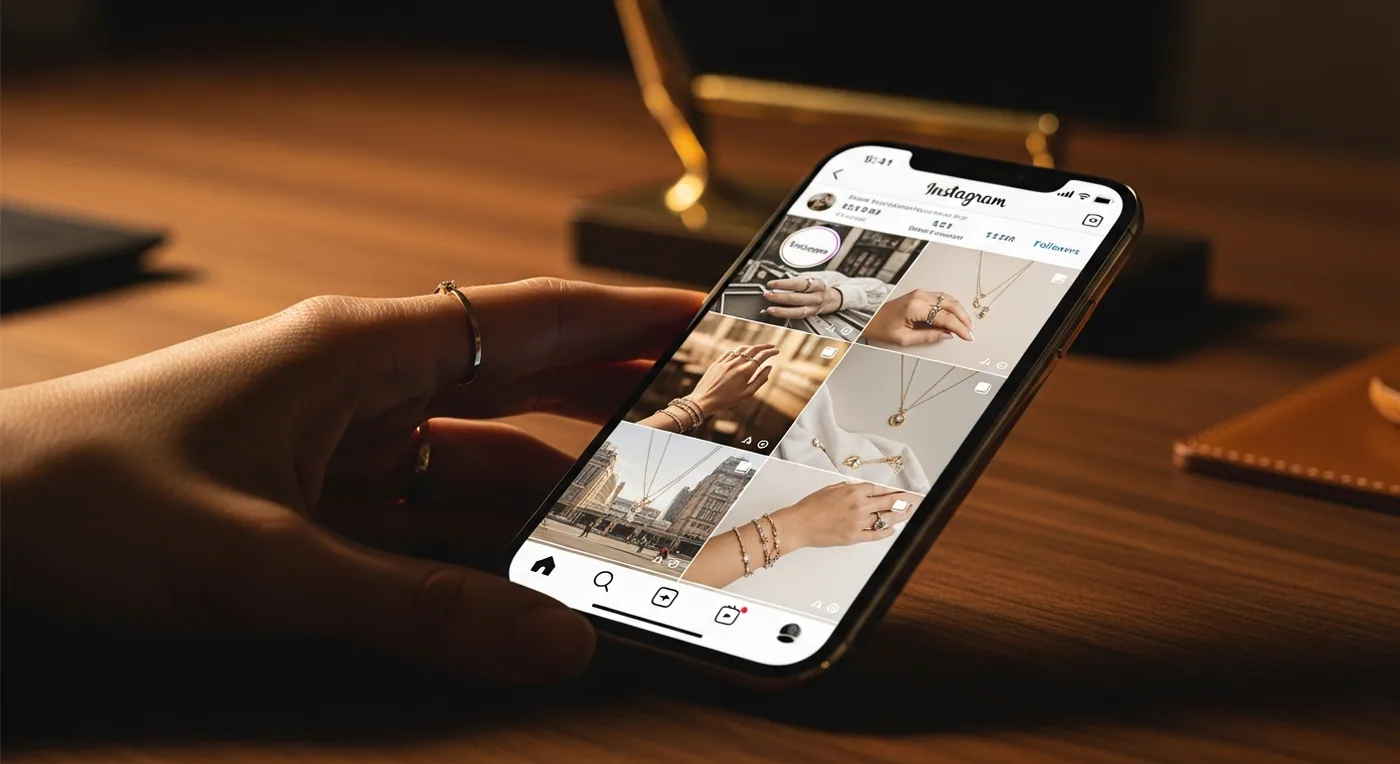
Instagram remains the primary platform for jewelry and watch retailers. It is visual-first, shoppable, and where your customers already browse before they walk into a store.
Feed posts build your catalog. Stories create urgency and intimacy. Reels extend your reach to people who have never heard of you. Guides let you curate collections and gift ideas in a format that lives permanently on your profile.
The thing most retailers misunderstand about Instagram: it is a discovery and consideration platform, rarely a direct conversion channel. A customer sees your solitaire ring on Reels Tuesday night. She screenshots it. Shows it to her partner over the weekend. They visit your store three weeks later. Instagram started that sale, but it will never show up in your last-click attribution.
Plan for that. Build content that plants seeds, not content that begs for immediate clicks.
Pinterest is the most underrated platform in the jewelry industry. The difference between Pinterest and every other social platform: intent. Pinners are not killing time. They are building wish lists, planning proposals, researching anniversary gifts. That is purchase intent you cannot buy on any other platform for free.
Every product in your catalog should be pinned. Pinterest functions as a secondary product catalog with organic search built in. When someone searches "oval halo engagement ring" on Pinterest, your product can show up alongside results from Tiffany and Blue Nile. That does not happen on Instagram.
Pinterest Ads can amplify this further, putting your products in front of high-intent users who are actively shopping in your categories.
TikTok
TikTok's engagement rates dwarf every other platform. A jewelry unboxing or stone-setting close-up can reach 100,000 people from an account with 500 followers. That does not happen anywhere else.
The content that works: behind-the-scenes at the bench, custom design reveals, "day in the life at a jewelry store," before-and-after restoration videos. Raw footage outperforms polished production. TikTok rewards authenticity and punishes anything that feels like an ad.
That said, TikTok is not a fit for every retailer. If your customer base skews over 55, your time is better spent elsewhere. If you sell bridal and fashion jewelry to buyers under 45, TikTok should be in your rotation.
YouTube
YouTube has the strongest search component of any social platform. A video titled "How to Choose a Diamond Engagement Ring" can rank in Google search results and drive traffic for years. No Instagram Reel or TikTok will do that.
Long-form content works here: ring buying guides, watch movement explanations, brand story videos, "what $5,000 gets you" comparison content. This is educational material that positions your store as the authority in your market.
YouTube Shorts competes directly with TikTok and Reels. If you are already producing short-form video, repurpose it here. One shoot, three platforms.
What to Skip
Facebook organic is dead for luxury retail. The reach on a business page post is 2-3% of your followers on a good day. Use Facebook for Meta Ads, not organic content.
X/Twitter has minimal relevance for jewelry retail. LinkedIn only matters if you sell B2B, and that is a different conversation.
Producing Content Without a Full Production Team
You do not need a creative agency or a full-time content producer. You need a system.
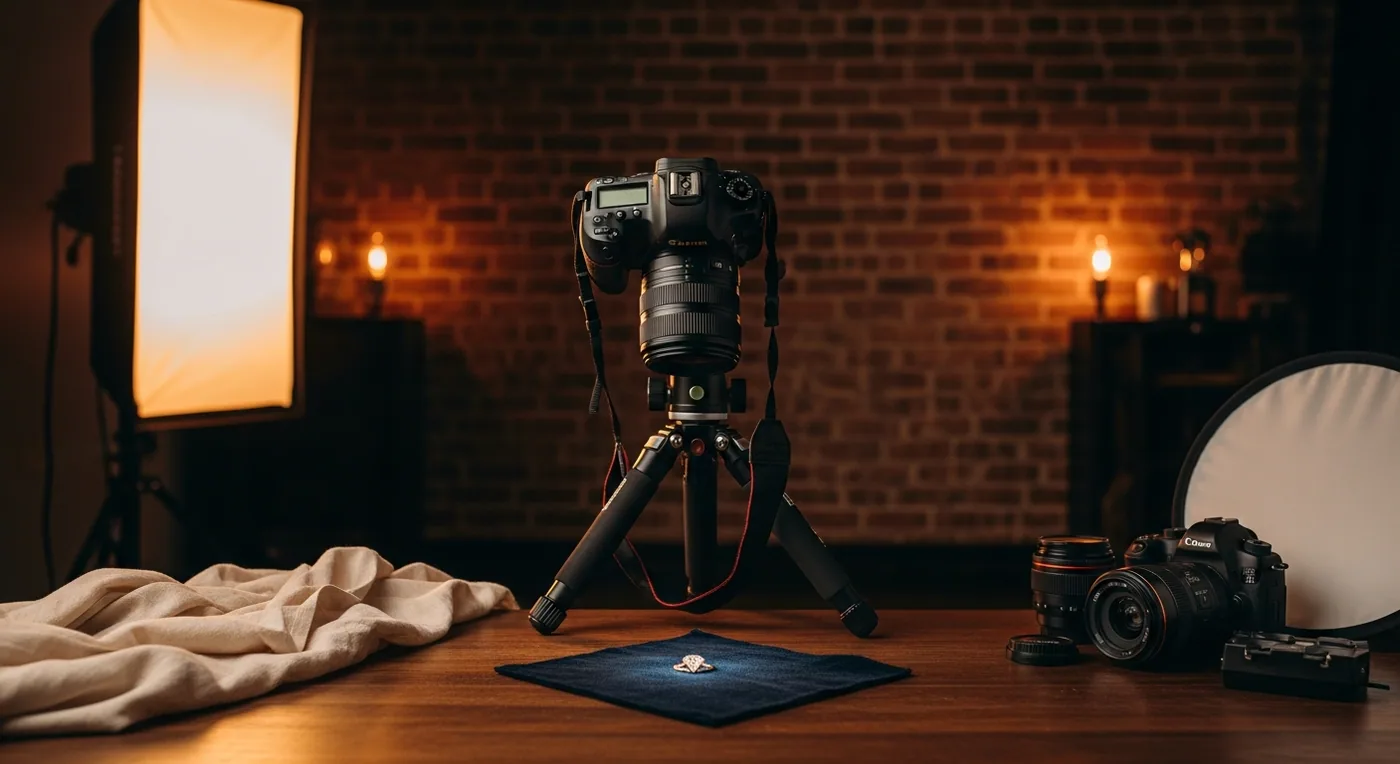
Batch filming. Dedicate one day per month to shooting 30 days of content. A smartphone with a macro lens attachment and a ring light gets you 80% of the way to professional-quality jewelry content. The remaining 20% comes from a DSLR with a dedicated macro lens for hero product shots, the ones you will use in ads, on your website, and in print.
This setup costs under $2,000 and pays for itself in the first month of content. Compare that to $500-$1,500 per session with a professional photographer, and the math is obvious.
Content types to rotate through:
- Product close-ups with natural light or lightbox
- Styling flat lays with lifestyle elements
- Behind-the-counter moments, the daily reality of running a jewelry store
- Customer stories and milestone moments (with permission)
- Store atmosphere shots that communicate the experience of visiting
Video content. Fifteen-second Reels and TikToks from product unboxings, repair bench footage, stone setting close-ups. These take minutes to shoot and consistently outperform static images on reach.
The repurposing engine. One product shoot produces a Reel, a carousel post, a Pin, a Story sequence, and a YouTube Short. That is five pieces of content from one setup. Multiply that across 10 products on your monthly shoot day and you have 50 content assets ready to schedule.
Editing tools. Canva for graphics and templates. CapCut for video editing. Both are free or near-free, both are simple enough that anyone on your team can learn them in an afternoon. Keep the workflow consistent so it does not depend on one person.
Content Calendars for Jewelers and Watch Retailers
A content calendar is not a creative constraint. It is the reason you stop scrambling for post ideas at 4pm on a Tuesday.
Monthly themes tied to buying seasons:
- November through February: engagement season, the single biggest content opportunity of the year
- February: Valentine's Day, with content starting in mid-January
- May: Mother's Day
- May/June: graduation gifts
- November through December: holiday gifting
Weekly content pillars. Assign a theme to each day of the week. Monday is product spotlight. Tuesday is brand story or history. Wednesday is behind-the-scenes. Thursday is customer or community content. Friday is educational. This framework eliminates decision fatigue and ensures variety.
Posting cadence recommendations:
- Instagram: 4-5 feed posts per week, daily Stories, 2-3 Reels per week
- Pinterest: 5-10 Pins per week, mostly product images linking to your website
- TikTok: 3-4 videos per week if you are active on the platform
- YouTube: 1-2 long-form videos per month, 2-3 Shorts per week
Leave room for reactive content. A customer proposal moment, a rare piece arriving in the safe, a trunk show recap. The best-performing content is often unplanned. Your calendar should have slots for spontaneity, not fill every minute.
Scheduling tools like Later, Planoly, or native platform scheduling eliminate the need to post manually every day. Set aside two hours on Monday, schedule the week, and get back to running your store.
Community Management and DM Strategy
Comments and DMs are where purchase intent lives. A "how much is this?" DM is not a nuisance. It is a warm lead sitting in your inbox.
Response time benchmarks: Under 2 hours during business hours for DMs. Under 4 hours for comments. Every hour you wait, the customer gets colder. They are also messaging your competitors, and whoever responds first usually wins.
DM scripts for common inquiries. Build templates for pricing questions, availability checks, appointment booking, and custom order requests. Templates do not mean robotic. They mean your team does not reinvent the wheel for every inquiry. Personalize the template, hit send, and move to the next one.
Comment strategy. Respond to every comment with substance. "Thanks!" and a heart emoji is a wasted opportunity. "Thank you! That's our Aria collection, handmade in Italy. Would you like to see it in person?" is a soft close. Every public comment exchange is visible to everyone watching. You are selling to the audience, not just the commenter.
Handling negative comments. If the complaint is legitimate, respond publicly with empathy and a path to resolution, then take the details to DMs. If it is spam or trolling, hide or delete. Never argue publicly. The audience remembers how you handled it, not what the complaint was about.
Tools. Meta Business Suite centralizes your inbox across Instagram and Facebook. One place for every DM, comment, and mention. If your team manages community engagement, this is non-negotiable.
User-Generated Content and Customer Stories
A customer posting their engagement ring with your store tagged is worth more than any ad you will ever run. It is social proof, word of mouth, and aspirational content rolled into one, and it cost you nothing.
How to encourage UGC:
- Post-purchase follow-up emails asking customers to share their moment and tag your store
- In-store signage with your Instagram handle and branded hashtag
- Staff who mention it during the sale: "We would love to see a photo when you pop the question"
Permission workflow. Never repost customer content without explicit written permission. A quick DM asking "Would you mind if we shared this on our page? We will credit you" is all it takes. Screenshot the approval and keep it on file.
UGC in ads. Customer photos and videos used in paid campaigns consistently outperform studio content on cost-per-click (Stackla, now Nosto, research). Real people wearing real jewelry in real settings creates trust that no product shoot can replicate. Run UGC creative alongside your studio creative and let the performance data tell you which to scale.
Proposal and milestone stories. With permission, these become your highest-engagement content of the year. A customer sharing their proposal story with your ring in the frame generates comments, shares, and saves at rates that make your product posts look invisible.
Review integration. Pull your best Google and Yelp reviews into social content. Screenshot format works. Video testimonials work better. Either way, you are taking social proof from one channel and distributing it across every other channel you own.
15-20 Micro-Influencers, Not 1-2 Big Names
Macro influencers with 500K+ followers charge $5,000-$25,000 per post (Influencer Marketing Hub, 2025 rate benchmarks). They deliver impressions. What they do not deliver is store visits. Their followers are spread across every city in the country. You need people walking through your door.
Micro-influencers with 5,000-50,000 followers in your metro area are a different story. Their engagement rates are higher (Markerly research shows micro-influencer engagement rates average 3.86% vs. 1.21% for accounts over 100K). Their followers actually live near your store. When they wear your jewelry and tag your location, their audience can actually visit you.
The model. Build a roster of 15-20 local micro-influencers. Lifestyle bloggers, local personalities, fashion content creators, wedding industry professionals, event hosts. Variety matters because each influencer reaches a different pocket of your local market.
Compensation structure:
- Product loans (not gifts), returned after the content period
- Store credit toward a future purchase
- Flat fees of $200-$500 per post
- Commission on sales attributed through their unique tracking link
Content requirements. Specify deliverables, one Reel plus three Stories, for example, but let the creator's voice come through. Overly scripted influencer content performs worse than authentic content. Give them the product, the talking points, and the freedom to make it theirs.
Measurement. Track each influencer with unique UTM links and unique tracking codes tied to analytics, not actual discounts. You are not a discount brand. The code is for attribution, not savings.
Long-term relationships over one-off posts. An influencer who features your store four times a year builds familiarity and trust with their audience. One post feels like an ad. A recurring presence feels like a genuine recommendation.
Social Commerce Features Worth Using
Instagram Shopping
Product tagging turns every feed post, Story, and Reel into a shoppable experience. A customer sees a ring they like, taps the tag, and lands on the product page. No searching your website, no "link in bio" friction.
Instagram Shop setup requires a product catalog synced with your Shopify store. Once connected, your inventory updates automatically. You can curate collections inside Instagram that mirror your website, engagement rings, wedding bands, luxury watches, and make browsing seamless.
Pinterest Shopping Pins
Every product Pin becomes a direct link to the product page with price, availability, and a buy button. Pinterest catalog integration with Shopify auto-syncs your inventory, so you are not manually creating Pins for every new arrival.
Pinterest performs particularly well for bridal, gifting, and wish list categories, the exact moments when buyers are most motivated.
What Social Commerce Does and Does Not Do
Social commerce reduces friction. It will not replace your website for high-ticket purchases. Most buyers spending over $2,000 want the full website experience or an in-store visit before committing. Below that threshold, social commerce can drive direct sales, especially for fashion jewelry, gifts, and impulse-friendly price points.
Track social commerce revenue separately from your website revenue. You need to understand its actual contribution, not just assume it is cannibalizing existing sales.
Measuring Social Media ROI That Matters
Follower count is not a business metric. Neither are likes. If your social media report leads with followers gained this month, you are measuring the wrong things.
Metrics that actually matter:
- Website traffic from social channels
- DM inquiries and appointment requests
- Link clicks to product pages
- Conversion events: add to cart, form submissions, phone calls
- Revenue attributed to social touchpoints
Attribution setup. UTM parameters on every link you share. Google Analytics integration on your website. Conversion tracking pixels installed on your social platforms. Without this infrastructure, you are guessing.
Assisted conversions. Social media is often the first or middle touch in a buying journey, not the last click. GA4's attribution models show the full path. A customer might discover you on Instagram, visit your website from a Pinterest Pin, then convert through a Google search two weeks later. Social started that chain. Last-click attribution would give all the credit to Google.
Monthly reporting framework:
- Traffic from each social platform
- Engagement rate (not total engagement, the rate matters more)
- DM volume and response time
- Link clicks to your website
- Website conversions from social traffic
- Revenue attributed to social touchpoints
This is the reporting structure we build for every client. The numbers tell you what is working, what is wasting time, and where to shift effort next month.
Pair this with a broader SEO strategy and you create a system where organic social feeds paid social, paid social drives traffic, and SEO captures the demand that social created. That is how the channels compound.
Format and Cadence by Platform
Each platform rewards different content formats. Posting the same image across four platforms is not a strategy. It is a shortcut that underperforms everywhere.
Instagram. Reels outperform static posts on reach by 2-3x (Later, 2025 Social Media Benchmarks). Carousels outperform single images on engagement. Stories drive DMs. Use all three formats in rotation. Best starting times for jewelry retail: 11am-1pm and 7pm-9pm local time.
Pinterest. Vertical Pins at a 2:3 ratio. Write keyword-rich descriptions, Pinterest is a search engine before it is a social platform. Every Pin should link to a product page or collection page on your website. Volume matters here more than timing.
TikTok. Raw beats polished. Hook the viewer in the first second or they scroll. Trending audio helps discovery but is not required. Post 3-4 times per week and let the algorithm find your audience.
YouTube. Titles and thumbnails drive clicks more than production quality. A well-titled video shot on a phone outperforms a cinematic piece with a bad title. Shorts need a hook in the first frame, just like TikTok.
Platform algorithms change constantly. What each platform rewards today will shift in six months. We monitor these changes and adjust client strategies accordingly, so your content stays in front of the audience instead of buried by an algorithm update you did not see coming.

Content Production
30 Minutes a Week Produces a Month of Content
DSLR with a macro lens, natural light, batch filming workflow. Your team shoots, we direct and edit. No production crew needed.

Platform Strategy
Two or Three Platforms Done Well Beats Six Done Poorly
Instagram is non-negotiable. Pinterest for visual discovery. TikTok if you can produce short-form consistently. We build the system that makes it sustainable.
Related Services
Other Services
Paid Social
Meta Ads
Full-funnel Meta campaigns that connect ad spend to in-store and online revenue for luxury retailers.
Learn MorePaid Social
Pinterest Ads
Reach high-intent shoppers during the discovery phase with Pinterest campaigns built for luxury products.
Learn More