
Paid Social Media

Pinterest Ads for Luxury Retailers Reaching High-Intent Buyers

Most luxury retailers spend their entire paid social budget on Meta. They get decent results. And they never think to look anywhere else. Meanwhile, Pinterest sits there with 537 million monthly active users, a massive share of them actively planning purchases, and almost zero competition from luxury advertisers. That gap is where the opportunity lives.

Book a Strategy Call

Trusted By

Didi Hirsch
Aqua Lounge
Life Alert
B Couture
Insurance Insight
Insurative Solutions
Microdea
Adlib
Alex Moss New York
Paloma Blanca
L'ORO Jewellery
Vosgi Honey
The Rebel Mama
Garen T Plumbing
cloudCENTRX
Shiny Jewellers
Toronto Electric
iAm21 Entertainment
Didi Hirsch
Aqua Lounge
Life Alert
B Couture
Insurance Insight
Insurative Solutions
Microdea
Adlib
Alex Moss New York
Paloma Blanca
L'ORO Jewellery
Vosgi Honey
The Rebel Mama
Garen T Plumbing
cloudCENTRX
Shiny Jewellers
Toronto Electric
iAm21 Entertainment

Most luxury retailers spend their entire paid social budget on Meta. They get decent results. And they never think to look anywhere else.

Meanwhile, Pinterest sits there with 537 million monthly active users (Pinterest Global Report, 2024), a massive share of them actively planning purchases, and almost zero competition from luxury advertisers. That gap is where the opportunity lives.

Pinterest is not a social media platform. It is a visual search engine. People do not come here to scroll, react, or argue. They come to plan. They build boards for engagement rings. They save watches they want to own. They pin furniture for the house they are renovating. Every one of those saves is a signal of purchase intent, and most luxury retailers are ignoring it completely.

We run Pinterest ads as part of a broader paid social strategy that coordinates with Meta and Google Ads. Pinterest is not a replacement for those channels. It fills a gap they cannot reach: the planning phase, weeks or months before a purchase, when your customer is building a mental shortlist.

The Platform Your Competitors Are Not Using

Here is what makes Pinterest different from every other paid channel in your mix.

The intent is real. When someone saves a product on Pinterest, they are telling you they want it. Not that they think the photo is nice. Not that they want to show a friend. They are bookmarking it for later. Pinterest’s own data shows that 85% of weekly Pinners have made a purchase based on Pins they saw from brands (Pinterest Business, 2023). That is not engagement. That is a pipeline.

The cost is lower. Average CPCs on Pinterest run 30-50% below Instagram for most luxury categories (Smartly.io Benchmark Report, 2024). Lower competition means lower auction prices. Simple math. This will not last forever. As more advertisers move to the platform, costs will rise. But right now, you are buying attention at a fraction of what you pay on Meta.

The shelf life is longer. An Instagram post dies in 24 hours. A Pin continues surfacing in search results for months. Sometimes years. The compounding effect of that visibility is something no other paid social platform offers.

And the audience skews exactly where you want it. Pinterest users over-index for household income above $100K (Comscore, 2023). They are disproportionately female, 25-54, college-educated, and planning major life purchases. If you sell anything that someone researches before buying, this audience is yours.

Shopping Pins That Connect Your Inventory to Search

Pinterest Shopping Pins turn your product catalog into searchable, shoppable inventory across the platform. When someone searches “diamond tennis bracelet” or “men’s dress watch under $5,000,” your products can appear directly in those results with pricing, availability, and a direct link to purchase.

Catalog Feed Setup

Your product feed is the foundation. Pinterest’s feed requirements differ from Meta’s in several ways that matter.

Titles need to be optimized for how people search on Pinterest, not Google. Pinterest searches are more aspirational and descriptive. Someone might search “vintage-inspired engagement ring” rather than “1.5ct round diamond solitaire.” Your titles need to account for that.

Images matter more here than on any other platform. Lifestyle photography, products shown in context, styled and lit to inspire, those outperform white-background product shots by a significant margin on Pinterest. If your feed pulls the same flat product images you use on Google Shopping, you are leaving performance on the table.

Price, availability, and product category mapping all need to be clean. Pinterest will reject or suppress products with bad data. We build and maintain feeds that stay approved and performing.

Shopping Ad Formats

Standard Shopping Pins are your workhorse. One product, one image, price and availability, direct to your product page. These appear in search results and the home feed based on user interest signals.

Collections ads let you show a hero image with a curated selection of products beneath it. Think of it as a styled vignette: a lifestyle image of a dressed table setting with links to the individual pieces below. For retailers with complementary inventory, collections drive higher average order values.

Idea Pins are Pinterest’s answer to Stories, but with a critical difference: they do not disappear. An Idea Pin about how to style a watch collection or how to choose an engagement ring setting lives on your profile permanently and continues to surface in search. They build organic authority while supporting your paid strategy.

Carousel format lets you show a single product from multiple angles or in different contexts. A ring on a hand, then a detail shot of the setting, then the full collection it belongs to. Each card can link to a different destination.

Which Luxury Retailers Get the Most From Pinterest

Pinterest is not equally effective for every product category. Here is where we see the strongest performance.

Bridal and engagement jewelry. This is one of Pinterest’s top categories, full stop. Couples planning proposals search Pinterest months before they walk into a store. “Engagement ring styles,” “wedding band ideas,” “proposal planning,” these searches happen millions of times per month on the platform. If you sell bridal, you should already be here.

Home and interior design. Furniture, lighting, decor, art. Pinterest is where renovation and remodel projects begin. Someone pins a living room layout in January, shops for the sofa in March, buys the side table in May. The consideration timeline is long, and Pinterest captures the full arc of it.

Fashion and accessories. Seasonal lookbooks, styling inspiration, collection launches. Pinterest users plan wardrobes, build wish lists for gifting seasons, and save pieces they want to own. Luxury fashion brands that treat Pinterest as a discovery channel see consistent referral traffic with higher average order values than Meta.

Watches and collectibles. The collector audience on Pinterest is real and active. Watch enthusiasts build boards organized by brand, complication, or style. They save pieces they are tracking, compare options, and research for months before buying. That extended consideration cycle is exactly what Pinterest was designed for.

The common thread: if your product looks better in a scene than on a white background, and your customer takes weeks or months to decide, Pinterest is a fit.

Pin SEO: Organic Reach That Compounds Over Time

This is the part most advertisers miss entirely. Pinterest has an organic algorithm, and it works like a search engine, not a social feed.

When you publish a Pin with the right title, description, and board placement, it gets indexed by Pinterest’s search algorithm. It surfaces when someone searches a relevant term. And it keeps surfacing, for months after you publish it. We have seen Pins driving traffic 18 months after they were first posted. No other social platform gives you that kind of organic longevity.

Title and description optimization follows the same logic as SEO for Google, but with different keyword patterns. Pinterest searches tend to be more aspirational and less transactional. “Art deco engagement rings” rather than “buy art deco engagement ring.” We optimize your Pin copy for how people actually search on this platform.

Board strategy affects discoverability more than most people realize. Board names, descriptions, and organization all feed Pinterest’s algorithm. A board called “Luxury Watch Collection” with a clear description and consistently themed Pins will perform better than a board called “Products” with random inventory dumped in.

Organic performance improves paid performance. This is the feedback loop that makes Pinterest worth the investment. When your organic Pins perform well, your paid campaigns get lower CPCs. Pinterest rewards accounts that produce content users engage with. The more saves, clicks, and closeups your organic Pins generate, the less you pay when you promote similar content.

The compounding effect is real. A well-optimized Pin continues driving traffic long after you stop paying to promote it. That is not how Meta works. That is not how Google works. It is unique to Pinterest, and it is the reason the platform deserves a spot in your media mix.

Creative That Performs on Pinterest

The creative that works on Instagram does not work on Pinterest. Full stop. Different platform, different user behavior, different visual language.

Lifestyle and editorial imagery wins. On Instagram, product-only shots can work because the feed is designed for quick consumption. On Pinterest, users are planning and imagining. They want to see the watch on a wrist at a dinner table. The necklace with an outfit at an event. The sofa in a room with the right rug beneath it. Context sells on Pinterest.

Vertical format is non-negotiable. The optimal image ratio is 2:3 (1000 x 1500 pixels). Vertical Pins take up more real estate in the feed on mobile, which is where the vast majority of Pinterest usage happens. Horizontal images get lost. Square images underperform. Build your creative for vertical first.

Text overlay requires restraint. Pinterest allows text on images, and some advertisers go overboard. For luxury, less is more. A short line of copy, your brand name, maybe a price point. That is it. The image should do the selling. If you need a paragraph of text to explain the product, the image is not strong enough.

Seasonal and occasion-based creative calendars matter because Pinterest users plan ahead. They search for Valentine’s Day gift ideas in December. They look at summer fashion in March. Your creative calendar needs to lead the season by 6-8 weeks to catch people during the planning phase.

The biggest mistake we see: taking the exact creative from an Instagram campaign and running it on Pinterest. Resize is not a strategy. Each platform demands creative built for how its users behave.

Retargeting Pinterest Visitors Across Meta and Google

Pinterest often sits at the top of the funnel. Someone discovers your product there, saves it, maybe clicks through to your site. Then they leave. The sale happens later, and usually on a different platform.

That is why cross-platform retargeting is built into every Pinterest campaign we run.

Pinterest engagement audiences are powerful retargeting seeds. Someone who saved your product, clicked on your Pin, or spent time on a closeup view has shown real intent. We build audiences from those engagement signals and retarget them across Meta and Google.

The Pinterest Tag goes on your website to track visitors who came from Pinterest. What pages they viewed, what products they looked at, whether they added to cart. That data feeds both Pinterest’s own retargeting and your cross-platform audiences.

Sequential retargeting is where this gets effective. Someone saves a diamond ring on Pinterest. Two days later, they see that same ring in an Instagram ad with a customer review. A week after that, they see a Google display ad mentioning your store’s private appointment option. Each touchpoint moves them closer to a decision, and the sequence feels intentional, not random.

Audience sharing across platforms gives you full-funnel coverage. Pinterest drives discovery and consideration. Meta reinforces with social proof and deeper storytelling. Google captures the search when they are ready to act. The three platforms work together, and the retargeting connects them.

Measuring a Platform Where the Purchase Happens Weeks Later

Pinterest measurement requires patience and a different framework than what you are used to with Meta or Google.

The purchase cycle for luxury goods on Pinterest is long. Someone saves a product today and buys it six weeks later. If you are evaluating Pinterest on a 7-day attribution window, you will never see the return. That is not the platform failing. That is the wrong measurement setup.

Pinterest’s attribution window extends to 30 days for clicks and 30 days for views by default, but we recommend looking at 60-day and 90-day windows for luxury categories. The data tells a different story at those longer lookback periods.

View-through attribution matters here more than on other platforms. A significant portion of Pinterest’s value comes from people who see your Pins, do not click, but later visit your site or store through another channel. Ignoring view-through conversions on Pinterest is like ignoring billboard impressions because nobody clicked the highway sign.

Offline measurement is where things get interesting for brick-and-mortar retailers. Pinterest offers store visit tracking for qualifying accounts, connecting ad exposure to physical foot traffic. We supplement that with our own attribution methodology to tie Pinterest engagement to in-store purchases.

UTM tagging is mandatory for accurate analytics. Every promoted Pin gets tagged so we can track the full path from Pinterest impression to website visit to conversion, whether that conversion happens online or in-store.

Monthly reporting, not weekly. Weekly Pinterest reports are misleading. The numbers look small because the conversion cycle is not complete. Monthly cadence, with a focus on trailing metrics rather than same-week performance, gives you the real picture.

Our attribution platform ties Pinterest touchpoints into the full customer journey across channels, so you see exactly where Pinterest contributed, even when the last click happened on Google.

The Cost Comparison: Pinterest vs Meta for Luxury

Let’s talk about what Pinterest costs relative to what you are already spending.

Average CPC for luxury-related keywords on Pinterest runs $0.40-$1.20, compared to $1.50-$4.00 on Instagram for equivalent audiences (Smartly.io Benchmark Report, 2024). That is a meaningful difference, especially at scale.

The reason is simple: lower competition. Most luxury retailers have not built a Pinterest ads practice. The auction is less crowded. Fewer advertisers bidding on the same audience means lower costs per click, per save, and per conversion.

That advantage will not last. Pinterest’s ad revenue is growing, more brands are entering the auction each quarter, and costs will normalize over time. The retailers who build their presence now, with optimized feeds, strong organic content, and established retargeting audiences, will have a structural advantage as competition increases.

Budget allocation depends on your product category and current channel mix. For most luxury retailers, we recommend starting with 10-15% of your total paid social budget on Pinterest. If performance justifies it, and it usually does for bridal, home, and fashion categories, that share grows to 20-25%.

When Pinterest is a primary channel: Bridal jewelry, home furnishing, and fashion retailers with strong visual catalogs. The audience alignment is so strong that Pinterest can outperform Meta on a cost-per-acquisition basis.

When Pinterest is a supporting channel: Retailers with smaller catalogs, very niche product categories, or primarily local footprints. Pinterest still earns its budget through top-of-funnel discovery and retargeting seed audiences, but it is not carrying the weight of your paid program.

The first-mover advantage is real. Most of your competitors are not running Pinterest ads. Every month you wait, the gap shrinks.

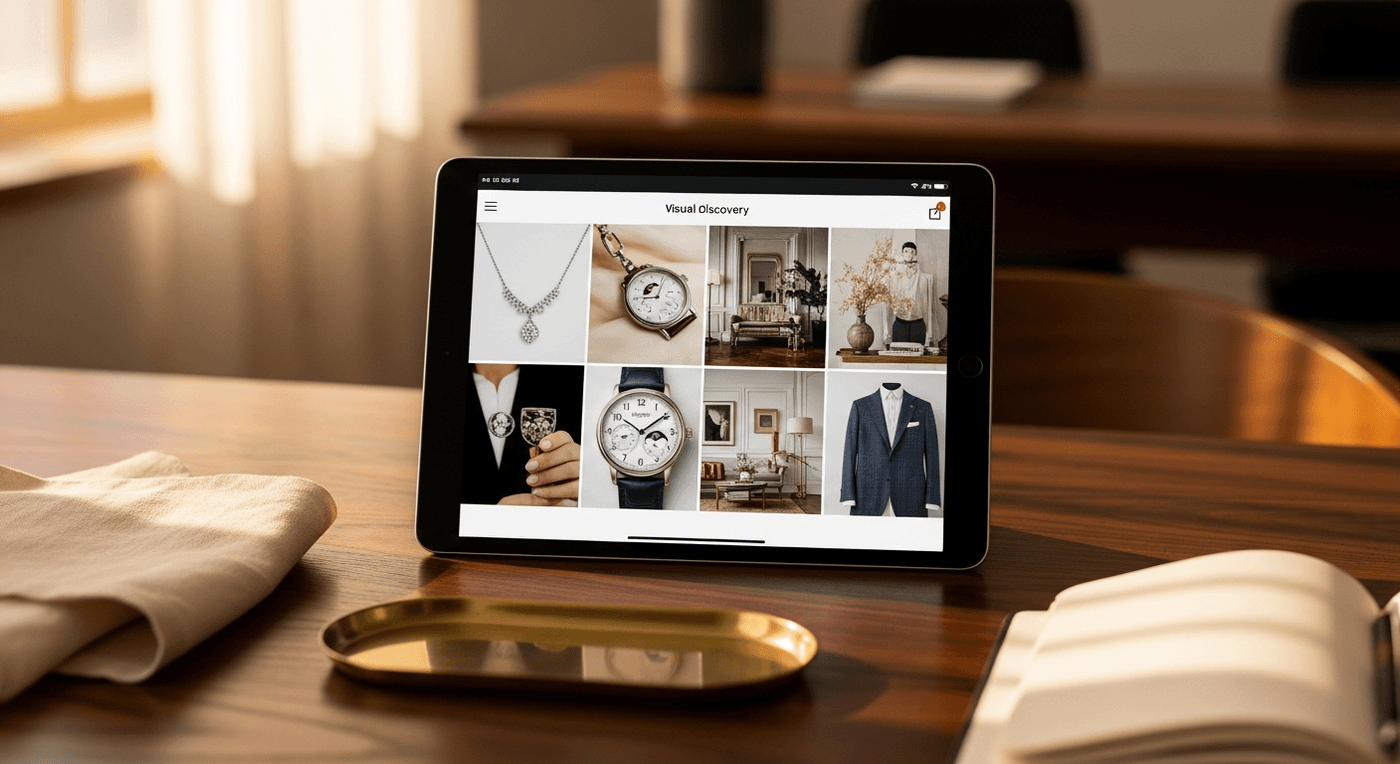
Pinterest mood board with luxury lifestyle imagery on a tablet

Visual Discovery

High-Intent Planners Who Save Before They Buy

Pinterest users build wish lists weeks before purchasing. Lower CPCs than Meta, stronger purchase intent, and a consideration cycle that matches luxury buying behavior.

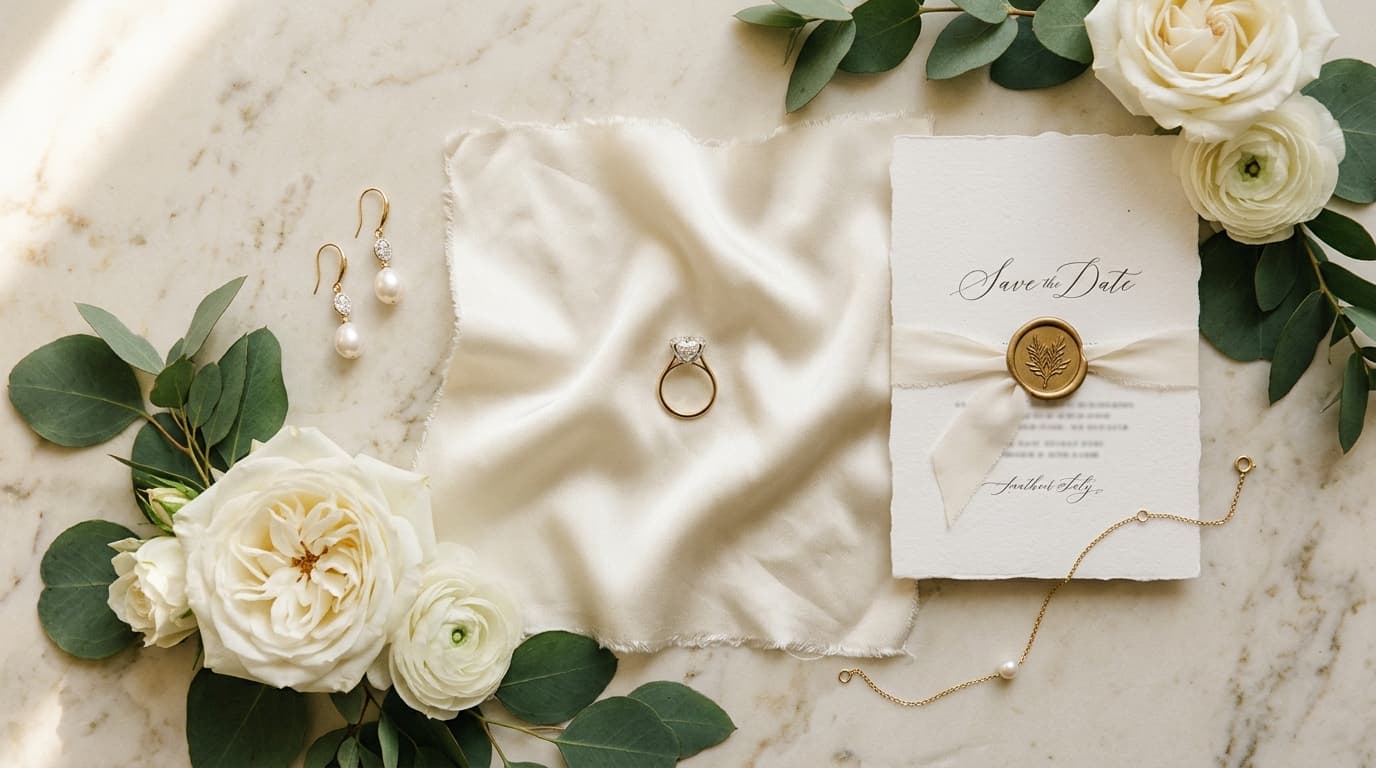
Bridal planning flat lay with engagement ring, invitation, and flowers

Bridal & Luxury

The Platform That Matches Your Buyer's Timeline

Engagement rings and luxury goods are top Pinterest categories. Users start searching months before purchase, giving you a long runway to build consideration.

Related Services

Other Services

Paid Social

Meta Ads

Full-funnel Meta campaigns that connect ad spend to in-store and online revenue for luxury retailers.

Learn More

PPC Advertising

Google Ads

Search, Shopping, and Performance Max campaigns structured around your actual product lines and margins.

Learn More

FAQ

Pinterest Ads FAQ

Find Out if Pinterest Belongs in Your Media Mix We will tell you in one conversation whether Pinterest makes sense for your store, what budget to start with, and how it fits alongside your existing paid social and Google Ads spend.

Book a Strategy Call