
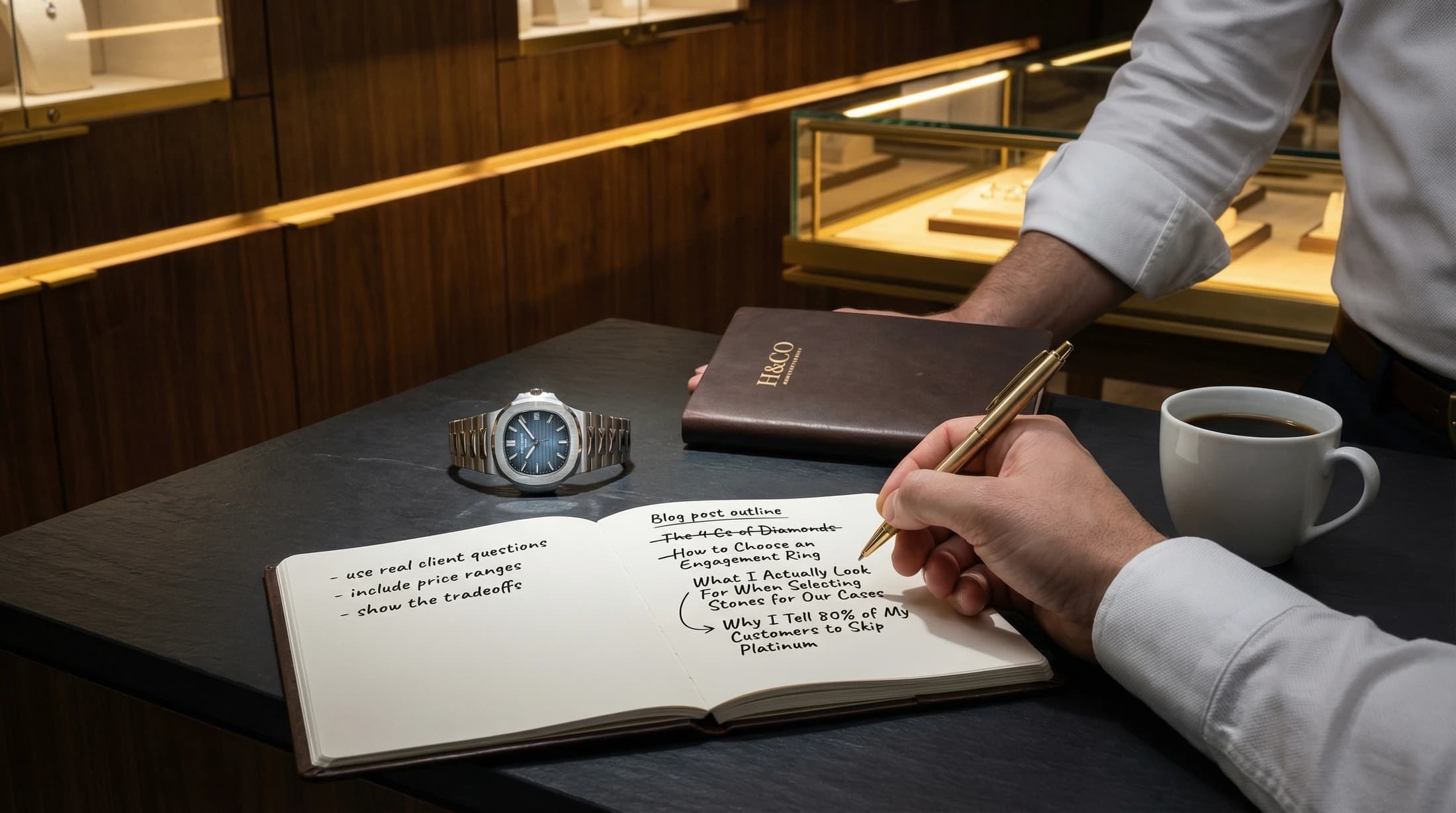
Content marketing for luxury retailers is the practice of publishing articles, guides, and educational material that attract buyers who are actively researching before they walk into a store or place a call. This is not blogging for the sake of it. Done well, it puts your store in front of the right people at exactly the moment they're trying to decide where to buy.
Luxury buyers do not make fast decisions. Whether it's an engagement ring, a grail watch, or an anniversary gift that will sit at $15,000, the research window is long. They read. They compare. They look for stores that seem to know what they're talking about. Content is how you show up during that window and build the trust that eventually turns into a sale.
*This article is part of our series on SEO for luxury watch and jewelry retailers.*
Why Content Works Differently for Luxury Retail
Most retail categories can compete on price, speed, and convenience. Luxury cannot. The buyer choosing between two jewelers is not choosing on who has the lowest price. They're deciding who they trust. Who seems authoritative. Who they want handing them a $20,000 ring.
Content builds that trust before they ever contact you. A detailed guide on how to buy a diamond, a breakdown of what makes a Patek Philippe movement different, a post explaining the difference between lab-grown and natural stones, these are not just SEO assets. They are demonstrations of expertise that position your store above competitors who have no content presence at all.
According to Google's research on the messy middle of the purchase journey, buyers loop through exploration and evaluation repeatedly before committing. For high-consideration purchases, this loop can go on for weeks or months. Every time they search, they're giving a chance to the stores that show up with relevant content and taking that chance away from the ones who don't.
What Content Actually Drives Results for Watch and Jewelry Stores
Not all content performs equally. The categories below consistently produce traffic, leads, and direct sales for luxury retail clients.
Buying Guides
"How to buy an engagement ring" gets tens of thousands of searches per month. A store that ranks for this query and its local variants captures buyers at the highest point of intent: they have decided to buy, they just don't know from where.
Good buying guides cover the decision framework in detail. What questions to ask. What to look for. What traps to avoid. What the price range actually means in terms of quality. A buyer who reads your 2,000-word guide on diamond buying has spent meaningful time with your expertise before they've ever walked in.
Brand and Product Education
Watch collectors search for specific references, movements, and brand histories. Jewelry buyers look up specific designers, stone origins, and certifications. If you carry Rolex, Cartier, Patek Philippe, or David Yurman, publishing detailed content around those brands and their most-searched references captures buyers who are already deep in the research phase.
This type of content also works for local search. "[Brand] authorized dealer [city]" is a high-intent query. If you have a page or post that specifically addresses your authorized dealer status for that brand in your market, you capture a buyer who has already decided on the brand and is now deciding where to buy it.
Comparison Content
"Lab-grown vs natural diamonds" is one of the most searched jewelry topics of the last three years. Buyers are confused, they've read conflicting things, and they want a straight answer from someone who actually knows.
Comparison content works well for watches too. Submariner vs Explorer. Datejust vs Day-Date. Buyers who are this specific already know what they want to spend. They just need the last piece of clarity before they commit. Be the store that gives it to them.
Local and Event Content
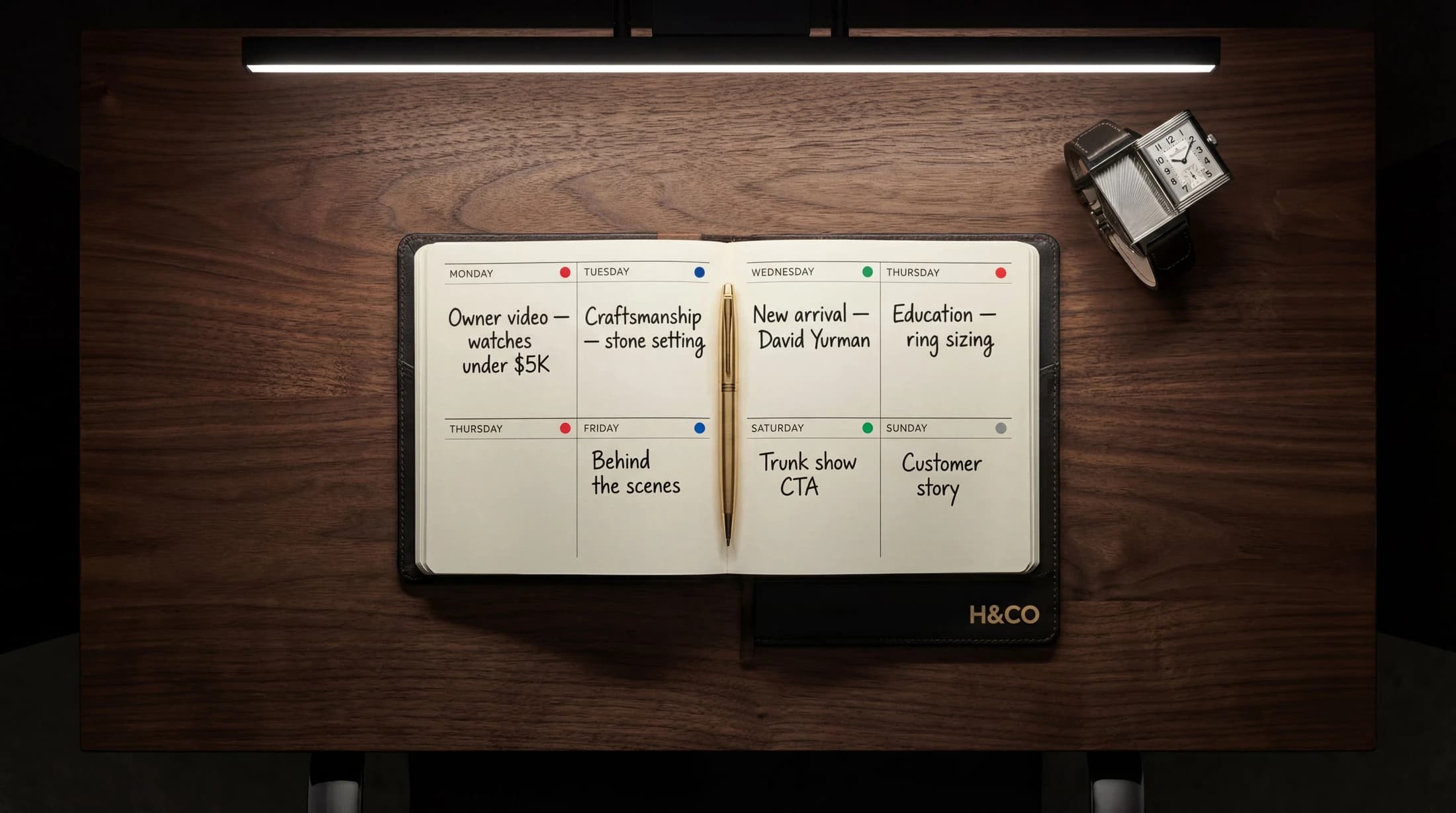
Trunk show announcements, new collection arrivals, charity event coverage, and local awards all create content that performs well in local search and keeps your existing audience engaged. These posts tend to have shorter lifespans than buying guides, but they signal to Google that your site is active and locally relevant, which supports your broader local SEO rankings.
FAQ and Objection Content
"Is it worth buying a watch from an authorized dealer?" "What's the resale value of a Rolex?" "Can I negotiate the price of an engagement ring?" These are real searches from real buyers who are close to a purchase decision.
FAQ content answers these questions directly and positions your store as the honest, knowledgeable resource that helps buyers feel confident. It also tends to rank in featured snippets and People Also Ask boxes, which means visibility without requiring a top organic position.
How to Structure a Content Strategy for a Luxury Retail Store
Random publishing doesn't work. A content strategy needs to be built around what your buyers are actually searching for, what you want to rank for, and how content fits into the broader sales cycle.
Start with Keyword Research Tied to Buyer Intent
Every content topic should map to a search query with real volume and clear intent. Pull keyword data for the brands you carry, the products you sell most, the questions your sales staff gets asked most often, and the local terms that buyers use when they're looking for a store in your market.
Pay attention to long-tail terms. "Engagement ring under $10,000" is less competitive than "engagement ring" and the buyer using that search knows exactly what they want to spend. Long-tail content often converts better than broad content, even with lower search volume, because the intent is clearer.
Build Topic Clusters, Not Random Posts
A topic cluster is a pillar page on a broad topic supported by several more specific articles that link back to it. For example: a pillar page on engagement rings supported by posts on diamond buying, setting styles, ring sizing, and proposal planning.
Clusters tell Google that your site is authoritative on a topic, not just that you published one post about it. They also create natural internal linking that distributes authority across your site. For a watch and jewelry store, clusters around engagement rings, luxury watch brands, estate jewelry, and custom design are all viable and commercially valuable.
Publish Consistently, Not Frequently
One well-researched, well-written post per month beats four rushed posts that say nothing. Google rewards content quality and relevance, not publication frequency. A post that fully answers a buyer's question and keeps them on the page is worth more than five thin posts that drive bounces.
For an independent, two to four substantial posts per month is a realistic output that produces results over time without requiring a full content team.
Align Content with the Sales Cycle
Content should exist at every stage of the buyer's journey. Awareness content (what is a VVSI diamond?) brings in buyers early. Consideration content (VVSI vs VS1: which should you choose?) catches them mid-research. Decision content (best place to buy a diamond ring in [city]) brings in buyers who are ready to act.
Awareness content is what gets published, because it feels natural. The decision-stage content, the stuff that directly competes for buyers who are ready to spend, is where the commercial payoff is and where the gap is usually biggest.
Turning Content Into Appointments and Sales
Traffic without conversion is just a vanity metric. The content itself needs to drive buyers toward a next step.
Every post should have a clear CTA appropriate to the buyer stage. Educational posts can invite readers to book a consultation, browse the collection, or sign up for an email list. Decision-stage posts should push directly toward a visit, call, or appointment.
Retargeting amplifies content's reach. A buyer who reads your diamond buying guide is a warm lead. Retarget them on Meta and Google with ads for your in-store appointment service or a specific collection. This keeps your store top of mind during the weeks or months they're still deciding.
Email capture from content, offered through a simple guide or checklist, builds a list of pre-qualified buyers you can reach directly. A buyer who gives you their email while reading your engagement ring guide is telling you exactly where they are in the purchase journey.
What Content Marketing Does Not Do
Content marketing does not produce results in 30 days. It compounds over time. A post published today may rank in three to six months and drive traffic for years after that. Stores that want immediate results should be running paid search, not waiting on content.
It also does not work in isolation. Content needs technical SEO to be crawlable and indexable. It needs internal linking to distribute authority. It needs backlinks from relevant sources to build domain credibility. And it needs analytics to know which posts are driving leads versus which ones are just getting traffic from people who will never buy.
Content marketing done right is a long-term revenue asset. The stores we've worked with that invested in content three or four years ago are now getting organic leads at a fraction of the cost of paid acquisition, and those assets compound every year. The stores that delayed are now paying more for paid ads to fill the gap that content would have covered.
Want a content strategy built around what your buyers are actually searching for? Book a call and we'll show you where your competitors are getting traffic that you're not.

About the author
Hagop Imasdounian
Hagop Imasdounian is the founder of H&CO. Raised around his family’s jewelry businesses, he brings more than 15 years of digital marketing experience to helping jewelry and watch brands improve their websites, reach buyers and connect marketing with sales.