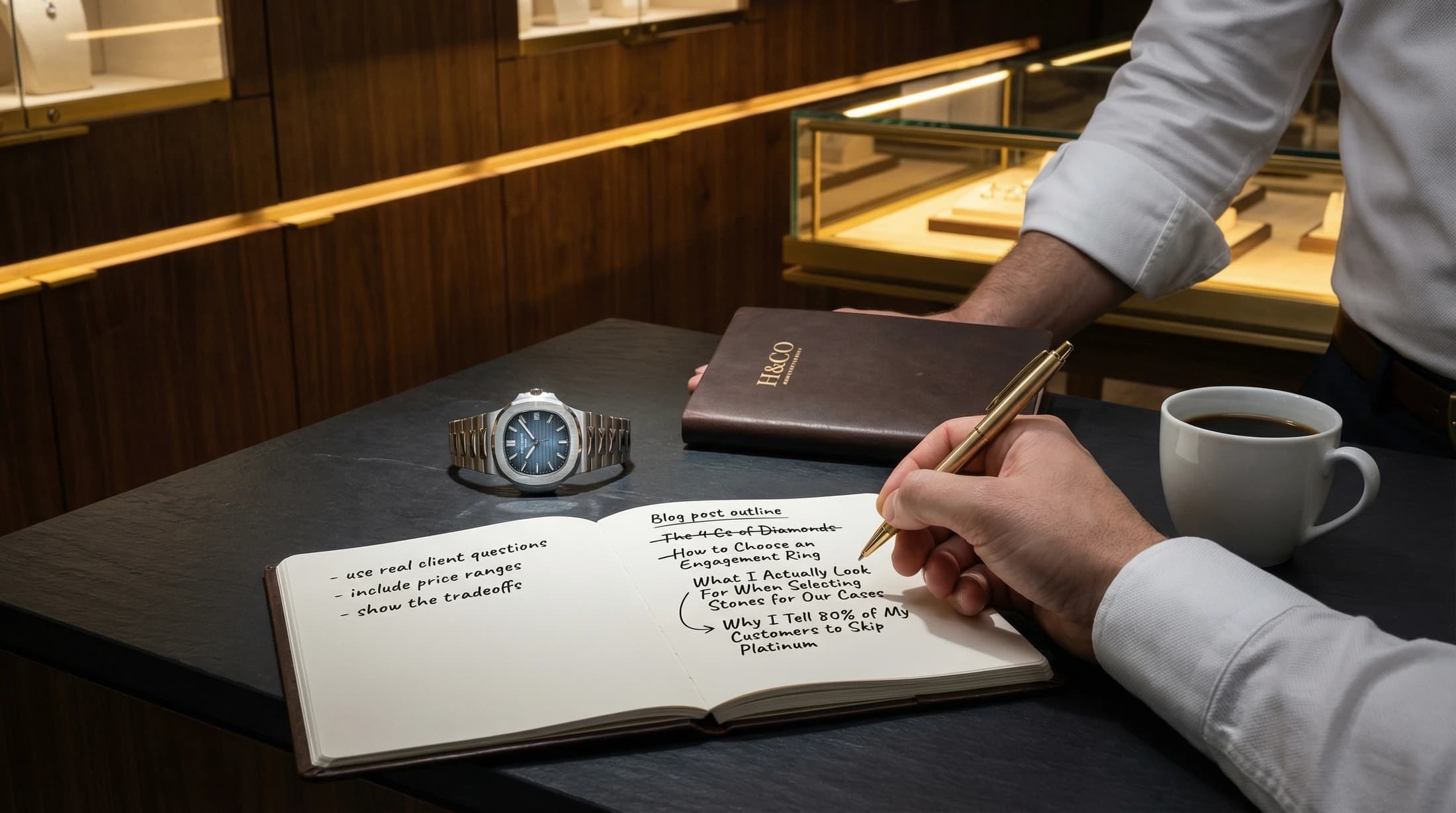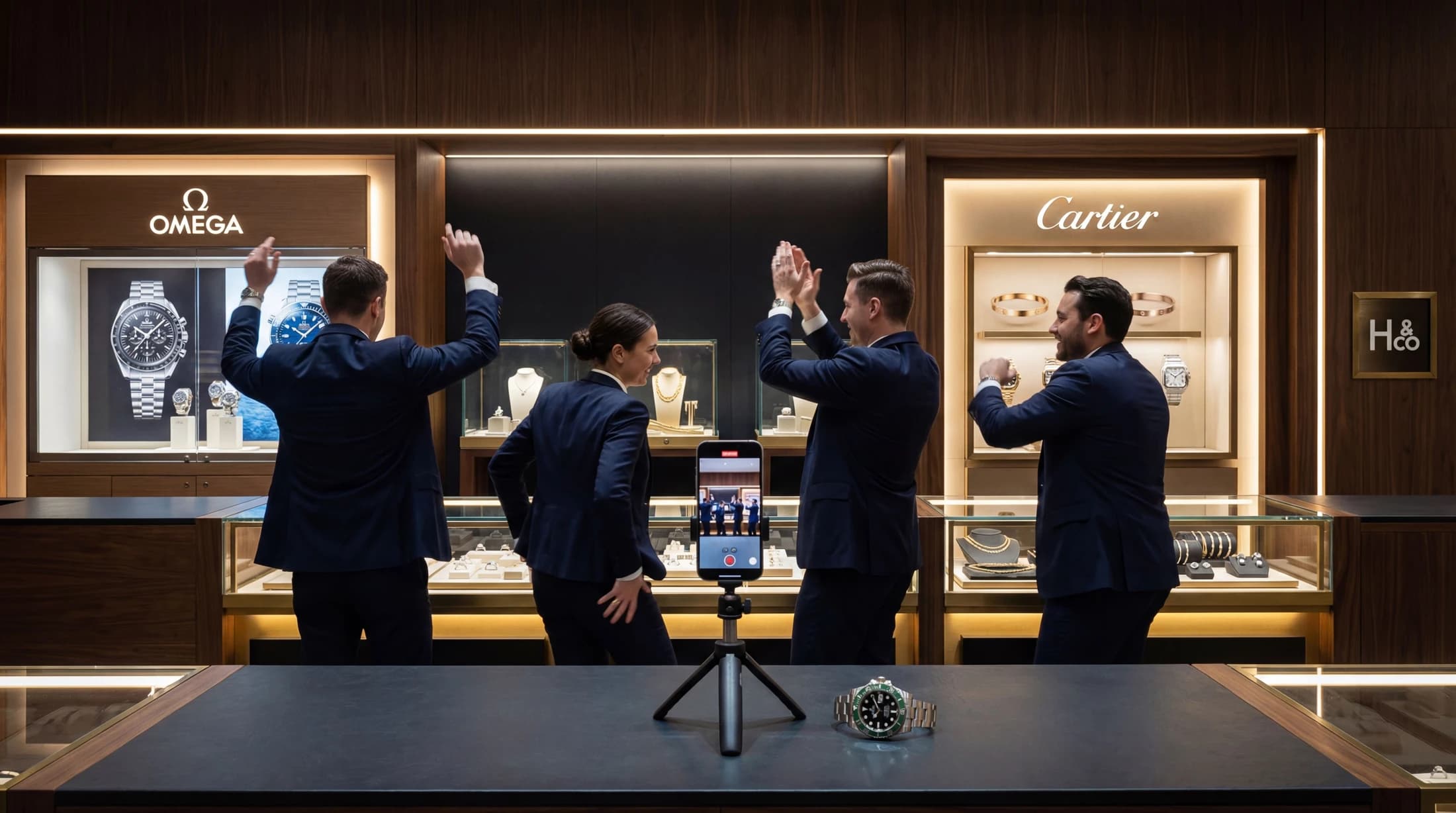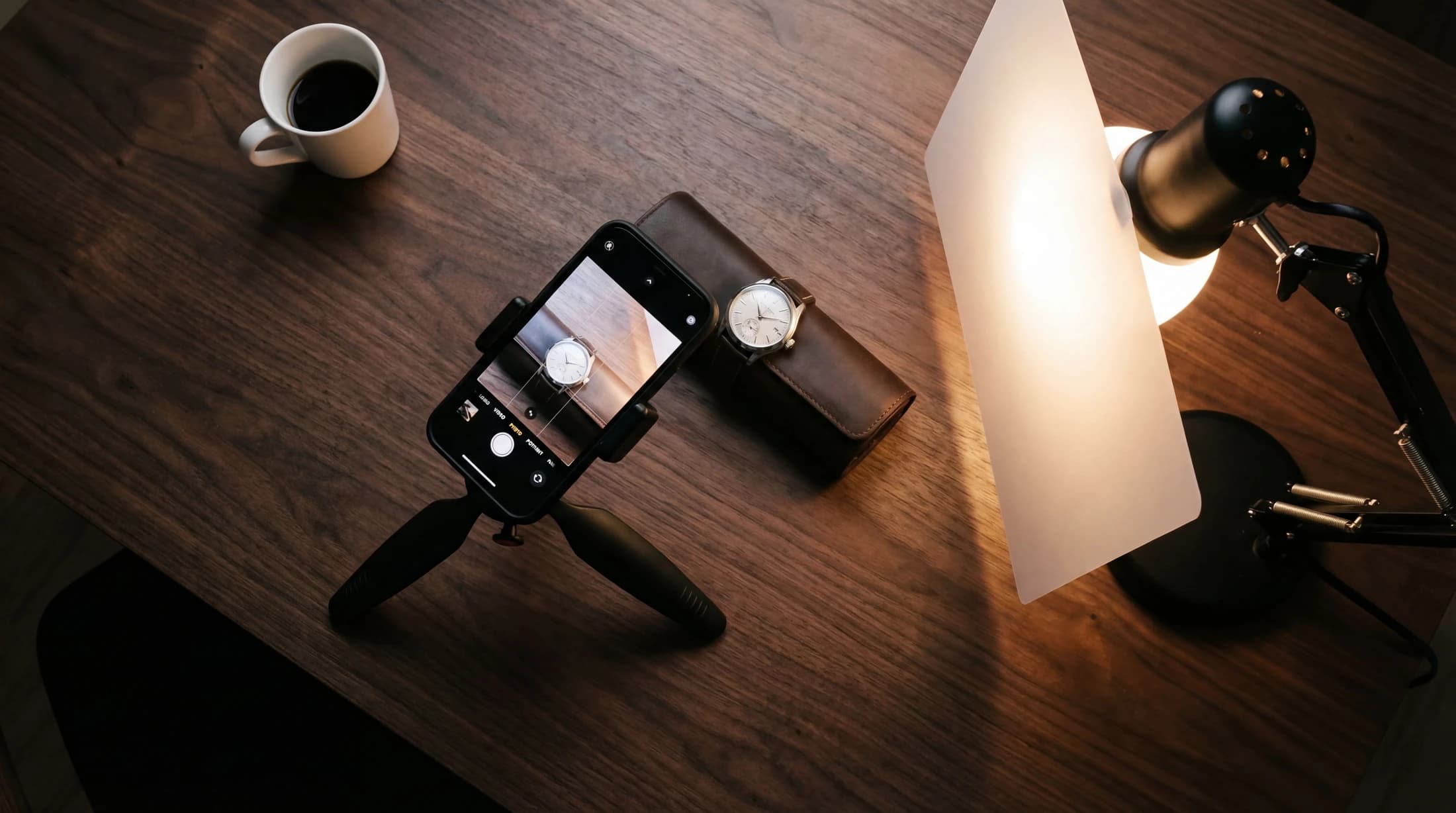

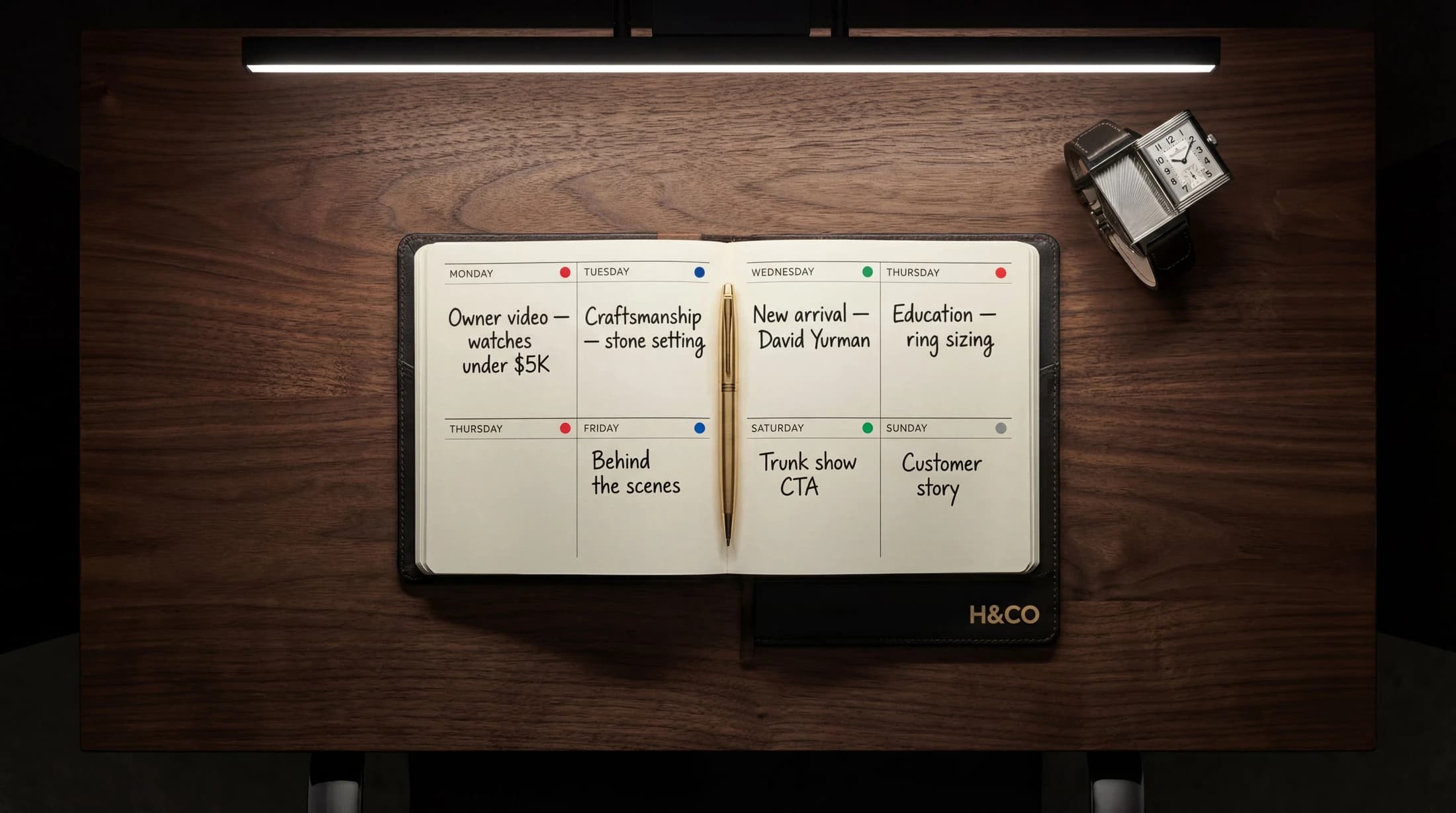
A content calendar for a jewelry store is a weekly publishing framework that mixes content types, brand building, education, product, and events, so every follower sees something relevant regardless of when they started following you. A good content calendar jewelry store owners can maintain is built on variety, not themes. Most content calendar advice gets this wrong.
The typical recommendation is to pick monthly themes. January is "New Year, New You." February is Valentine's Day. March is spring collections. By June you've run out of themes and the calendar falls apart.
This approach fails for luxury retail because it assumes your entire audience is on the same journey at the same time. They're not. Somebody follows you in October because they're researching watches. Somebody follows you in November because they're starting to think about an engagement ring. Somebody follows you in March because they saw a behind-the-scenes video and thought you were interesting.
Your audience is a mix of intents at all times. Your content calendar jewelry store framework needs to reflect that. This is how we build content calendars for our luxury retail clients, and it's the approach that sticks past month two.
*This article is part of our social media series for luxury retailers. For turning organic content into paid ads, see our Meta Ads guide. For blog content strategy, read How to Build Content That Ranks.*
Think of it like a drip marketing campaign. A good email drip doesn't send the same message to every subscriber at the same time. It triggers based on where the person is in their journey: welcome sequence for new subscribers, product education for browsers, purchase prompts for warm leads.
Your social calendar works the same way. It is not campaign-based ("this month we focus on watches"). It's always-on, always varied, because new followers arrive every day at different stages. The person who followed you yesterday needs to see a mix of who you are, what you sell, and why you're worth visiting, not this month's theme.
Free Download: 2026 Content Calendar Template
We built a ready-to-use content calendar spreadsheet for jewelry and watch retailers. It covers every day from January 1 to December 31, with suggested content types pre-filled, 40+ content ideas organized by category, every major industry date (Watches & Wonders, JCK, Couture), and all the retail moments that actually drive purchases (engagement season, Mother's Day, Father's Day, holiday peak).
Make a copy, add your store's events, and start filling it in.
Download the 2026 Content Calendar Template (Google Sheets)
What Should a Content Calendar for a Jewelry Store Include?
Every week should include a mix of content types. Not one type per week. Not one type per month. A mix, because your followers aren't all at the same stage and they didn't all follow you for the same reason.
The five content types
- Product Showcase
- Purpose: drive desire. 2-3x/week. Examples: new arrivals, styled shots, close-ups, try-ons.
- Education / Expertise
- Purpose: build authority. 1-2x/week. Examples: gemstone guides, care tips, how custom works.
- Behind the Scenes
- Purpose: build trust. 1-2x/week. Examples: workshop footage, team moments, store prep.
- Social Proof
- Purpose: reduce risk. 1x/week. Examples: customer stories, reviews, proposal reactions.
- Events / Promotions
- Purpose: drive action. As needed. Examples: trunk shows, seasonal launches, exclusive access.
The weekly minimum
If you're posting daily (which you should aim for, more content means more data and more material to test as ads), a typical week looks like:
- Monday
- Product Showcase — new arrival or featured piece with styled photography.
- Tuesday
- Education — gemstone spotlight, metal comparison, or buying guide clip.
- Wednesday
- Behind the Scenes — workshop process, team culture, or store setup.
- Thursday
- Social Proof — customer story, review highlight, or proposal reaction.
- Friday
- Product Showcase — weekend inspiration, lifestyle imagery, or collection highlight.
- Saturday
- Event / Promotion — trunk show reminder, seasonal launch, or exclusive early access.
- Sunday
- Education or BTS — relaxed, personal content. Planning for the week ahead.
Treat it as a framework. Some weeks you'll have more events. Some weeks a new collection lands and you post product content three days in a row. The framework keeps you from defaulting to product photos every day and ensures the mix stays varied.
If you're posting more than once a day
Post as often as you can. There's no penalty for posting too much. The algorithm rewards frequency and consistency. If you can do two posts a day, the second post might be a Story, a carousel, or a quick talking-head video that took 60 seconds to film. The bar for the second post is lower. It doesn't need to be polished. It needs to exist.
How Should Jewelry Stores Handle Seasonal Content?
Your content calendar runs the same mix year-round. But the weighting shifts based on when purchase intent naturally spikes.
The seasonal demand windows
Engagement season (October through February)
This is when engagement ring research peaks. People start looking 2-4 months before proposing, and proposal season runs November through Valentine's Day.
Starting in October, increase the weight of engagement-related content: custom ring process, diamond education, setting comparisons, proposal stories, "how to choose the right ring" content. Don't make it the only thing you post (watches and other jewelry content continues), but shift from 10-15% engagement content to 30-40%.
Holiday gifting (October through December)
Gift guides, price-point recommendations ("gifts under $1,000," "gifts under $5,000"), in-store events, holiday hours, shipping cutoff dates. Ramp up event and CTA content during this window.
Valentine's Day (late January through February 14)
Short, intense window. Hearts, jewelry gifting, last-minute appointment availability. Two weeks of heavier CTA content.
Mother's Day (mid-April through early May)
Second-biggest gifting occasion after the holidays, and often overlooked by jewelry retailers on social. Gift ideas, bestsellers, "what we'd recommend for your mom."
Wedding season (May through September)
Wedding bands, bridal sets, bridal party gifts. If you serve the bridal market, this is a sustained content window, not a one-week push.
Watch launches and brand events (varies)
When Omega drops a new collection or Rolex announces new models (typically Watches & Wonders in April), create content around it. Your watch audience is paying attention and your competitors probably aren't posting about it.
What doesn't need its own season
"Spring cleaning" content, "back to school" angles, national jewelry day, random awareness months. If the season doesn't match actual purchase behavior in your store, skip it. Your calendar should follow your customers' buying patterns, not a marketing holiday list.
How Do You Batch a Week of Jewelry Content in 2 Hours?
The difference between a content calendar jewelry store owners stick with and one that dies after a month is production workflow. If you're creating content in the moment, staring at your phone at 2pm trying to figure out what to post, you'll burn out by week three.
The batch session
Pick one morning per week (or every two weeks). Block 90 minutes. Film everything in one session.
What to film:
- 4-5 talking-head clips (30-60 seconds each). The owner or a team member holding a product and talking about it, answering a common question, sharing an opinion.
- 3-4 craftsmanship/behind-the-scenes clips (15-30 seconds each). Stone setting, polishing, watch service, any hands-at-work footage.
- 5-10 product photos and videos (quick captures of pieces in good lighting).
What you leave with:
7-9 video clips and 5-10 photos. That's 10+ days of content from a single 90-minute session.
The assembly line
After filming, spend 30 minutes assembling:
- Add captions to every video, because it will be watched without sound
- Write captions for each post (2-3 sentences with a hook, not a paragraph)
- Schedule using Meta Business Suite (free) or a scheduling tool
- Cross-post to TikTok (download the Reel without the Instagram watermark, or reupload the original file)
The repurposing multiplier
One piece of content can become multiple posts:
- A 60-second talking-head video → Instagram Reel + TikTok + YouTube Short + Facebook Reel
- A custom ring process → 5-image carousel on Instagram + individual pins on Pinterest + a blog post recap
- A trunk show event → pre-event announcement + event-day Stories + post-event recap with photos
- A customer's engagement ring reveal → video Reel + still photo post + testimonial quote graphic
One creation session produces content for multiple platforms and multiple days. Think about repurposing before you film, not after.
This system in practice
We set this up for a watch-and-jewelry retailer in the Northeast who had been posting sporadically. Five posts one week, nothing for three weeks. We helped them batch-film eight short videos in one 45-minute session on a Tuesday morning. That gave them two weeks of Reels and TikTok content. They added one product photo per day from existing inventory.
Within two months, they had a consistent 5x/week posting cadence that took about 90 minutes of total weekly effort. Their follower growth tripled. Three of their organic Reels became their highest-performing paid ads when we boosted them through our Meta Ads program. In our experience, the retailers who batch their content post far more consistently than those creating in the moment.
How Does Organic Content Lower Your Paid Ad Costs?
Your organic social content is a free testing ground for paid creative. This is the most practical reason to invest time in social, because it directly reduces your paid advertising costs.
Here's the pipeline:
Step 1: Post content organically across Instagram and TikTok.
Step 2: After 48-72 hours, check performance. Which posts got the most saves? Which got the most shares? Which had the longest watch time? These are your winners.
Step 3: Turn winners into paid ads on Meta. Boost the post or create a new ad using the same content. Because the content is already proven to engage, your CPM (cost per thousand impressions) will be lower than running untested creative as an ad.
Step 4: Use the organic data to inform future creative. If talking-head videos consistently outperform product photos, make more talking-head videos. If "opinion" content gets more saves than "education" content, lean into opinions.
Retailers who skip organic social and go straight to paid ads are paying for creative testing they could have done for free. They're guessing what creative will work, which means higher costs and lower performance.
What Content Calendar Tool Should Jewelers Use?
Don't spend three weeks evaluating content calendar software. The tool is irrelevant. What matters is the habit.
Free options that work:
- A Google Sheet with columns for date, platform, content type, caption, and status
- Meta Business Suite (built-in scheduling for Instagram and Facebook)
- Notes app on your phone with a running list of content ideas
Paid options if you want more features:
- Later, Planoly, or Buffer for visual scheduling and cross-platform posting
- Notion or Airtable for team workflows if multiple people contribute
The best calendar is the one you use. A Google Sheet that gets updated weekly beats a $50/month tool that sits empty.
What Does a Month of Jewelry Store Content Look Like?
Here's a sample month for a luxury watch and jewelry retailer. Not a template to copy exactly, just a reference for the rhythm and variety.
Week 1:
- Mon: Owner video, "Why I carry Grand Seiko alongside Omega"
- Tue: Craftsmanship, close-up of stone setting
- Wed: New arrival, David Yurman collection just landed
- Thu: Education, "What certified pre-owned means for watches"
- Fri: Behind-the-scenes, Friday afternoon at the bench
- Sat: Event CTA, "Come see us this weekend"
- Sun: Customer story, engagement ring reveal (repost with permission)
Week 2:
- Mon: Opinion, "The most underrated engagement ring settings"
- Tue: Product, specific piece spotlight with detail shots
- Wed: Owner video, "What I look for when selecting diamonds"
- Thu: Craftsmanship, watch service in progress
- Fri: Education, "Lab-grown vs natural, here's my take"
- Sat: Product, weekend spotlight, "come see it in person"
- Sun: Behind-the-scenes, organizing the cases
The pattern repeats with variation. Every content type appears each week. Engagement content, watch content, custom work, brand stories, events, and education rotate throughout the month. Nothing gets siloed into themed weeks.
Why Should You Start Before You're Ready?
The biggest obstacle to a content calendar isn't strategy. It's starting.
You don't need professional equipment. You don't need a social media manager. You don't need a content strategy document. You need one person with a phone who posts something from the store today.
The content will get better over time. The first video will feel awkward. The tenth will feel natural. The fiftieth will be something you're proud of. But the fiftieth doesn't happen without the first.
Post today. Post tomorrow. Post as often as you can. Build the muscle. The strategy refines itself as you see what your audience responds to.
*For how to turn organic content into paid advertising, see Facebook and Instagram Ads for Luxury Watch and Jewelry Retailers. For the full social media strategy, read Social Media for Luxury Watch and Jewelry Retailers in 2026. For local search optimization, see our Google Business Profile guide.*
Need help building a content calendar jewelry store owners stick with? Book a call and we'll map out a realistic plan for your store.

About the author
Hagop Imasdounian
Hagop Imasdounian is the founder of H&CO. Raised around his family’s jewelry businesses, he brings more than 15 years of digital marketing experience to helping jewelry and watch brands improve their websites, reach buyers and connect marketing with sales.