
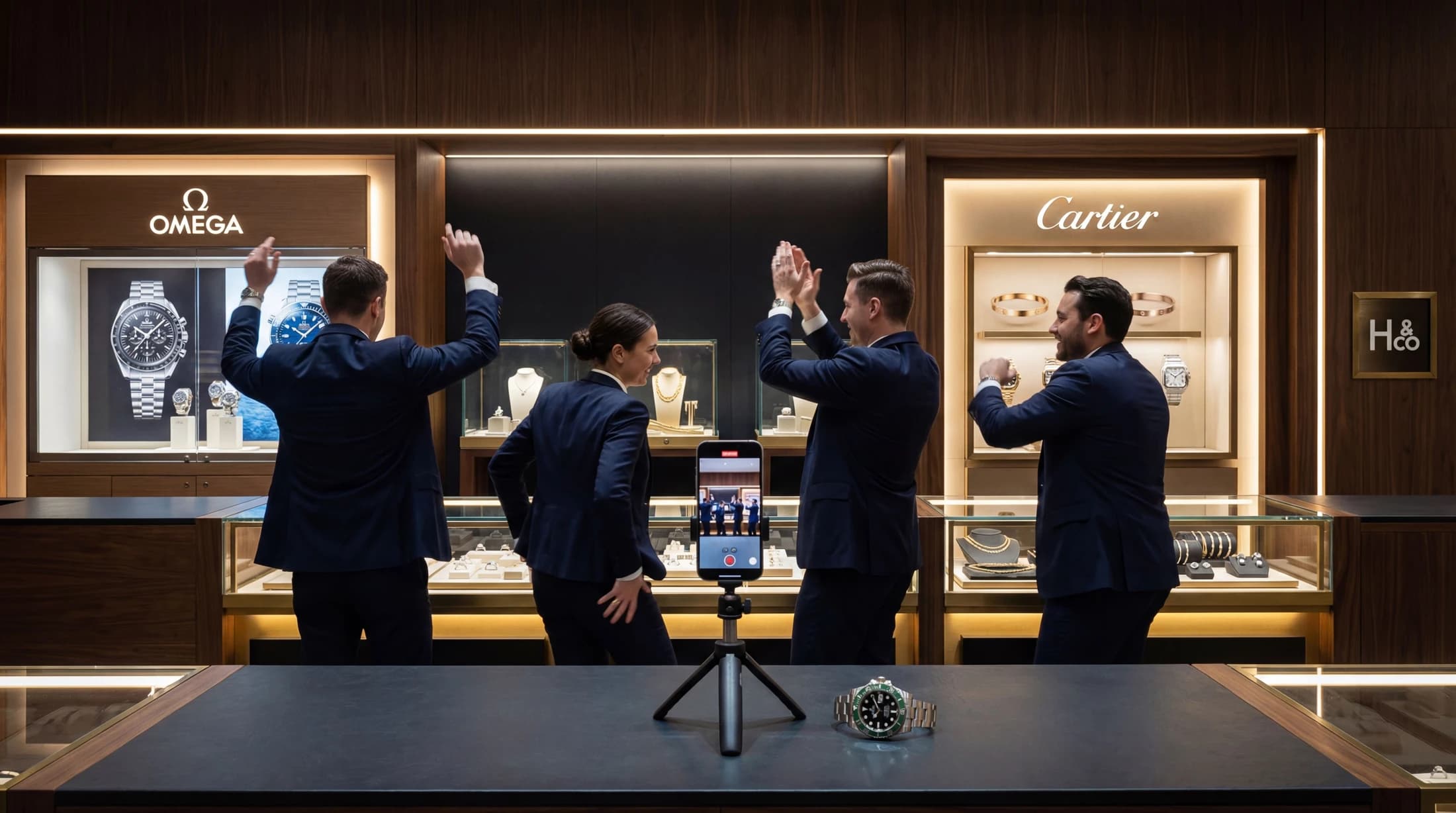
Social media for luxury jewelry retailers is the content engine that feeds every other marketing channel. Paid ads, brand recall, foot traffic. Social is not a direct revenue channel or a lead generation machine. It is still not optional.
The video you learn to make for Instagram Reels becomes the creative that lowers your Meta ad costs. The product post you put on TikTok teaches you what your audience responds to. The behind-the-scenes content that earns saves and shares will drive store visits and make your paid advertising cheaper over time.
We manage social media for luxury jewelry and watch retailers across the US. The patterns in this guide are drawn from that work, not from generic social media advice.
*For how to turn social content into paid ads, read our Meta Ads guide. For content scheduling, see How to Build a Content Calendar. For the full paid advertising strategy, see Paid Advertising for Luxury Retailers.*
Which Platforms Should Luxury Jewelry Retailers Focus On?
If you can only do two platforms well, do Instagram and TikTok. Both run on short-form vertical video, which means one piece of content works on both. You shoot once, post twice, and get data from two different algorithms on the same creative.
The overlap between Instagram and TikTok is significant, but not complete. Instagram skews older and higher-income. TikTok skews younger and drives discovery for people who aren't actively shopping yet. Running both gives you the awareness play on TikTok and the consideration play on Instagram at the same time.
The difference is in how each platform distributes content. Instagram favors consistency and engagement history. TikTok gives every post a shot at the For You page regardless of follower count. For a retailer starting from zero, TikTok has a lower barrier to reach. For a retailer with an existing audience, Instagram compounds faster.
What about Facebook?
Facebook organic reach has collapsed. The average Facebook post reaches roughly 2–5% of your followers. The platform is still valuable for paid advertising on these platforms and for retargeting, but as an organic channel it shouldn't take significant time.
What about Pinterest?
Pinterest makes sense if you have original designs to show. Custom work, estate pieces, house brand collections, unique gemstone cuts. Content that's genuinely yours and can't be found on a brand's own website. If most of your social content is co-op images of Rolex and David Yurman, Pinterest won't move the needle.
What about YouTube?
YouTube is a long-term investment for watch retailers specifically. Watch enthusiasts use YouTube the way jewelry buyers use Instagram. But building a YouTube presence takes 12–18 months of consistent effort before it compounds. Don't start there unless you're already consistent on Instagram and TikTok. See our watch retailer marketing guide for platform-specific guidance on YouTube for watch dealers.
What Content Works for Luxury Jewelry Retailers on Social?
There are five content types that consistently work for luxury jewelry and watch retailers across both Instagram and TikTok.
1. Craftsmanship and process footage
Rings being set. Stones being polished. Watches being serviced. Custom pieces in progress. This content works because it shows something the customer can't see in a retail display case. It creates context and appreciation for the work that justifies the price.
15-second clips shot on a phone work fine here. The content does the work, not the production quality. A video of a gemologist setting a pavé diamond band on a light box, with audio off and a simple text overlay, earns saves and shares. Saves and shares are the algorithm signals that drive reach.
2. Owner or staff on camera
People follow people, not logos. The store owner explaining why they only carry certain brands, how they evaluate a trade-in, what questions to ask before buying a diamond. This content builds trust in a way no product photo can. It positions the store as the expert, not just the retailer.
This is also the content type with the lowest bar to entry. No product. No staging. Just someone in the store, talking directly to camera, sharing something they know. The discomfort of being on camera is temporary. The compounding value of that content is not.
3. Product spotlights
Single pieces with context: what makes this stone unusual, what this watch is known for, why this estate ring was worth buying. Not "shop now" with a product image. Actual information that earns attention.
The context is what separates your content from the brand's own content. Rolex posts Rolex images. You can post the specific Submariner ref. 126610LN you have in your case right now, why the dial on this particular example is exceptional, and how the next buyer can lock it in. That's content Rolex can't produce.
4. Education
"How to tell if a diamond is GIA certified" gets saved. "What's the difference between a movement and a quartz watch" gets shared. "Why Omega Aqua Terra vs. Seamaster" gets commented on by enthusiasts who do your distribution for you.
Educational content builds search authority, drives engagement, and positions the store as the credible source in your market. It's also reusable: a short TikTok about what makes a Colombian emerald different from a Zambian one becomes a blog post, a FAQ page section, and an email campaign.
5. Events and in-store moments
Trunk shows. New arrivals. A custom ring reveal. An anniversary-edition watch that just came in. These are the moments that remind your audience the store is alive and worth visiting. They're also the highest-value content for paid amplification, boosting an event post to a local audience costs a fraction of running a standalone ad campaign.
How Often Should You Post on Social Media?
Post as often as you can sustain without the quality of what you're selling falling apart. For the retailers we work with, that's 4–7 times per week on Instagram and TikTok combined.
Frequency matters for two reasons. First, the algorithm rewards consistency, accounts that post regularly get more distribution than accounts that post sporadically. Second, more content means more data. When you post 20 pieces of content in a month, you learn quickly what your audience responds to. When you post 4, you learn almost nothing.
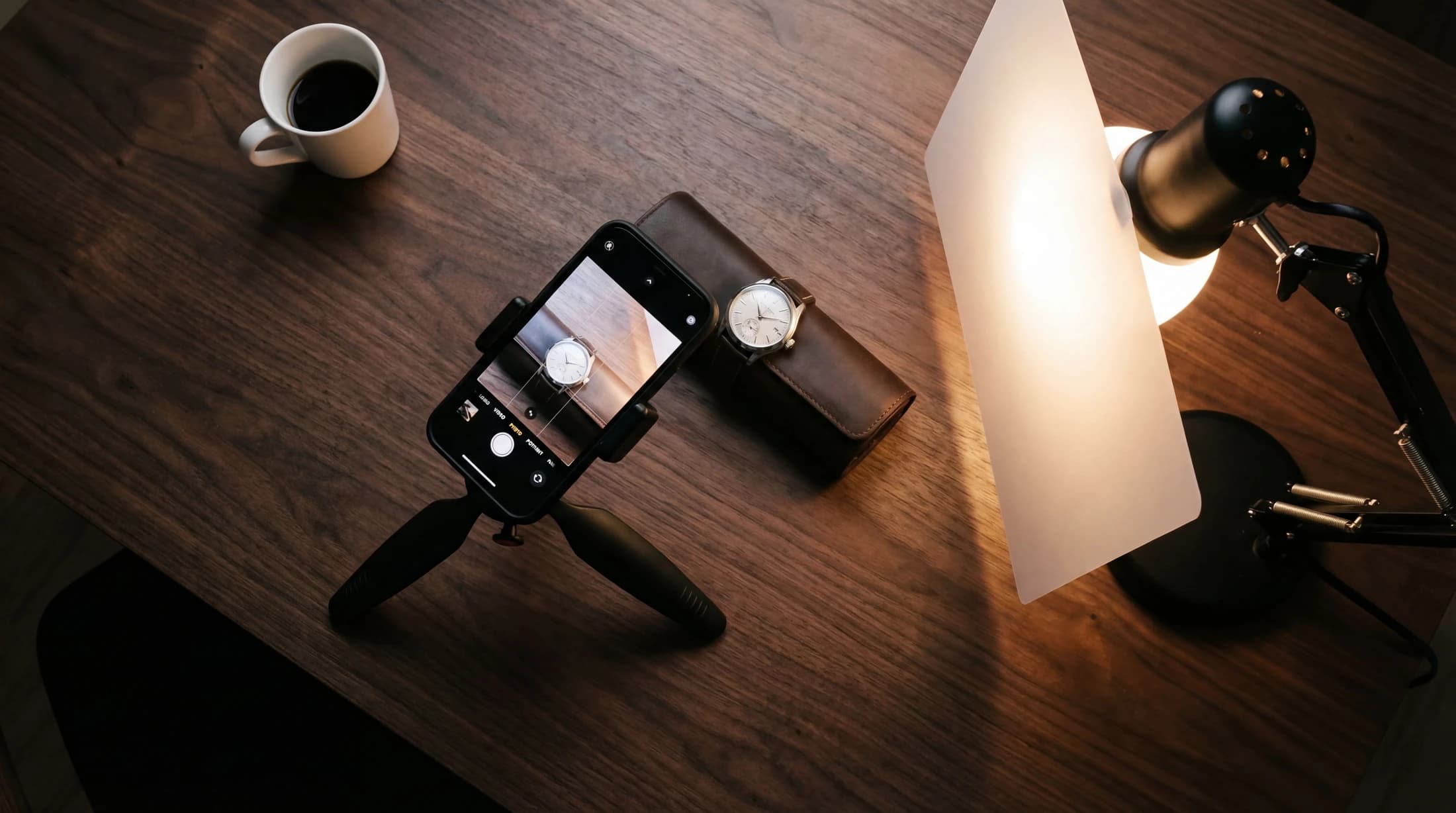
The practical goal: build a system that makes producing content easy enough to be sustainable. A content calendar with designated shoot days, a phone mount in the store, and a consistent format reduces the decision fatigue that kills most social media programs.
How Do You Turn Social Media Content Into Paid Ads?
Organic social is your free creative testing lab. Post content. Wait 48–72 hours. Check which posts earned the most saves, shares, and profile visits. Those are your winners. Turn them into paid ads.
Because the content has already been validated organically, your cost per impression on Meta drops. You're not paying for creative testing. You already did that for free. The algorithm already knows the content earns engagement. Paid distribution amplifies a result that's already proven.
This is the organic-to-paid pipeline that gets skipped. They run standalone ad campaigns using creative that was never tested organically, pay higher CPMs for creative that might not resonate, and conclude that Meta advertising doesn't work. It works. They just skipped the step that validates the creative before spending money on it.
Should You Use Influencers for Jewelry or Watch Marketing?
Micro-influencers with 5,000–50,000 local followers outperform celebrity partnerships for local retail. The logic is simple: a local food blogger with 12,000 followers in your city has a higher percentage of people who could actually walk into your store than a national influencer with 500,000 followers spread across the country.
The partnership model that works for luxury retail: gifting with content requirements. The influencer receives a piece or an experience (styling session, custom consultation, trunk show access). In return, they post 2–3 pieces of content tagged to your store. No cash changes hands for micro-influencers at this scale.
15–20 micro-influencer partnerships running simultaneously creates consistent branded content across your market without requiring a large budget. The aggregate reach of 20 local influencers at 10,000 followers each is 200,000 local impressions, with far higher engagement than a single large account.
The selection criteria: they should be local, their audience should match your customer demographic, and their existing content should feel consistent with the aesthetic of your store. You don't want your $15,000 watch featured on a budget lifestyle account.
What Metrics Actually Matter for Social Media?
Follower count is a vanity metric. An account with 2,000 highly engaged local followers is worth more to a physical jewelry store than 50,000 followers spread nationally.
The metrics that predict performance:
Saves: Someone saving your post means they found it worth returning to. High saves signal high-quality content to both algorithms. For jewelry, saves often mean the customer is bookmarking something they're considering.
Profile visits: Content that drives someone to your profile indicates they want to know more. That's a meaningful signal of purchase intent.
DM volume: Jewelry and watch buyers frequently DM before they visit. Track which content types drive DMs and replicate those.
Website clicks: Not every post needs to drive website traffic, but the posts that do tell you which topics have purchase intent behind them.
Shares: Educational content and process content earns shares. Shares expand your reach beyond your existing audience and signal to algorithms that your content is worth distributing more broadly.
Ignore: Raw likes and follower count as primary KPIs.
How Do You Build a Content System That's Actually Sustainable?
The retailers who fail at social media don't fail because of bad ideas. They fail because they have no system. Every post is a creative decision made under time pressure, and eventually the pressure wins and posting stops.
The system that works:
Designate one staff member as the content lead. They don't have to be a social media expert. They have to be reliable and present in the store. Their job is to capture moments: unboxings, craftsmanship clips, new arrivals, customer reactions (with permission). Even 15 minutes a day of intentional capturing produces enough raw material for a consistent posting schedule.
Set a weekly shoot window. 30 minutes on Tuesday morning, before the store opens. You get 3–4 pieces of content in that window. Those fuel the rest of the week. Without a dedicated window, content gets deprioritized every time something else comes up.
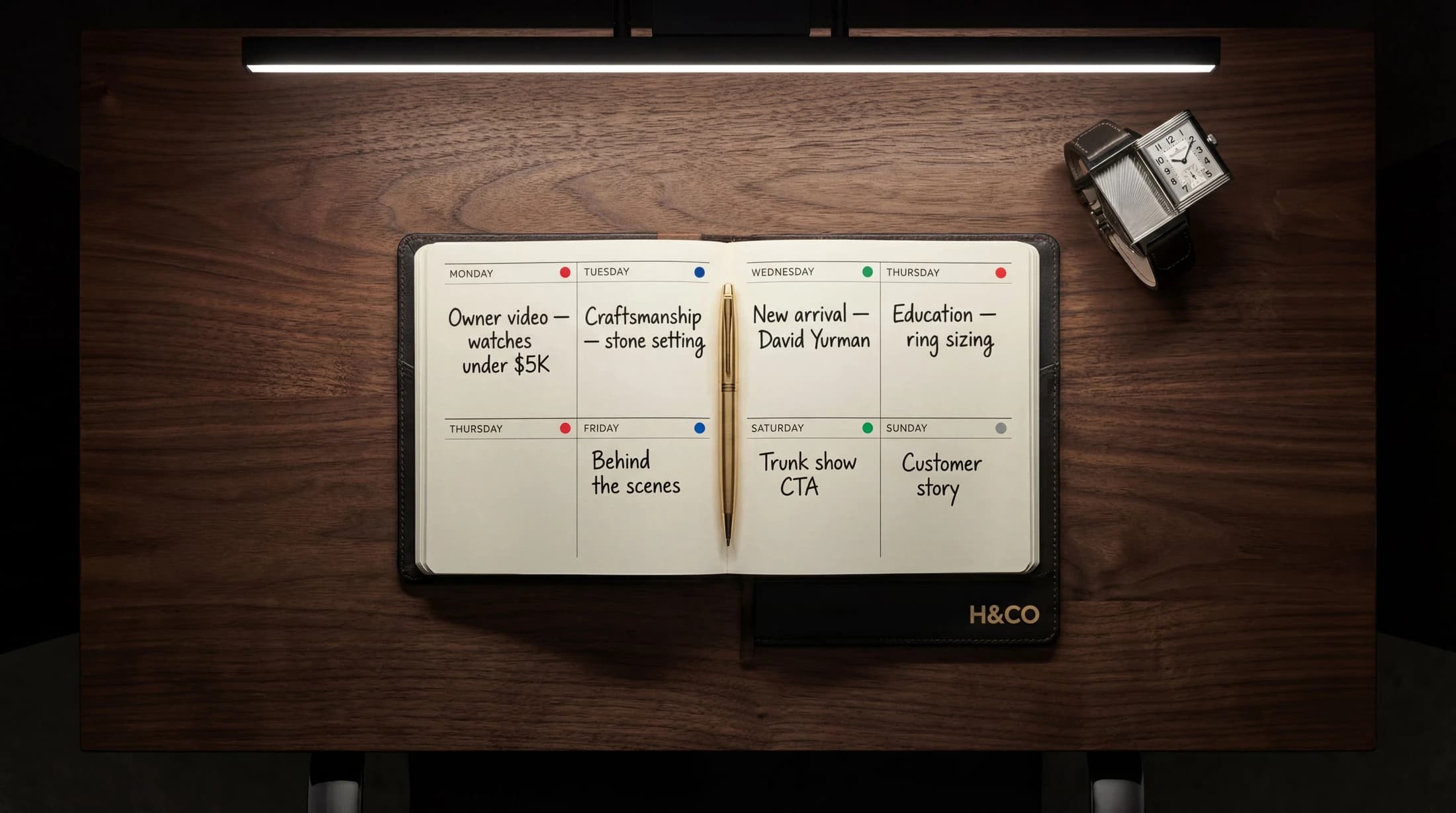
Use a content calendar with categories. Monday: craftsmanship or process. Wednesday: education. Friday: product spotlight. Weekend: event or behind-the-scenes. You are filling a slot, not deciding what to post. That's the difference between a program that runs for two weeks and one that runs for two years.
Repurpose aggressively. One trunk show produces 5–8 posts: a teaser, a preview, a day-of, two or three pieces during the event, and a follow-up. One educational video on TikTok becomes an Instagram Reel, a caption on a product photo, and a section in your next email.
What Are the Common Social Media Mistakes Luxury Retailers Make?
Logo-only content. Brand co-op images with your logo in the corner. Every other dealer who carries that brand is running the same images. You're spending time and money to post content indistinguishable from your competitor's.
Treating social media like a catalog. Product image, price, "DM to inquire." Repeated for every new arrival. This type of content earns almost no reach organically because it gives the audience no reason to engage.
Starting and stopping. A burst of posts in January, nothing in February, sporadic through March. Algorithm platforms penalize inconsistency. Every gap in posting reduces your reach when you return.
Hiring out creative without giving direction. A social media agency or freelancer who has never been in your store produces generic content that sounds nothing like you. The result is polished, generic, and completely interchangeable with any other jewelry retailer. Your brand voice has to come from inside the store.
Chasing trends that don't fit the brand. TikTok audio trends. Meme formats. Dance challenges. For most luxury jewelry and watch retailers, this content feels off-brand and performs accordingly. Trend participation makes sense when the trend aligns naturally with your aesthetic, not as a blanket strategy.
How Does Social Media Feed SEO and Long-Term Brand Equity?
Social media posts aren't indexed by Google in the traditional sense, but social activity contributes to brand search volume and backlink generation indirectly. When your content earns enough reach that local media, bloggers, or trade publications notice and reference you, that generates indexed mentions that improve your authority.
More directly: brand search volume is a measure of how many people search for your store by name. A consistent social presence, one that builds recognition and recall, increases brand search volume over time. And brand searches are the highest-converting search category you have.
Social media content that's posted consistently also builds your own content archive. An educational video you posted two years ago is still discoverable through search. The older your content, the more of it exists, and the broader your reach in search results on social platforms themselves.
*For content scheduling frameworks, see How to Build a Content Calendar. For email marketing strategy, read our Email Marketing for Jewelry Retailers guide. For the full marketing overview, see Watch Retailer Marketing Guide.*
Sprout Social's 2025 Content Benchmarks Report found that Instagram engagement grew 28% year-over-year, but retail brands saw engagement drop despite posting more frequently. The difference was format: Reels outperformed every other post type for retail, while single-image posts declined. Consistency matters, but only if you're creating the right content. For luxury jewelry retailers, that gap is wider because the content itself, craftsmanship footage and on-camera expertise, is harder to replicate than generic retail posts.
Need a social media plan built for luxury jewelry retailers? Book a call and we'll map out a realistic content strategy for your store.

About the author
Hagop Imasdounian
Hagop Imasdounian is the founder of H&CO. Raised around his family’s jewelry businesses, he brings more than 15 years of digital marketing experience to helping jewelry and watch brands improve their websites, reach buyers and connect marketing with sales.