
Custom Is the Revenue Channel That Gets Ignored
Every jeweler offers custom. Almost none market it.
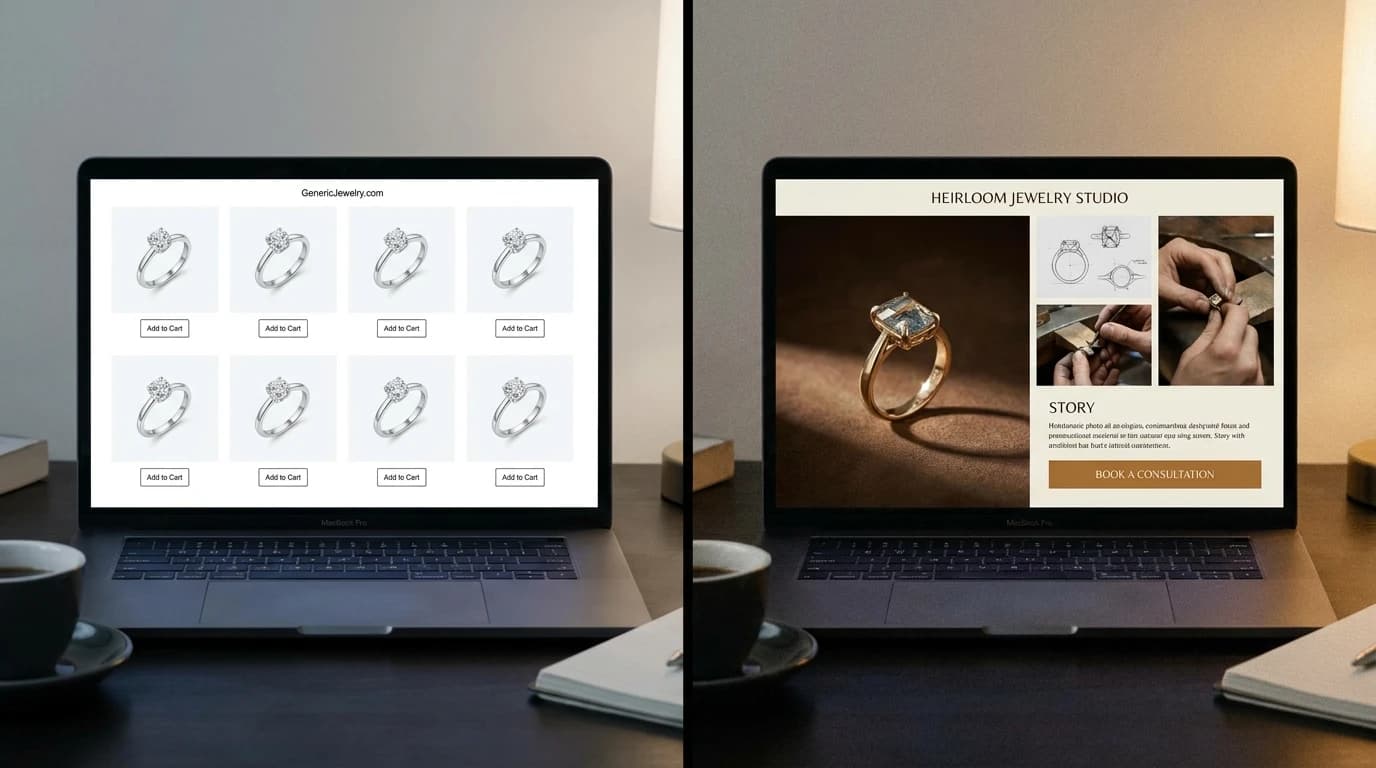
Go look at your own site. Where does custom live? Probably a bullet point on a services page, four clicks deep, with a contact form that says "How can we help?" and nothing else. No portfolio. No process. No price guidance. No reason for someone to fill it out instead of calling the next shop on the list.
The demand is right in front of you. According to The Knot's Real Weddings Study, roughly 50% of engagement rings sold today are custom or semi-custom.
The economics make it even more obvious. Custom work carries 60–70% gross margins compared to 45–50% on keystoned branded inventory. And custom clients don't buy once. They come back for the wedding band, the anniversary piece, the push present, the family heirloom reset (EightX, 2026).
We'll reference two examples throughout this piece. Alex Moss New York runs celebrity-level custom at scale, with $10,000 minimums and a client list that includes A$AP Rocky and Drake. On the other end, shops like A. D'Mae Diamonds in LA, a third-generation, appointment-only operation with 110+ Google reviews, prove the same playbook works with a three-person team. Same principles. Different execution.
Your Website Is Losing Custom Inquiries
Most custom pages fail because they're afterthoughts. No portfolio, no process explanation, no price anchoring, no social proof. Just a form asking for a name and email.
What High-Volume Custom Looks Like
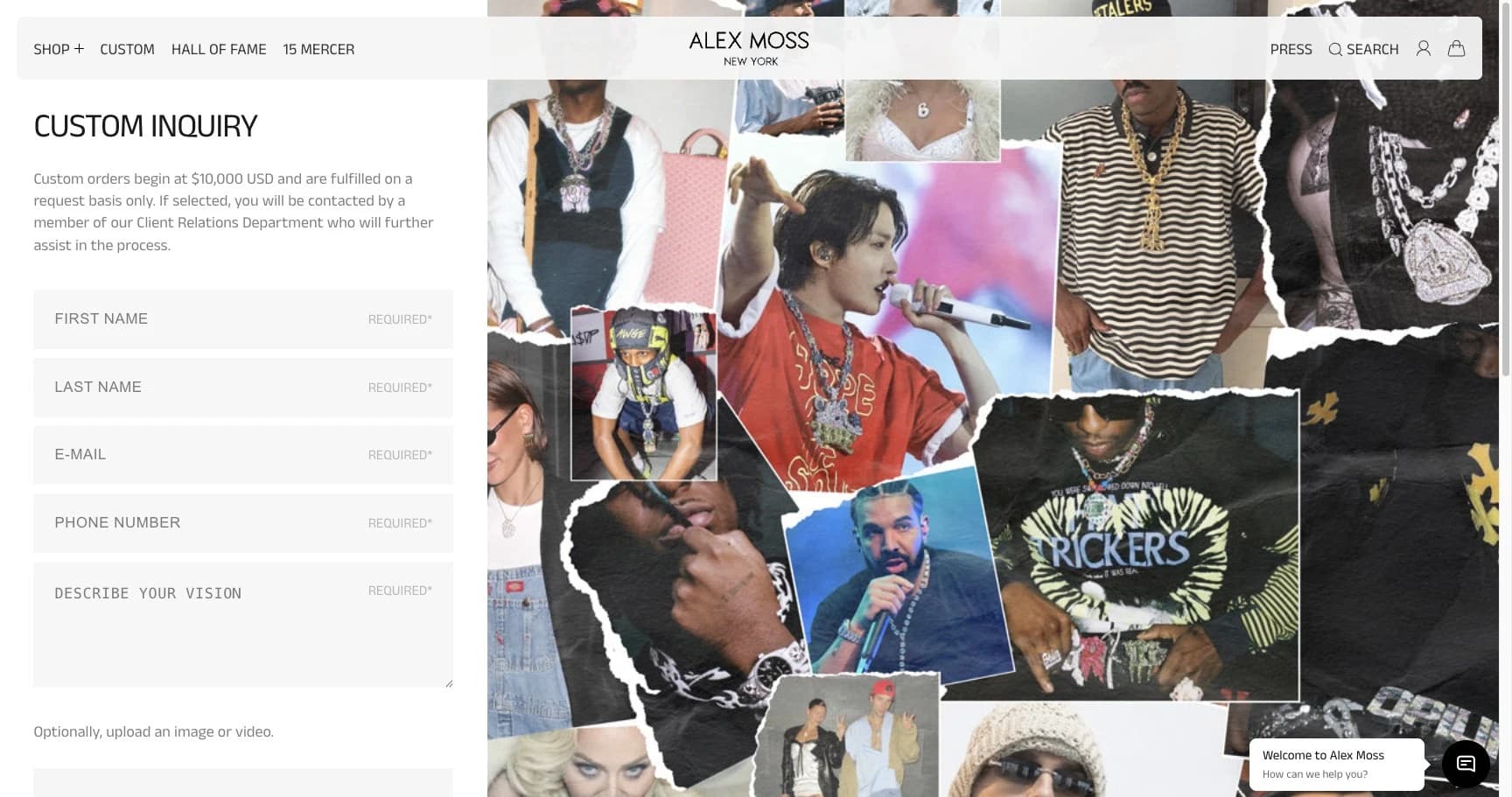
Alex Moss New York does this right. "CUSTOM" sits in the main navigation. The page opens with a celebrity collage that functions as instant social proof. Then, in plain text: "$10,000 minimum." That one line filters dreamers and signals quality in four words.
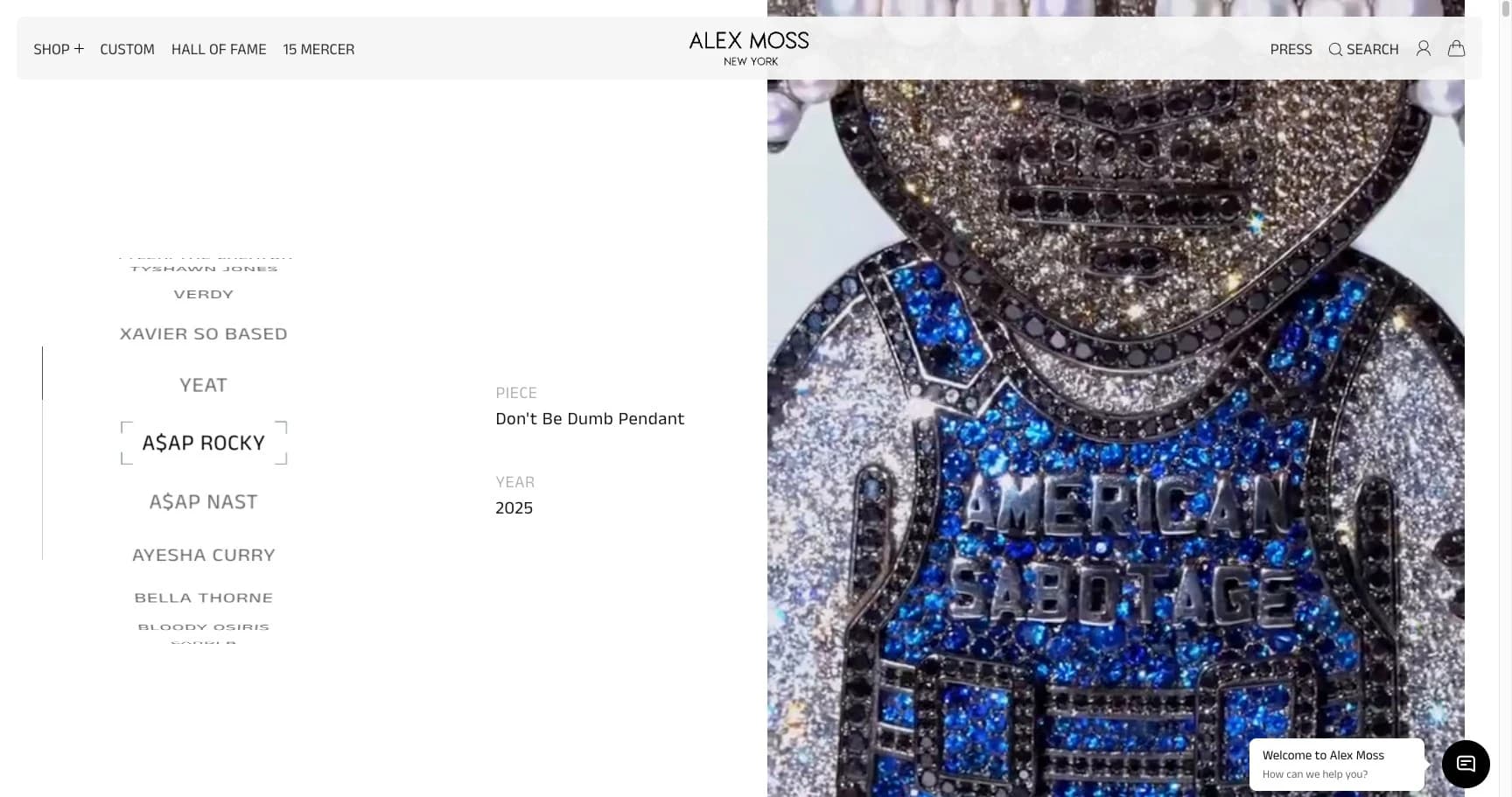
Their Hall of Fame gallery does double duty as both a portfolio and a trust signal. Every piece shown was a real commission for a real person.
What It Looks Like at a Smaller Scale
A. D'Mae Diamonds in Los Angeles runs the same playbook with different assets. "Book Now" lives in the nav. Portfolio and Design Process are separate pages. The homepage leads with "3rd Generation Jeweler" and "110+ Five-Star Google Reviews."
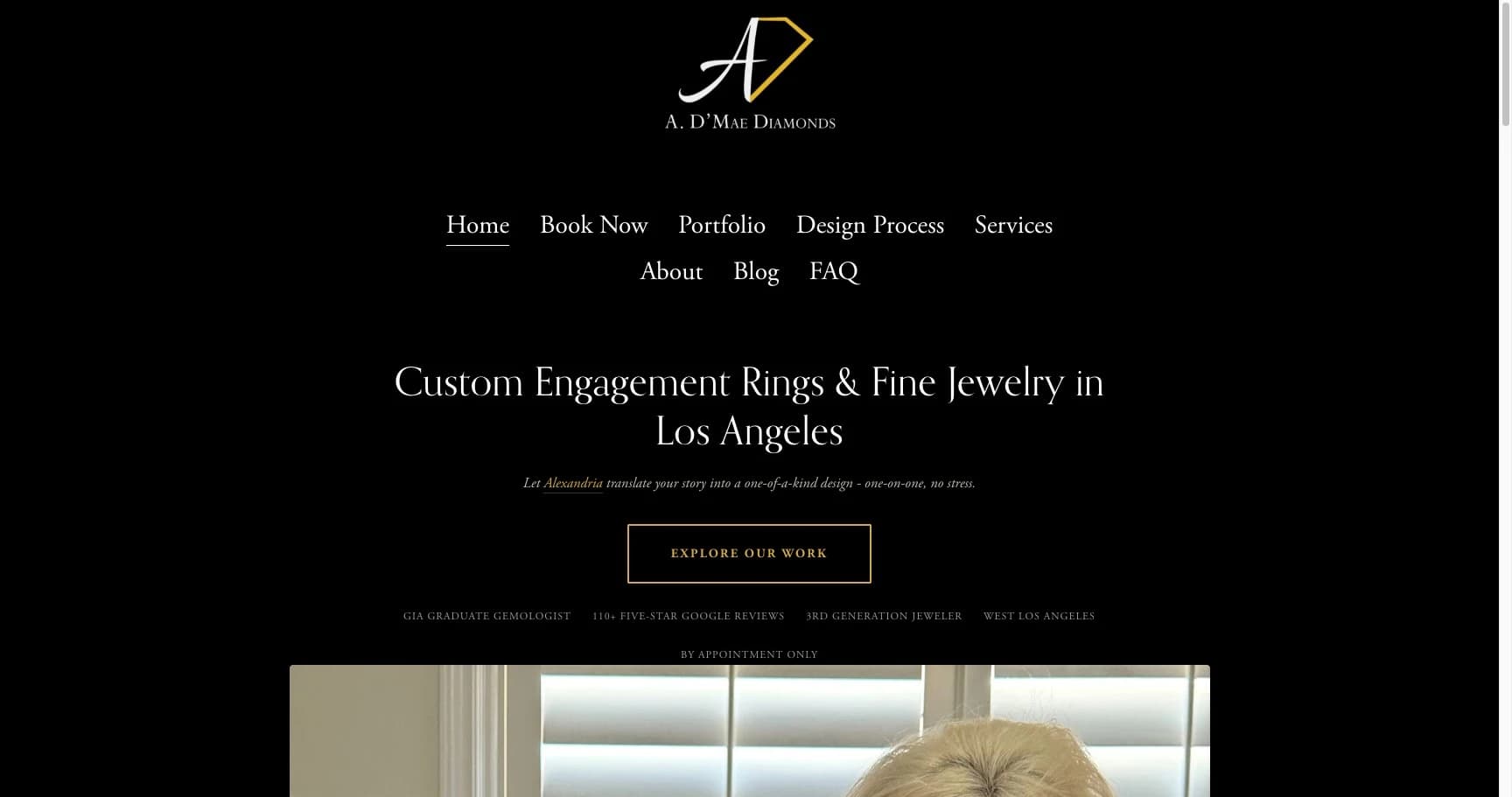
Your consultation booking button is the highest-converting element on your site. Give it a real page to live on.
The Content That Fills Your Bench
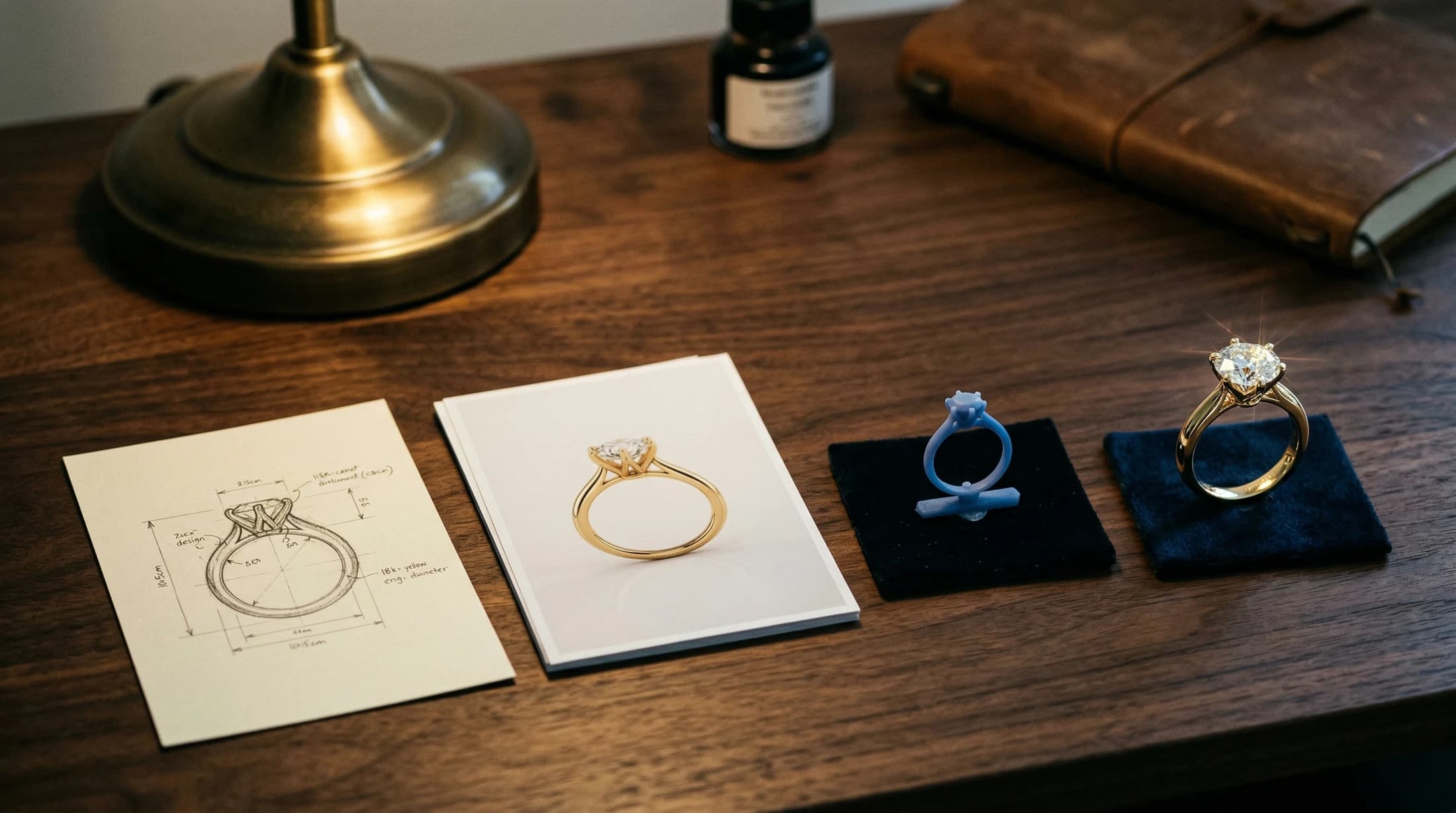
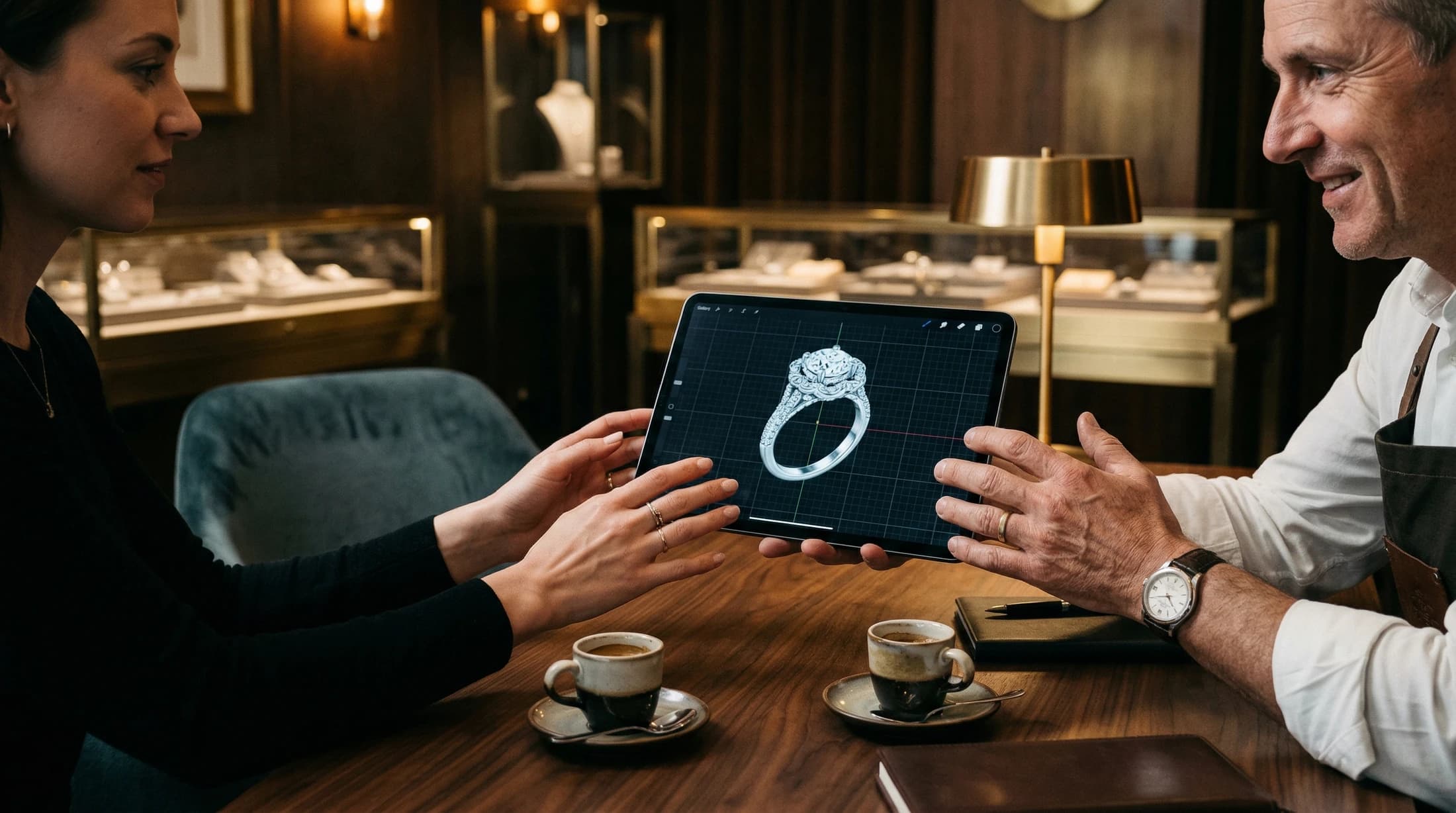
Process content is what moves the needle. CAD walkthroughs, wax carving time-lapses, stone selection sessions, setting close-ups, final polish, finished reveal, client reaction. That content consistently out-engages a static product shot, often by a wide margin.
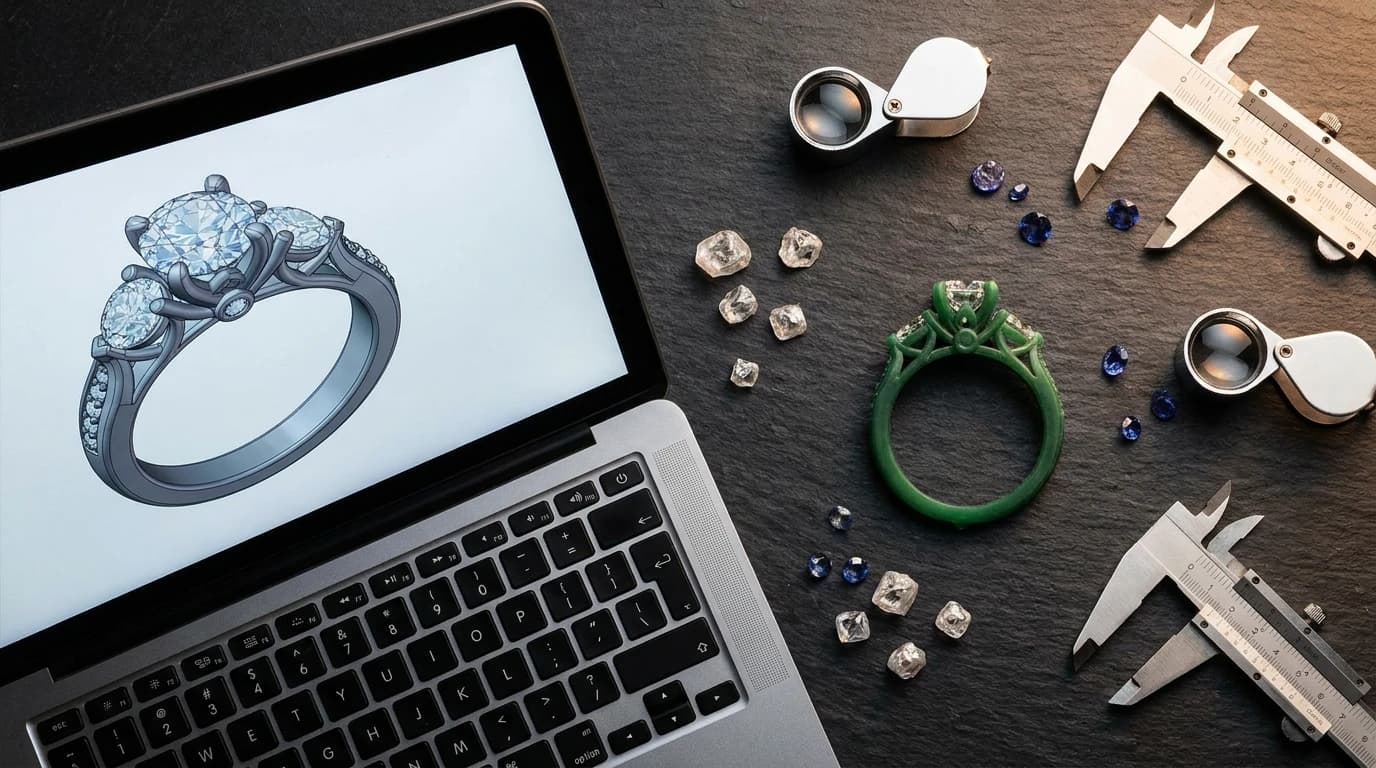
It works for custom specifically because the buyer isn't purchasing a product. They're purchasing a process. They want to see what it looks like to work with you before they commit $5,000 or $15,000.
Alex Moss New York's Instagram feed is roughly 70% process, 30% finished pieces. One commission generates a wax video, a CAD render, stone selection footage, a setting clip, a polish shot, the final reveal, and a client reaction. That's seven posts from one commission.
You don't need celebrity clients to make this work. A $5,000 custom engagement ring filmed on an iPhone during the CAD review is just as compelling. The intimacy is the selling point.
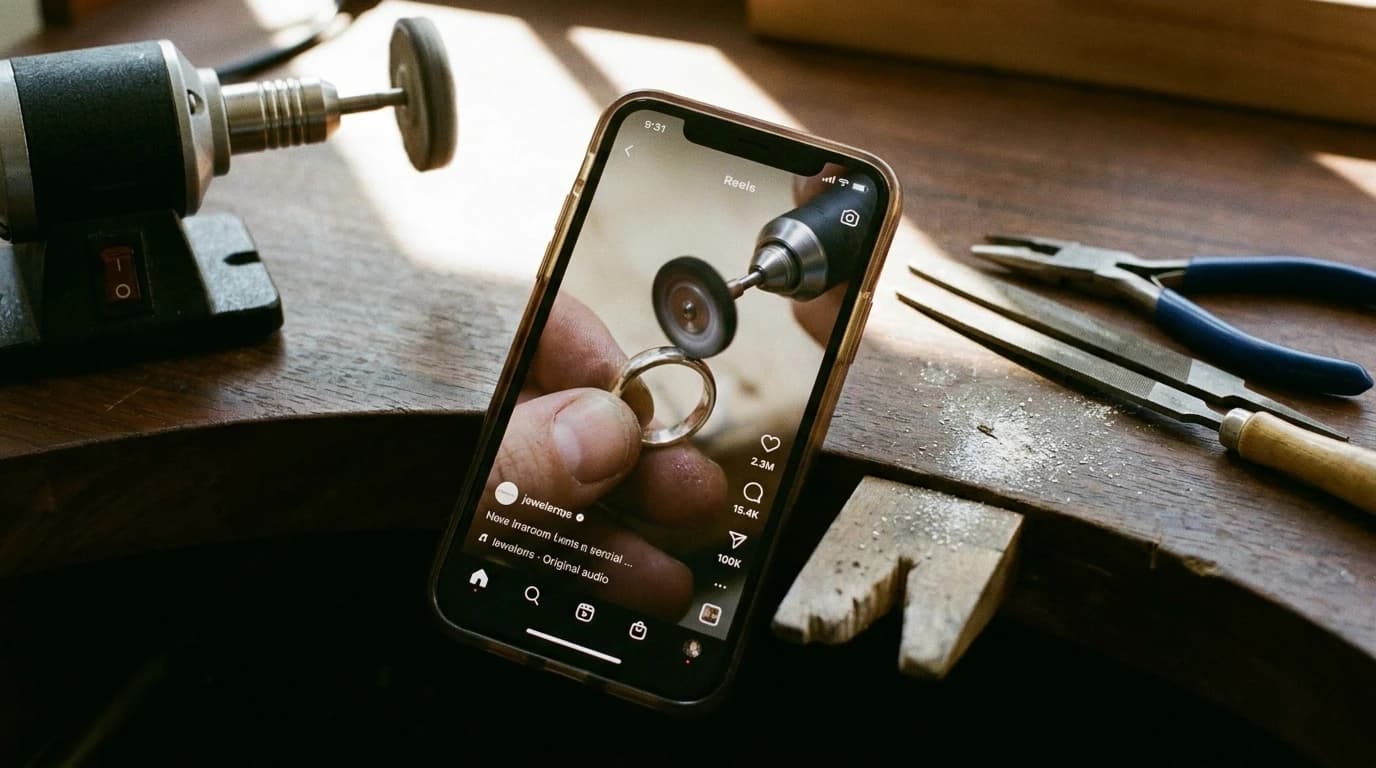
We wrote a full breakdown of turning one custom commission into 30 pieces of content. The Content-First Jeweler covers the system.
Google Ads for Custom (Different Strategy Than Retail)
Custom jewelry ads require a different approach than retail. "Custom engagement ring Dallas" is not the same buyer as "buy diamond ring online." That's a different keyword list, a different landing page, and a different conversion action.
If someone clicks an ad for "custom engagement ring" and lands on a page full of pre-made inventory, you've lost them.
Custom keywords often carry lower CPCs because fewer jewelers bid on them. $2–4 CPC for "custom jewelry" versus $5–8 for branded product terms. At a 1.5–2.5% conversion rate, a $1,500/month budget could generate 15–30 custom inquiries.
Track form fills and consultation bookings as your primary conversions. Not add-to-cart. Custom doesn't have a cart. For a deeper look, read our Google Ads guide for jewelry and watch retailers.
Local SEO: Own "Custom Jeweler in [Your City]"
This is the most underpriced real estate in custom jewelry marketing. The national chains don't have custom pages. The local competition probably doesn't either. It's wide open.
Alex Moss New York ranks #1 for their branded terms. Their GBP shows 4.8 stars, and "Custom Commissions" appears as a sitelink in search results.
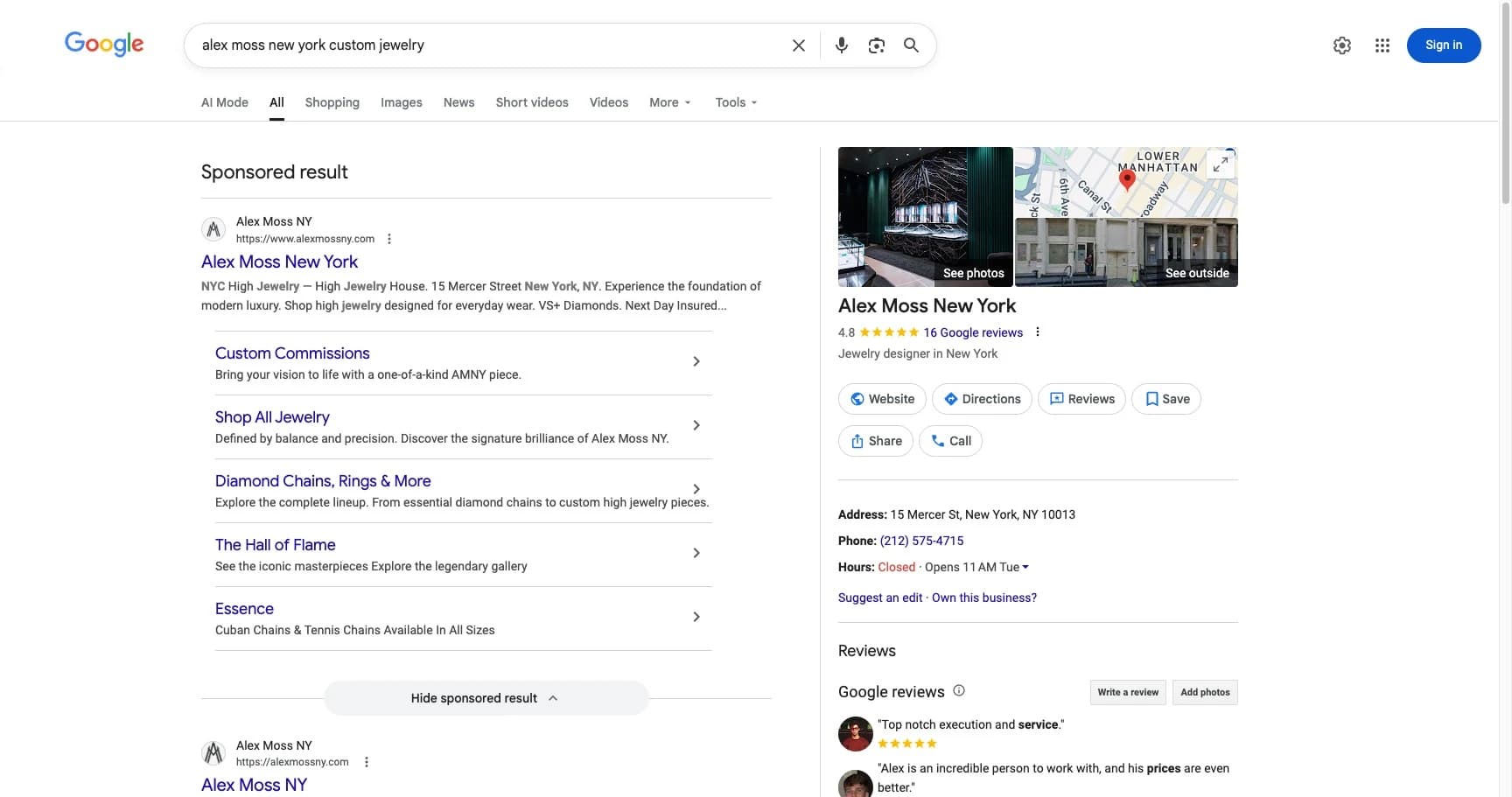
For the full local SEO playbook, read our local SEO guide for jewelry and watch retailers.
The Intake Form That Pre-Qualifies Buyers
The intake form is not an afterthought. It's a filter. Alex Moss puts "$10,000 minimum" in plain text. That one line saves dozens of hours per month.
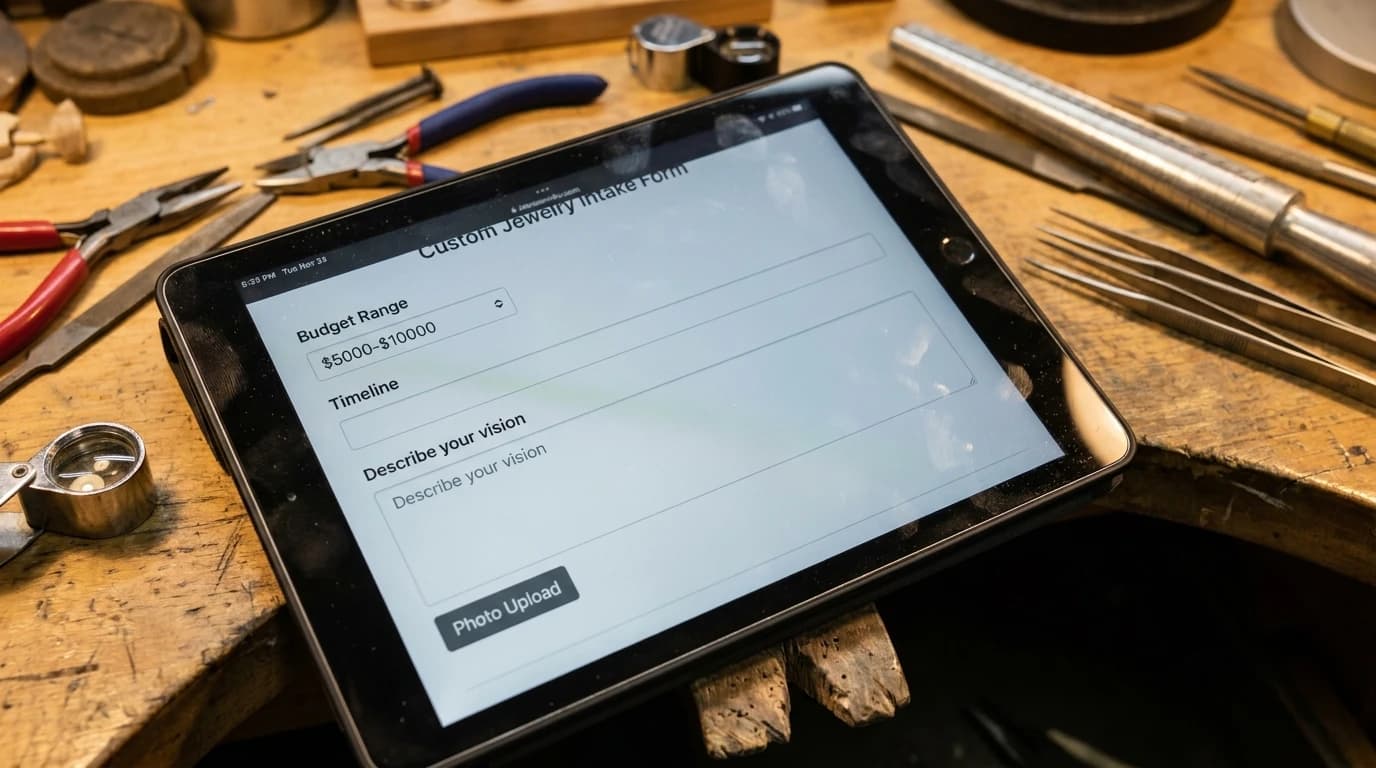
Custom inquiries are high-intent, high-value. First response within two hours during business hours. These buyers are contacting two or three jewelers at once. The first one to respond wins.
For more on filtering serious buyers, read our guide on smart forms that help you spend time with $50K buyers.
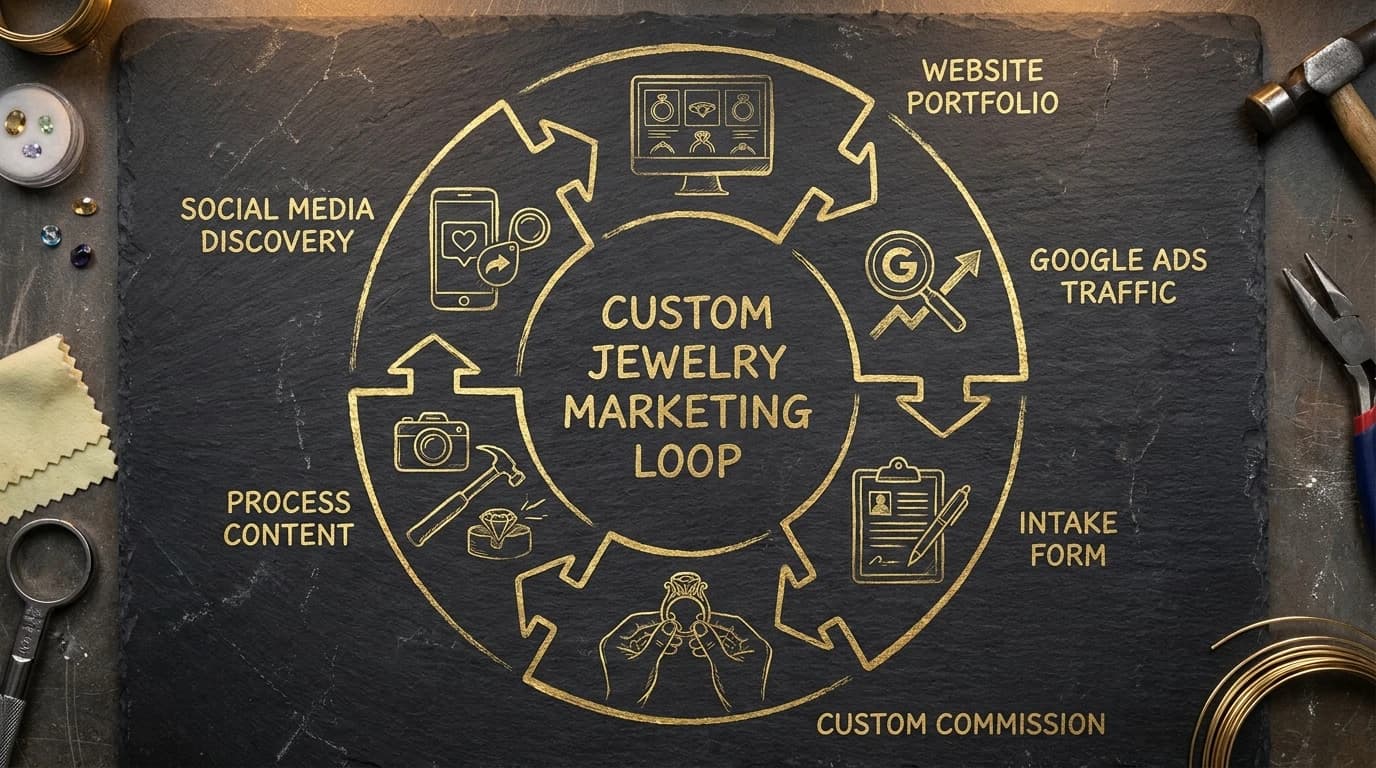
Build the Loop
- Your portfolio lives on a dedicated custom page. Google Ads and local SEO drive qualified traffic.
- Traffic fills out your intake form. Qualified leads go to your bench.
- Every commission becomes process content. Seven posts from one piece.
- Content drives new audiences to your site.
- Happy clients leave Google reviews mentioning "custom." Reviews boost local SEO.
- Repeat.
Whether you're running a celebrity-level operation like Alex Moss New York or a three-person shop like A. D'Mae Diamonds, the system is the same. The scale changes. The structure doesn't.
H&CO builds digital marketing systems for jewelers who take custom seriously. If your custom page is an afterthought and your bench has open weeks, we should talk. Book a strategy call.
About the author
Hagop Imasdounian
Hagop Imasdounian is the founder of H&CO. Raised around his family’s jewelry businesses, he brings more than 15 years of digital marketing experience to helping jewelry and watch brands improve their websites, reach buyers and connect marketing with sales.