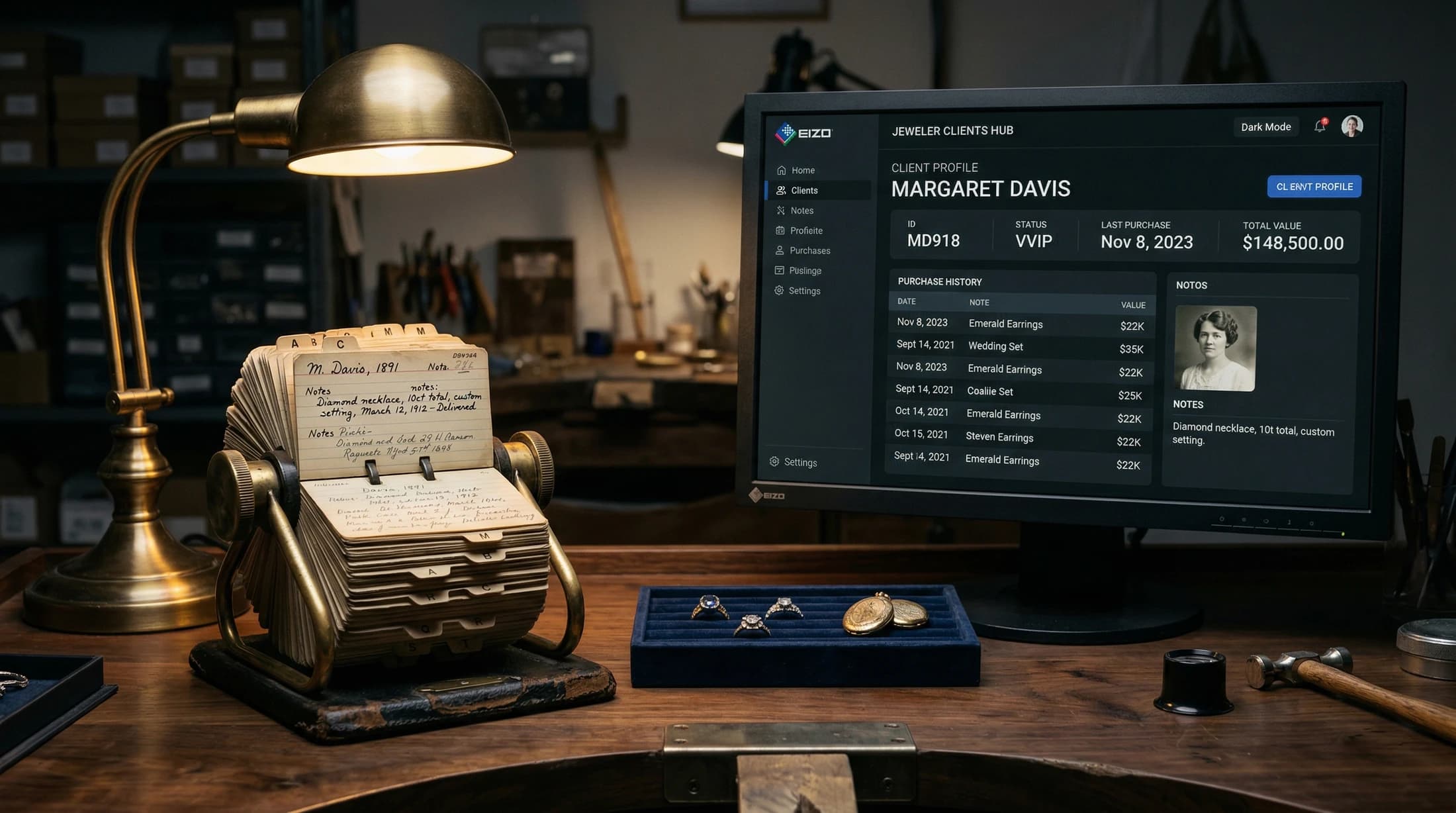

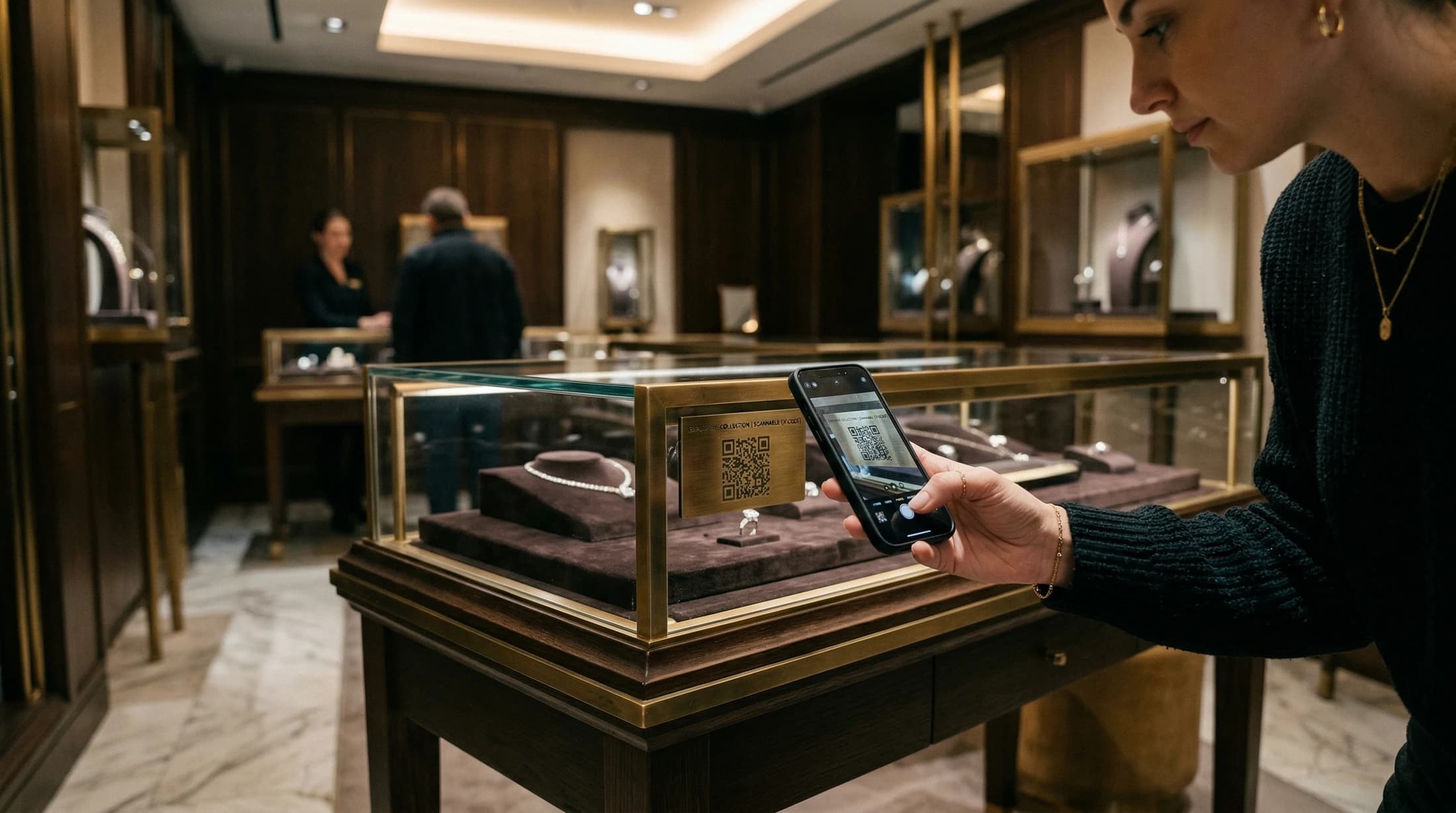
The most dangerous moment in your showroom isn't when a customer complains about a price; it's when a customer walks out the door without your team capturing their contact information.
In luxury retail, 81% of sales still happen in physical stores, but the modern buyer is a hybrid creature. They walk into your store to feel the weight of a platinum band or see the fire in a diamond, but they are often still in the "research phase." Expect weeks of research for a high-end watch or a custom piece. If they leave your showroom without a way for you to follow up, you are essentially handing that research window to your competitors (Euromonitor International, 2025).
At H&CO, we believe the physical showroom should be a data-capture engine. The tool for that job? The QR code. But not a generic QR code. A luxury-grade, high-intent digital bridge.
The Silent Salesperson: Why QR Codes Matter in 2026
QR codes get written off as "too techy" or "not luxury." They are wrong. A QR code is a silent salesperson. It caters to the high-net-worth individual who wants to browse in peace without a sales associate hovering over their shoulder. It's for the "just looking" customer who is actually a "pre-buying" customer.
Without a QR code, that customer leaves, goes home, and searches for the piece on Google. At that point, they might find it on a gray-market site or a competitor's page. With a QR code, you own the journey from the moment they scan.
Retail POS scanners are still being upgraded to read them, with GS1's Sunrise 2027 target set for the end of 2027.
Strategic Placements: Where and What to Link
Do not link your QR code to your homepage. That is a waste of a scan. Every QR code should have a specific, high-value purpose linked to the specific display case it sits in.
1. "Save This Piece for Later"
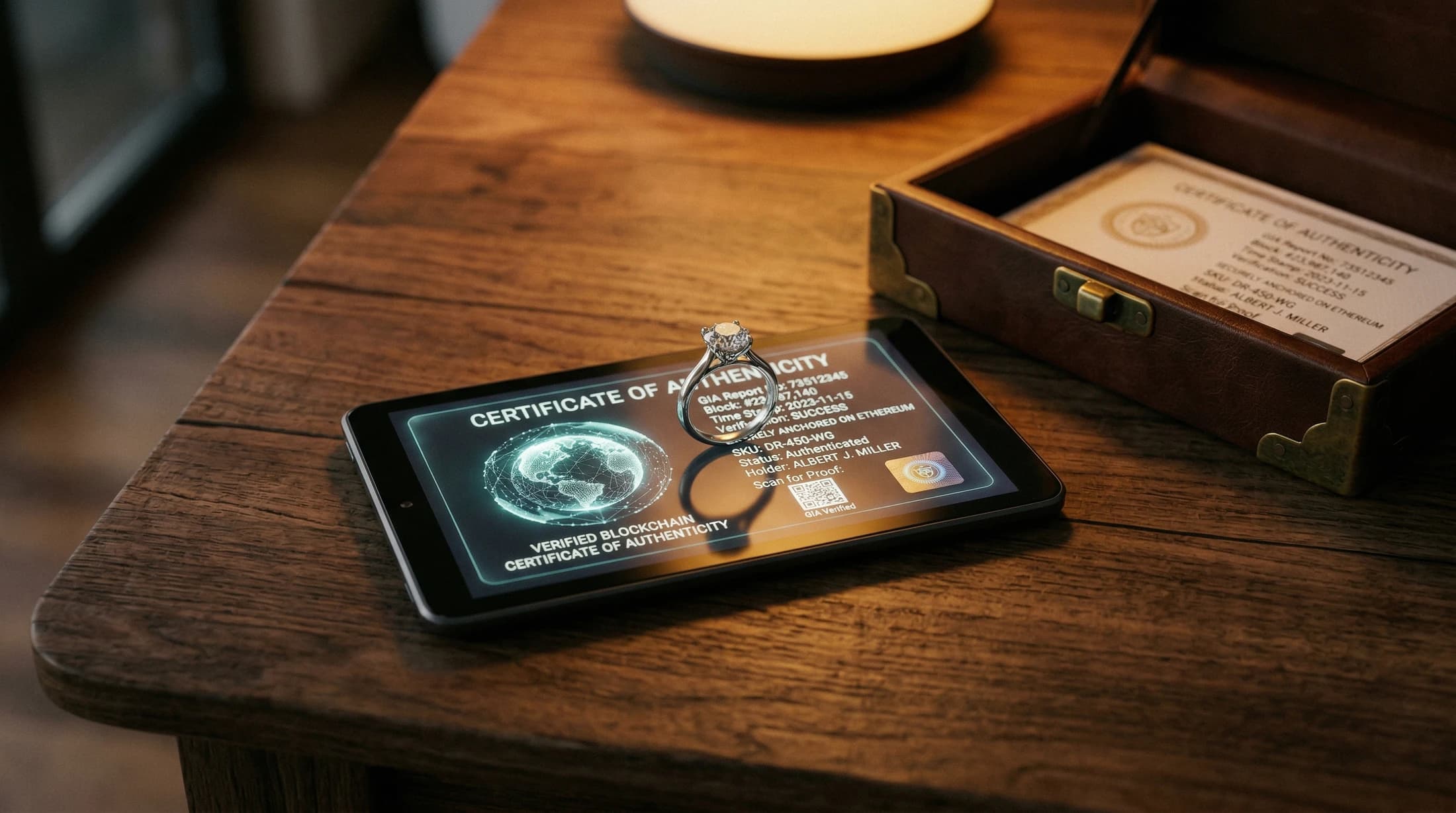
Place a small, branded card next to a specific high-value item, perhaps a $15,000 tennis bracelet. The CTA: "Scan to receive high-res photos and the GIA report to your inbox." When they scan and enter their email, they aren't just getting a link; they are entering your CRM. You now have weeks to nurture that lead. Once they're in the system, the Anniversary Alarm and other CRM lifecycle sequences take over, turning that single scan into years of repeat purchases.
2. "See the Macro-Video"
Jewelry is about the details. Use a QR code to link to a 4K macro-video of the piece under a loupe. Showing the craftsmanship in a way the naked eye can't see in the showroom is a powerful "wow" moment that reinforces your authority.
3. "Check In-Store Availability"
For authorized dealers, this matters more than almost anything else. If you have a popular model that is currently out of stock, use a QR code on the display model: "Scan to be notified the moment this model arrives." This is a high-intent lead that you can hand directly to your sales team.
Closing the Revenue Gap
Revenue gets lost when retailers fail to connect the dots between in-store browsing and online purchase intent. Digital marketing revenue attribution is how you measure which steps actually drive the sale, and QR scans give you a clean data point that ties a physical showroom visit to a digital conversion.
When a customer scans a QR code in your showroom, they are providing you with first-party data. You can now see:
- Which display cases generate the most interest.
- Which time of day your "browsers" are most active.
- The exact path from "scanned in-store" to "purchased online 14 days later."
By closing this loop, you aren't just guessing what works; you are measuring it. This is the difference between a "mom and pop" shop and a data-driven luxury authority.
The Luxury QR Code Design Rules
To maintain a luxury aesthetic, your QR codes shouldn't look like an afterthought.
- Branding: Use "Designer QR Codes" that incorporate your brand colors and logo.
- Materials: Print them on high-quality, heavy-weight cardstock or etched acrylic. They should feel as premium as the jewelry they represent.
- The CTA: Always include a clear, one-line benefit. "Scan for GIA Details" is better than a lonely QR code.
- UTM Tracking: This is non-negotiable. Every QR code must have unique UTM parameters so your analytics can tell you exactly which case the lead came from. This feeds directly into your SEO strategy by telling you which products are trending in real-time.
The Nurture Sequence: What Happens After the Scan?
A scan is just the beginning. Once they are in your system, your 2026 Luxury Retail Marketing Playbook should kick in.
- Immediate: An automated, personalized email with the details of the piece they scanned.
- Day 3: A follow-up from a sales associate: "I saw you were interested in the [Piece Name] the other day. Would you like to schedule a private viewing to see it in natural light?"
- Day 14: A subtle reminder as they approach the end of that research window.
Your showroom floor is full of invisible data. Every person who walks in and out without buying is a lost opportunity, unless you give them a digital bridge. QR codes are the most cost-effective way to capture high-intent leads and ensure that when the end of the research window arrives, the buyer is coming back to you.
Your display cases are generating interest you can't measure. We'll build the QR-to-CRM system that captures it. Let's talk.
Research & Sources
- GS1 US: Sunrise 2027 Report. Data on the 85%+ adoption rate of 2D barcodes (QR codes) by retail POS systems.
- Threekit/AR retail surveys: Data on 40% of consumers willing to pay more for products they can experience through augmented reality (Threekit, 2024).
- European Commission: ESPR Regulation 2024/1781, Digital Product Passport framework. QR and NFC as primary access points for mandatory digital provenance.
- Euromonitor International: World Market for Luxury Goods 2025. Data on the 81% in-store sales baseline for personal luxury goods.
- Bain & Company: Luxury Goods Worldwide Market Study 2024. Trends on experience-led retail and the physical-digital bridge.
Hagop's Notes
I've seen jewelers spend $10k a month on Facebook ads to get strangers to their site, while ignoring the 50 people a day who walk into their store and leave anonymously. Capture the people who are already in the building first. It's the lowest-hanging fruit in luxury retail.

About the author
Hagop Imasdounian
Hagop Imasdounian is the founder of H&CO. Raised around his family’s jewelry businesses, he brings more than 15 years of digital marketing experience to helping jewelry and watch brands improve their websites, reach buyers and connect marketing with sales.