
The Display Case vs. The Database: Which One is the Asset?
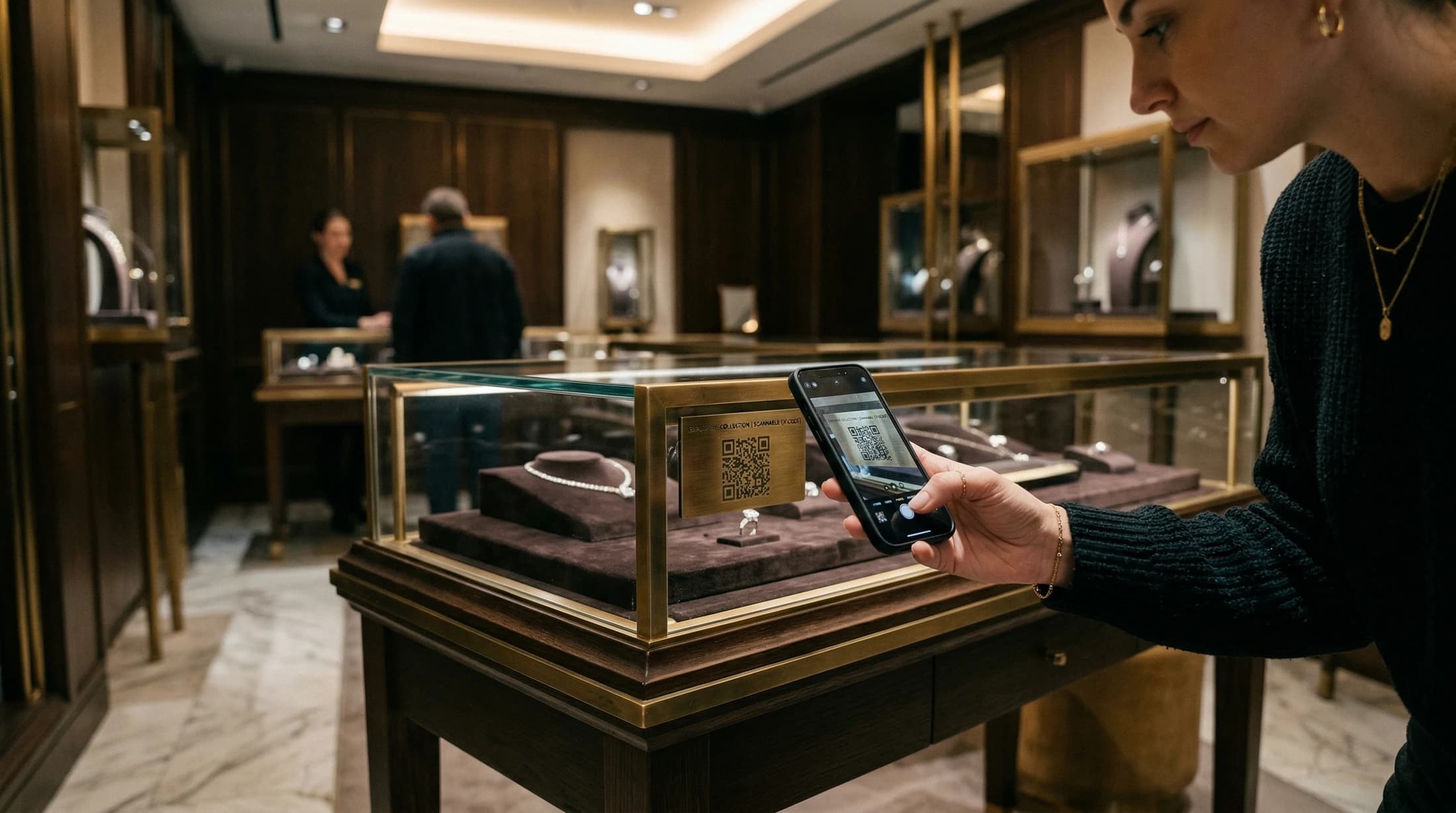
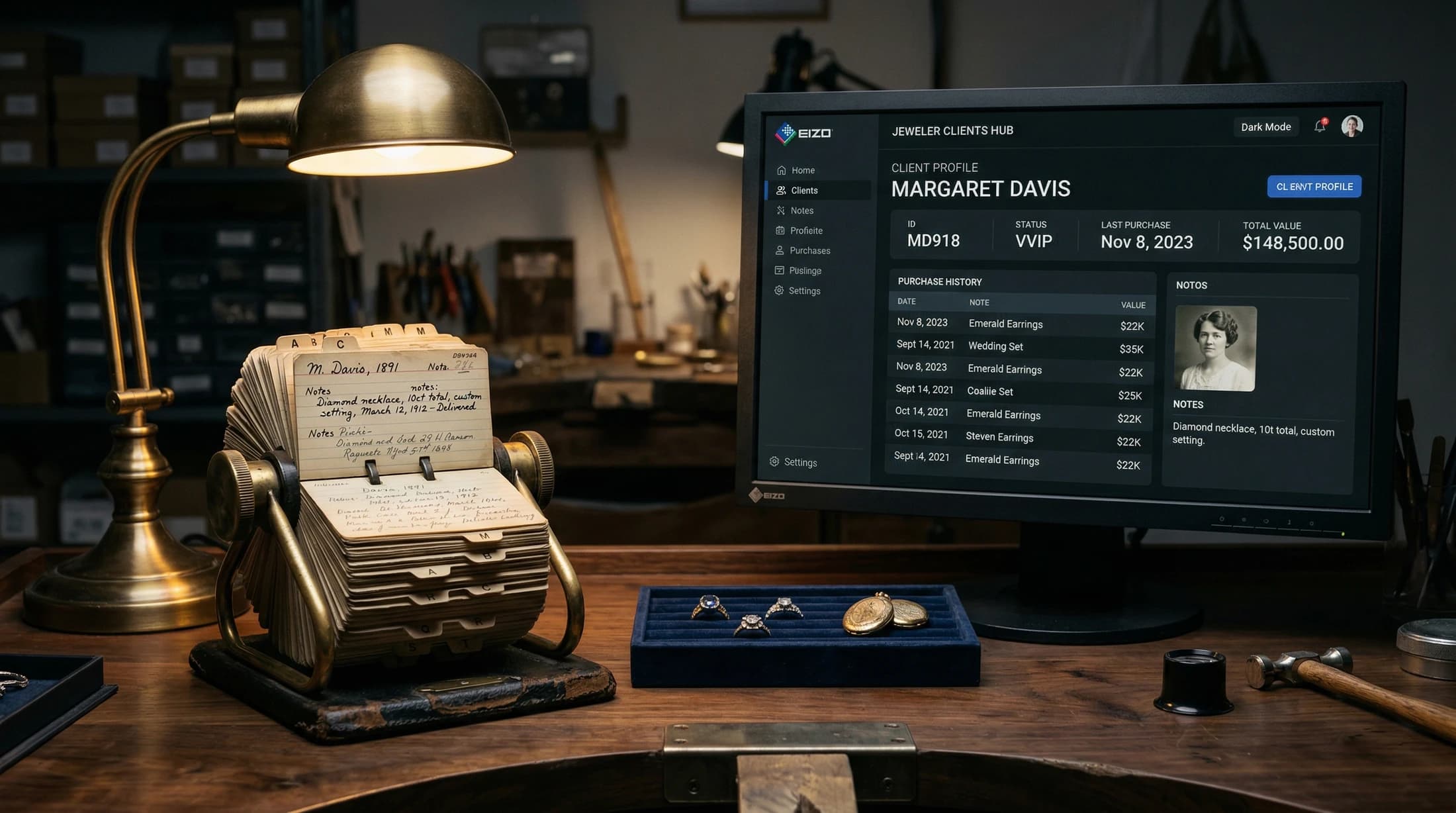
Walk into any high-end jewelry store, and you'll see millions of dollars in liquid assets: six-carat diamonds, rare Swiss timepieces, and hand-forged gold. But if you were to ask the owner which is more profitable, the inventory in the display case or the data in their CRM, most would give you the wrong answer.
Your inventory is a liability until it's sold. Your CRM is a revenue engine.
The math favors the database every time: repeat buyers in jewelry spend 92.8% more than new buyers in H&CO client data. Furthermore, the average CRM ROI in retail is $8.71 per $1 spent, a figure Tiffany & Co. blew past with a 25% sales lift via hyper-personalized campaigns.
The global luxury market is projected to reach €1.44 trillion in 2025, but the nature of that spend is changing. Bain and Altagamma call it a 'tectonic shift' from buying goods to investing in experiences: luxury experiences grew about 4% even as personal luxury goods stalled.
For the modern luxury jeweler, the client list is a structured database of human milestones, taste profiles, and financial intent. In an industry where the buyer research window spans weeks, a CRM is the only tool that allows you to remain "present" throughout that entire cycle without feeling like a pushy salesperson.
H&CO works with authorized dealers and independent jewelers to turn their "quiet" client lists into active growth machines. Digital marketing revenue attribution is the discipline that connects your CRM data to actual sales, so you can see which automations and touchpoints are generating real revenue.
What Data Should You Actually Be Capturing?
The POS ends up as a glorified filing cabinet. To build a CRM strategy that scales, you must move beyond "transactional" data and start capturing "lifestyle" data.
1. The Relationship Map
You aren't just selling to a client; you're selling to a household. Your CRM should map:
- Spouse/Partner Names: Essential for high-stakes gift outreach.
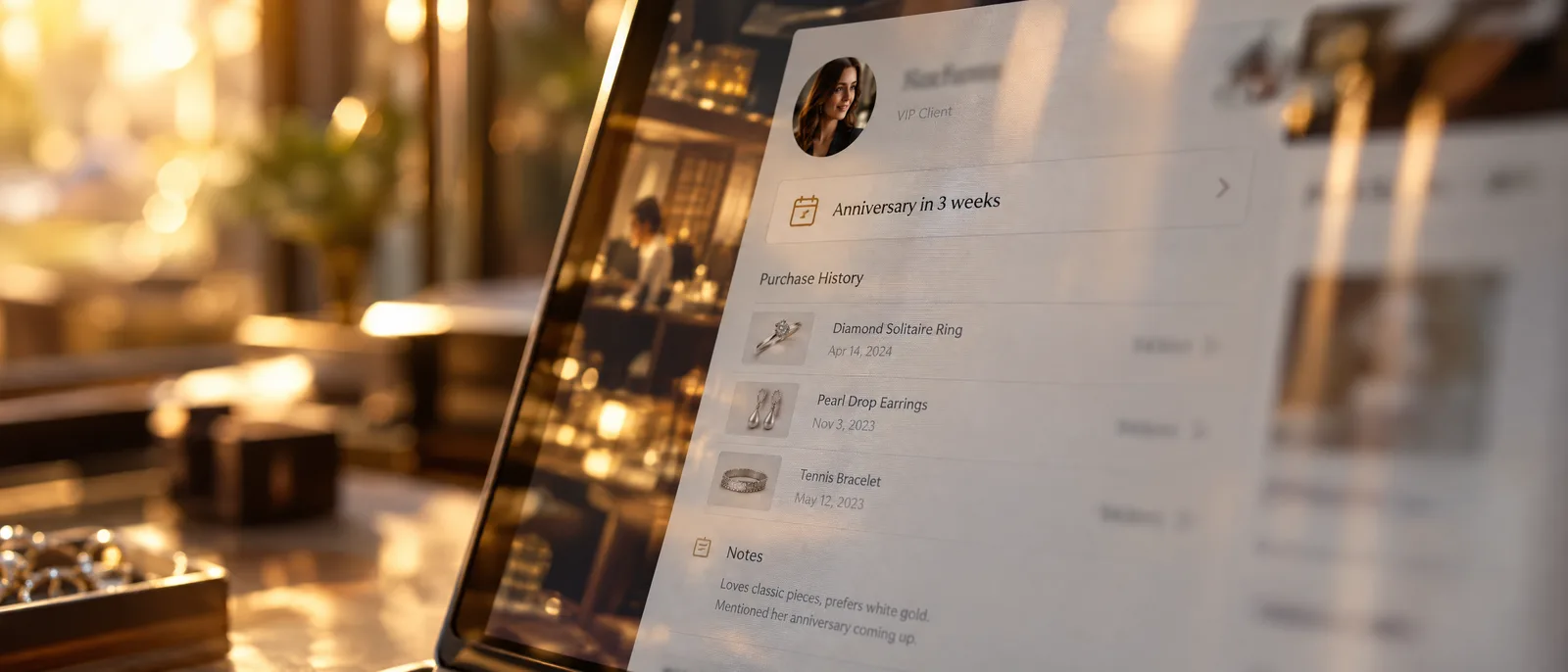
- Milestone Dates: Anniversaries, birthdays, and promotion dates.
- Gift History: Knowing they bought a $5,000 necklace for an anniversary tells you their budget tier for the next milestone.
2. The Taste Profile
A client who buys yellow gold rarely switches to platinum. A client who collects Submariners is likely interested in a GMT-Master II.
- Metal Preferences:
- Stone Shape:
- Brand Affinity: (Rolex, Omega, David Yurman, Hearts on Fire)
3. The Digital Footprint
This is where CRM meets marketing. Your CRM should track how they found you:
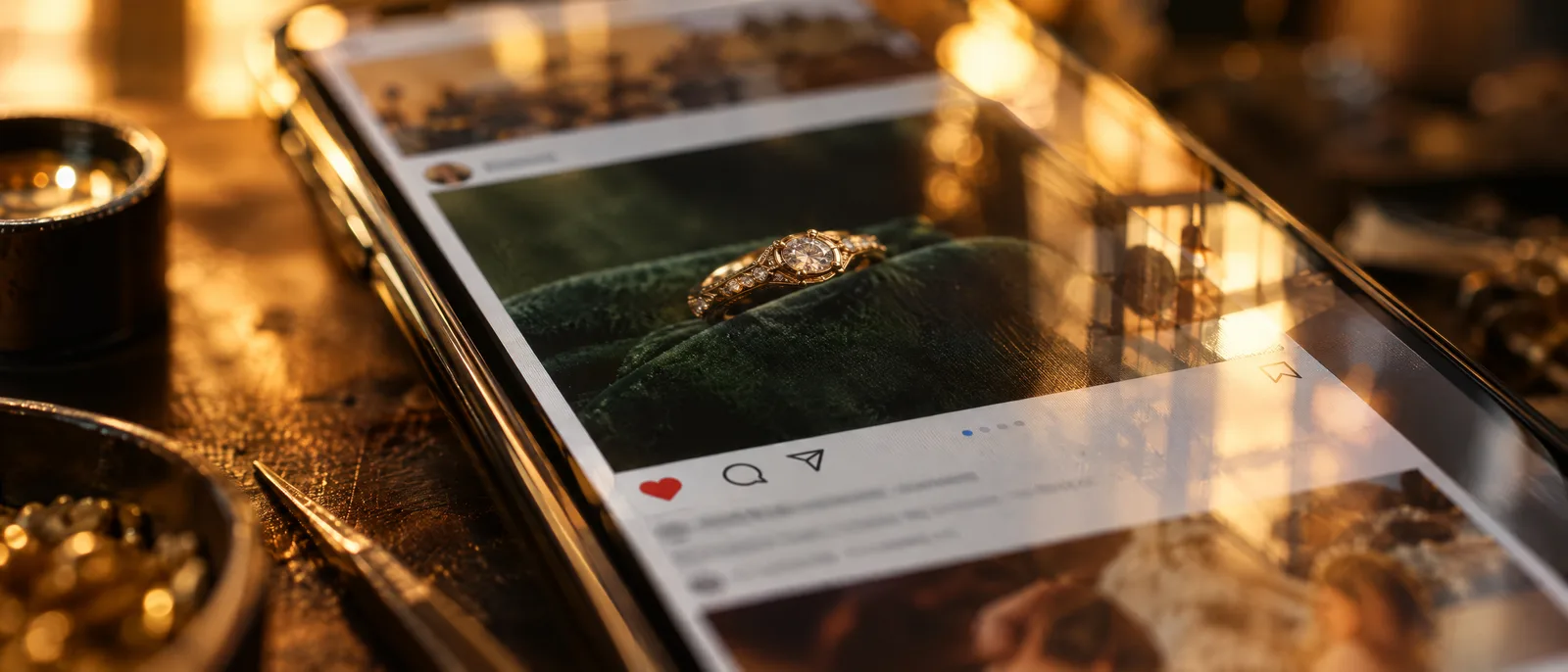
- Initial Source: Was it a Google Ad, an Instagram post, or a walk-in?
- Email Engagement: Do they open your "New Collection" emails but never click?
- Website Behavior: Use cookies to sync their website visits to their CRM profile. If a past client views a specific $15,000 ring three times in one week, your salesperson should be picking up the phone.
The Revenue Triggers: Automated Outreach That Doesn't Suck
The goal of a CRM strategy is to automate the mundane so your team can focus on the relationships. Here are the four automated sequences every luxury jeweler needs.
1. The Anniversary Alarm
This is the highest-ROI campaign in the jewelry world. Triggered 21 days before an anniversary, the CRM sends a personalized email or SMS to the partner.
- The Angle: "Your anniversary is coming up on June 12th. Based on Sarah's style, here are three pieces we think she'd love. Would you like us to put one aside for you?"
- The Result: You solve a problem (gift-giving stress) before the client even realizes they have it.
2. The Post-Purchase "Honeymoon" Sequence
After a five-figure purchase, buyer's remorse is the enemy.
- Day 1: Thank you + digital copy of the appraisal/GIA report.
- Day 30: "How is it wearing? Come in for a complimentary cleaning and inspection."
- Day 180: "We just received a new piece that perfectly matches your [Piece Name]."
3. The Service-to-Sales Bridge
Repairs are the ultimate "foot traffic" generator.
- When a watch comes in for a service, the CRM should tag the client as an active lead for an upgrade.
- The Campaign: "While your [Watch Model] is being serviced, take a look at our trade-in program. Your current piece is worth $X toward a new [Model]."
4. The VIP Reactivation
Clients who haven't spent in 18 months are "at risk."
- The Angle: Not a discount. Never a discount. Offer an *experience*.
- The Offer: "We're hosting an exclusive preview of our Fall collection for our top 50 clients. We'd love to see you there."
CRM as the "Brain" of Your Marketing Attribution
The biggest frustration for jewelry owners is not knowing which marketing dollar worked. CRM data solves the attribution problem by tying every interaction to a client ID, a transaction, and a lifetime value number.
By feeding your CRM data back into your ad platforms (Google Ads, Meta), you can tell the algorithm: "Don't just find me more clicks; find me more people like *these* top 100 clients." This creates a virtuous cycle where your marketing becomes more efficient as your CRM grows.
Without a CRM, your marketing is a guess. You're throwing money at "awareness" and hoping for "sales." With a CRM, every dollar spent on SEO for jewelry and watch retailers is tracked against a specific client ID, a specific purchase, and a specific lifetime value. And every dollar spent on paid ads gets smarter because your CRM data trains the targeting algorithm.
Choosing Your Weapon: The CRM Tech Stack
- The Jewelry Specialist: Clientbook. Built specifically for the industry. It excels at "clienteling," helping salespeople manage their individual books of business.
- The Marketing Powerhouse: Klaviyo. If you are heavy on e-commerce and automated email/SMS, Klaviyo is the gold standard.
- The Enterprise Choice: HubSpot. For larger multi-store retailers who need full pipeline management and automation across sales, marketing, and service departments.
Your client list is a growth engine that's currently turned off. At H&CO, we build the CRM infrastructure that turns past buyers into lifetime advocates. Let's talk about unlocking your database.
Research & Sources
- DMA/Data & Marketing Association: *CRM ROI Benchmarks.* Average returns for personalized retail outreach ($8.71 per $1).
- Bain & Company: *Global Luxury Goods Market Study 2024.* Analysis of the €1.44 trillion market value and the 3% growth in experience-based luxury.
- Fortune Business Insights: *Luxury Goods Market Analysis.* Trends in high-touch retail and the importance of localized data.
About the author
Hagop Imasdounian
Hagop Imasdounian is the founder of H&CO. Raised around his family’s jewelry businesses, he brings more than 15 years of digital marketing experience to helping jewelry and watch brands improve their websites, reach buyers and connect marketing with sales.