
The Trust Gap: Why "Trust Me" Is a Failing Sales Strategy
In the luxury world, uncertainty is the ultimate deal-killer. The design process gets treated as a technical hurdle to be cleared. They sketch on a cocktail napkin, show a few loose stones, and then utter the most expensive words in the industry: *"Trust me, it's going to look beautiful."*
For a client about to drop $20,000 on an engagement ring, "trust me" sounds like a gamble.
In H&CO client data, the reality is stark: the average research window for custom jewelry is 22 days. That is three weeks of your prospect browsing Pinterest, visiting your competitors, and second-guessing whether you actually "get" their vision. If you aren't using photorealistic CAD renders to anchor that research window, you are handing the sale to the jeweler who can visualize the dream better than you can.
CAD Is Not a Manufacturing Step; It Is a Closing Tool
CAD gets treated as a prerequisite for the casting house. They use it to calculate metal weights and ensure stone seats are precise. This is a massive tactical error.
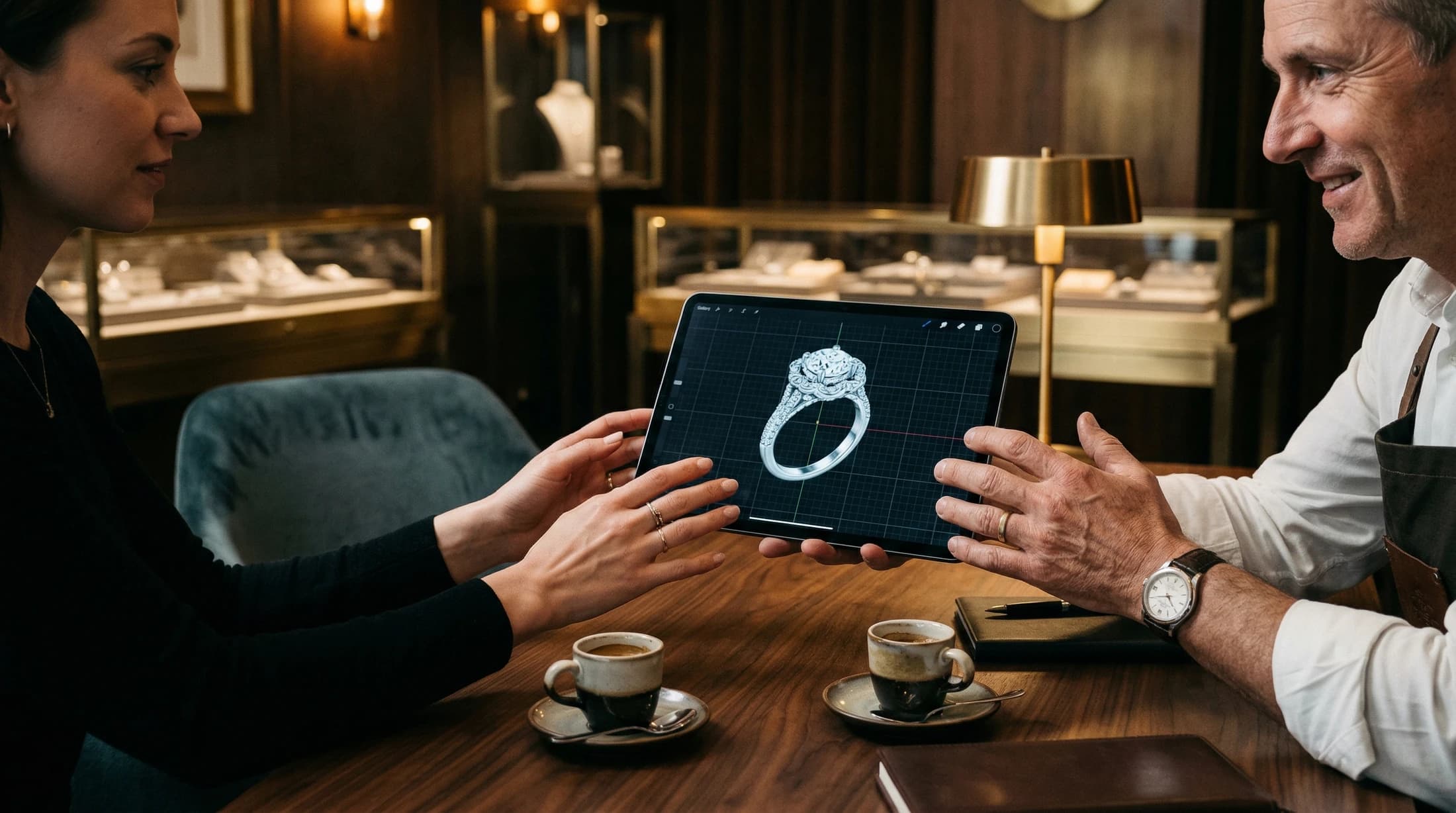
The primary value of CAD in a high-ticket environment isn't technical; it's psychological. It turns a verbal abstraction into a visual commitment. It bridges the gap between the client's "mental image" and your "technical reality." When you show a client a wireframe, they see a skeleton. When you show them a photorealistic render, they see *their* ring.
This is where the deposit happens. We've seen that jewelers who lead with high-fidelity renders see a significant lift in immediate commitment. Why? Because the render removes the "fear of the unknown" that plagues the luxury retail marketing playbook.
How Photorealistic Renders Shorten the 22-Day Research Window
If a client is in that research phase, they are looking for a reason to stop looking. They want to find "their" jeweler and end the stress of the search.
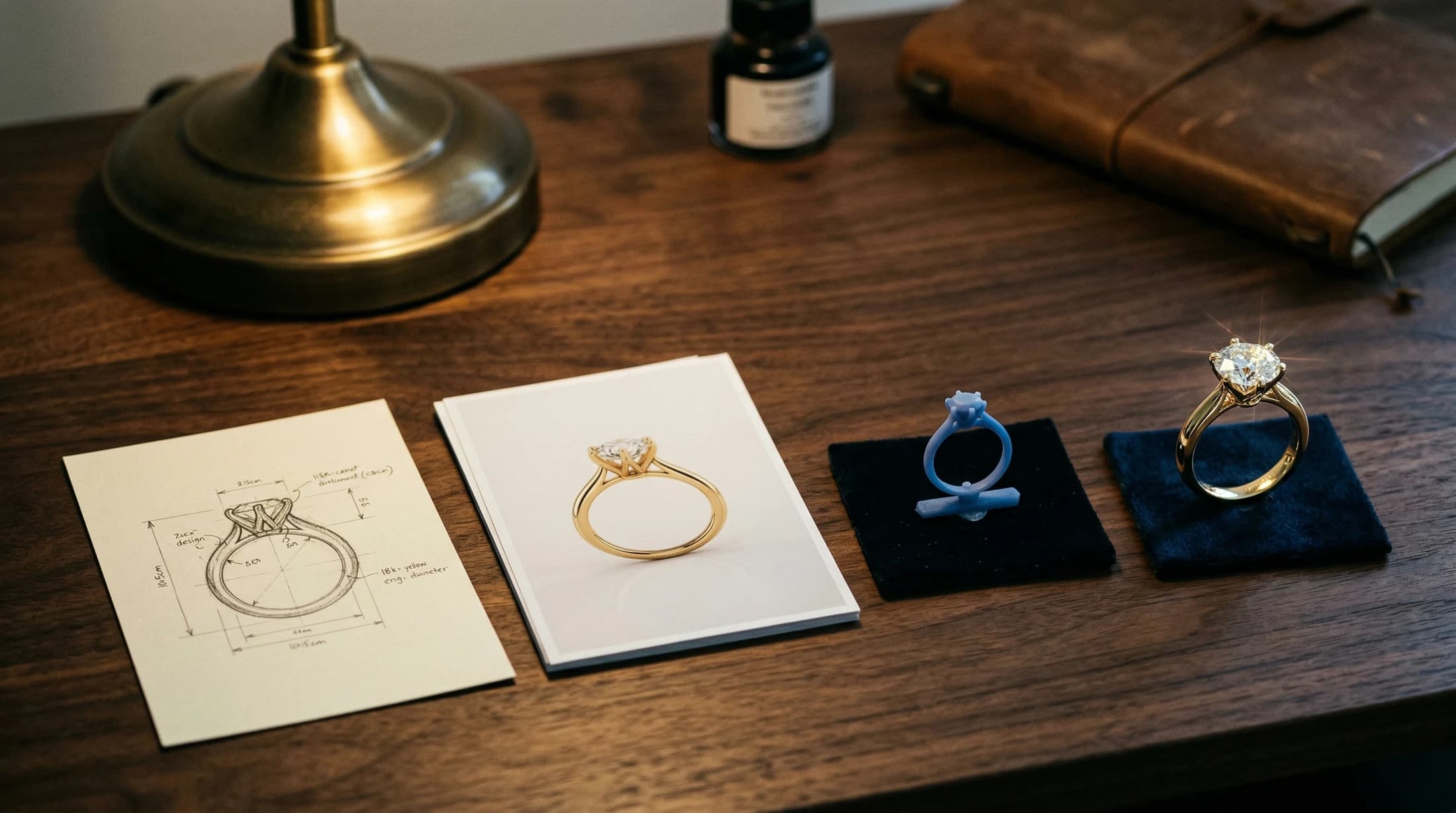
A technical drawing doesn't end the search; it invites more questions. A photorealistic render, however, provides a sense of finality. By presenting a render that looks like a finished photograph, complete with light refraction in the diamonds and the subtle glow of 18k yellow gold. You effectively "cast" the piece in their mind.
When the client can see the exact proportions of the shank against the center stone, the research window closes. They stop looking at other designers because they have already "seen" the finished product in your office. This isn't just about aesthetics; it's about efficiency. Every day a lead remains "in consideration" is a day they might find a reason to say no. CAD shortens that fuse.
The Technical vs. The Emotional Render
Stop showing your clients "work-in-progress" CAD files. Unless your client is an engineer, a gray, faceted wireframe with blue and red lines for stone settings looks like a terrifying medical device, not a romantic heirloom.
To use CAD as a sales tool, you must distinguish between the Manufacturing File and the Presentation Render.
The Presentation Render Essentials:
- Photorealistic Textures: Use high-quality shaders for metals. 14k white gold should look different from platinum.
- Environment Lighting: Avoid flat, clinical lighting. Use HDRI environments that mimic a luxury showroom or a soft outdoor glow.
- The "Three-View" Rule: Never send a single image. Provide a top-down view, a profile view, and a 45-degree "beauty" shot.
- Scale Context: If possible, superimpose the render onto a hand model. Perception of "too big" or "too small" is the leading cause of custom jewelry returns.
By providing these, you aren't just asking for approval; you're building brand equity. You are positioning your atelier as a tech-forward leader in an industry often seen as antiquated.
Revenue Attribution: The Hidden Cost of "Close Enough"
One of the biggest leaks in jewelry shop profitability is the "rework." A client picks up their finished piece, looks at it for five seconds, and says, *"Oh, I thought the halo would be smaller."*
Now you're cutting out stones, melting gold, and losing your margin. From a digital marketing revenue attribution perspective, that sale just became a net loss when you factor in bench time and opportunity cost.
CAD renders act as a digital contract. When a client signs off on a photorealistic render, they are agreeing to a specific visual outcome. This protects your margins and ensures that your "first-time revenue" stays in the bank rather than being eaten by "second-time corrections." Custom demand is rising, and getting it right the first time is what separates you.
Turning Renders Into Marketing Fuel
Beyond the individual sale, your CAD library is a goldmine for content.
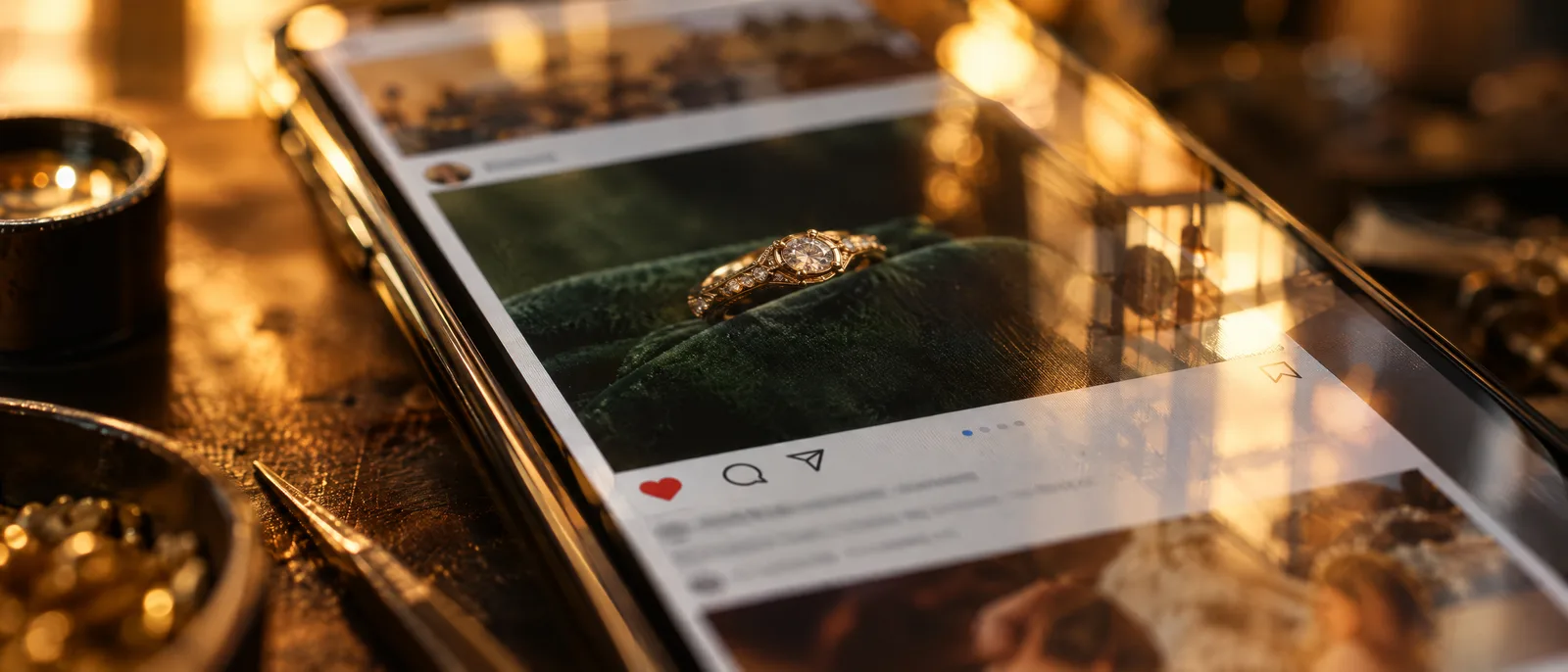
- The "Render vs. Reality" Post: These are high-performing assets for social media marketing. They demonstrate your process and prove that what you promise is what you deliver.
- SEO Benefits: Every custom project should have a dedicated portfolio page on your site. Using the CAD renders alongside the final photos creates a "long-form" story that Google loves, helping you dominate local SEO strategy.
Custom jewelry is a high-friction sale. Your job is to lubricate that friction with clarity. CAD is the most powerful lubricant in your arsenal. It takes the "maybe" out of the conversation and replaces it with "when can I pick it up?"
Stop treating CAD as a chore for the bench and start treating it as the spearhead of your sales process.
Your CAD renders should be closing sales, not just filling folders. H&CO builds the digital systems that turn your design expertise into a revenue-generating machine. Let's talk about your custom process.
Research & Sources
- Grand View Research: *Custom Jewelry Market Trends & Forecast 2026.* Data on the $4.3B market projection.
- Fortune Business Insights: *Jewelry 3D Printing and CAD Market Analysis.* Insights on tech-forward sales strategies.
- McKinsey & Company: *The State of Fashion: Watches & Jewellery.* Research on the research window and trust-building in luxury.

About the author
Hagop Imasdounian
Hagop Imasdounian is the founder of H&CO. Raised around his family’s jewelry businesses, he brings more than 15 years of digital marketing experience to helping jewelry and watch brands improve their websites, reach buyers and connect marketing with sales.