
The highest-margin sale in jewelry isn't the one you win on Google Search by outbidding Blue Nile. It is the repeat sale from the customer you've already won.
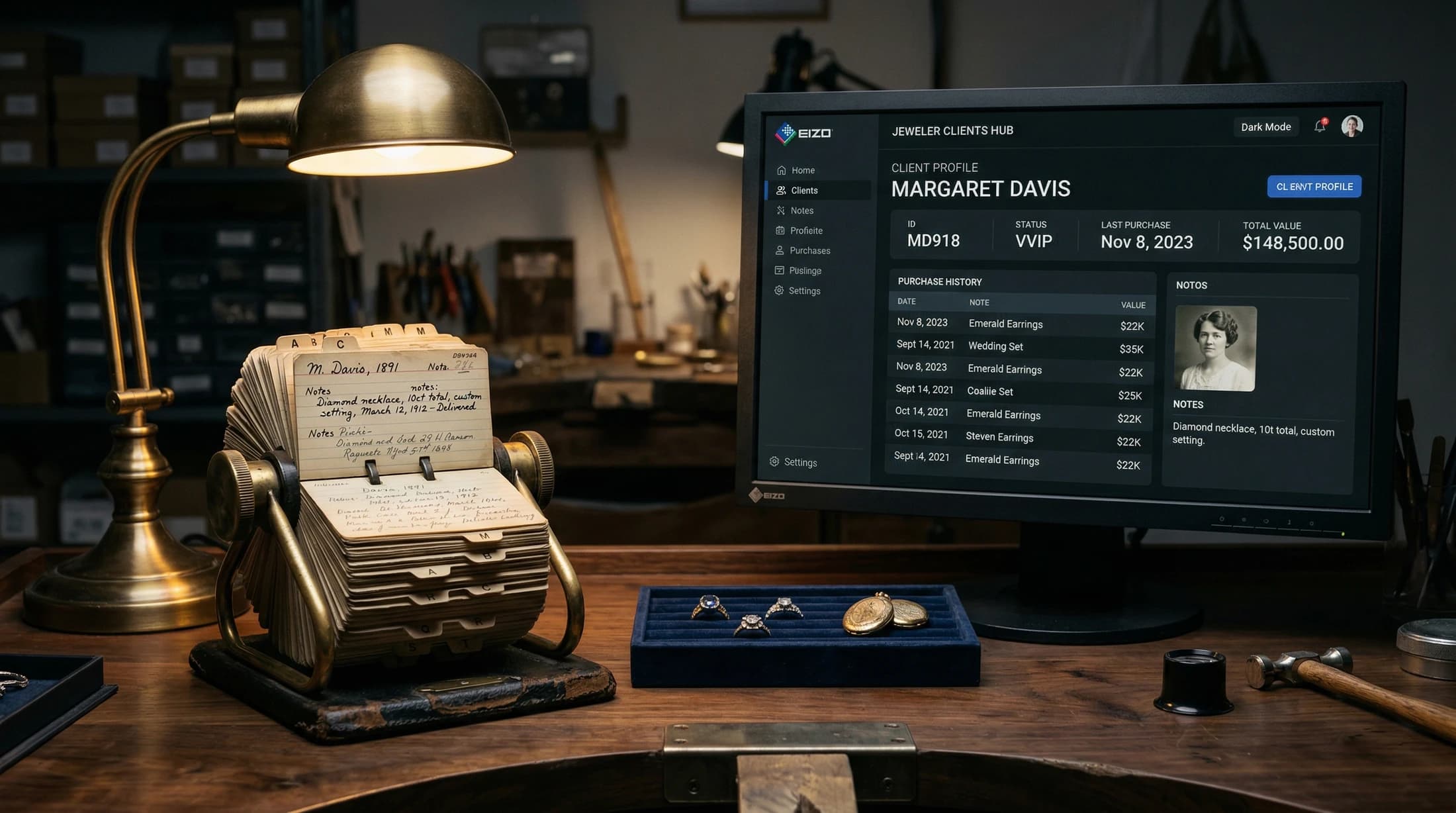
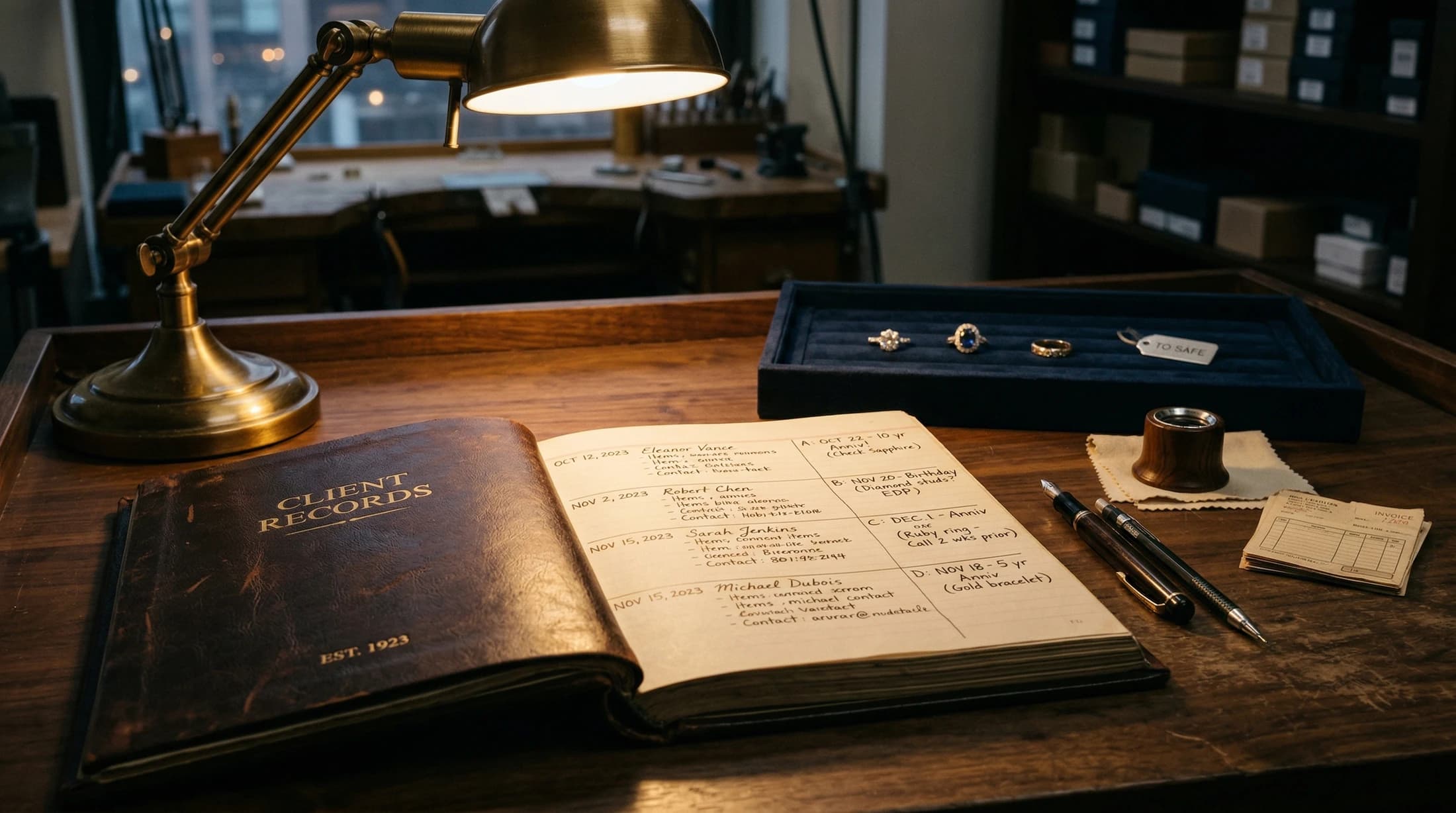
Your POS system is sitting on a data goldmine that yields an incredible return: Nucleus Research famously pegged CRM ROI at $8.71 per $1 spent. Even luxury giants like Tiffany & Co. have invested heavily in hyper-personalized CRM campaigns. Every time a client buys an engagement ring, a wedding band, or a "just because" pendant, they are giving you a date.
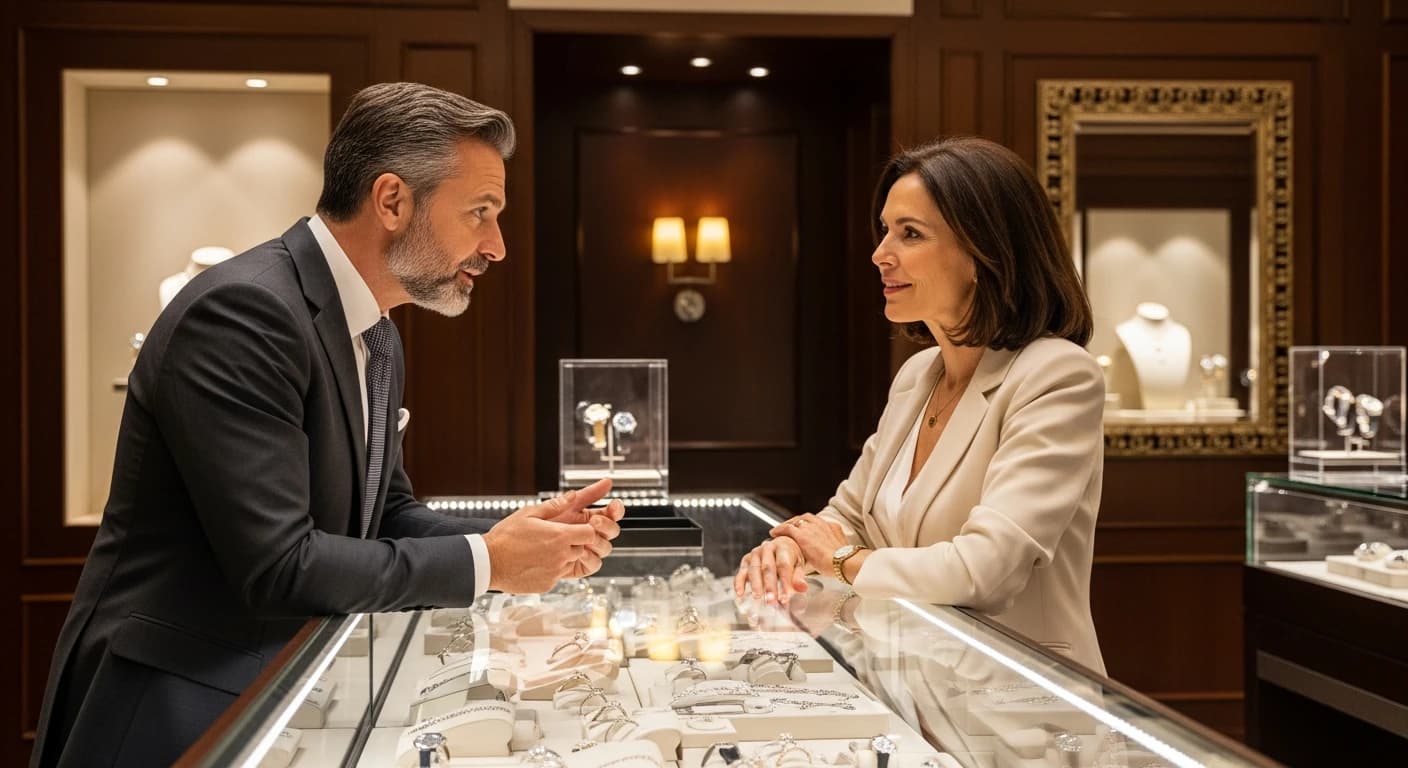
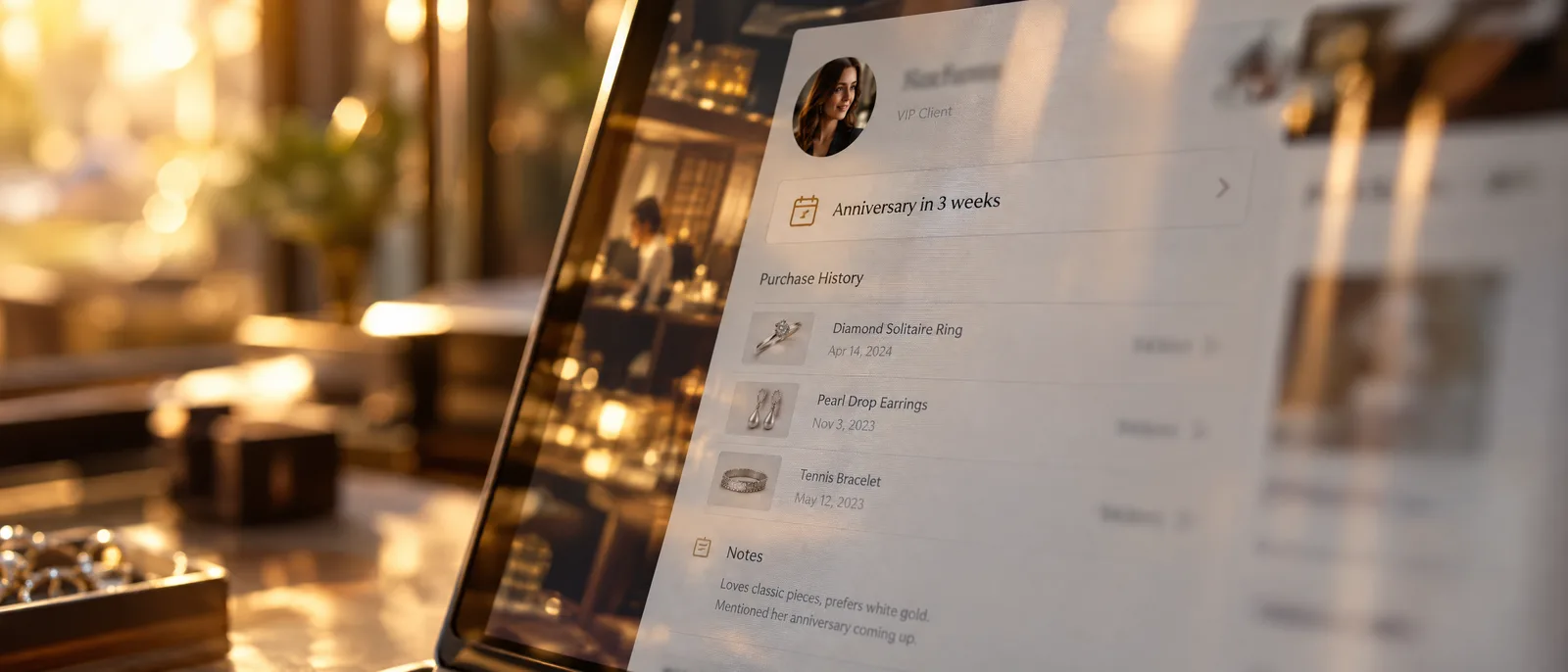
At H&CO, we see CRM automation as a service, not a marketing tactic. If you can remind a husband that his 10th anniversary is coming up three weeks before he remembers it himself, you aren't just selling him jewelry; you are saving his life.
Why Your POS Data Is Your Best Salesperson
The POS gets used for inventory and tax compliance. They are ignoring the "Relationship Data" that generates lifetime value. Repeat buyers in jewelry spend 92.8% more than new buyers (H&CO client data), making retention your most profitable lever. Every transaction contains:
- The Trigger Date: The anniversary of their engagement ring purchase.
- The Taste Profile: What they bought, the metal preference, the price point.
- The Lifetime Potential: A customer who spent $10k on an engagement ring has a 30-year "gift-giving" horizon ahead of them.
The global luxury market is projected at €1.44 trillion in 2025, but the real growth isn't in "buying goods" alone. It's in the shift toward "luxury experiences." An automated reminder that anticipates a client's needs is an experience. If you don't use this data, you are leaving the door open for that client to walk into a competitor's showroom next year. You are essentially letting that first-time revenue gap become a lifetime revenue loss. Digital marketing revenue attribution is how you prove that this CRM-driven revenue actually came from the system you built (Bain & Company, 2025).
The 22-Day Rule: Timing the Alarm
In H&CO client data, the average luxury purchase has a 20-day research window for watches and a 22-day window for custom jewelry.
Timing | Email Type | Content |
|---|---|---|
T-25 days | Soft Alarm | Pieces chosen from past purchases |
T-14 days | Personal Service | Specific piece + hold offer |
T-5 days | Panic Button | Ready-to-wear, gift-wrapped, next day |
If you send an anniversary reminder three days before the date, you are too late. The customer is already panicked, and they don't have time for a custom-ordered piece or an "out of stock" model.
The Ideal Sequence:
- T-Minus 25 Days: The initial "soft" alarm. A personalized email: "Your anniversary is exactly one month away. We've picked a few pieces that would pair perfectly with the sapphire ring you bought last year."
- T-Minus 14 Days: The "Personal Service" touch. "I saw you liked the [Piece] in our last email. We have it in the showroom right now. Would you like me to set it aside for a private viewing?"
- T-Minus 5 Days: The "Panic Button." "If you're still looking, we have a selection of ready-to-wear pieces that we can have gift-wrapped and delivered tomorrow."
This transformation from "selling a product" to "facilitating a milestone" is how you capture the roughly 4% growth Bain and Altagamma report in experiential luxury.
Segmenting Your Audience for Maximum ROI
Every customer shouldn't get the same automation. That is the quickest way to end up in the spam folder. Your 2026 Luxury Retail Marketing Playbook must include segmentation.
- The VIP Tier ($25k+ spend): No automation. These clients get a personal phone call or text from their sales associate. The "alarm" is for the associate, not the client.
- The Mid-Tier ($5k-$25k): Automated, but highly personalized emails. Use dynamic content that pulls in images of pieces that match their previous metal and stone preferences.
- The Entry Tier (Under $5k): Broad-based collection highlights and "Anniversary Gift Guides."
These guides aren't just for email; they are a core SEO strategy. By creating pages like "The 10th Anniversary Gift Guide" or "What to Buy for Your First Anniversary," you are capturing search intent that predictably spikes every month of the year.
CRM as a Recurring Revenue Machine
The acquisition cost (CAC) for an anniversary-triggered repeat purchase is nearly zero. You already have the lead. You already have the data. The only cost is the software and the time to set up the logic.
If you have 1,000 clients in your database and you can convert just 5% of them to an anniversary purchase each year with an average spend of $3,000, you have just generated $150,000 in annual revenue from a system that runs on autopilot.
The Anniversary Alarm is one piece of a larger CRM lifecycle strategy that turns your client database from a static list into a recurring revenue channel. When you layer anniversary triggers with post-purchase sequences, VIP reactivation campaigns, and service-to-sales bridges, the compound effect on lifetime value is massive.
Your client database is a live engine of recurring revenue. The "Anniversary Alarm" turns a one-time transaction into a multi-decade relationship. Stop waiting for your clients to remember you. Give them a reason to never forget you.
"Your client database is a revenue channel you're not using. We'll build the CRM automation that turns past purchases into future sales. Let's talk."
Research & Sources
- DMA/Data & Marketing Association: *CRM ROI Benchmarks.* Average returns for personalized retail outreach ($8.71 per $1).
- Bain & Company: *Global Luxury Goods Market Study 2024.* Projection of €1.44 trillion market value by 2025 and the 3% shift toward experience-based luxury.
Hagop's Notes
I've seen a single CRM automation sequence generate more revenue in one month than a jeweler's entire Instagram strategy did in a year. Why? Because the person on the other end of the email was *already* a fan of the brand and *already* had a problem (a looming deadline) that the jeweler was solving. Simple wins.
About the author
Hagop Imasdounian
Hagop Imasdounian is the founder of H&CO. Raised around his family’s jewelry businesses, he brings more than 15 years of digital marketing experience to helping jewelry and watch brands improve their websites, reach buyers and connect marketing with sales.