
Here's a number that should bother you: physical luxury stores still account for 81% of personal luxury goods sales. That is the vast majority of revenue for this industry still happening face-to-face, at the counter, in the showroom.
And yet foot traffic keeps declining.
Bain & Company calls it a "tectonic shift." Consumers aren't spending less on luxury. They're spending differently, moving their dollars from products toward experiences.
The experiential retail market is growing at 14.9% CAGR, adding $133.5 billion by 2030. This article is the practical playbook for turning your luxury retail location into a destination, on a real budget.
Why Experiential Retail Works for Independent Luxury Stores
85% of consumers say they're more likely to make a purchase after attending a branded event, and marketers who run them report that events pay for themselves.
The Partnership Model: Stop Building, Start Borrowing
Adjacent Luxury Businesses
Think cigar companies, whiskey brands, luxury car dealerships. These businesses serve the same demographic you do but don't compete with you for a single dollar.
Existing Community Groups
Watch collector clubs. Car enthusiast groups. Cigar societies. These people are pre-qualified buyers.
Event Formats That Actually Sell
The Intimate Preview (8-15 People)
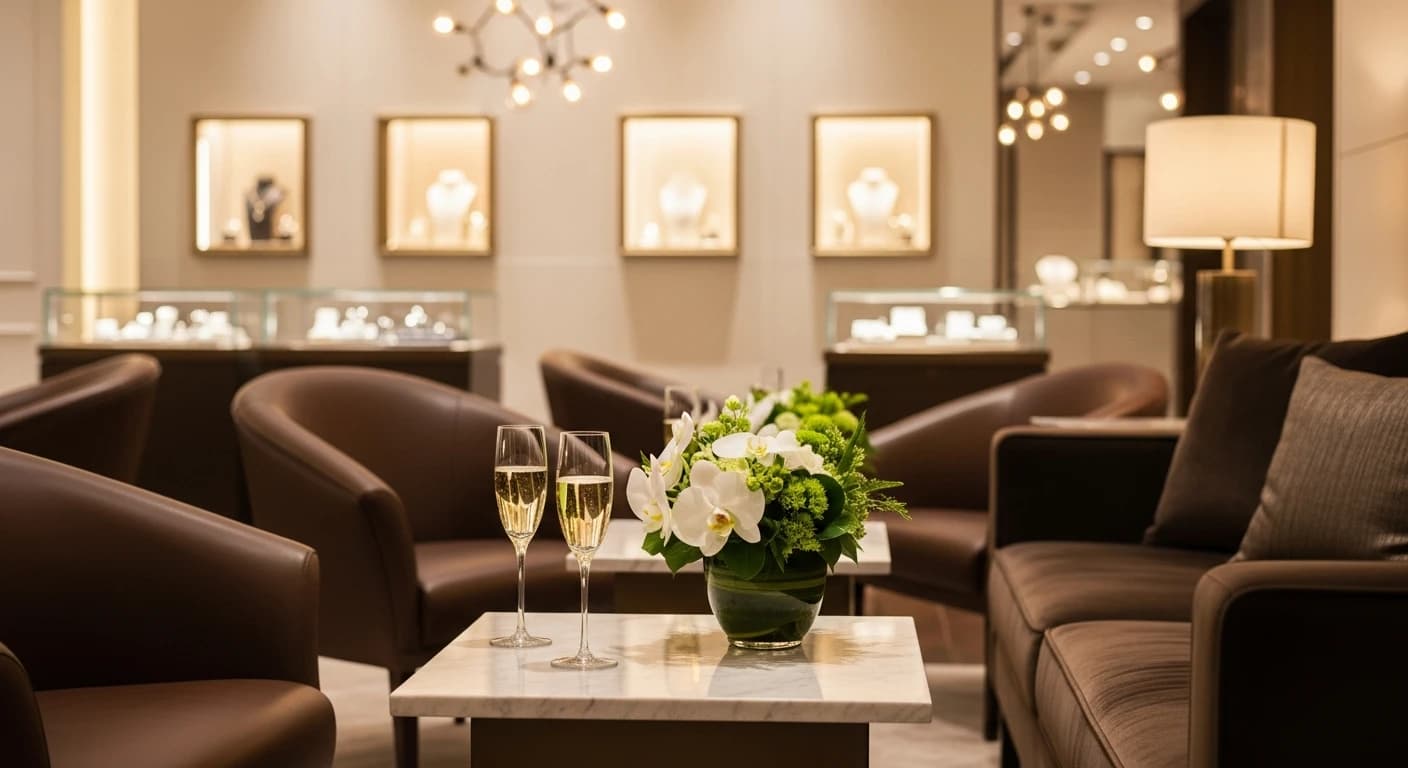
This is the trunk show format, stripped down and done right. You invite 8 to 15 people, usually existing clients and a handful of their guests, for an after-hours look at a new collection or a specific brand's latest pieces. The store is closed to the public. Champagne is poured. The lighting is set. Every person in the room has been personally invited.
The intimacy is the point. At this size, your sales team can spend real time with each guest. You are having conversations, not working a crowd. The client gets to try pieces without feeling rushed, ask questions without competing for attention, and make a decision without pressure from a packed room.
If you can get a brand rep in the room, even better. Having the designer or a brand ambassador walk guests through the collection adds a layer of access that money can't normally buy. That feeling of exclusivity is what drives same-night purchases. We've seen stores close 3 to 5 high-ticket sales in a single evening with this format, often pieces that had been sitting in the case for weeks.
Cost to run one of these? A few hundred dollars in food and drink, maybe a floral arrangement. The margins on a single sale cover the event ten times over.
The Cross-Category Evening (20-40 People)
This is where the partnership model pays off. You co-host with one or two adjacent luxury businesses, a wine importer, a local art gallery, a high-end menswear shop, and each partner brings their own guest list. Suddenly you have 20 to 40 people in your store, and half of them have never been inside your doors before.
The format works because it gives guests a reason to come that goes beyond shopping. They're attending an evening, not a sales pitch. A sommelier pours wine. An artist talks about their work. Your team is there, present and available, but nobody's being cornered with a close. The jewelry and watches are on display, and the environment does the selling.
The math here is different from the intimate preview. You won't close as many sales that night per guest, but you're acquiring net-new contacts who now associate your store with a memorable experience. Every person who walks in gets added to your CRM, your email list, your retargeting audience. The conversion happens over the next 30 to 90 days when they come back, now familiar with the space and the team.
Split costs with your partners. Each business contributes a few hundred dollars and their guest list. Your acquisition cost per new qualified contact drops to almost nothing.
The Recurring Series (Monthly or Quarterly)
One-off events are good. A recurring series is better. When you host a monthly or quarterly event with a consistent format, you build anticipation. Guests start asking when the next one is. They bring friends. It becomes part of their social calendar.
A watch retailer could run a quarterly "Collector's Night" where enthusiasts bring pieces from their own collections, compare notes, and see what's new in the cases. A jewelry store could host a monthly "Design Hour" where the bench jeweler walks guests through the custom process, from wax carving to final polish. The format matters less than the consistency. People need to know it's coming.
The recurring format also solves the biggest problem with event marketing: momentum. A single event generates buzz for a week, maybe two. A series keeps your store in the conversation year-round. It gives you a reason to email your list every month that isn't a promotional blast. It gives your social media calendar a recurring content anchor.
Name the series. Give it a logo. Treat it like a brand within your brand. When people start referring to it by name, you know it's working.
The Content Flywheel: One Event, Months of Marketing
The real ROI of an event isn't just what you sell that night. It's the content you capture, and how you deploy it across every marketing channel for weeks or months afterward.
The Math of Small Events
Events get dismissed because you picture low attendance and wonder if it's worth the effort. So let's run the numbers on what "small" actually produces over a year.
Say you host one event per month, 12 per year. Average attendance is 15 people. That's 180 face-to-face interactions with qualified buyers annually. Not website visitors, not ad impressions. Real people standing in your store, holding your product, talking to your team.
Now layer in conversion. If 20% of attendees make a purchase within 90 days of attending (a conservative number for a well-run event with proper follow-up), that's 36 sales per year directly attributable to events. If your average transaction is $3,000, you've just generated $108,000 in revenue from events alone. Your total cost? Maybe $500 per event in food, drinks, and decor. That's $6,000 for the year against $108,000 in sales.
But the compounding effect is where it gets interesting. Those 180 people go on your email list. They enter your retargeting audiences. They tell friends. Some of them come to the next event and bring a guest. By month six, your attendance is growing without you spending a dollar more on the event itself. By month twelve, you have a community, not just a customer list.
Compare that to running $6,000 in Facebook ads to cold audiences. The event math wins every time, and it's not close.
Running the Event: Logistics That Matter
The difference between an event that drives revenue and one that wastes everyone's time usually comes down to logistics, not the concept. Here's what to get right.
Invitations should go out three weeks before, by email and followed up with a personal text or call to your top clients. Generic email blasts to your entire list don't work. Curate the guest list. You want buyers, not browsers. If you're co-hosting with a partner, coordinate lists so there's no overlap and agree on a shared RSVP system.
Staffing matters more than you think. Every team member working the event should know which pieces to direct attention toward and have talking points ready. Assign roles: someone greets at the door, someone manages the bar area, someone is free to have deeper conversations with serious buyers. Nobody should be standing behind the counter waiting.
Capture mechanisms are non-negotiable. Have a sign-in process, digital or on paper, that collects name, email, and phone number. Take photos throughout the evening, both candid shots and posed moments with guests. Designate one person to shoot short video clips for social content. If a guest opts in, tag them in stories the next day. Every attendee should leave your store already on your marketing list.
Keep the event window tight. Two hours is the sweet spot. Long enough for people to settle in and browse, short enough that there's energy in the room the entire time. A three-hour event always has a dead zone in the middle where half the guests have left and the other half haven't arrived yet.
Common Mistakes That Kill Event ROI
The first mistake is discounting. The moment you attach a sale or a discount to an event, you've changed what the event is. It stops being an exclusive experience and becomes a promotional night. The people who show up are bargain hunters, not relationship buyers. Your margins take a hit, and you've trained your best clients to wait for the next event before purchasing. Never discount at an event. The experience itself is the incentive.
The second mistake is the wrong guest list. Blasting your entire database with an invitation is lazy and counterproductive. You end up with a room full of people who came for free food and have no intention of buying. Be selective. Invite your top 50 clients, the ones who've purchased in the last 18 months or have shown serious interest in specific pieces. Let them bring one guest. That guest is your acquisition channel, pre-vetted by someone who already trusts you.
The third, and most common, mistake is no follow-up. 80% of event leads never receive a single follow-up contact. That's an industry-wide number, and it's staggering. You spend time and money getting qualified buyers into your store, they have a great evening, they leave, and nobody calls them. Send a thank-you email within 24 hours. Include a photo from the event. Reference something specific you discussed, a piece they tried on, a brand they asked about. Follow up by phone within the week. The event opens the door. The follow-up closes the sale (Momencio, 2025).
How This Connects to Your Digital Marketing
Events aren't separate from your digital marketing. They feed it. Every event you run should produce content that powers your online presence for weeks.
Conversion rates on these audiences regularly outperform cold traffic by a wide margin.
The content from events is gold for social media. Behind-the-scenes clips of the setup, candid moments during the evening, a quick interview with a brand rep, guests reacting to a piece they love. This is the kind of content that stops the scroll because it's real. Show people having an experience in your space. Post it as Reels, Stories, and carousel recaps. One well-documented event can fill your content calendar for two to three weeks.
Email gets a boost too. Your post-event recap email has real open rates because people want to see the photos, see if they're in them, and relive the evening. That email also serves as social proof for the people on your list who didn't attend. They see what they missed, and they're more likely to RSVP next time.
The loop closes when your digital marketing drives attendance at your next event. Promote it through email, paid ads, and organic social. The events create content, the content drives engagement, the engagement builds your audience, and the audience fills your next event. That is a system.
Turn Your Store Into the Destination
If you want help building an event strategy that connects to your paid media, social, and email into one revenue-driving system, talk to H&CO.

About the author
Hagop Imasdounian
Hagop Imasdounian is the founder of H&CO. Raised around his family’s jewelry businesses, he brings more than 15 years of digital marketing experience to helping jewelry and watch brands improve their websites, reach buyers and connect marketing with sales.