Why "pay-per-post" works for toothpaste but fails for high-end retail—and what to do instead.
Key Takeaways
- Standard influencer advice is built for CPG, not luxury. Seeding products to 100 creators works for $50 moisturizers, not $5,000 handbags.
- Nano-influencers deliver higher ROI by an order of magnitude. A 2024 Journal of Marketing study found that smaller influencers significantly outperform macro-influencers on revenue generation (Beichert et al., 2024).
- The "Relationship Seeding" method ($300–$500 in access and experiences) builds long-term partnerships without devaluing inventory.
- Local authority beats global reach. For physical retailers, 10 influencers with 15k local followers convert better than one influencer with 100k scattered followers.
- Always negotiate content rights. Never pay for posts that disappear—build a reusable asset library instead.
Key Definitions
Relationship Seeding — A luxury retail influencer strategy where brands invest in access and experiences (typically $300–$500) rather than gifting high-value inventory. Instead of sending a $5,000 product for review, the brand sends lifestyle-adjacent gifts—premium champagne, branded accessories, or event invitations—to build long-term relationships without devaluing products or depleting margin.
Why Traditional Influencer Marketing Fails for Luxury Retailers
Most retail influencer marketing strategy advice is built for Consumer Packaged Goods. That's why it fails for luxury.
If you sell a $50 moisturizer, "seeding" (sending free product to 100 people) is a numbers game. If you're an authorized dealer selling $5,000 handbags, $10,000 necklaces, or high-end audio equipment, you cannot seed your way to growth. You don't have the margin, and scattering inventory across the internet devalues the brand.
The strategy for luxury retail isn't about trading product for exposure. It's about trading access for status.
How to Build Hype Without Giving Away Inventory
The most effective retail influencer marketing strategy for luxury doesn't require sending your hero products to creators. Two approaches consistently outperform traditional gifting.
Strategy 1: Relationship Seeding
What it is: Instead of sending a $5,000 bag, send the lifestyle attached to it—a branded leather travel case, a bottle of premium champagne, or an invite to a private dinner.
Budget: $300–$500 per influencer.
Why it works: You're not paying for a product review. You're paying to get on their radar. When a fashion influencer unboxes Dom Pérignon from your boutique, they're signaling to their audience that they're on your VIP list. That status signal is worth more than a feature review.
Strategy 2: The "Cluster Event" Approach
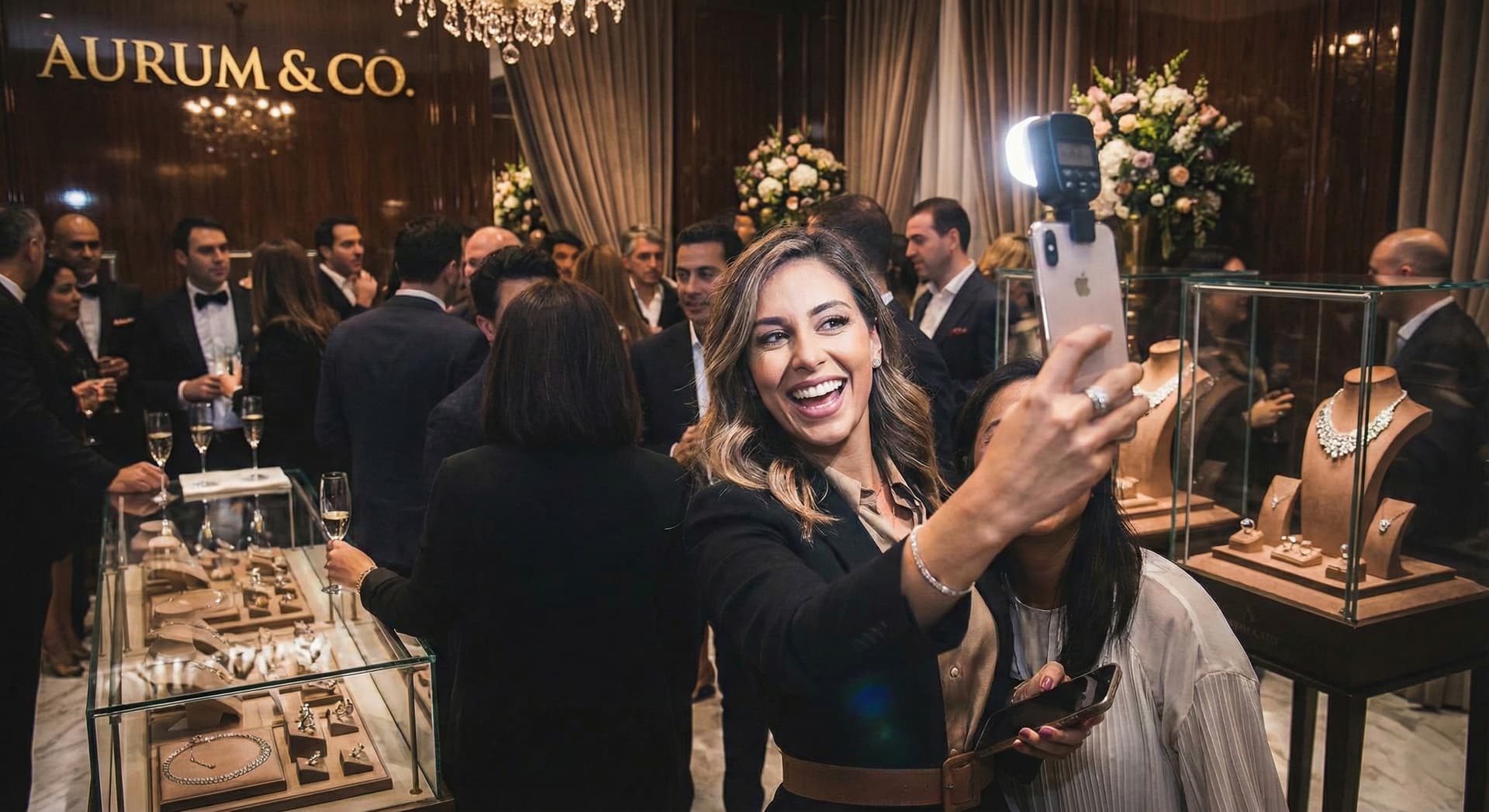
What it is: Instead of coordinating 20 separate shipments, bring 20 influencers to the inventory. Host a private viewing, styling session, or cocktail hour at your showroom.
Budget: $200–$500 per attendee (covers catering and a quality gift bag).
Why it works: Instead of one person posting a lonely review on a Tuesday, you get 20 credible voices posting Instagram Stories from your location simultaneously. This creates a "digital flash mob"—the algorithm notices the spike in mentions, and local customers see that everyone is at your store. The research supports this approach: the Journal of Marketing study found that nano-influencer effectiveness is partially driven by higher engagement rates and stronger influencer-follower relationships, which cluster events naturally amplify.
This approach is the single most effective retail influencer marketing strategy for physical showrooms and boutiques.
Influencer Pricing for Luxury Retail: 2026 Rate Guide
Effective retail influencer marketing strategy requires pricing based on authority (trust), not reach (follower count). This rate card prioritizes local impact over global vanity metrics.
TierFollower CountPrice Range (USD)Best Use Case
The Local Hero
15k–25k - $200–$400
Driving foot traffic. High trust in your specific city.
The Aestheticist
25k–50k - $500–$900
High-quality content creation (photos/video) for your ads.
The Broadcaster
50k–100k - $1,000–$2,500
General brand awareness. Low conversion for high price points.
The Celebrity
100k+ - $2,500 - 5,000+
"Borrowed" prestige. Only for national brand campaigns.
The key insight: Retailers frequently over-invest in "The Broadcaster" tier, chasing the 100k follower count. For luxury retail, "The Local Hero" delivers superior results. Research published in the Journal of Marketing confirms this pattern: nano-influencers generate significantly higher ROI than macro-influencers—by an order of magnitude—due to higher pre-campaign engagement and stronger follower relationships (Beichert et al., 2024). Ten stylish people with 15k followers who actually live in your city and shop in your price bracket will outperform one creator with 100k followers scattered globally.
How to Vet Influencers for Luxury Retail Partnerships
Your reputation is your inventory. Partnering with the wrong influencer alienates your actual VIP clients. Use this vetting protocol before any partnership.
The "Vibe Check" Protocol
1. Engagement Ratio Look for 3%–6% engagement. Lower indicates a dead audience; significantly higher on large accounts suggests purchased engagement.
2. The Comment Audit
- Fake signals: "🔥🔥🔥", "Obsessed!", "So cute." (Generic bots or disengaged followers)
- Real signals: "Is that the new season collection?", "Do you have this in gold?", "I was just looking at this." (Actual buyers asking specific questions)
3. The Grid Test Scroll down 12 rows on their feed. Is their aesthetic consistent? Chaotic or low-quality feeds cannot represent high-ticket brands effectively.
How to Negotiate Content Rights with Influencers
The biggest waste of money in retail influencer marketing is paying for Instagram Stories that vanish in 24 hours. A smart strategy builds a reusable content library.
The "Content Asset" Clause
When inviting an influencer or sending a gift, make content rights part of the standard agreement:
"We'd love to host you. All we ask is that you tag us in your stories and send us 3 high-res photos you take at the event."
The result: You're not just getting exposure—you're building a library of editorial-grade images featuring your inventory, taken by stylish people, which you can use in email newsletters, Meta ads, and website galleries for months.
The Bottom Line: Density Over Reach
Effective retail influencer marketing strategy for luxury is about density, not reach.
Twenty people talking about your brand on the same night in the same city will always outperform 200 people posting scattered content over six months. Cluster your efforts, protect your inventory, and focus on the local signal.
References
Beichert, M., Bayerl, A., Goldenberg, J., & Lanz, A. (2024). Revenue Generation Through Influencer Marketing. Journal of Marketing. https://doi.org/10.1177/00222429231217471