
The broader resale market is projected to reach $360 billion by 2030 (BCG/Vestiaire Collective, 2025), with luxury resale alone at roughly $30-40 billion and growing 3x faster than firsthand luxury. Secondary market watch sales alone hit $26.8 billion in 2024 and are climbing toward $45 billion by 2030.
Those are not niche numbers. That's a market large enough that ignoring it is a strategic decision, whether you realize you're making it or not.
You almost certainly already have some pre-owned inventory. What almost none of them have is a marketing strategy behind it.
The Pre-Owned Opportunity (and Why It Gets Wasted)
The stigma question comes up constantly, and it's worth addressing directly: it's mostly over. 54% of luxury clients would purchase pre-owned directly from a luxury brand or retailer (EY Luxury Client, 2025).
Pre-Owned Is a Customer Acquisition Channel
9 in 10 customers participating in the resale market are also buyers of new products. The pre-owned purchase is often the first transaction that builds trust.
Marketing to Buyers: Moving Pre-Owned Inventory
Pre-owned marketing splits into two distinct problems: selling what you have and sourcing what you need. It is easy to focus on the first and ignore the second, which is how you end up with a depleted case and nothing to sell. Buyer marketing comes first because it is more intuitive, but seller marketing (covered in the next section) is what sustains the program long-term.
Google Ads for Pre-Owned Luxury
Pre-owned search intent is specific, and that specificity is your advantage. Someone searching "pre-owned Rolex Submariner near me" or "used Cartier Love bracelet" has already decided to buy secondhand. They are comparing options, and you want to be one of them.
Structure your campaigns around three tiers. First, brand + model + pre-owned keywords, which are the highest intent and lowest volume. Second, category-level terms like "pre-owned luxury watches" or "used designer jewelry" with your city name. Third, competitor-displacement campaigns targeting platform names like "Chrono24 alternative" or "buy pre-owned watches in person."
Separate your pre-owned campaigns from your new inventory campaigns completely. The margins are different, the audience overlap is partial at best, and the landing pages need to be distinct. Send pre-owned ad traffic to dedicated pre-owned pages with current inventory, authentication details, and warranty information. Sending them to your homepage is burning money.
One thing worth knowing: pre-owned CPCs are often meaningfully lower than new luxury product terms because fewer local competitors are bidding on them. That window will not stay open forever, but right now, it is real.
Local SEO for Pre-Owned
Your Google Business Profile is the single most important asset for pre-owned local visibility, and pre-owned is rarely mentioned on it. Add "pre-owned luxury watches" and "certified pre-owned jewelry" to your business description. Create Google Posts featuring specific pre-owned pieces that just arrived. Upload photos of your pre-owned inventory regularly, not just your new collection.
Build dedicated landing pages for your top pre-owned categories: pre-owned Rolex in [city], pre-owned engagement rings in [city], pre-owned luxury watches in [city]. These pages need real content, not just a product grid. Include your authentication process, your warranty terms, and your return policy. That content does double duty: it ranks and it converts.
Encourage reviews that mention pre-owned specifically. When a client buys a pre-owned piece and loves it, ask them to mention the experience in their Google review. "Bought a pre-owned Omega Speedmaster" in a five-star review does more for your pre-owned SEO than any on-page optimization you could write.
Social Media: Show the Inventory
Pre-owned content outperforms new inventory content on social media almost every time. The reason is simple: pre-owned pieces have stories, history, and often discontinued references that collectors actively follow. A 1970s Rolex Daytona generates more engagement than a current-production Datejust because the audience for vintage and pre-owned is passionate and vocal.
Film short-form video of new arrivals the moment they hit your case. Unboxing-style content, condition close-ups, movement shots for watches. Do not overproduce these. The appeal is authenticity and immediacy, the sense that this piece just landed and could be gone tomorrow. Because it probably will be.
Instagram Reels and TikTok are your primary channels here. Post pre-owned arrivals at least twice a week. Use hashtags that collectors actually search: #preownedrolex, #vintageomega, #preownedjewelry, #luxuryresale. Tag the brand (they will not repost you, but the algorithm notices). Pin your best-performing pre-owned content to the top of your profile.
One format that works consistently: side-by-side comparisons of a pre-owned piece versus the current production version. Collectors love this content, and it naturally positions pre-owned as the smarter buy when the discontinued version has features the new one dropped.
Your Website Needs a Pre-Owned Section, Not a Footnote
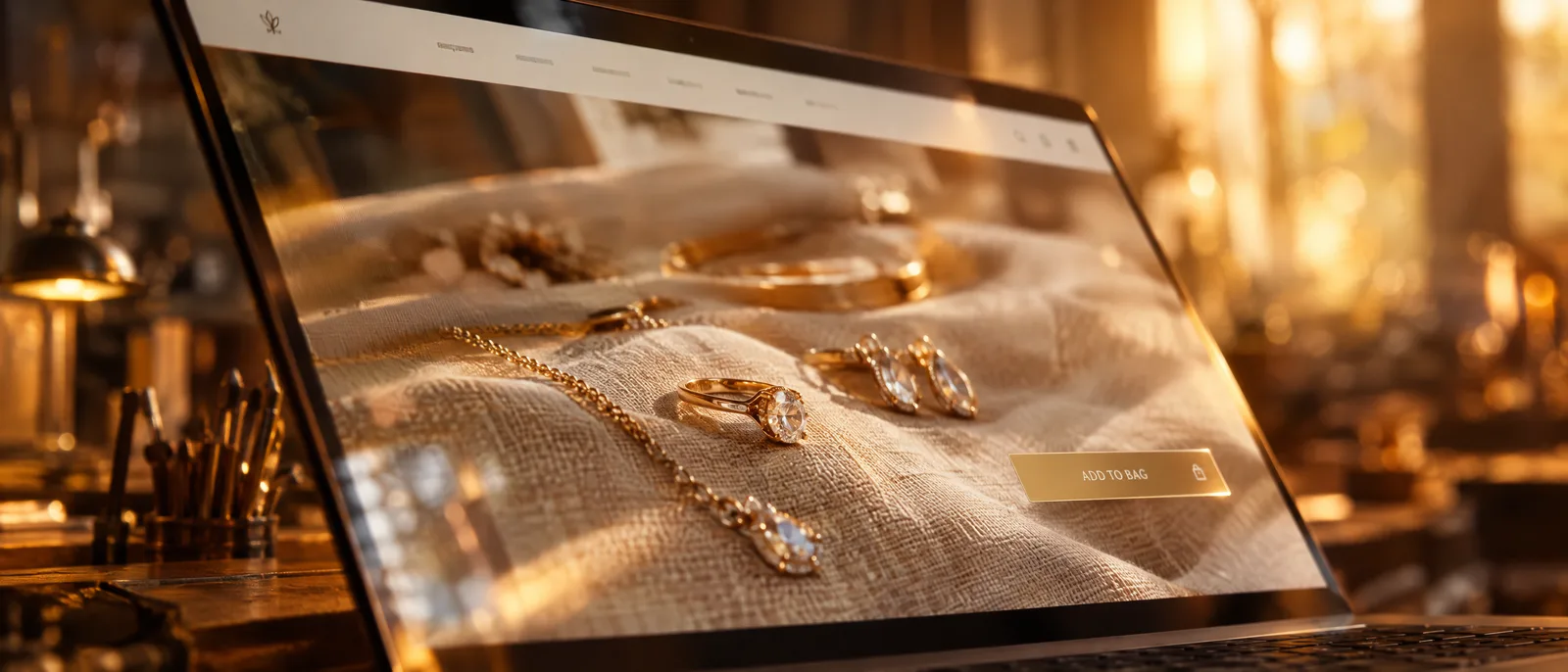
If your pre-owned inventory lives on a single page buried three clicks deep in your navigation, you do not have a pre-owned program. You have a clearance rack. Pre-owned needs its own top-level navigation item, its own landing page, and ideally its own filterable product grid.
Every pre-owned listing should include high-resolution photos from multiple angles, a detailed condition description using standardized grading (unworn, excellent, very good, good), the included accessories (box, papers, extra links), your warranty terms, and your authentication guarantee. This is the information that separates a professional pre-owned operation from a pawn shop.
Add an intake form for sellers directly on your pre-owned page. A simple "Have a piece to sell or trade?" form with fields for brand, model, condition, and photos. This does two things: it generates seller leads passively, and it signals to buyers that your inventory turns over regularly, which means fresh selection.
Price transparency matters more for pre-owned than new. Buyers comparison-shop pre-owned across platforms constantly. If your website says "call for pricing" on a pre-owned Submariner, they will check Chrono24 instead. List your prices. You will sell more.
Marketing to Sellers: Building Your Inventory Pipeline
Inventory is the constraint. You can run perfect ads and have a beautiful pre-owned page, but if your cases are empty, none of it matters. Seller marketing is the unsexy half of the equation, and it is the half that determines whether your pre-owned program grows or stalls.
Email and SMS to Existing Clients
Your existing client database is your best source of pre-owned inventory, and the ask rarely gets made. The person who bought an Omega Seamaster from you in 2019 might be ready to upgrade. The couple who bought wedding bands five years ago might have inherited pieces they do not wear. You will not know unless you ask.
Send a quarterly "We're Buying" email to your full client list. Keep it simple: you are actively purchasing pre-owned luxury watches and jewelry, you offer fair market valuations with no obligation, and the process takes 15 minutes in-store. Include two or three examples of brands and models you are currently seeking.
SMS works even better for time-sensitive asks. When you need specific inventory, a short text to your VIP list moves faster than email. "Looking for pre-owned Rolex sport models this month. Know anyone ready to sell? We pay top dollar and handle everything." That text, sent to 200 past clients, will generate calls.
Segment your outreach by what clients originally purchased. Someone who bought a Tag Heuer is more likely to sell a Tag Heuer. Someone who bought an engagement ring might have estate jewelry. Match the ask to the relationship.
Google Ads for Sellers
Seller-focused Google Ads are the most overlooked pre-owned strategy in luxury retail. The search volume is real: "sell my Rolex," "where to sell luxury watches," "sell engagement ring near me." These searches happen every day in every major metro, and most of the ads running against them are from online platforms, not local retailers.
Your advantage over those platforms is the in-person experience. Lead with it. Your ad copy should emphasize same-day payment, no shipping risk, face-to-face evaluation by a certified appraiser, and immediate cash or store credit. Online platforms cannot match any of that.
Build landing pages specifically for sellers. These are not the same as your buyer-facing pre-owned pages. A seller landing page needs your process (bring it in, get a valuation, walk out with payment), your credentials (GIA-trained, decades in business), and a clear call to action to schedule an appointment or walk in. Include testimonials from past sellers if you have them.
Budget-wise, seller keywords often convert at a higher rate than buyer keywords because the intent is so direct. Someone searching "sell my Cartier bracelet" is not comparison shopping for fun. They want to sell it. A $500-1,000/month budget on seller terms in a mid-size market can generate consistent inventory flow.
Social Media as a Seller Recruitment Tool
Every pre-owned piece you sell on social media is also an ad for your buying program. When followers see a pre-owned Rolex sell within 48 hours of you posting it, the message is clear: this store moves inventory fast, and they probably pay well for it too. That perception is worth more than any direct "we buy watches" post.
That said, run direct seller recruitment content too. A monthly "What We're Buying" post listing specific brands and models you are seeking performs well because it gives people a reason to check their watch box or jewelry drawer. Make it specific. "Currently seeking: Rolex Submariner 116610, Omega Speedmaster Moonwatch, Cartier Tank Solo" is more effective than a generic "we buy luxury watches" message.
Share the process. A 30-second video showing a client walking in, having their watch evaluated, and leaving with a check (with their permission, obviously) demystifies selling and reduces hesitation. Your client has probably never sold a luxury item before. They do not know what to expect, and uncertainty kills action. Show them it is easy.
Community and Word of Mouth
The best pre-owned inventory comes from referrals, and referrals come from being known as the store that buys and sells pre-owned. This sounds circular, but it is how the business actually works. The more visibly you operate a pre-owned program, the more people think of you when someone mentions wanting to sell.
Tell your staff to mention your buying program in every relevant conversation. Client picking up a repair? "By the way, we are always looking to buy pre-owned pieces if you ever want to trade up." Client browsing new watches? "We also have pre-owned options if you want to see what is available, and we buy as well." It takes five seconds and plants a seed.
Partner with estate attorneys, divorce attorneys, and financial advisors in your area. These professionals regularly work with clients who need to liquidate luxury items and have no idea where to go. A simple introduction, a stack of business cards, and an understanding that you will treat their referrals well is all it takes. This channel produces some of the highest-value inventory because estate and divorce pieces often include rare or vintage items.
Authentication and Trust: Your Competitive Moat
The single biggest objection to buying pre-owned luxury is authenticity. Is it real? Is it stolen? Is the condition as described? Online platforms address this with return policies and authentication services, but none of them can match what you offer: hold it in your hands, look the seller in the eye, and have a trained professional walk you through every detail of the piece.
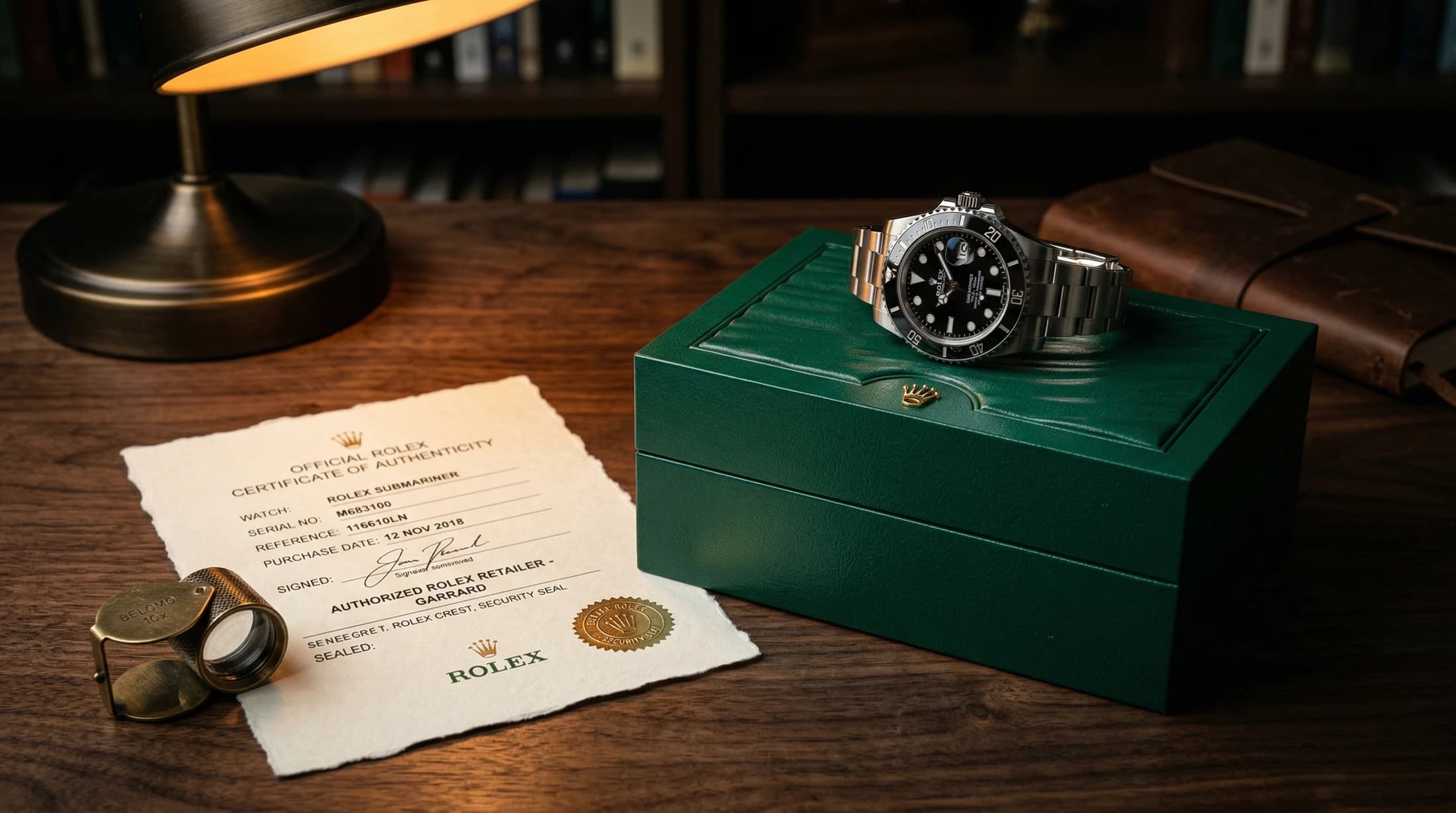
Market your authentication process explicitly. If your watchmaker is WOSTEP-certified, say so. If you use specific diagnostic equipment for movements, photograph it and feature it on your website. If you guarantee authenticity with a written warranty, make that warranty the centerpiece of your pre-owned marketing. This is your primary differentiator against every online platform.
Offer a post-purchase service guarantee on pre-owned pieces. A 12-month mechanical warranty on watches, a structural warranty on jewelry, complimentary first-year service. These commitments cost you very little relative to the sale price, and they eliminate the risk perception that keeps a buyer on the fence. When a buyer can get a pre-owned Rolex from you with a warranty and in-person relationship, versus from a stranger on Chrono24 with a return window, the choice is obvious. Make sure they know it.
Merchandising Affects Marketing
How you display pre-owned inventory in your showroom directly affects how well your marketing performs. If pre-owned pieces are mixed into your regular cases with no distinction, you are missing an opportunity to create a destination within your store. If they are shoved into a back corner, you are telling clients that even you do not take pre-owned seriously.
Give pre-owned its own dedicated case or section, well-lit and positioned where browsers naturally walk. Presentation should match your new inventory standards: clean pieces, proper cushions or watch stands, visible pricing. A "Just Arrived" display works well specifically for pre-owned pieces that rotates weekly. This gives repeat visitors a reason to come back and check what is new.
Your in-store merchandising and your online content should mirror each other. The pieces featured in your Instagram Reels should be findable in your store and on your website. When someone sees a pre-owned Cartier Santos on your social feed, walks in to see it, and finds it displayed beautifully with full documentation, that consistency converts. When the experience does not match, trust erodes fast.
Measuring What Works
Pre-owned requires separate tracking from your new inventory business. Different margins, different customer acquisition costs, different sales cycles. If you are lumping everything together in your analytics, you have no idea whether pre-owned is profitable or subsidized.
Track these metrics monthly: pre-owned inventory turn rate (how fast pieces sell after listing), average margin per pre-owned sale, cost per acquisition on both the buyer and seller side, and the percentage of pre-owned buyers who return to purchase new. That last metric is the one that justifies the entire program to skeptics, because it proves pre-owned is a gateway to full-price sales.
Attribution matters here more than most categories. A pre-owned buyer might discover you through a Google Ad, check your Instagram for inventory, read reviews on Google, and then walk in. If you are only tracking last-click, you will over-invest in whatever channel gets credit for the final touch and under-invest in everything that got them there. Use UTM parameters on every ad and social link, track phone calls from your Google Business Profile, and ask every walk-in how they found you. Simple systems beat no systems every time.
Make Pre-Owned a Real Business
H&CO builds pre-owned marketing programs for jewelry and watch retailers, covering both sides of the equation. If you have the inventory and the expertise but not the marketing, let's talk.

About the author
Hagop Imasdounian
Hagop Imasdounian is the founder of H&CO. Raised around his family’s jewelry businesses, he brings more than 15 years of digital marketing experience to helping jewelry and watch brands improve their websites, reach buyers and connect marketing with sales.