
If you read most marketing blogs, you'd think AI is about to replace your sales associates with holograms and your gemologists with robots.
That is noise.
For a luxury watch or jewelry retailer with 10–30 employees, AI in 2026 isn't about the "future of retail." It's about efficiency today. It's about doing the work of a 50-person marketing department with the budget of a local store.
According to a 2024 Federal Reserve Bank of St. Louis study, generative AI has hit a 40% adoption rate faster than the PC or the internet did. Workers using it are 33% more productive during the hours they're actually plugged in. Frequent users are clawing back over 2 hours a week. In a category like luxury retail, where marketing teams are often just one person wearing five hats, that lift is the difference between staying relevant and being forgotten.
Three Real Applications for AI This Quarter
Forget the "metaverse" and "agentic commerce." Here is what is actually working for our clients right now.
1. Scaling Ad Creative and Testing
In our analysis of 20,946 ads, we found that 58.8% of ads had no message at all. Why? Because producing dozens of ad variations is a grind. You've got high-res shots of a Rolex Daytona 116500LN or a Patek Philippe Nautilus 5711, but no copy to match the heat of the piece.
- The AI Fix: We use AI to generate 20–30 variations of headlines, body copy, and image concepts for a single campaign. We then use Meta's Advantage+ creative to test these variations automatically.
- The Result: The algorithm finds the winners faster, lowering your cost per lead. It stops you from burning cash on a Cartier Tank ad that isn't hitting.
2. Product Descriptions at Scale
If you have 500+ SKUs on your website, writing unique, SEO-friendly descriptions for each one is a multi-month project. You're dealing with technical nuances like the Rolex Caliber 3235's Chronergy escapement or the delicate hand-applied Anglage on a Vacheron Constantin movement.
- The AI Fix: AI can draft high-quality descriptions based on product specs (metal, stone, carat, setting). A human then spends 2 minutes editing the "voice" to ensure it matches your brand.
- The Result: You go from 50 products with descriptions to 500 in a single week. This improves your visibility and gives AI search engines (like ChatGPT) more data to cite when someone asks about a "platinum micro-pave engagement ring."
3. AI-Enhanced Clienteling
Luxury retail is built on memory. "Mrs. Chen bought Van Cleef & Arpels Alhambra earrings last year for her anniversary. Her husband mentioned she likes the vintage-inspired white gold aesthetic."
- The AI Fix: AI-assisted CRM notes help your sales team summarize customer preferences and trigger personalized outreach. It's about tracking the "allocation games" and "waitlist fatigue" mentioned on RolexForums or Reddit/r/Watches to keep your best clients happy.
- The Result: Your team has "superhuman memory," allowing them to provide a level of personal service that a national chain or DTC brand can never match.
GEO: Making Your Store "Citable"
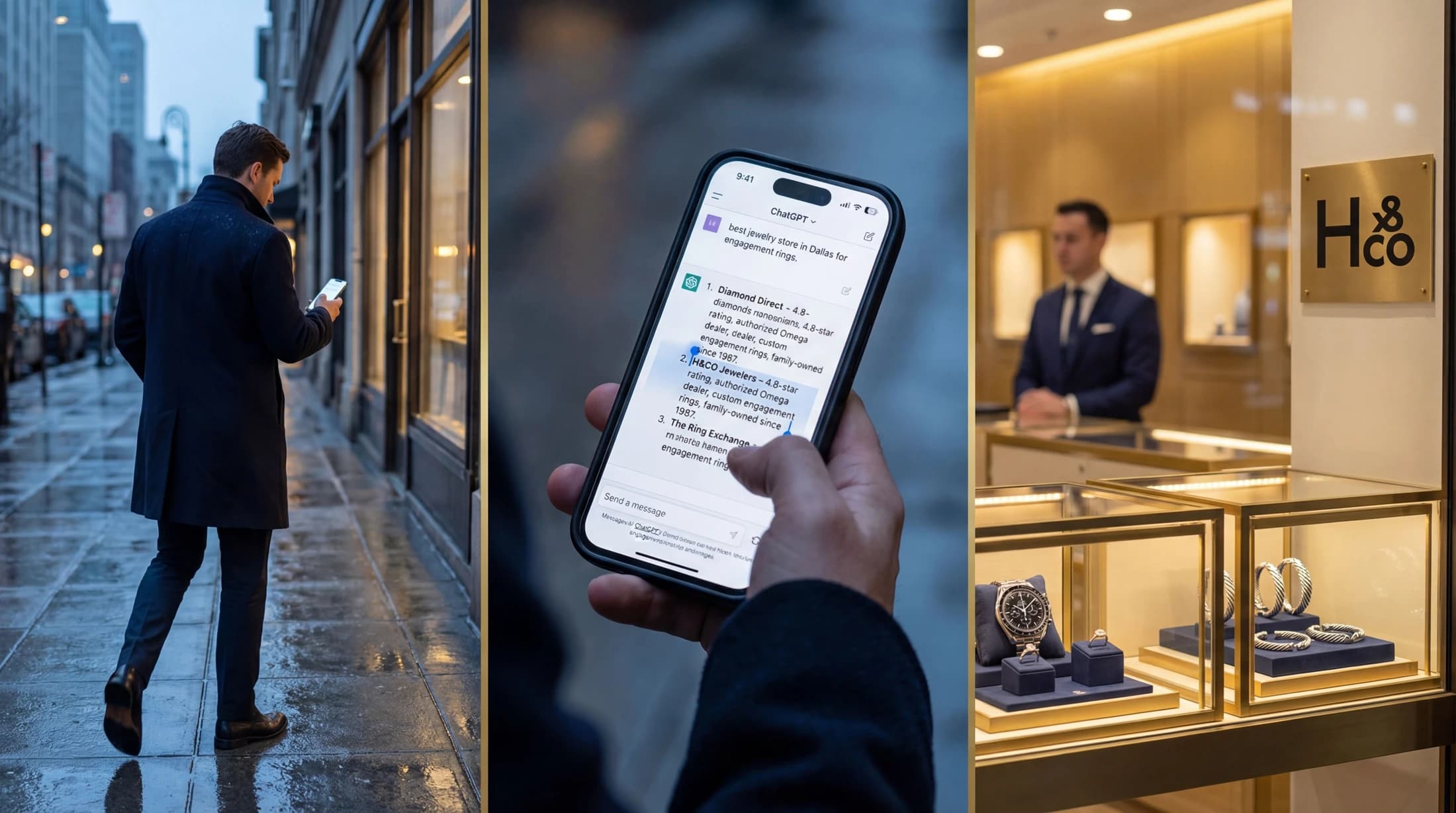
The most significant shift in 2026 is the rise of AI Search. According to BrightLocal, 45% of consumers now use tools like ChatGPT, Gemini, and Perplexity to evaluate local businesses. That's up from just 6% a year ago.
When an AI answers a question like "Where is the best place to buy a Patek Philippe in Dallas?", it pulls from the most citable data it can find. This is Generative Engine Optimization (GEO). It requires clear, factual paragraphs (134-167 words is the sweet spot for AI citation) and specific entity signals. If your website is a black box to AI, you won't be in the answer. You're invisible.
What to Ignore (For Now)
If someone tries to sell you on these, walk away:
- AI Chatbots for Luxury Sales: Luxury buyers want a human conversation, not a script. A chatbot on a $50,000 Audemars Piguet Royal Oak page is a trust-killer.
- AR "Try-On" for Fine Jewelry: Unless you are Harry Winston, the cost of high-quality AR assets rarely outweighs the "gimmick" factor for a local jeweler.
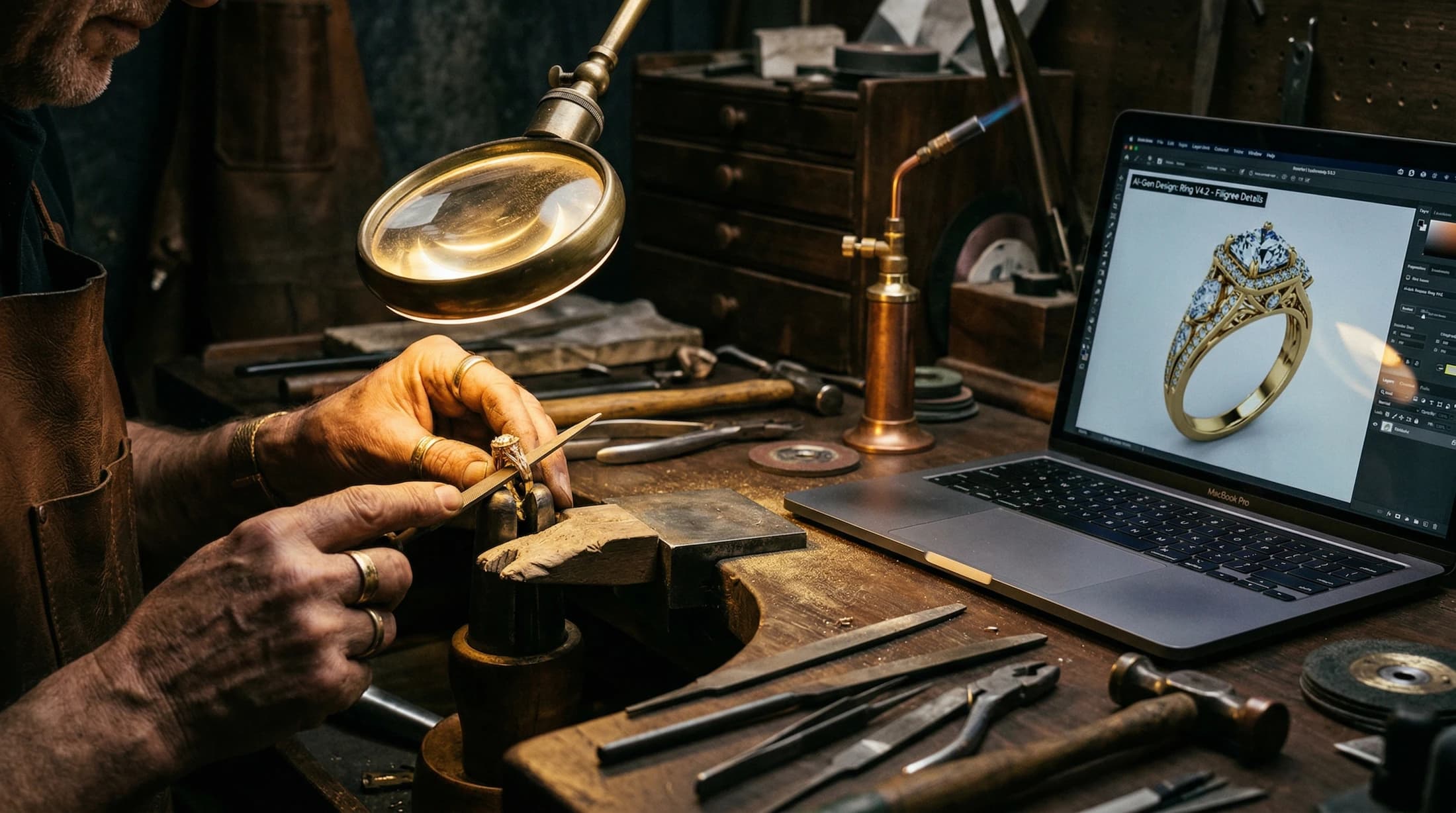
- AI-Generated Jewelry Design: It's a tool for inspiration, but it's not ready to replace the craft of a master jeweler.
The Human Moat
AI is a commodity. Everyone has access to the same models. The "moat" that protects your business is the part AI can't do: the taste, the relationships, and the physical presence in your city.
AI can write the ad, but it can't host the trunk show. AI can describe the diamond, but it can't see the light in a customer's eyes when they see it for the first time.
At H&CO, we use AI to handle the volume so you can focus on the value. Look, the tech is here. Use it or get left behind.

About the author
Hagop Imasdounian
Hagop Imasdounian is the founder of H&CO. Raised around his family’s jewelry businesses, he brings more than 15 years of digital marketing experience to helping jewelry and watch brands improve their websites, reach buyers and connect marketing with sales.