
Nearly 70 watch brands spend over $1M a year on advertising in the U.S. alone. Rolex has historically led the pack with tens of millions in annual ad spend. The Swiss watch industry has produced some of the most effective ad campaigns in marketing history, and the reason is not budget. It is positioning.
Most "best watch ads" lists treat these campaigns like collectibles. Pretty pictures, a little nostalgia, zero analysis of why they actually worked. That is fine if you are a watch enthusiast killing time on a lunch break. It is useless if you run a store and need to sell watches.
This post does something different. We break down 15+ watch ads and campaigns through a marketing strategy lens. For each one: what the brand did, the principle behind it, and what a watch retailer can apply to their own business today. These campaigns span from 1927 to 2026, from newspaper front pages to user-generated content on social media.
This is a strategy playbook disguised as a listicle.
You do not need a massive budget. You need the same instincts these brands used, scaled to your market.
Proof Over Claims
The most effective watch advertising does not assert quality. It demonstrates it through real-world events and third-party validation. Two campaigns defined this approach, and both are still generating returns decades later.
Rolex x Mercedes Gleitze, 1927: The Ad That Invented Product Placement
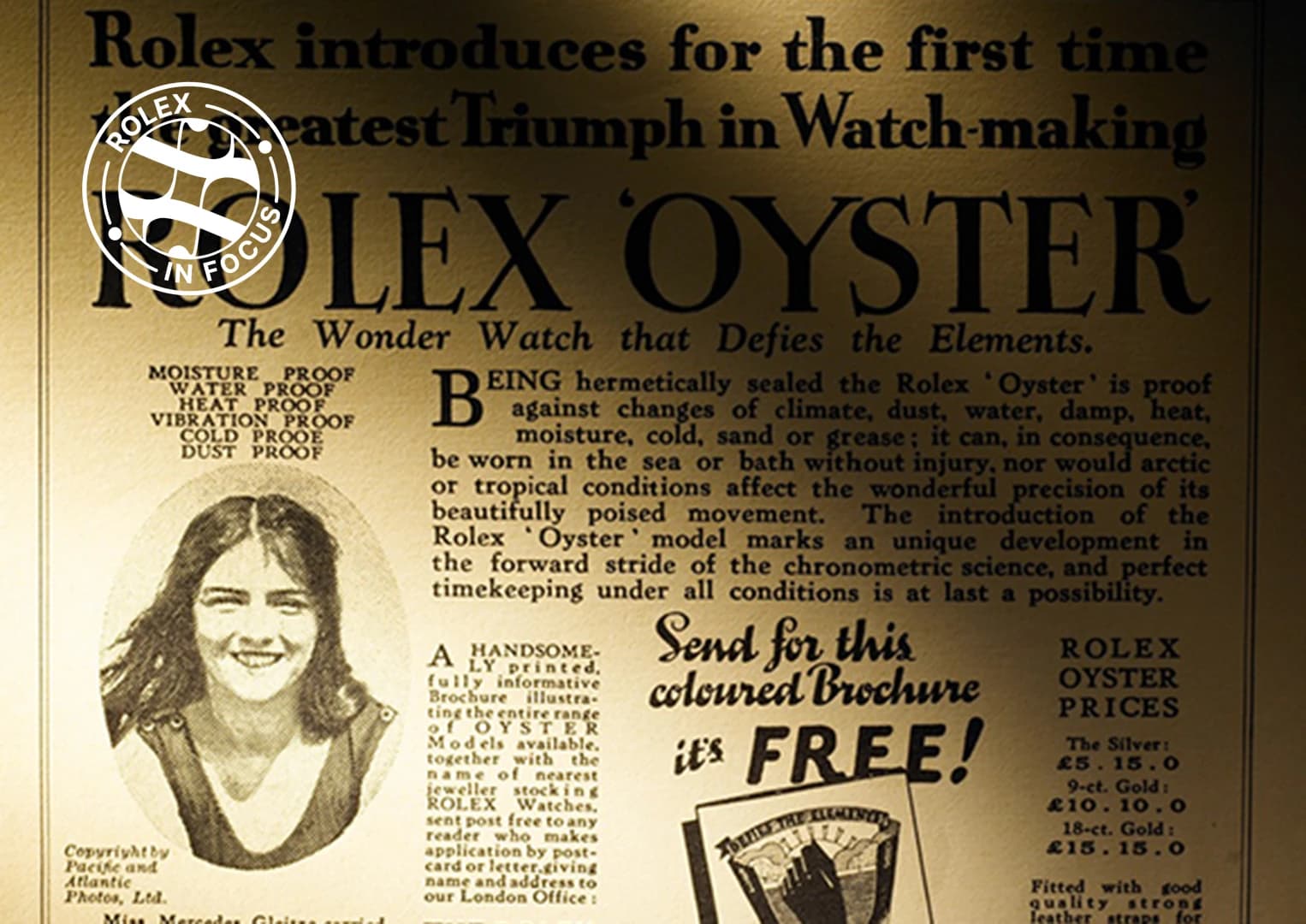
In 1927, Rolex founder Hans Wilsdorf strapped a Rolex Oyster to swimmer Mercedes Gleitze for her "vindication swim" of the English Channel. Gleitze was pulled from the water after more than 10 hours due to hypothermia, unable to finish. But the Rolex Oyster kept running. Wilsdorf ran the ad anyway, because the watch had done its job even when the swimmer couldn't complete hers.
Then Wilsdorf did something no watchmaker had done before. He bought a front-page ad in the Daily Mail to announce the result. Not a product shot. Not a list of specifications. A news story about a real event, with his product at the center.
This was the first brand ambassador activation we know of. The Oyster did not claim to be waterproof. It proved it, in the most public and verifiable way possible. The watch went through what the customer feared, and came out the other side working perfectly.
Rolex still references Gleitze in their advertising nearly 100 years later. One authentic moment, leveraged for a century. That is the kind of return on investment that no media buy can match.
What this means for your store: Proof beats claims. Every time. If you sell dive watches, show them underwater. If you sell dress watches, show them at the events where they belong. Stop describing quality in your product copy. Start demonstrating it in your content. A 30-second video of a watch being dunked in water and coming out ticking will outperform any paragraph about water resistance ratings.
Omega Speedmaster: NASA Did Not Endorse It. They Selected It.
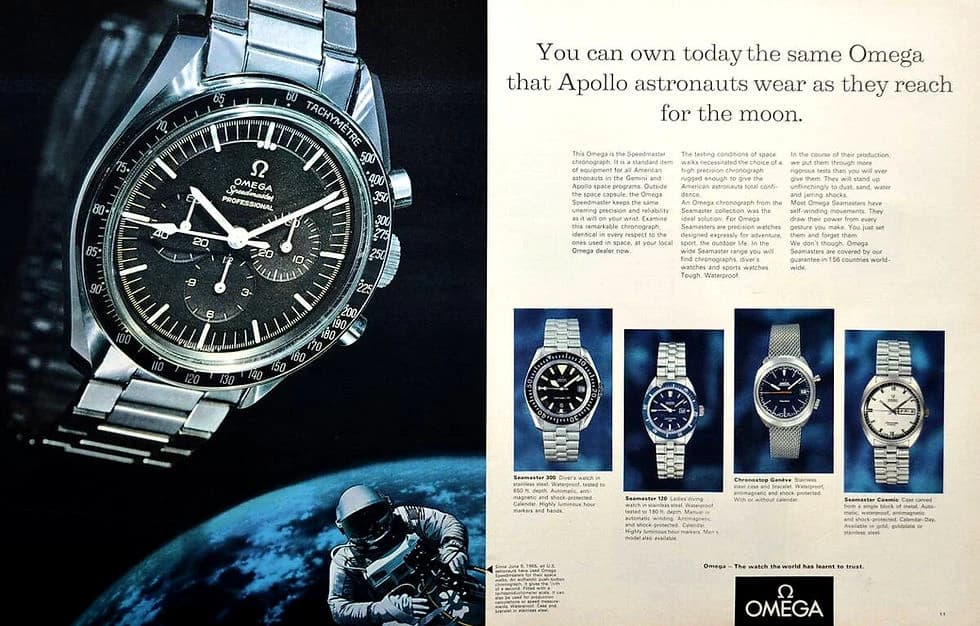
There is an enormous difference between a sponsorship deal and a blind selection. NASA did not call Omega looking for a partner. They tested multiple watches from multiple brands under extreme conditions, heat, cold, vibration, zero gravity, and the Speedmaster was the one that survived. The other brands failed.
That distinction matters because third-party validation at this level is almost impossible to manufacture. Omega did not pay for the endorsement. They earned it through product performance.
The 1969 print ads played a brilliant pricing angle: the watch that went to the moon cost roughly $200. About two weeks' wages for the average American worker. The combination of the most extraordinary context imaginable with an attainable price point made the Speedmaster feel like the democratization of space-age technology.
Omega has been running Moonwatch campaigns for 57 years. The campaign is still active. They have released 40th anniversary editions, 50th anniversary editions, and special colorways. All of it traces back to one moment of genuine, unscripted validation.
What this means for your store: Institutional validation, whether that is awards, certifications, press coverage, or media features, carries more weight than anything you say about yourself. Chase third-party proof. Get your store reviewed. Submit for local business awards. Earn a feature in a regional magazine. These assets are worth more than a year of self-promotional social posts. If you want a framework for measuring what actually moves the needle, start with the sources your customers trust more than you.
Sell the Identity, Not the Specs
The strongest watch ads never lead with movements, complications, or materials. They sell a version of who the buyer becomes when they put the watch on. Three campaigns from three different decades all figured this out.
Rolex "If You Were...": The Ads That Sold a Future Self
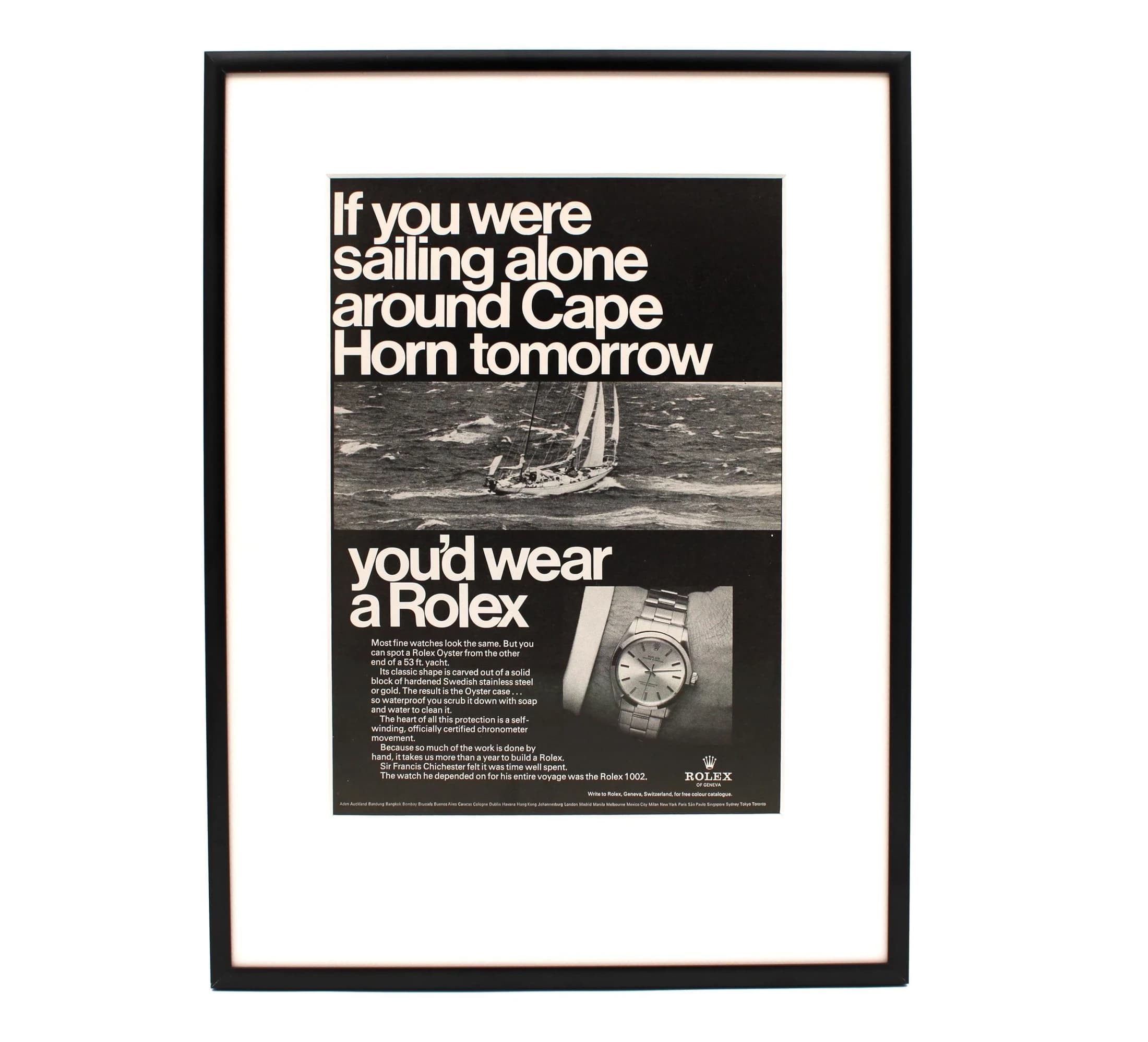
During the 1960s and 1970s, Rolex ran a campaign built on a simple formula: "If you were [doing something extraordinary] tomorrow, you'd wear a Rolex." Each ad placed the reader into an aspirational professional scenario. Speaking at the United Nations. Commanding a submarine. Taming an oil well fire.
The typography was clean Helvetica. The layouts were spare. And the copy never once listed a feature, a complication, or a case diameter.
These ads worked because they answered the only question a luxury buyer actually cares about: "What kind of person wears this?" The specs justify the purchase after the decision is made. The identity sells it.
What this means for your store: Your product pages and ads should answer "who wears this?" before "what does it do?" Lead with lifestyle imagery and customer identity. Save the technical specifications for the second scroll.
Patek Philippe "Generations": The Greatest Luxury Ad Line Ever Written
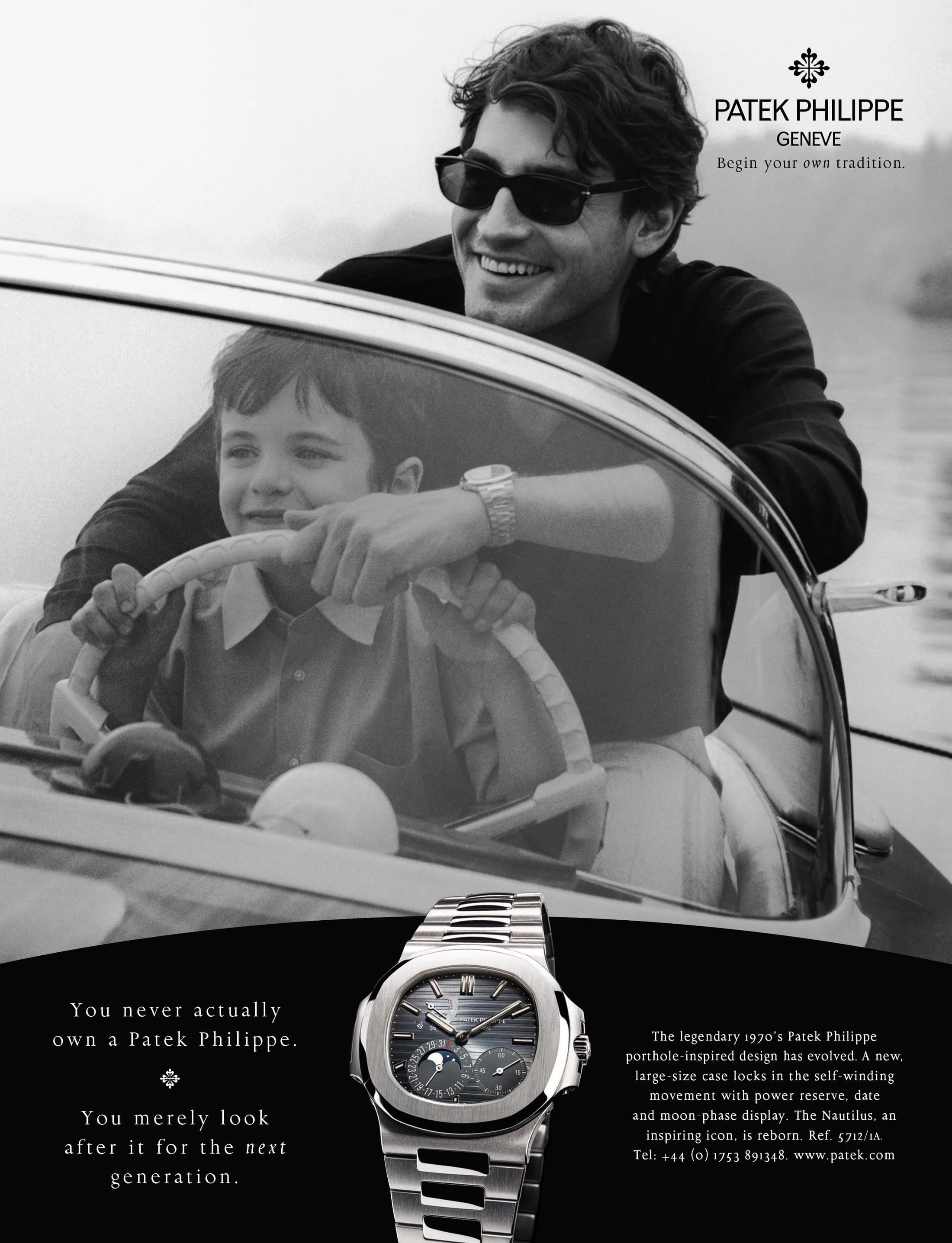
"You never actually own a Patek Philippe. You merely look after it for the next generation."
Created by agency Leagas Delaney in 1996. Still running in 2026, 30 years later. It is the longest-running luxury watch campaign in history, and there is a reason no one has tried to replace it.
The tagline was born on a flight from San Francisco to London, after consumer research revealed something the industry had been ignoring: buyers were resistant to celebrity-driven watch advertising. They did not want to be told that a famous person wore the watch. They wanted to understand why the watch mattered to their own life.
Leagas Delaney answered that with black-and-white photography by Peter Lindbergh and Mary Ellen Mark. Fathers and sons. Later, mothers and daughters. No celebrities. No product shots on velvet. Just families, and a line of copy that reframes a purchase as an inheritance.
The genius is in what the tagline does to the buyer's psychology. When you position a product as a family heirloom, price becomes irrelevant. The customer is no longer buying a watch. They are buying legacy. They are buying the moment, 30 years from now, when their child opens that box.
No other watch campaign has ever achieved this level of emotional repositioning. And no other campaign has needed to run for three decades without a refresh. The message does not age because the desire to leave something behind does not age.
What this means for your store: The best luxury marketing makes price a non-issue by reframing what the customer is actually buying. Every retailer selling high-end pieces should be telling generational stories, not reciting spec sheets. Ask your customers: who will inherit this piece? Film that answer. That is content that converts. If you are serious about building a content strategy around stories like these, start with your existing client relationships.
Tudor "Born to Dare": Aspirational Without the Rolex Price Tag
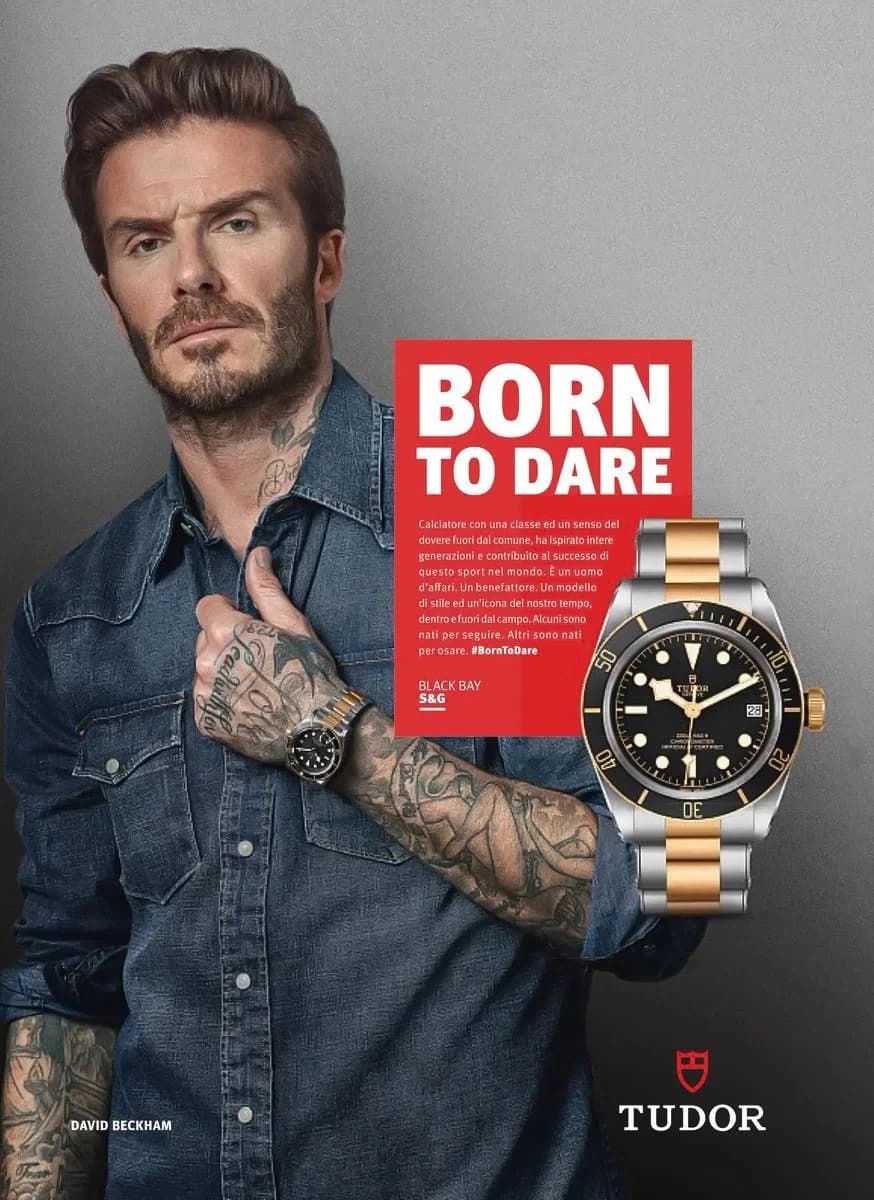
David Beckham as Tudor's brand ambassador is a positioning masterclass. Tudor is Rolex's more accessible sibling brand. It shares DNA, shares manufacturing standards, shares retail space. But it needs its own reason to exist in the display case.
Beckham solves that problem. He is a global style icon with mass appeal, but he is not the kind of untouchable celebrity who makes a product feel distant. The "Born to Dare" campaign videos show him freediving, reflecting on the moments in his career that required courage. The production is cinematic, modern, video-first.
The implicit message is clear: you do not need the crown on the dial to be interesting. Tudor gives the retailer a story about personal daring. Rolex gives them a story about heritage and achievement. Same case, two distinct conversations.
What this means for your store: If you carry multiple brands, each one needs distinct positioning in your marketing. Tudor and Rolex can sit side by side in the same display if the stories you tell about them are different. Define that difference before you spend a dollar on advertising.
Confront the Objection in the Headline
When your product has an obvious objection, whether it is price, material, or unfamiliarity, the worst move is to ignore it. The customer is already thinking it. Two watch brands turned their biggest liabilities into their strongest selling points by saying the quiet part out loud.
Audemars Piguet Royal Oak: "Would You Buy a Rembrandt for Its Canvas?"
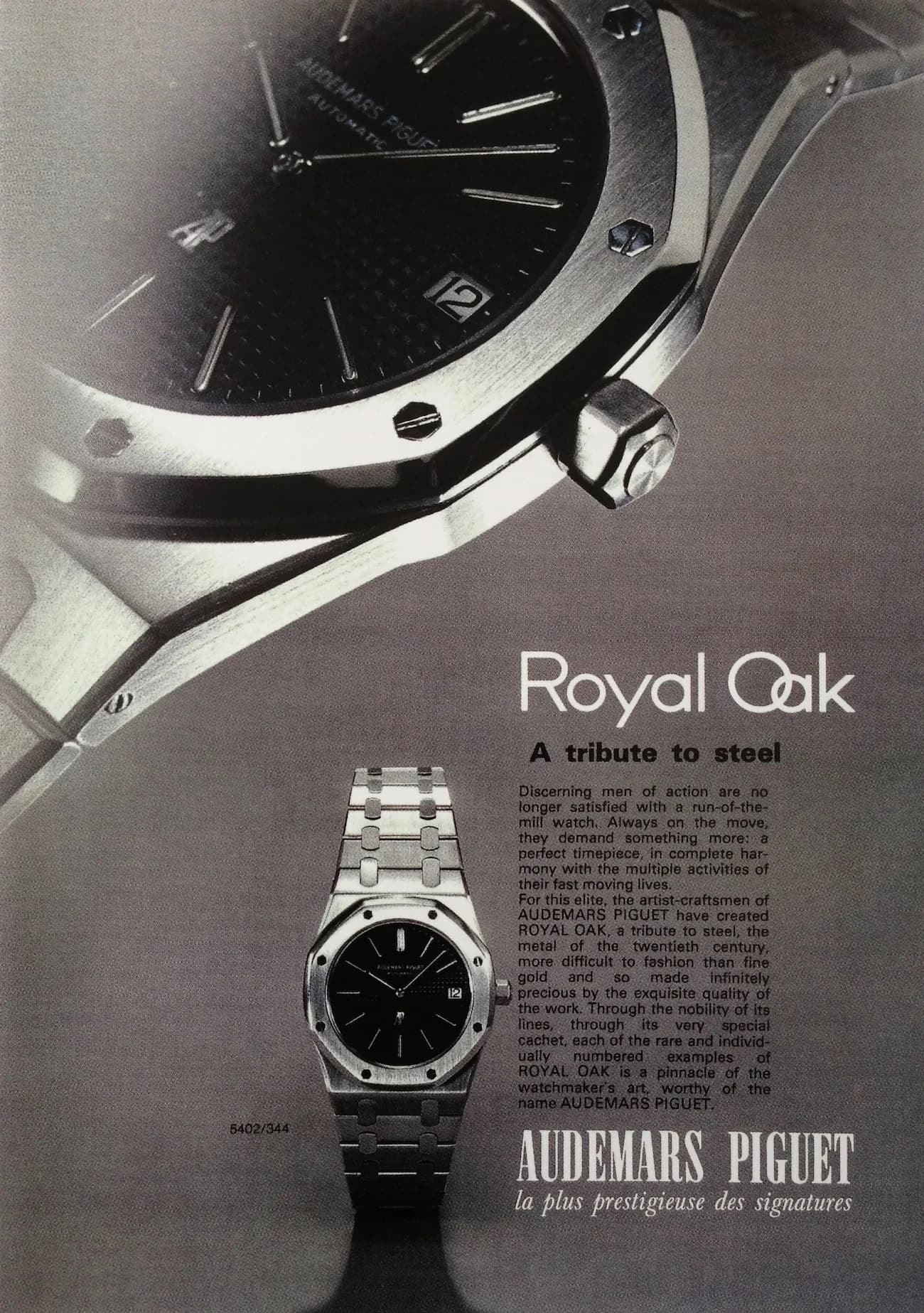
In 1972, Audemars Piguet did something the watch industry considered insane. They launched a steel sports watch priced higher than gold dress watches. The Royal Oak, designed by Gerald Genta, broke every rule about what steel could cost and what a luxury watch was supposed to look like.
The ads did not dance around the obvious objection. They led with it. One headline read: "The costliest stainless steel watch in the world." Another asked: "Would you buy a Rembrandt for its canvas?"
That Rembrandt line is one of the cleverest objection-handling taglines in watch advertising. It takes the customer's skepticism ("it's just steel, why does it cost this much?") and reframes it in a single sentence. You do not buy a painting for the material it is printed on. You buy it for the artistry. Same principle.
AP did not apologize for the price. They did not explain it away with spec lists. They challenged the buyer to think differently about value. And it worked. The Royal Oak became one of the most sought-after watches in history.
What this means for your store: If your product has an obvious objection, do not avoid it. Name it. Reframe it. Your customers are already thinking it. Beat them to the punch. If they balk at price, do not lower the price. Change what they think they are paying for. If you are managing demand for allocated watches like the Royal Oak, the objection-handling starts the moment someone joins the waitlist.
Seiko Quartz Astron: "Someday, All Watches Will Be Made This Way"
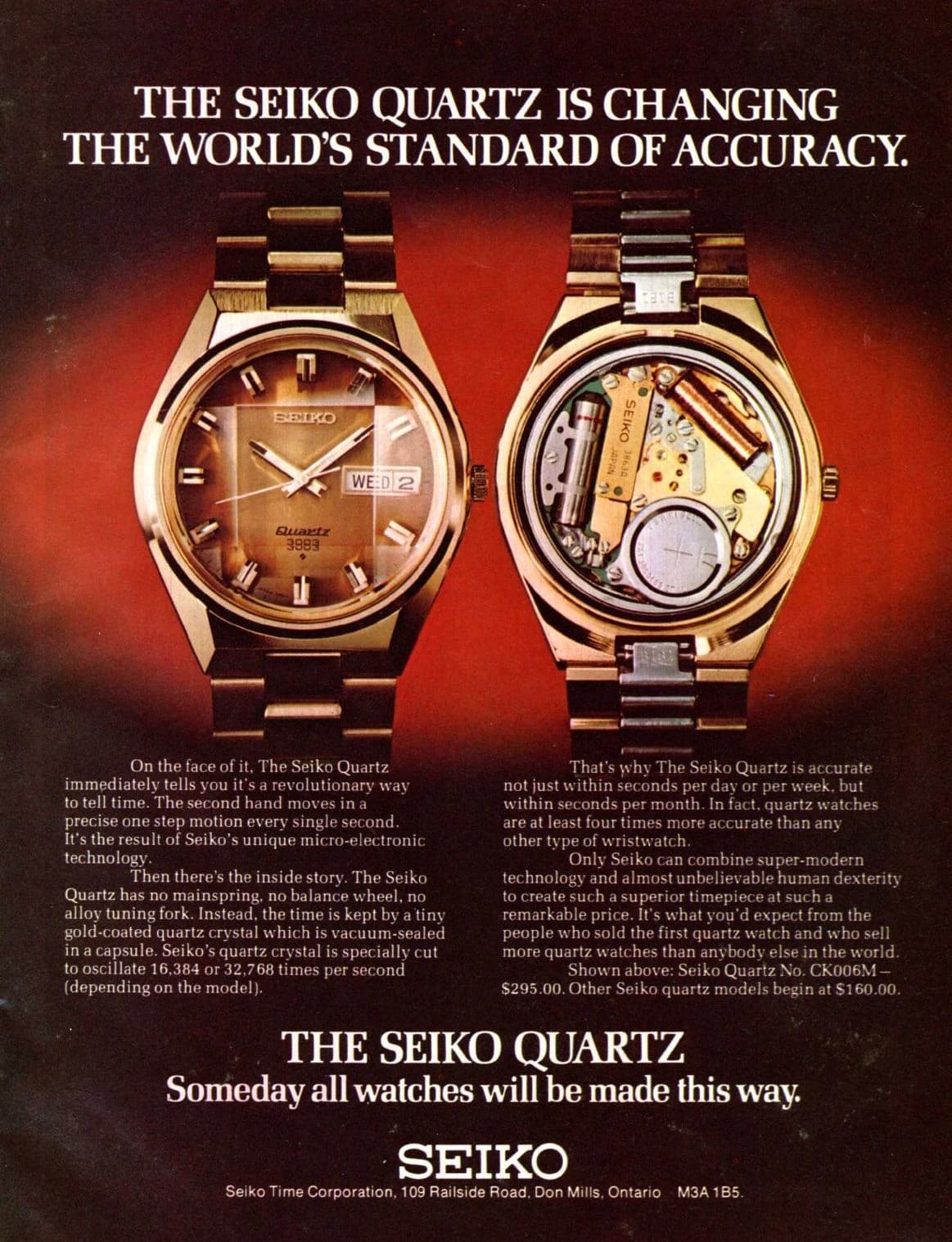
Released on Christmas Day 1969, the Seiko Quartz Astron cost roughly $1,250, equivalent to about $10,000 today. That is what a medium-sized car cost in 1969. For a Seiko.
The tagline was audacious: "Someday, all watches will be made this way." It was also prophetic. The quartz revolution that followed nearly destroyed the Swiss watch industry. Entire companies went bankrupt. The ones that survived had to reinvent themselves around craftsmanship and heritage, because they could no longer compete on accuracy.
Seiko did not position the Astron as a better watch. They positioned it as an inevitability. When you are creating a new category, you do not compete with the existing one. You declare the existing one obsolete. That takes confidence, and it takes a product that delivers.
What this means for your store: When you introduce a new brand or product category to your store, frame it as the inevitable next step. Not a risky experiment. Not a quirky addition. The future, sitting in your display case right now.
> We analyzed 20,946 ads from 99 jewelry and watch retailers. The patterns we found separate the stores that grow from the ones that stall. Read the full breakdown.
Celebrity Done Right
Celebrity endorsement in watch advertising works when the ambassador genuinely lives the brand's ethos. It fails when the connection is purely transactional, when the celebrity would never actually wear the watch if they were not being paid to. Three campaigns show the difference between a partnership and a paycheck.
Omega x James Bond: A Single Limited Edition Projected at $32M in Sales
When Pierce Brosnan took over the Bond role for GoldenEye in 1995, costume designer Lindy Hemming made a decision that changed watch marketing forever. She considered Rolex "rather flash" and too associated with city-boy culture for the new Bond, and switched to Omega's Seamaster.
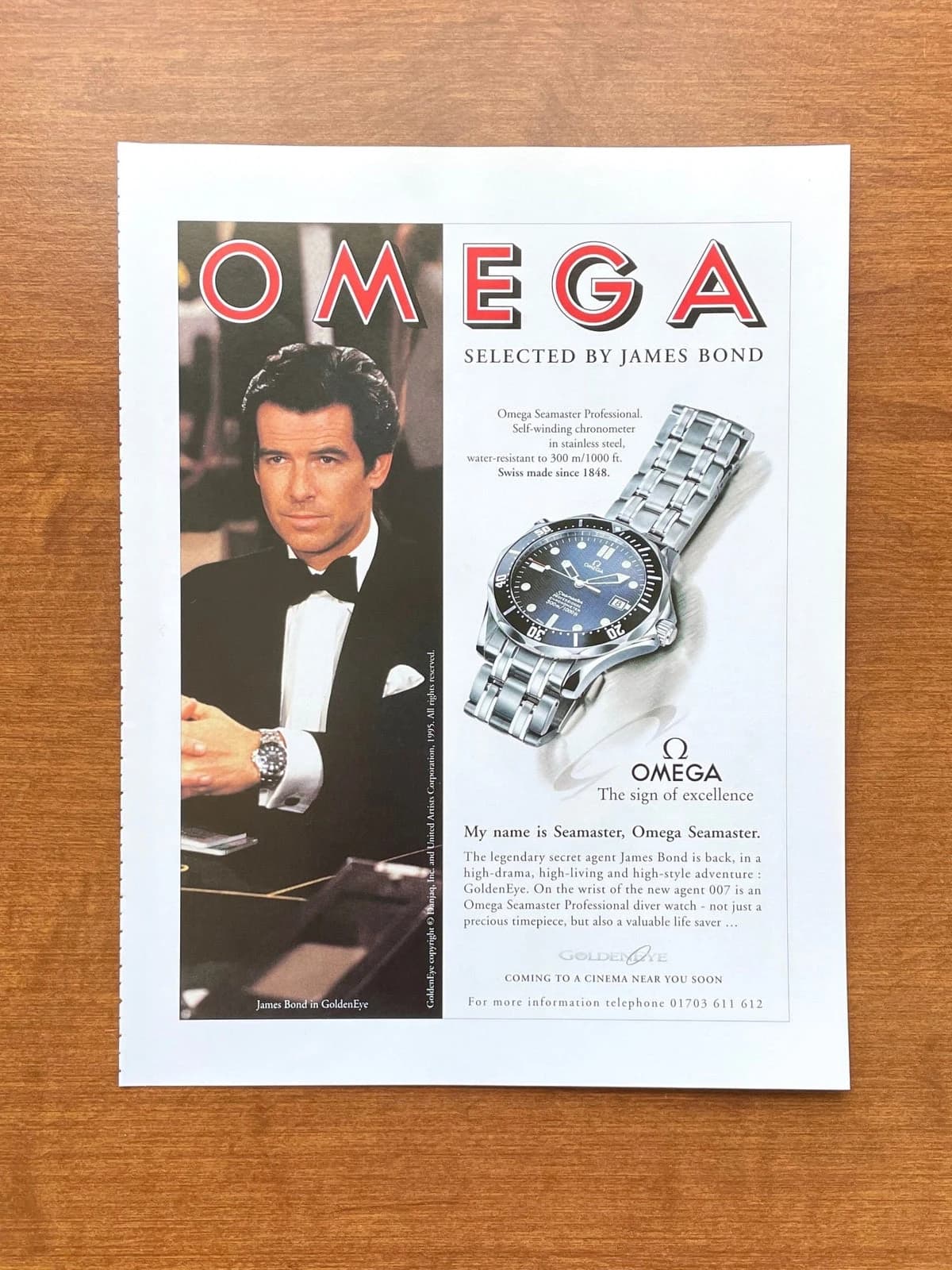
That single creative decision has generated millions in limited-edition Seamaster sales with every Bond film release. Each movie launch creates a predictable demand spike: pre-release anticipation builds, the film opens, limited editions sell out, demand settles, and the cycle resets when the next film is announced.
Omega has released Bond-edition Seamasters for every film since GoldenEye. The brand integration feels natural because the watch is used as an actual tool in the films, not a prop for a close-up. Bond activates the watch's features. He checks it under pressure. The Seamaster is not product placement. It is a character asset.
For retailers, the takeaway is about timing and product strategy: Bond films create a reliable sales event. Retailers who pre-order Bond editions and build in-store displays around the film launch window convert curiosity into transactions. The film does the marketing. The retailer's job is to be ready with the inventory and the experience.
What this means for your store: Map your inventory calendar to cultural moments. If a brand you carry has a film tie-in, event sponsorship, or celebrity moment approaching, build your marketing window around that external buzz. Let the brand's national campaign drive awareness. Your job is conversion at the local level.
TAG Heuer "Don't Crack Under Pressure": Volume Over Exclusivity
TAG Heuer's approach to celebrity endorsement is fundamentally different from Omega's or Patek Philippe's. Where a luxury watch brand usually picks one or two carefully selected ambassadors, TAG Heuer has signed dozens across sports, entertainment, and social media.
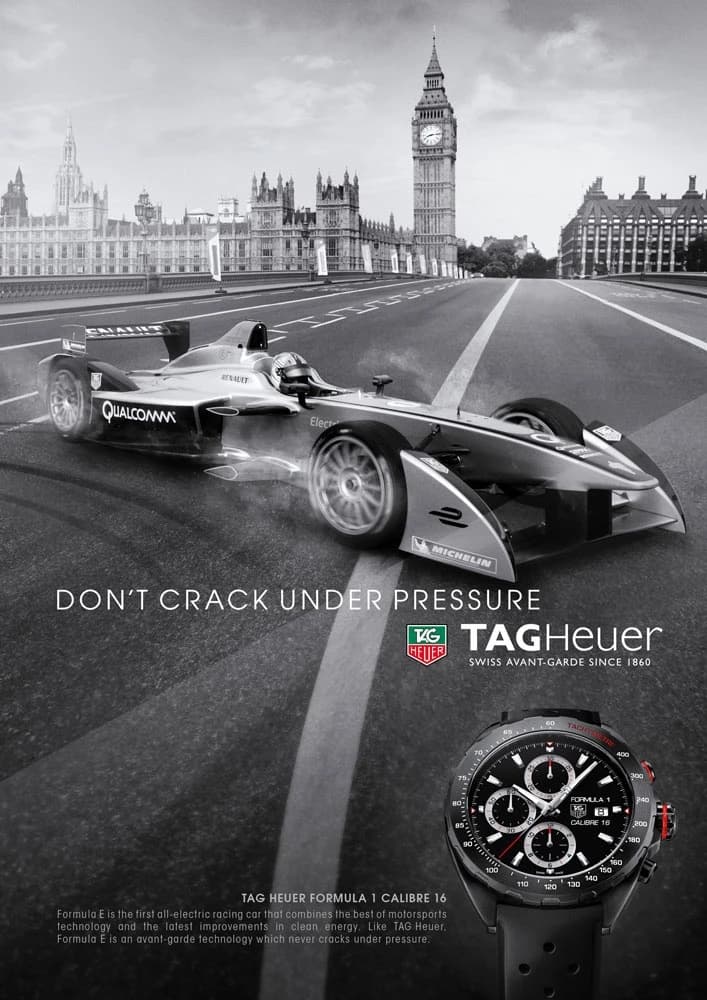
Cristiano Ronaldo. Maria Sharapova. Steve McQueen, posthumously. Ryan Gosling. The roster is deliberately wide. The tagline "Don't Crack Under Pressure" unifies them all under a single brand idea: performance under stress.
This is a volume play. TAG Heuer is not trying to be the most exclusive watch in the case. They are trying to be the most recognized. And it works: TAG Heuer consistently ranks as one of the most searched luxury watch brands globally.
The risk is dilution. When everyone is an ambassador, the word loses meaning. But TAG Heuer mitigates this by keeping the tagline consistent and the brand message uniform across all partnerships. The ambassador changes. The pressure does not.
What this means for your store: You can feature multiple local ambassadors, customers, athletes, chefs, entrepreneurs, as long as you have one consistent brand message connecting them all. The thread matters more than the face.
Steve McQueen x TAG Heuer Monaco: The Unplanned Association Worth Millions
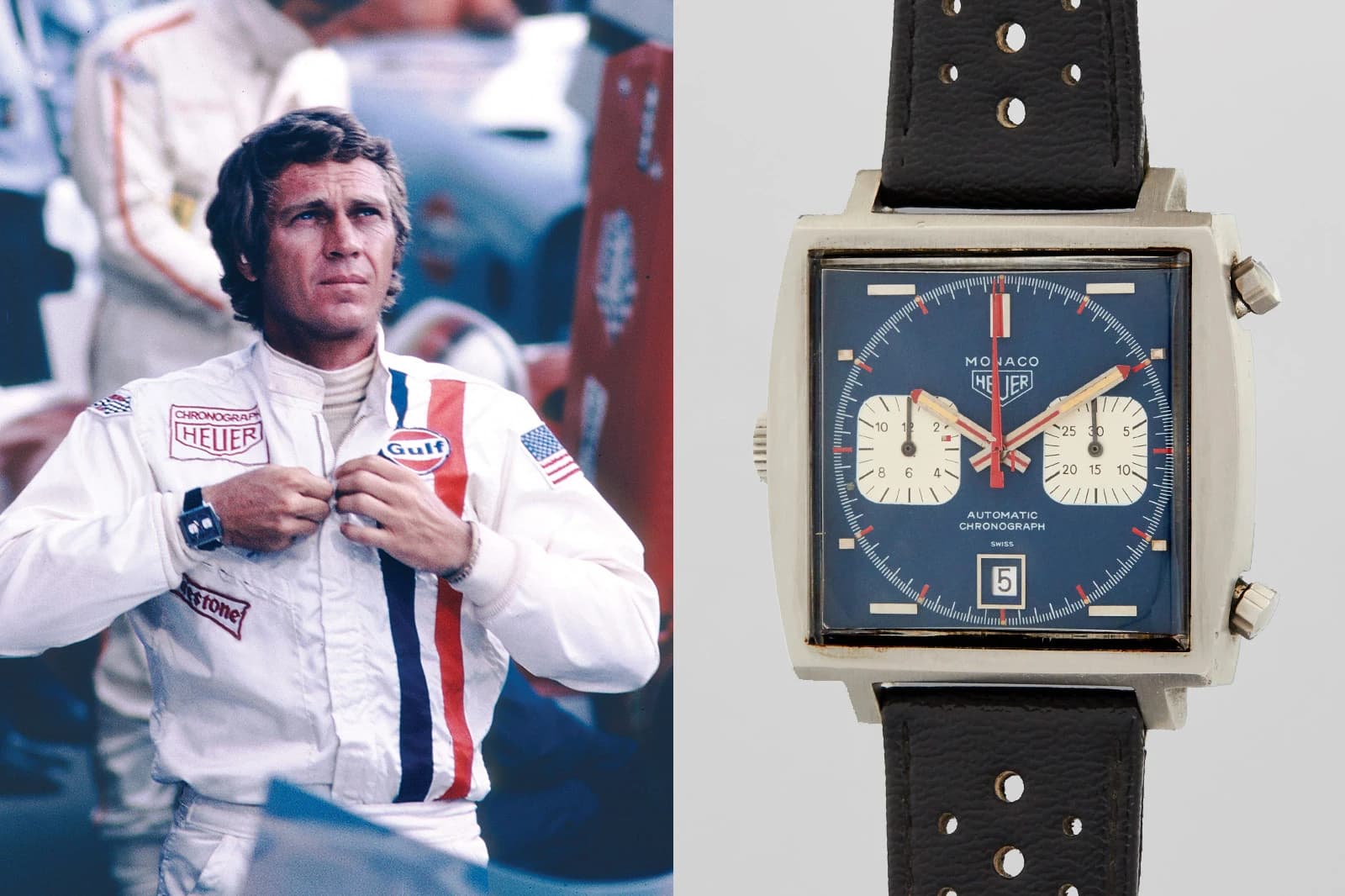
Steve McQueen wore a TAG Heuer Monaco in the 1971 film Le Mans. It was a prop decision. McQueen liked the watch. He wore it on set. And that single production choice turned the Monaco into one of the most recognized watches in the world.
The Monaco was not a commercial success before Le Mans. It was an oddly shaped square chronograph that most dealers were not enthusiastic about. McQueen's on-screen endorsement, entirely organic, gave it the cultural context it needed.
TAG Heuer has since released multiple McQueen-era Monaco re-editions, and every one of them sells. The association has lasted over 50 years, generated by a single unplanned moment. Compare that to a typical paid celebrity deal: 12-18 months of contractual obligations, seven-figure fees, and often no lasting brand equity once the contract ends.
What this means for your store: Organic moments of product love from real customers are more durable than paid placements. When a local figure, a chef, an athlete, a business leader, genuinely wears one of your watches, capture that moment. That photo, that story, that testimonial will outperform a paid influencer post by an order of magnitude.
Break the Medium
Some of the best watch advertising works because it does not look like advertising. It breaks conventions of format, medium, and expectation.
IWC Big Pilot Bus Straps: The Ad You Could Wear
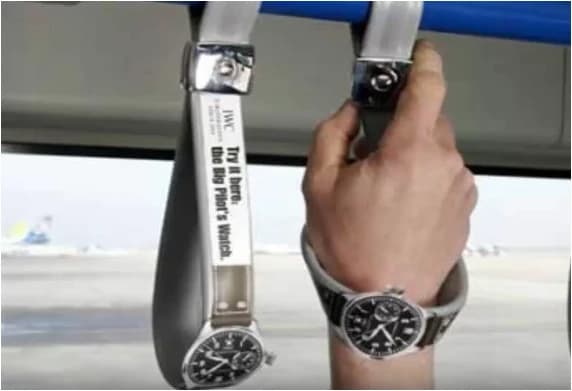
In 2006, agency Jung von Matt replaced the hanging straps on Berlin buses near the airport with IWC Big Pilot watch faces. Commuters who grabbed the strap appeared to be wearing a massive Big Pilot on their wrist. The execution cost almost nothing relative to a traditional media buy. It generated global press coverage.
The campaign won a Gold Lion at Cannes. More importantly, it demonstrated a principle that luxury brands often forget: media can be part of the product experience. Every commuter who grabbed that strap got a brief, physical simulation of what it feels like to wear an IWC. That is trial.
The campaign also demonstrates that the most memorable watch advertising does not need to be digital. Sometimes the most effective media is the most physical. A bus strap that looks like a watch face creates an interaction that a banner ad never could.
What this means for your store: Think beyond your feed. Where can customers experience your product before they walk into the store? Pop-up try-on events, partnerships with local restaurants or hotels, QR codes in unexpected places. The best guerrilla marketing does not shout. It invites.
IWC Watchmaker Darts: Precision as Entertainment
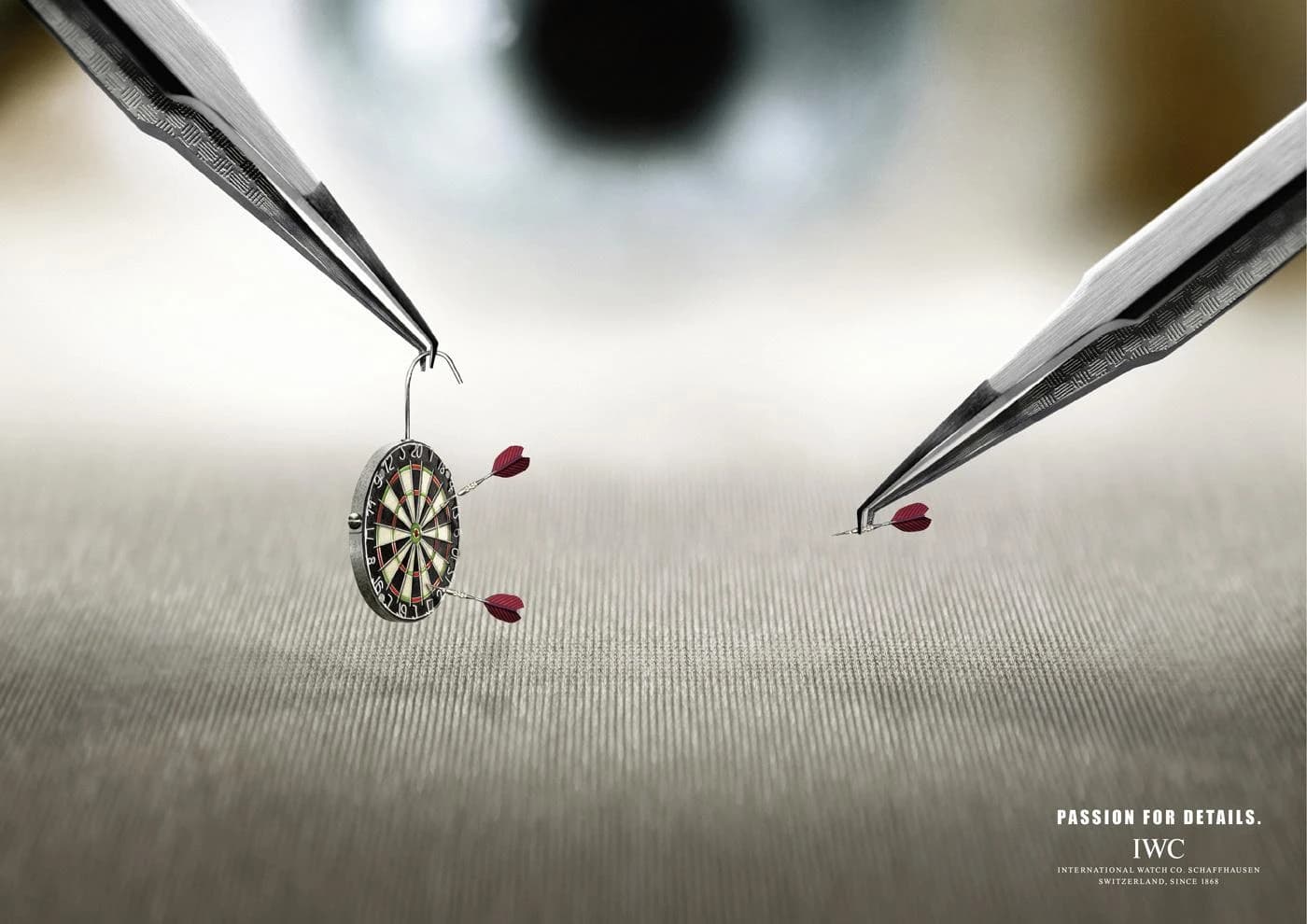
IWC also ran a print campaign featuring watchmakers playing darts with tweezers. The image was absurd but the message was precise: the people who build these watches operate at a level of dexterity most of us cannot comprehend.
It worked because it showed the human behind the product. Not a CEO in a suit. Not a model on a yacht. A craftsperson with decades of training, playing a pub game with surgical tools. That contrast between the mundane activity and the extraordinary skill level communicated precision more effectively than any spec sheet.
What this means for your store: Show the craft. If your watchmaker is repairing a movement, film it. If your jeweler is setting stones, photograph their hands at work. The behind-the-scenes content humanizes your brand and communicates quality through demonstration. Every maker has a story. Tell it.
Let the Customer Be the Campaign
The final evolution of watch advertising takes the brand out of the spotlight entirely and lets customers tell the story. Two very different brands, one digital and one mechanical, figured this out in different ways.
Apple Watch "Dear Apple": Letting Real Users Tell the Story
Apple initially marketed the Apple Watch as a fashion accessory with health features. It struggled with identity. Was it a tech gadget? A fitness tracker? A luxury item? The marketing tried to be all three and convinced no one.

When Apple pivoted to real stories of the Watch saving lives, fall detection alerting paramedics, heart rate monitors catching irregular rhythms, emergency SOS calls from hikers in distress, the product found its positioning. The "Dear Apple" campaign featured actual letters from real users. No scripts. No actors. Just people who were alive because of their Apple Watch.
That is the most powerful form of advertising: user-generated proof that the product does what it claims. Apple did not have to say the Watch saves lives. Their customers said it for them.
What this means for your store: Your best marketing asset is your existing customer base. Collect their stories. Film their testimonials. Share their moments. A customer talking about the watch they bought for their wedding anniversary is more convincing than any ad you could write. User-generated content has higher trust, higher engagement, and costs nothing but the effort to ask.
Rolex Forums and Watch Communities: The Decentralized Campaign
Rolex spends almost nothing on digital advertising relative to their brand value. And yet Rolex dominates online watch conversation. The reason is community-driven content: forums like Watchuseek and Rolex Forums, subreddits like r/watches and r/rolex, and Instagram accounts run by collectors.
Rolex does not need to advertise online because their customers do it for them. Every wrist shot, every unboxing video, every forum post comparing GMT references is free marketing. The brand has created a product so aspirational that owning one makes people want to talk about it publicly.
For retailers, this means the conversation about your brands is happening whether you participate or not. The question is whether you are part of it. Engage with watch communities. Share knowledge. Answer questions. Build relationships in the spaces where enthusiasts already gather. That is where the next generation of buyers is forming their preferences.
What this means for your store: Be where the conversation is. Engage on forums, respond to Reddit threads, share expertise on Instagram. Not to sell. To build credibility. The retailer who answers watch questions for free on Reddit today sells watches in their store tomorrow.
The Details Nobody Notices (But Everyone Feels)
Here is something the watch industry knows that rarely gets thought about at retail: the small visual choices in advertising shape perception more than the headline.
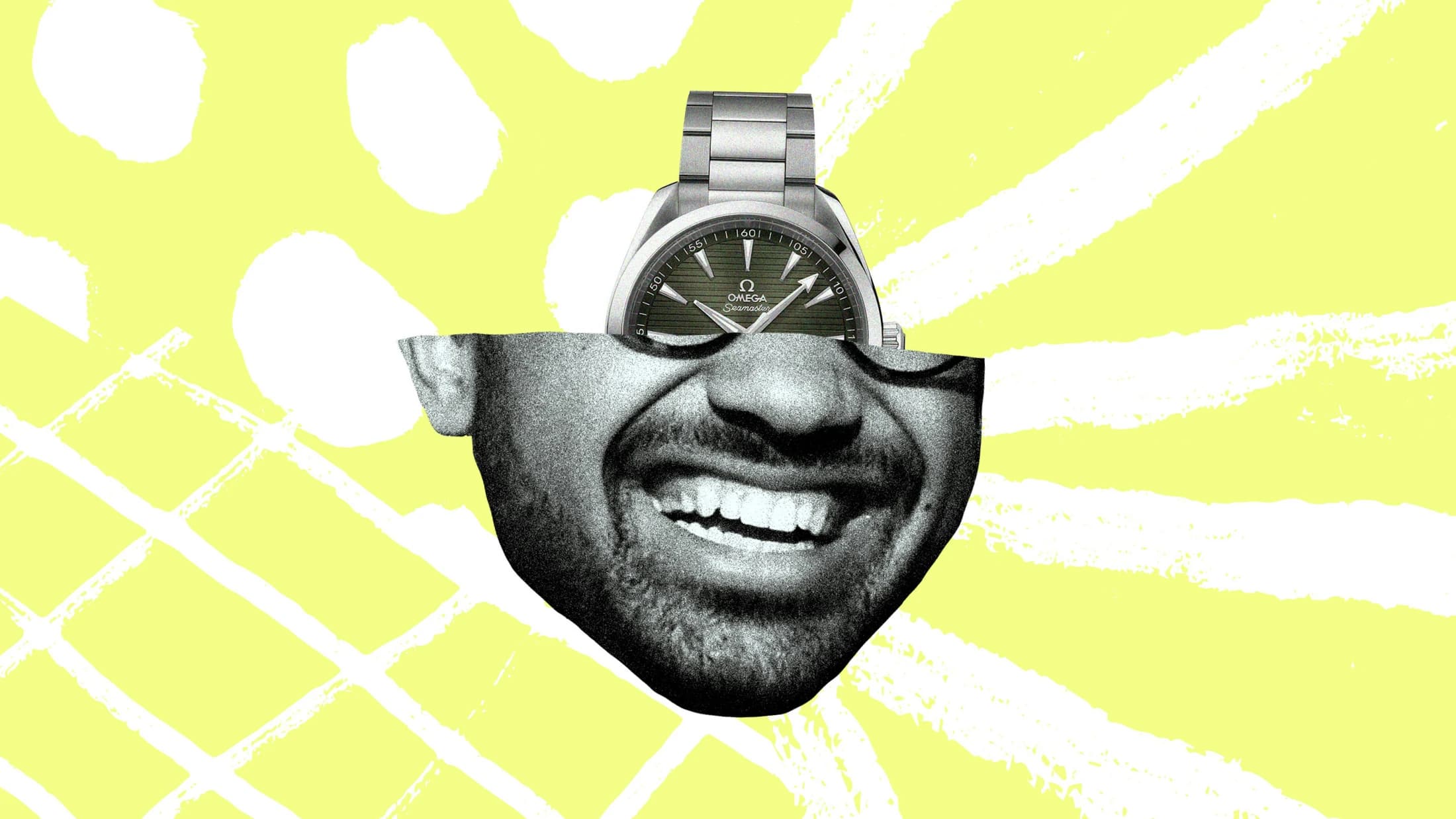
Before the 1950s, watches in ads were typically set to 8:20. Then the industry discovered something: 10:10 creates a visual "smiley face" on the dial. The hands frame the brand logo. The watch appears symmetrical and balanced. Since then, virtually every watch ad in the world sets the time to 10:10.
The 10:10 Rule: The Detail Nobody Questions
The 10:10 convention persists because the upward-pointing hands read as a smile, the same way a V-shape or an upward curve does. The hands also frame the brand name at 12 o'clock, creating a natural visual hierarchy that draws the eye to the logo first.
What this means for your store: The micro-details of your product photography matter more than you think. Set every watch to 10:10. Make sure the crown is pushed in. Polish the crystal before shooting. Ensure the lighting does not create reflections that obscure the dial. These are the things that separate professional product imagery from amateur snapshots, and they directly affect conversion rates on your website.
What Retailers Can Steal From These Campaigns
Every campaign in this list was built by a brand with resources you do not have. But the principles behind them scale down. Here is the compressed playbook:
Use real customers, not actors. The "Dear Apple" approach works at every budget level. Your customers have stories. Collect them. Film them. Share them. A 60-second iPhone video of a customer explaining why they chose their watch will outperform a professionally produced brand video every time.
Sell identity before specs. The Rolex "If You Were" campaign understood that luxury buyers care about who they become, not what they get. Every product listing, every Instagram post, every email should answer: "What kind of person wears this?"
Set every watch to 10:10. Not negotiable. If your product photos show random times, you are leaving conversion on the table.
Chase third-party proof. Omega's Moonwatch campaign has lasted 57 years because the endorsement was earned, not bought. Get your store reviewed. Win local awards. Earn press features. These assets compound.
Differentiate your brands. Tudor and Rolex sit in the same case. They should not share the same story. Give each brand you carry its own distinct positioning in your marketing.
Name the objection. AP's "Would you buy a Rembrandt for its canvas?" worked because it said the quiet part out loud. If customers think your prices are high, address it head-on. Reframe value. Do not avoid the conversation.
Build for decades, not quarters. Patek Philippe has been running the same campaign for 30 years. Rolex still references a 1927 swim. Find your core message and commit to it. Consistency beats novelty in luxury positioning.
Show the craft. IWC's watchmaker darts campaign humanized the brand by showing the maker, not the product. Film your watchmaker. Photograph your jeweler's hands. Behind-the-scenes content builds trust in ways that polished product shots cannot.
The Bottom Line
The watch industry has been running marketing masterclasses for nearly a century. The default is still a product-shot carousel and hope.
The retailers who study these campaigns and adapt the principles to their own markets will consistently outperform the ones who do not. Not because they have bigger budgets. Because they understand that in luxury, the story you tell matters more than the product you sell.
If you want help building a marketing strategy that applies these principles to your specific market and inventory, reach out to us. We work exclusively with luxury watch and jewelry retailers, and we have seen what happens when you get the strategy right.
About the author
Hagop Imasdounian
Hagop Imasdounian is the founder of H&CO. Raised around his family’s jewelry businesses, he brings more than 15 years of digital marketing experience to helping jewelry and watch brands improve their websites, reach buyers and connect marketing with sales.