
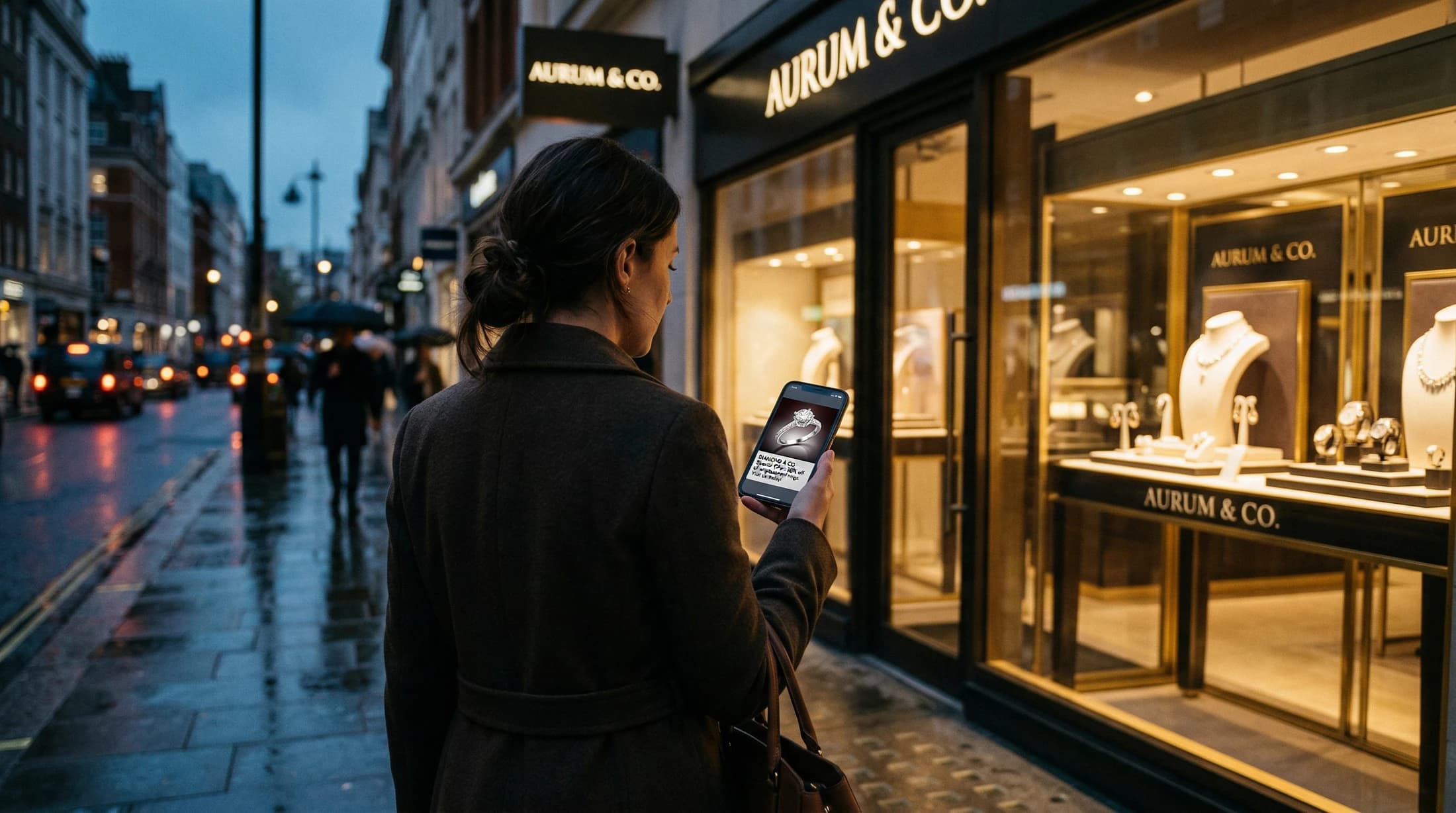
In the "K-shaped" luxury economy of 2026, affluent spending is holding up, but the battle for foot traffic has never been more precise. While general radius targeting is a blunt instrument, polygonal geofencing, mapping the exact physical footprint of a competitor's showroom, is a surgical strike.
For a luxury jeweler or authorized watch dealer, geofencing is the digital equivalent of intercepting a customer as they walk out of a competitor's store and offering them a better reason to visit yours.
At H&CO, we build location-based campaigns that move the needle. The data proves the efficacy: according to Foursquare, jewelry and watch retailers achieve an average 200% ROI with precision location targeting, with some advanced models reaching upwards of 500% ROI.
The "Premiumization" of Foot Traffic
The jewelry sector is currently experiencing a 'premiumization' trend. While entry-level unit sales have contracted due to gold price spikes, higher-priced pieces are driving the market's growth in 2026.
This means every person walking into a luxury showroom is more worth your attention than ever before. With the global jewelry market projected to reach roughly $400 billion (Grand View Research), the cost of missing a single high-intent lead is staggering.
Geofencing allows you to "shadow" these high-value prospects. If a buyer is looking for an $18,000 GMT-Master II or a custom 3-carat engagement ring, they will typically visit 2.4 boutiques before swiping their card. Geofencing ensures your brand is the persistent "other option" throughout that 20-to-research window.
The H&CO "Fence Blueprint": Where to Intercept
The secret to a high-ROAS campaign isn't just fencing your competitors; it's fencing the entire luxury market.
1. The Competitor's Showroom (Direct Intercept)
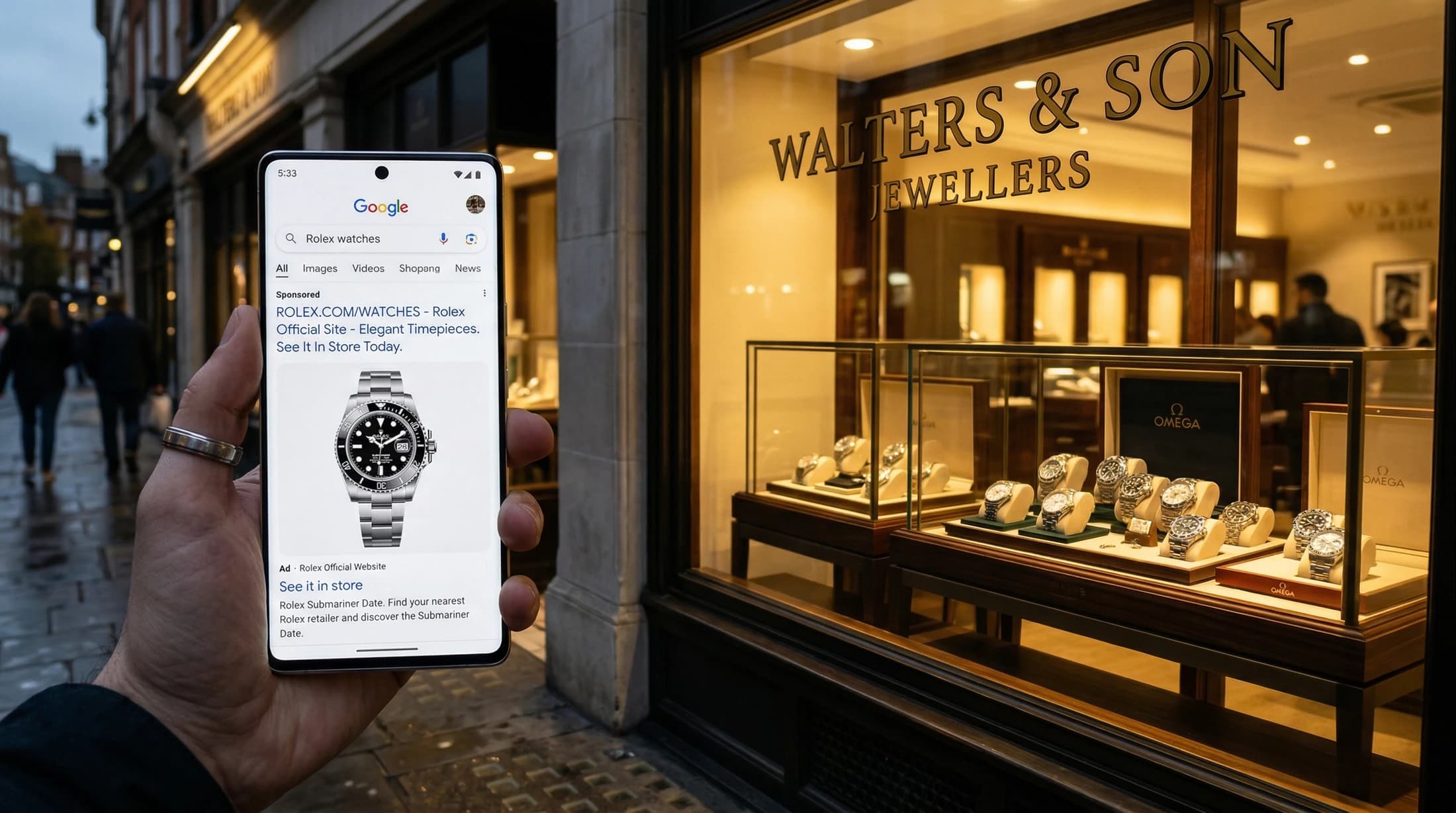
This is your primary source of high-intent data. By drawing a polygon around competing ADs or independent jewelers, you capture an audience that is physically verifying inventory.
- The Lift: Reveal Mobile benchmarks show that location-based audiences see a 67% increase in campaign conversion rates compared to standard demographic targeting.
2. High-Income "Lifestyle" Hubs
Affluent consumers frequent specific nodes. We fence:
- Private Aviation (FBOs): Capturing the ultra-high-net-worth (UHNW) traveler.
Luxury Auto Dealerships: There is a well-documented overlap between luxury watch buyers and owners of brands like Porsche or Mercedes-Benz.
- Elite Country Clubs: Targeting the "Status Symbol" buyer where they socialize.
3. The "Bridal District" & Couture Boutiques
For engagement ring specialists, fencing high-end wedding dress boutiques allows you to reach brides-to-be at the very start of their planning journey, long before they've settled on a jeweler.
The "Youth Shift" Strategy
Today, Gen Z and Millennials account for nearly half of luxury spending, heading toward 70% or more by 2030 (Bain). This demographic is "mobile-native" and expects a "Phygital" experience.
Over 70% of these luxury consumers expect immersive digital touchpoints to be integrated into their physical shopping journey. Geofencing meets this expectation by serving rich media, AR previews, or VIP appointment invitations directly to their devices while they are in "shopping mode." (BSPK, 2026)
Technical Performance & ROI
Geofencing isn't just about "impressions"; it's about Behavioral Lift.
- Showroom Visit Lift237
- Avg ROI (Location)200
- Conversion vs Demographic67
- Showroom Visit Lift237
- Avg ROI (Location)200
- Conversion vs Demographic67
- Verified Visits: In our recent audits, we've seen geofencing drive a 237% behavioral lift in showroom visits. This means people exposed to the geofenced ad were more than twice as likely to visit the store than those who weren't.
- Omnichannel Multiplier: Data from GroundTruth indicates that adding Digital Out-of-Home (DOOH), like digital billboards near the competitor's location, to a mobile geofencing campaign creates a "multiplier effect," increasing in-store conversions by an additional 18%.
Sales Attribution: Top-tier luxury brands now attribute a meaningful share of store sales directly to location-based ad exposure.
The "Anti-Creepy" Creative Framework
The biggest mistake retailers make is using "I saw you at [Competitor]" copy. That kills trust. Instead, use the "Value Proximity" approach:
- The Artisan Contrast: If they are at a national chain, show them a video of your master jeweler at the bench. Contrast corporate with craftsmanship.
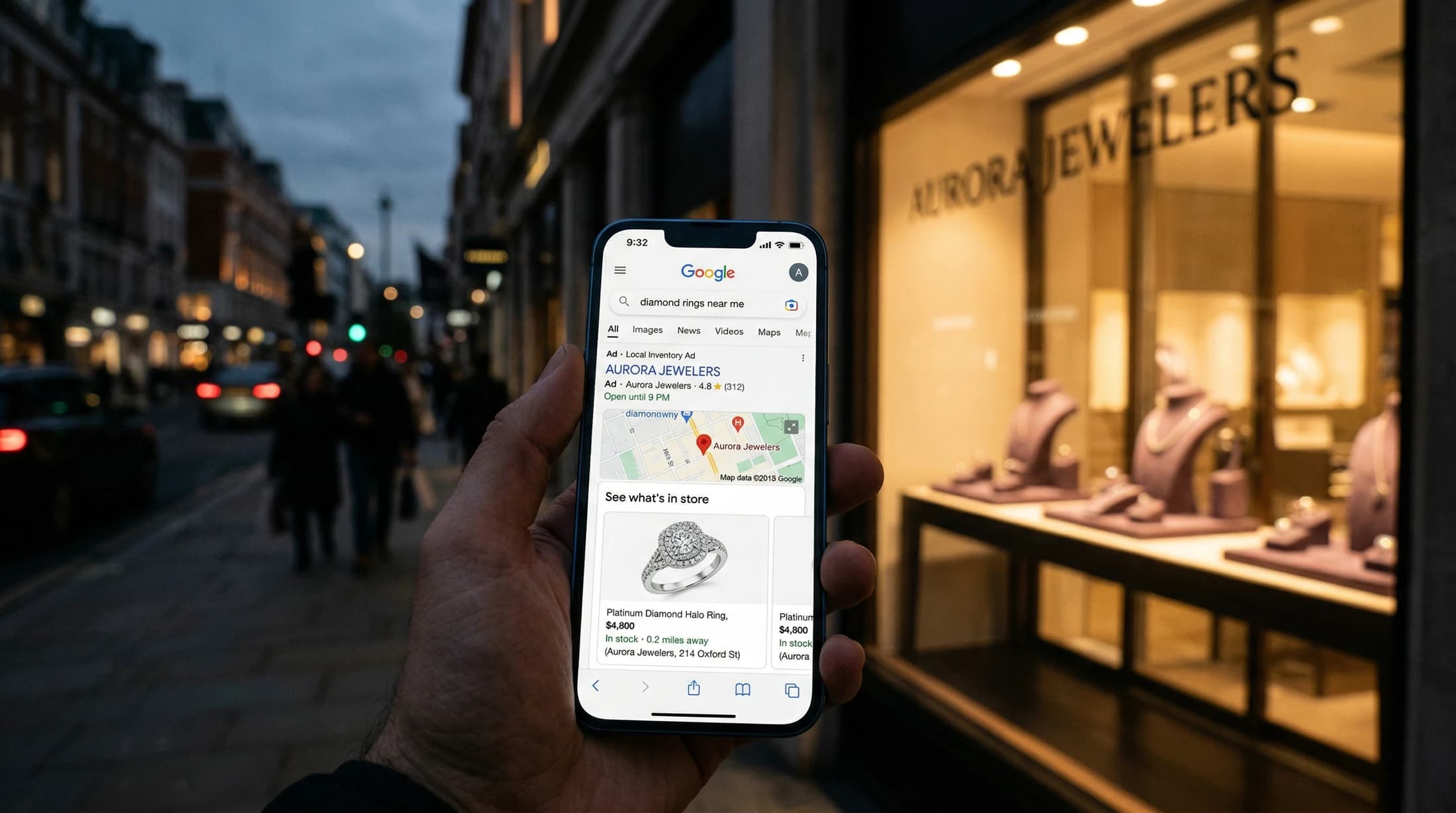
- The Inventory Flex: "In stock today." Use Local Inventory Ads (LIAs) within the geofence to show specific references that the competitor might have on a waitlist.
- The VIP Invitation: "Skip the mall. Book a private viewing in our [City] lounge." Sell the experience, not just the product.
With the LBA (Location-Based Advertising) market projected to hit $206 billion in 2026, your competitors are likely already drawing fences around your front door (Global Growth, 2026).
If you aren't engineering your foot traffic using Foursquare-level precision, you are donating your customers to whoever has the better geofence.
Ready to reach your competitor's customers before they make a decision? We'll set up the fences and the creative that brings them to your door. Let's build your geofencing strategy.
Research & Sources
- Foursquare: 2025-2026 Location Targeting ROI Report (200%-500% ROI benchmarks).
- Reveal Mobile: VISIT Local Benchmark Study 2025 (67% conversion lift; 4.46% household conversion).
- GroundTruth: The Power of Physicality in an Omnichannel World (151M verified visits; DOOH multiplier effect).
- McKinsey & Co: The State of Fashion 2026: The Luxury Youth Shift.
- Global Growth Insights: Location-Based Advertising Market Forecast 2026.
- Future Market Insights: Luxury Jewelry Channel Analysis 2026.
Hagop's Notes: The Polygonal Edge
*Most 'geofencing' sold by local agencies is just 1-mile radius targeting. That's a waste of money. Real geofencing requires polygonal mapping, literally drawing around the walls of the competitor's building. If your agency isn't talking about 'polygons' and 'behavioral lift,' they're just selling you a digital billboard in the middle of a forest.*
About the author
Hagop Imasdounian
Hagop Imasdounian is the founder of H&CO. Raised around his family’s jewelry businesses, he brings more than 15 years of digital marketing experience to helping jewelry and watch brands improve their websites, reach buyers and connect marketing with sales.