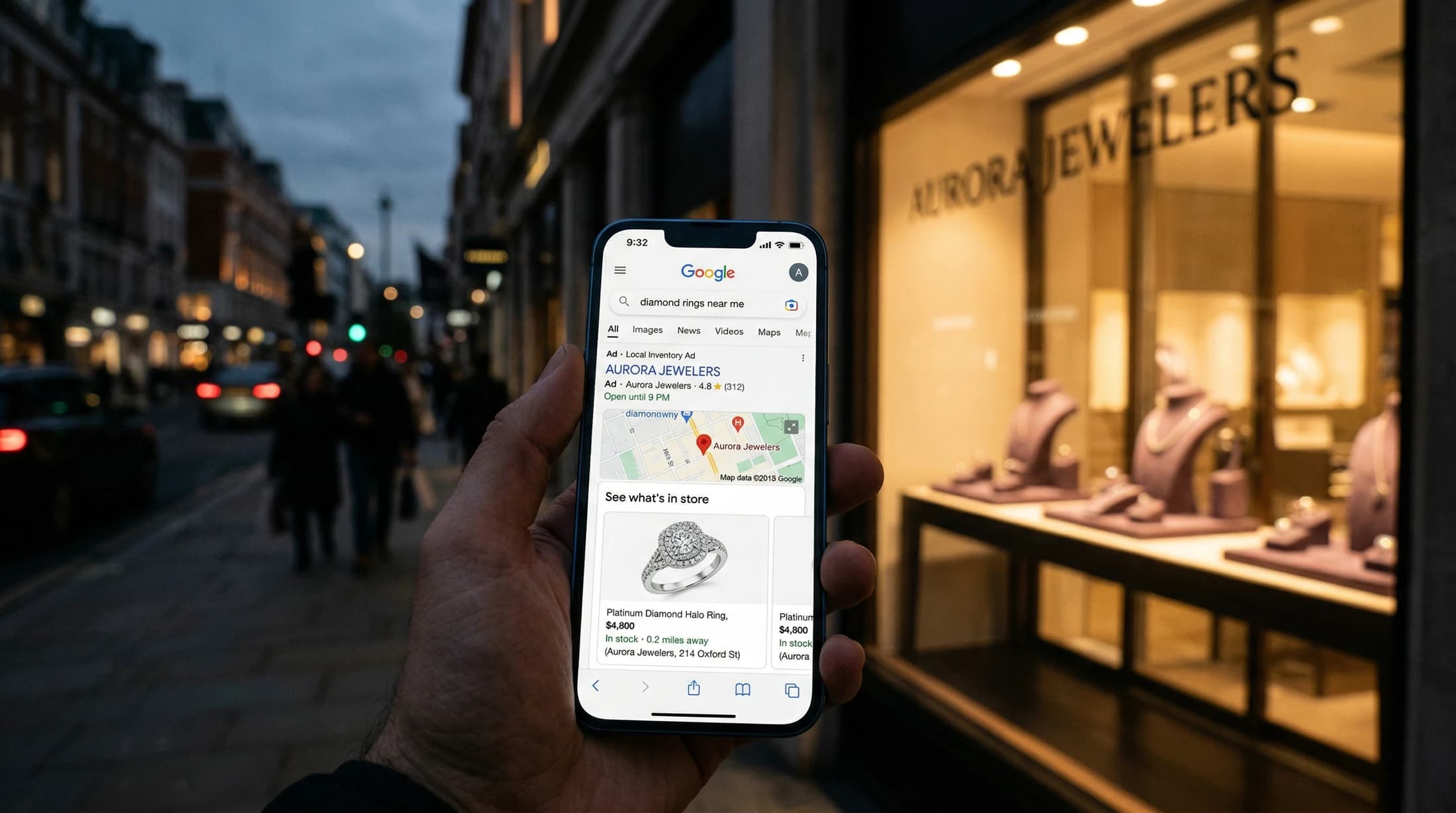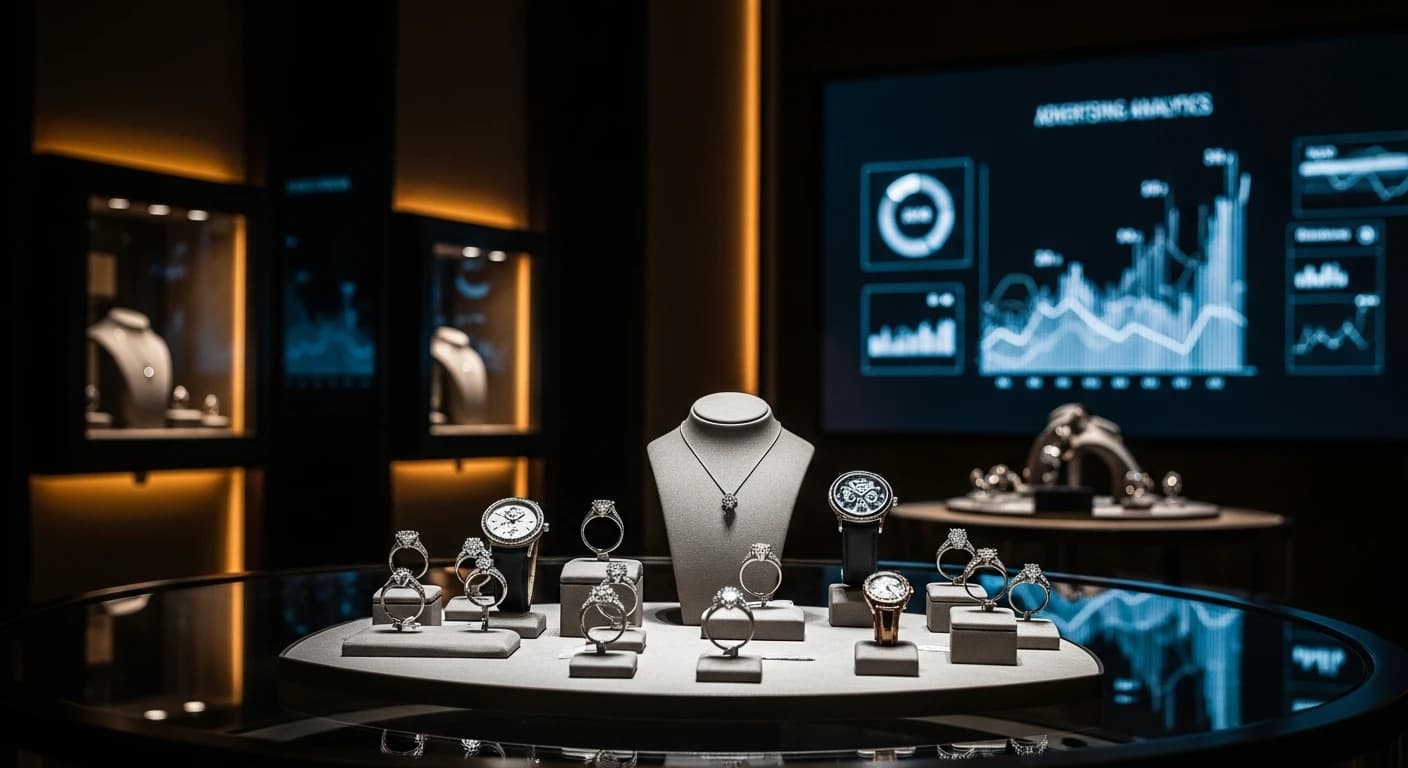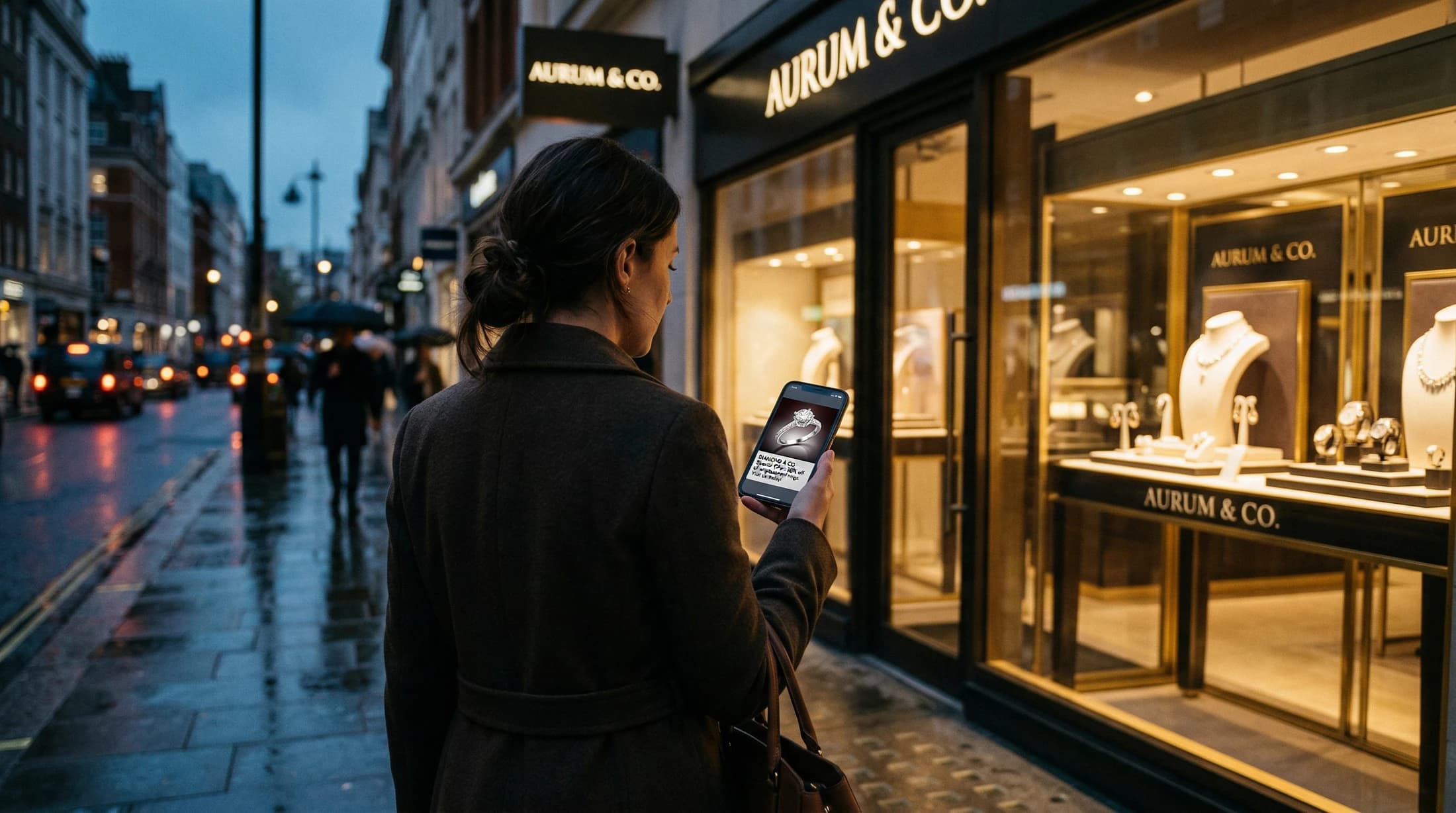


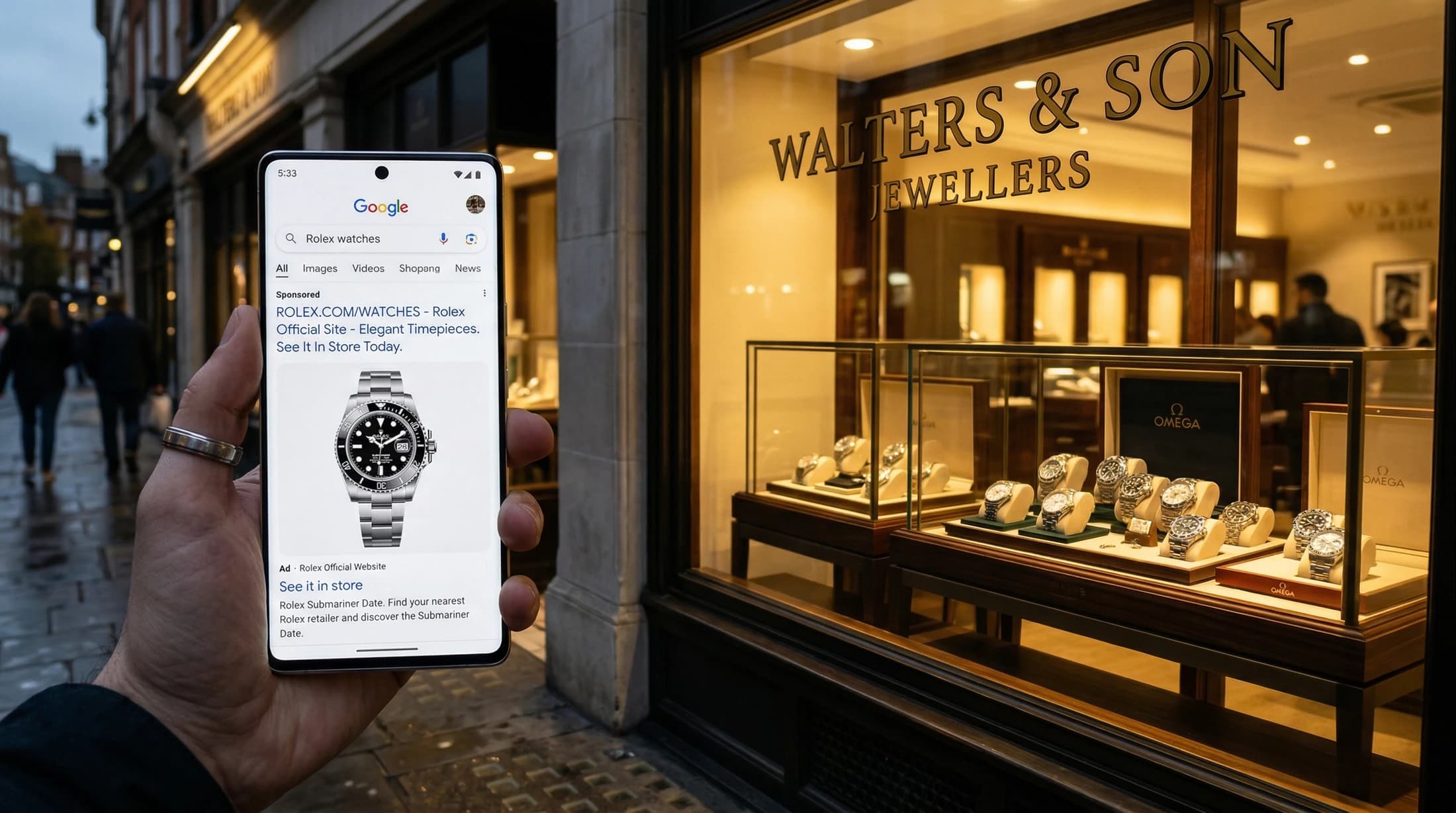
The "in-store only" hack is a Google Ads strategy built for authorized watch and jewelry dealers who are contractually banned from selling online but still need to capture digital demand. Instead of building an e-commerce store, you build a digital window display that demands a physical visit.
H&CO is a digital marketing agency for luxury jewelry and watch retailers. We see the same frustration in almost every new client conversation: millions invested in inventory, prestigious brand rights secured, and yet, hands tied. The brand says no "Add to Cart." No checkout button. No online transactions.
Meanwhile, your customers are living online. 78% of consumers research luxury products online before ever visiting a physical location. But here is the massive opportunity: 76% of local mobile searches result in a visit within 24 hours (Google/Ipsos 'Fashion Online, 2013).
If you aren't showing up when they search for that specific reference number or collection, you've already lost the sale to the gray market or the corporate flagship three states away.
But here is the hack: Brand compliance usually restricts the transaction, not the attention.
You can use Google Ads to display every single piece of inventory you have, even if you aren't allowed to put a price tag or a checkout button on it. Here is how to do it without getting a "cease and desist" from the brand.
Understand the brand restrictions
The traditional mindset is: "If I can't sell it online, I shouldn't advertise it online." This is a fatal mistake.
Luxury brands restrict online sales to protect their "exclusivity" and control the customer experience. They want the mahogany desks, the espresso, and the white-glove service. That's where the 81.4% of revenue is. But if you don't advertise, the customer doesn't know you have the stock (Euromonitor International, 2025).
The gap in most dealer agreements is simple: Brands restrict *e-commerce*, but they desperately want *foot traffic*. Most compliance frameworks allow, and even encourage, digital advertising that drives customers to a physical showroom.
You don't own the Rolex or Patek name. The brand does. But you *do* own your local market. If you don't dominate the search results for your city, you are handing your local customers to a competitor on a silver platter. Stop waiting for the brand to "allow" you to be successful.
Choose your campaign type
To bridge this gap, you need to move away from standard "Shopping" ads (which require a price and a checkout) and toward formats designed for local discovery. For a deeper walkthrough on structuring these campaigns, see our Google Ads guide for luxury watch and jewelry retailers.
| Type | How It Works | CTA | Compliance |
|---|---|---|---|
| Search Campaigns | Bid on Brand + City terms | Book a Viewing page | High |
| Local Inventory Ads | Shows products to nearby searchers | Google storefront with address | High |
| Performance Max | AI optimizes for store visits | Showroom landing page | High |
1. Search Campaigns with "Visit Us" Intent
Instead of bidding on generic terms like "luxury watches," bid on high-intent "Brand + City" terms. For example: *"Tudor Black Bay [Your City]."* Your ad shouldn't say "Buy Online." It should say "In Stock: See the Tudor Black Bay in Person at [Your Store]."
By pointing these ads to a landing page that focuses on "Book a Viewing" or "Check Availability," you stay within the lines of almost every major brand's digital policy.
2. Local Inventory Ads (LIAs)
This is the single most underutilized tool for authorized dealers. LIAs show your products to people searching nearby, but instead of taking them to a checkout page, Google shows them a "Storefront" page that displays your address, hours, and the message: "In stock at this location."
Because the format is controlled by Google, it often bypasses the brand's concerns about "non-conforming web design." You aren't building an e-commerce site; you're updating a directory.
3. Performance Max for Store Goals
PMax is Google's automated campaign type. When you set the goal to "Store Visits" rather than "Online Sales," Google optimizes your budget to find people most likely to walk through your doors. It uses location history and search patterns to put your inventory in front of local buyers who are physically capable of visiting your store today.
Build your showroom landing page
When a user clicks your ad, they expect to see the watch. If you take them to a generic "Home" page, they'll bounce. If you take them to an e-commerce page with a "Buy Now" button, you might get a call from your brand rep.
The solution is a Showroom Landing Page. Here are the rules:
- No "Add to Cart": Replace it with a prominent "Schedule a Private Viewing" or "Text Us for Availability" button.
- High-Quality Imagery: Use the brand's lifestyle shots or, better yet, your own "wrist shots" to show the piece is physically in your building.
- The "Scarcity" Callout: Use language like "Currently available in our [City Name] showroom. High demand, please call to confirm availability before visiting."
- Store Integration: Embed a live map, your current store hours, and a direct link to "Get Directions."
This page doesn't look like a store; it looks like an invitation. It satisfies the brand's desire for a premium experience while satisfying the customer's need for information.
Measure store visits and leads
The biggest hurdle for dealers is that they try to measure these ads using standard e-commerce metrics. If you're looking for "Return on Ad Spend" (ROAS) in your dashboard, you'll see $0.00 because no one is checking out online.
To justify the spend, you must track:
- Store Visit Conversions: Google uses anonymized phone location data to tell you how many people clicked an ad and then physically entered your store. This is your primary metric.
- Phone Call Tracking: Use dynamic number insertion (DNI) to see which ads are driving "Is this in stock?" phone calls.
- Appointment Bookings: Every form submission for a "Viewing" should be treated as a high-value lead.
The math for a luxury dealer is simple. If you spend $3,000 on Google Ads and it leads to just one sale of a $10,000 watch, the campaign has paid for itself. If it leads to a $40,000 sale, it has paid for the entire quarter.
Research & sources
- Think with Google: Local Search Statistics, 46% of all Google searches have local intent; 76% of local mobile searches result in a physical store visit within 24 hours.
- Bain & Company: Luxury Market Study 2024, 78% of luxury consumers research online before purchasing; 84% take action after engaging with interactive digital catalogs.
- BrightLocal: Local Consumer Review Survey 2026, AI tool usage for local recommendations surged from 6% to 45% in a single year.
Running Google Ads as an authorized dealer is a minefield of compliance and technical hurdles. At H&CO, we specialize in building brand-approved campaigns that turn digital searches into physical foot traffic. Here's what's actually possible for your brands.

About the author
Hagop Imasdounian
Hagop Imasdounian is the founder of H&CO. Raised around his family’s jewelry businesses, he brings more than 15 years of digital marketing experience to helping jewelry and watch brands improve their websites, reach buyers and connect marketing with sales.