
What Are Local Inventory Ads and Why Should Jewelers Care?
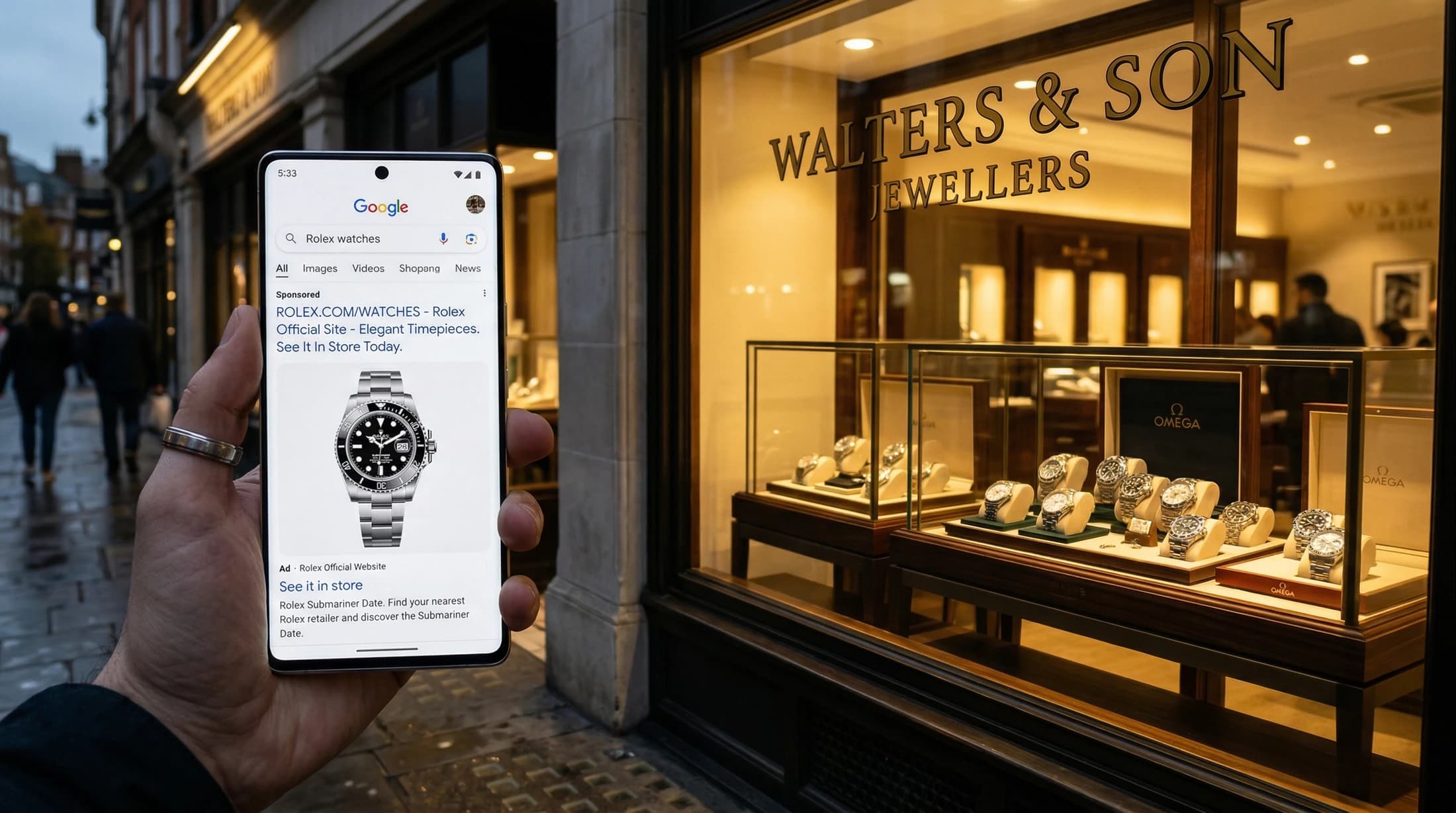
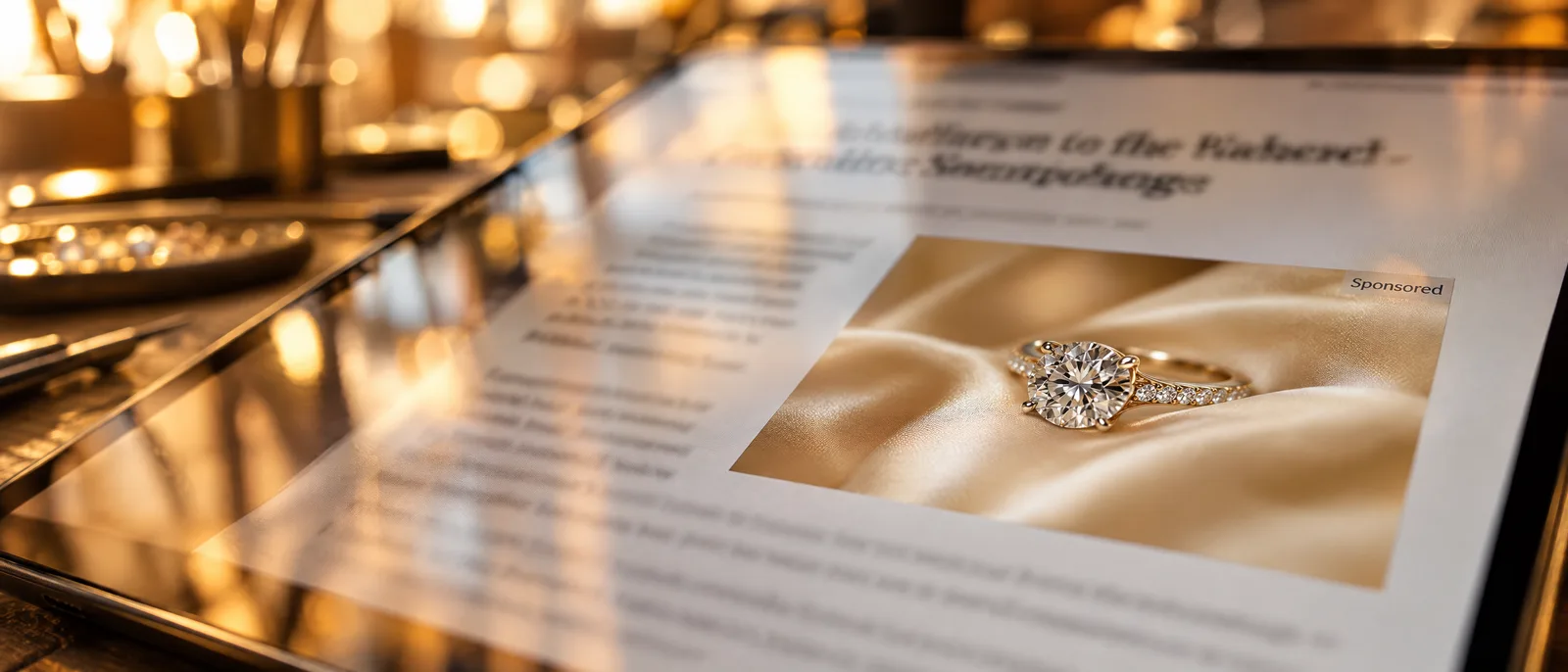
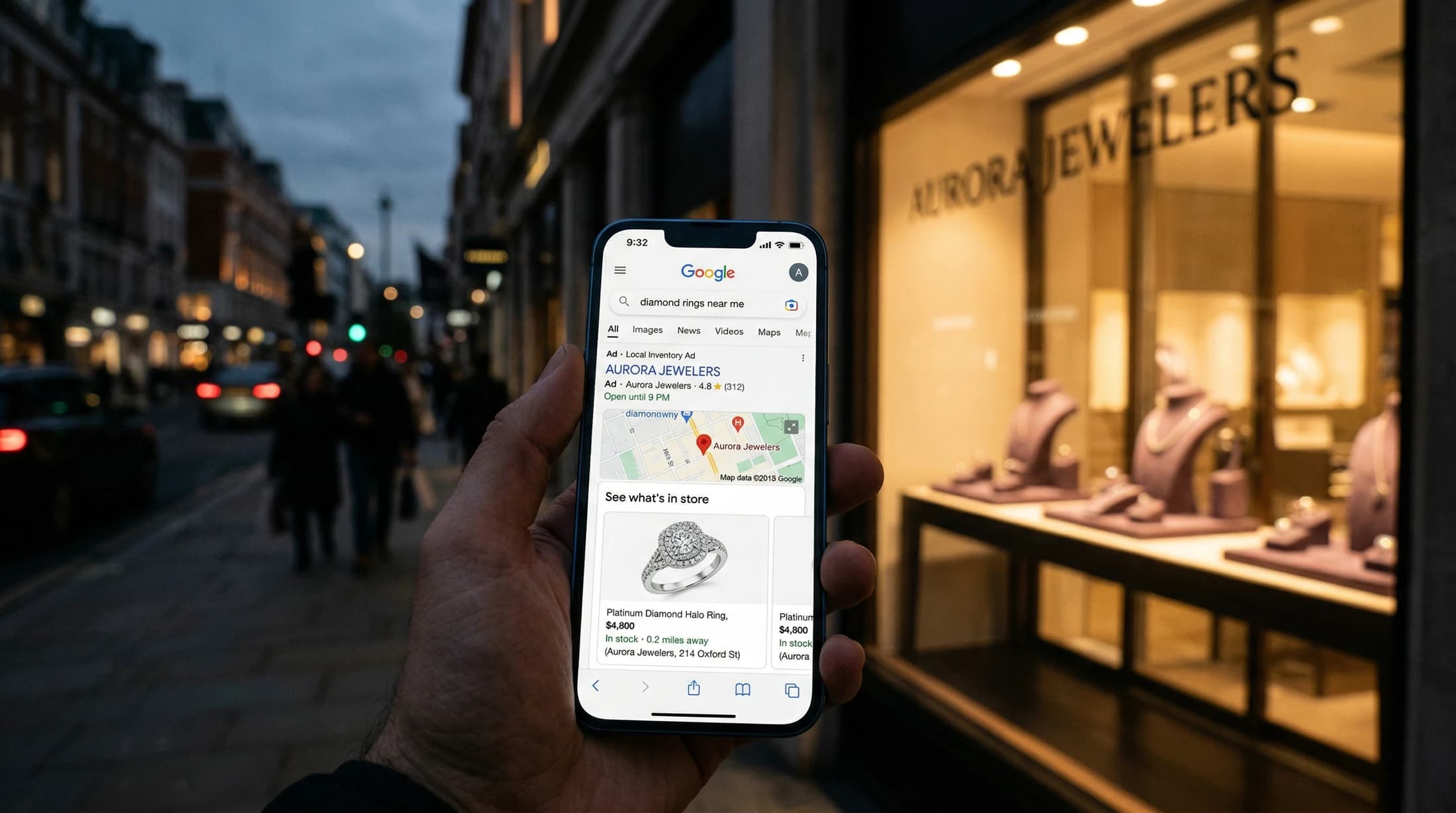
LIAs show nearby searchers that a specific product is available at your store right now. When someone searches "Omega Seamaster near me," your LIA can appear with a photo, your store name, distance, and the words "In stock."
This is especially critical in an era of visual discovery. Google Lens now processes roughly 20 billion visual searches per month. When a user "snaps" a photo of a watch they like, an LIA ensures your store is the one that shows up as the closest "In Stock" destination.
H&CO is a digital marketing agency for luxury jewelry and watch retailers. We've set up LIA campaigns for dealers across both countries, and the results are consistent: LIAs drive store visits at a lower cost than standard search ads.
According to Fortune Business Insights, 81.4% of luxury watch sales still happen in physical stores. Many of these journeys also start on Pinterest, where users are projected to reach 700 million by 2026 and are 27% more likely to buy luxury products than users on other social platforms. LIAs are the bridge that connects these digital searchers to your physical showroom.
Why Are LIAs Mandatory for Authorized Dealers?
Authorized Dealers face a paradox: you can't sell that $12,000 watch on your website due to brand restrictions, but the buyer is searching for it online. LIAs solve this by driving a store visit instead of an online transaction.
This strategy also protects your bottom line. In a market where every dollar lost to fraud costs more than its face value, driving customers into a secure, physical showroom is the most effective way to mitigate the risks associated with high-ticket remote transactions.
How Do You Set Up the Technical Infrastructure?
The industry is moving toward greater precision: 82% of retailers support the shift to GS1-standard 2D/QR codes, with checkout readiness targeted for Sunrise 2027. Integrating these into your inventory management system ensures your LIA feed is always "ground truth" accurate.
1. Google Merchant Center and Business Profile
You need a verified Google Business Profile linked to your Google Merchant Center account. Merchant Center is where your product and inventory feeds live.
2. Product Feed
Your primary product feed contains your catalog: product titles, descriptions, GTINs or MPNs, images, and prices. Google's feed specification requires a price field even for products where you don't display the price publicly. You can set the price in the feed and configure Merchant Center to suppress the display.
3. Local Inventory Feed
This is the feed that makes LIAs work. It syncs with your POS system and tells Google what's physically in each store right now. The sync frequency matters; daily updates are the minimum, but 4-6 hours is preferred for high-turnover inventory.
4. Inventory Verification
Google will verify your inventory. Only include what's actually in your cases.
How Do You Handle Brand Compliance With LIAs?
Brands often prohibit online pricing for authorized products. This creates tension with LIAs, which are designed to show product details. Here's how to navigate it:
- Price suppression: Configure the Local Storefront to hide the price from the consumer. The storefront then shows "In stock, visit store for pricing" instead.
- Image compliance: Use your own product photography where possible.
- MAP policies: Ensure your feed price matches or exceeds the brand's Minimum Advertised Price policy.
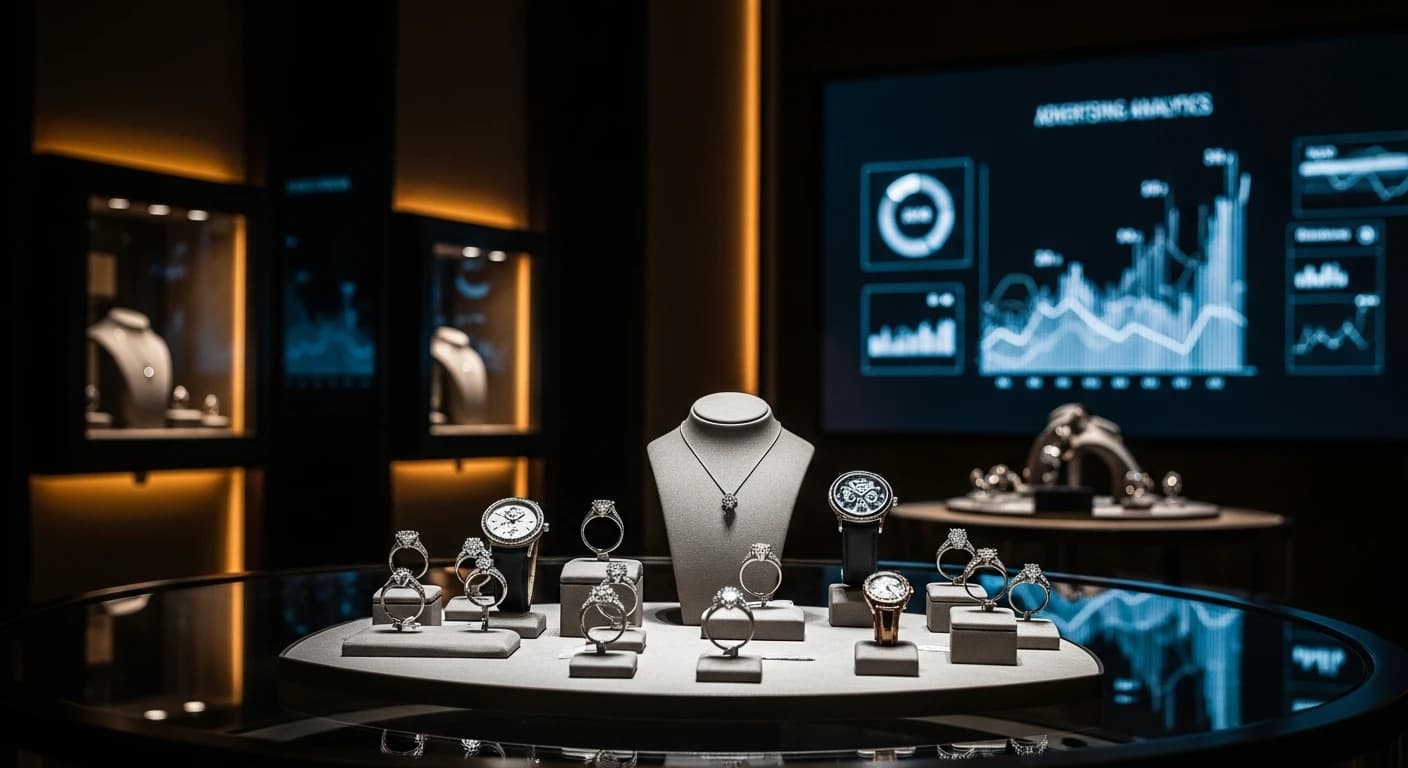
How Do You Measure LIA Performance?
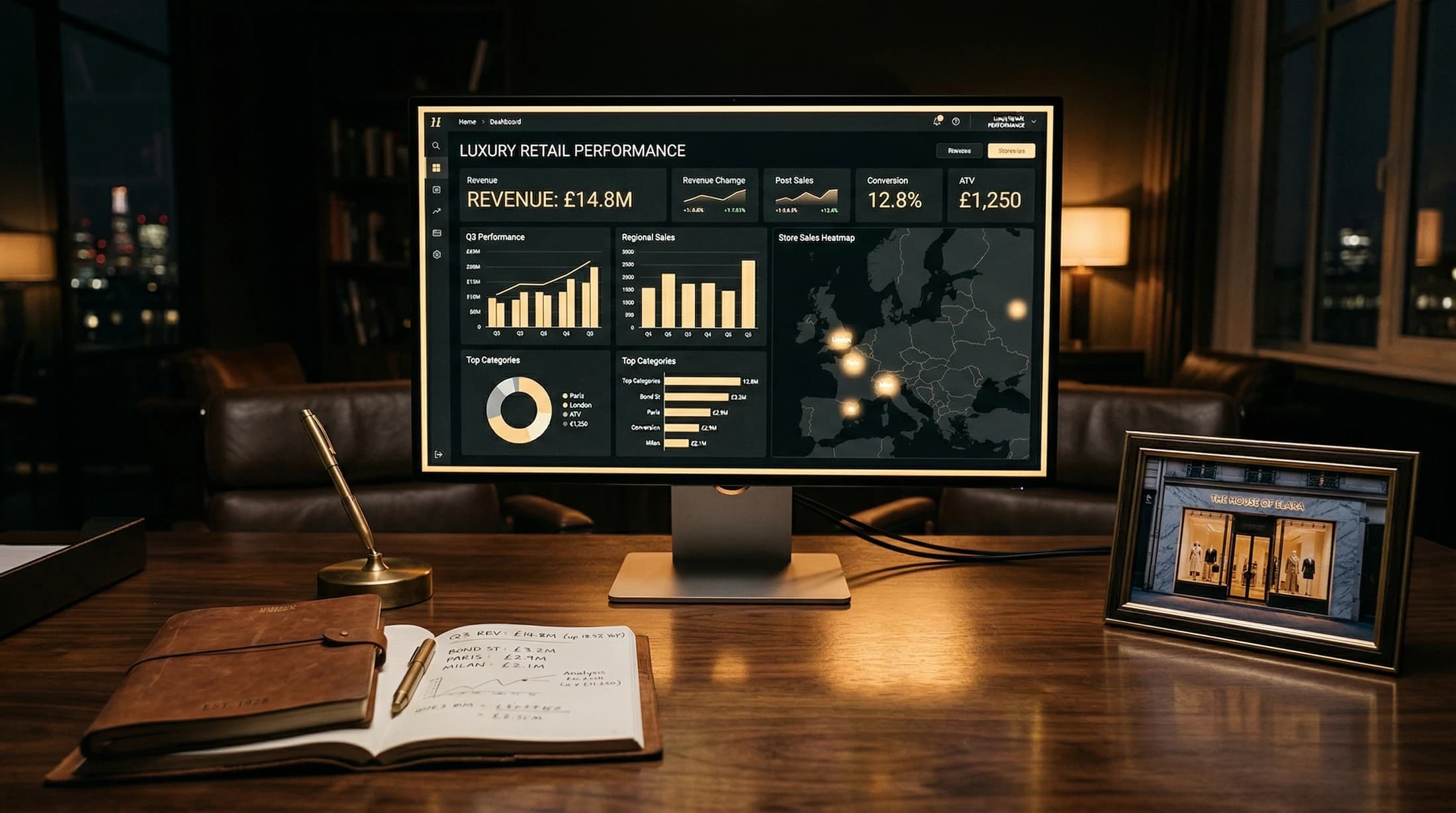
Standard click-through tracking only tells part of the story. The real metric is store visits. Google offers a "Store Visits" conversion action for qualifying advertisers. Pair it with your in-store CRM to close the loop: did the person who clicked the LIA actually come in and buy?
We'll connect your inventory to Google and put your showcases in front of every local searcher. Let's set it up.
Research & Sources
- GS1 US: *Powering the Future of Retail* study and Sunrise 2027 initiative. 82% of retailers support moving to GS1-standard 2D/QR codes to improve inventory accuracy and omnichannel integration.
- Google: *Lens product update, October 2024.* Google Lens processes nearly 20 billion visual searches per month.
- Pinterest Business: *Luxury Shopper Report 2024.* Pinterest users are 27% more likely to purchase luxury items than users on other social platforms.
- LexisNexis: *The True Cost of Fraud.* The full cost of fraud for high-ticket retailers beyond the direct loss.
- Fortune Business Insights: *Luxury Watch Market Analysis.* Report on the 81.4% offline sales dominance in the luxury watch sector.

About the author
Hagop Imasdounian
Hagop Imasdounian is the founder of H&CO. Raised around his family’s jewelry businesses, he brings more than 15 years of digital marketing experience to helping jewelry and watch brands improve their websites, reach buyers and connect marketing with sales.