

The $25,000 Anxiety Gap: Why Logistics is a Marketing Tool
You've spent months nurturing a lead. You've navigated the long research window where the client scrutinized your Instagram, read your Google reviews, and compared your custom CAD designs against three competitors. They finally swiped their card for a $25,000 engagement ring.
And then you hand the box to FedEx.
That moment, the handoff from your showcase to a shipping label, is where more jewelry and watch retailers lose trust than they realize. A delayed package, a missing signature, a generic brown box arriving at someone's door. Any of these can undo months of brand-building. Shipping isn't an operational afterthought. For high-value retailers, it's the last impression you make before the customer decides whether to come back.
Why Standard Shipping Fails for High-Value Items
Standard e-commerce shipping was built for $30 t-shirts, not $30,000 watches. The gaps show up in three places.
Insurance caps. Most carrier liability maxes out at $100 for standard service, $1,000 for declared value without supplemental coverage. If you're shipping a piece worth five or six figures and relying on the carrier's default coverage, you're self-insuring without realizing it. File a claim on a $20,000 necklace with basic FedEx coverage and you'll get a check for $100. That's not an exaggeration.
Tracking blind spots. Standard tracking updates are vague. "In transit" could mean the package is on a truck two hours away or sitting in a regional sort facility for three days. Your client just spent $15,000. They don't want to guess where it is. And when they call you to ask, you're stuck refreshing the same tracking page they are.
Signature gaps. Even with signature required, carriers sometimes leave packages at the door if no one answers. "Driver release" on a $25,000 shipment is a liability nightmare. Indirect signature, where a neighbor signs, is equally dangerous for high-value goods. The driver marked it delivered, someone signed for it, and your client never got it. Good luck with that claims process.
These aren't edge cases. They're the default behavior of every major carrier unless you specifically override it.
Carrier Selection: Matching the Piece to the Service
Not every shipment needs the same carrier. Build a tiered system based on declared value.
Under $5,000: FedEx Priority Overnight or UPS Next Day Air. Both offer declared value coverage up to $50,000 (with additional fees), adult signature required, and reliable overnight windows. FedEx tends to have better handling protocols for high-value packages when you flag them correctly. Request "no redirect" and "no driver release" on every shipment. This is a setting in your shipping account, not something you write on the box.
$5,000 to $25,000: FedEx Custom Critical or UPS Express Critical. These white-glove tiers offer chain-of-custody tracking, tamper-evident packaging verification, and dedicated handling. The cost premium is 2-3x standard overnight, but the liability reduction is worth it. At this tier, you should also be using third-party insurance rather than relying on the carrier's declared value program.
Over $25,000: Brink's, Malca-Amit, or Ferrari Group. These are armored logistics providers built specifically for jewelry and precious goods. They offer vault-to-vault transfers, armed couriers, GPS-tracked vehicles, and full replacement value insurance as part of the service. If you're shipping pieces above $25,000 regularly, establish an account. The per-shipment cost drops significantly with volume commitments.
International shipments. USPS Registered Mail remains one of the most secure international options for jewelry. Every handoff is logged, the package is kept under lock, and it's the only USPS service with true chain-of-custody documentation. It's slow (7-14 days), but the security is unmatched at its price point. For faster international delivery of high-value goods, Brink's and Malca-Amit both operate global networks with customs brokerage included.
Packaging That Protects and Impresses
Packaging serves two functions: physical protection and brand experience. One usually gets done and the other ignored.
The double-box method. Every high-value shipment should use two boxes. The inner box holds the branded presentation, your jewelry box, tissue, and card. The outer box is a plain, unmarked corrugated shipper. No logos, no store name, no indication of contents. The gap between the two boxes gets filled with foam or kraft paper. This setup protects against impact and eliminates the "target box" problem where a branded exterior signals valuable contents to anyone handling it.
Tamper-evident seals. Apply tamper-evident tape or security labels to the inner box. If someone opens the package in transit, you'll know. More importantly, the customer will see that you took the step. It signals that you understand what's inside matters.
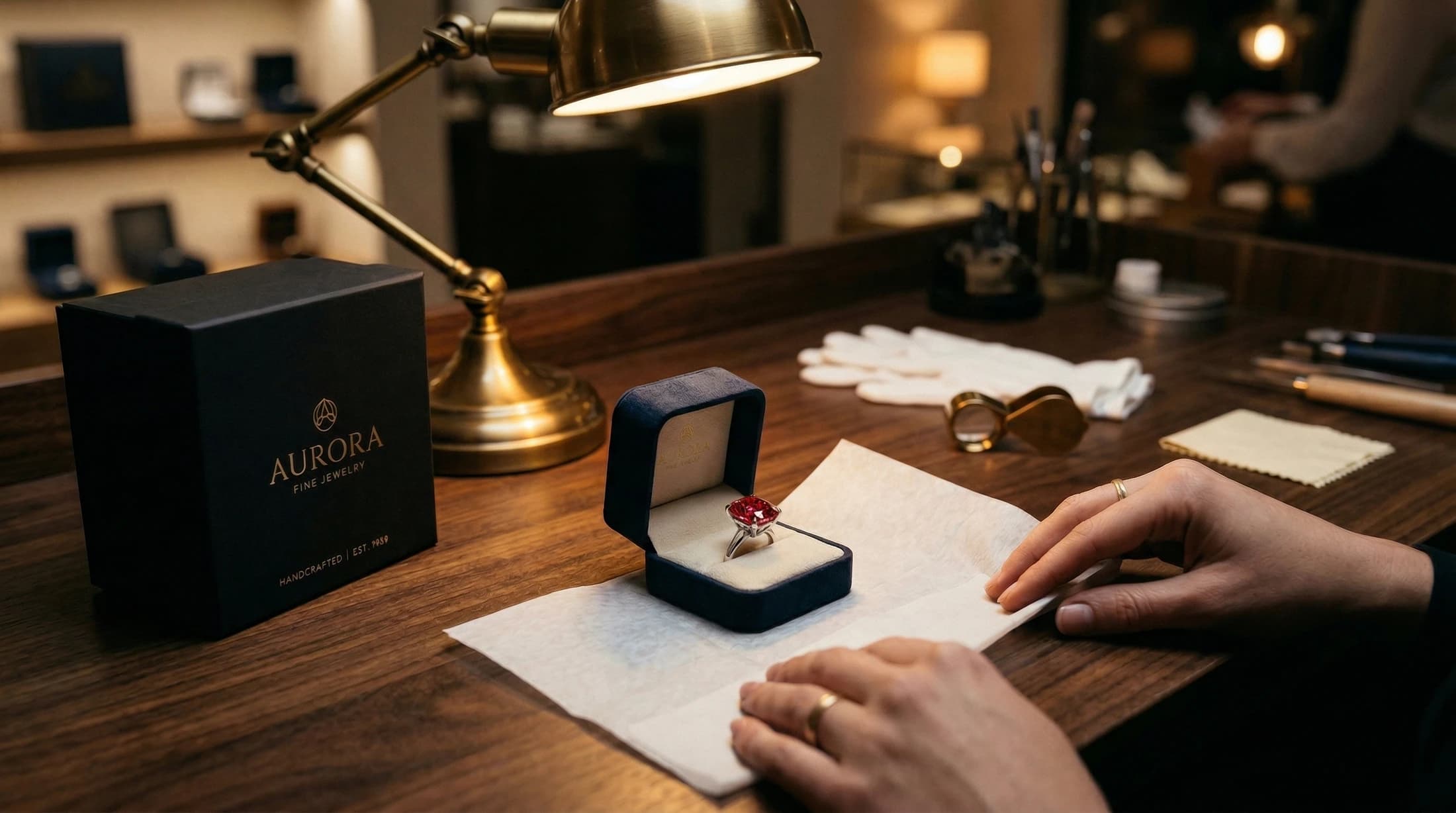
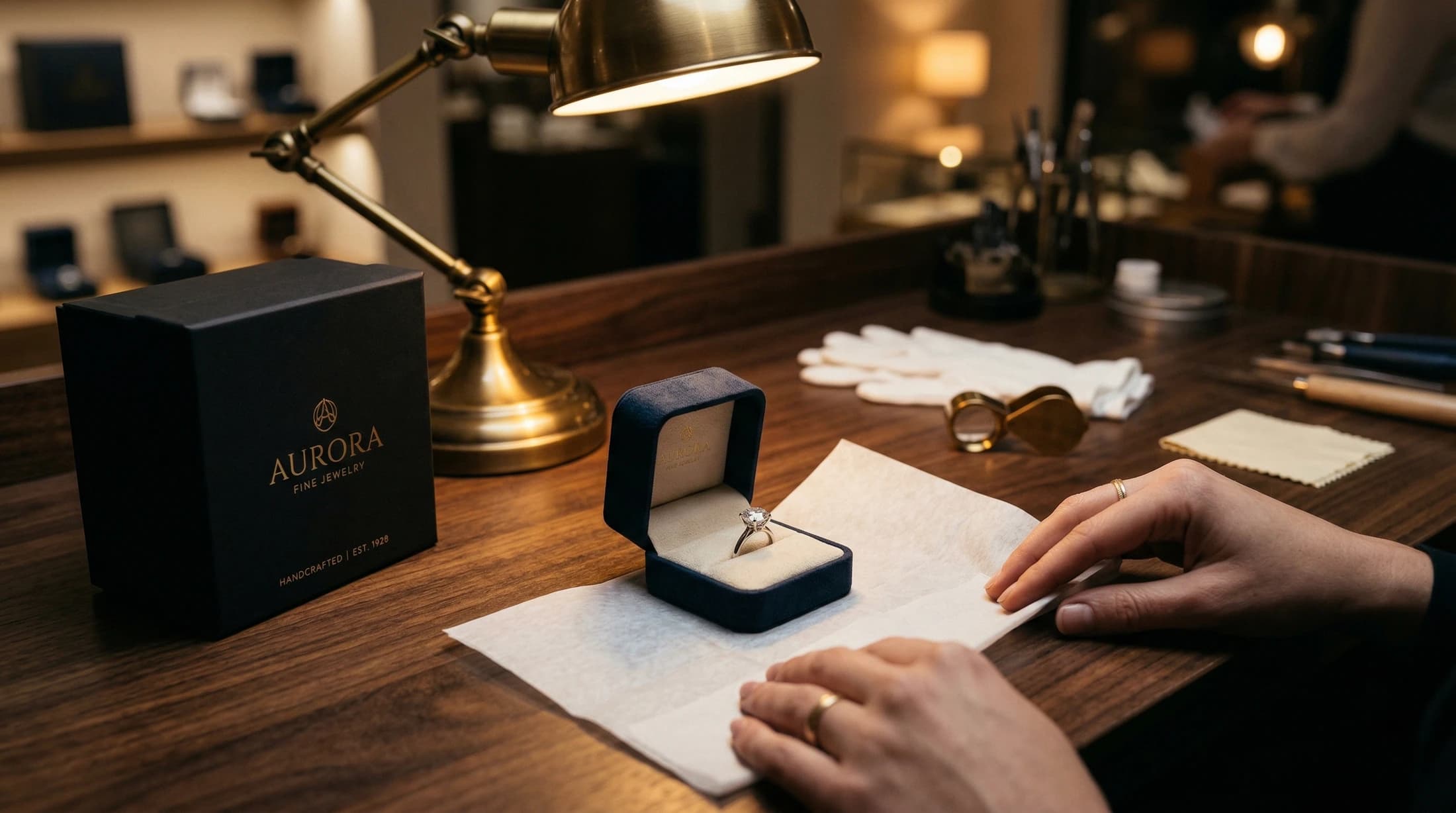
The unboxing experience. The inner presentation should feel like receiving the piece in-store. Your branded box, a handwritten note or printed card thanking them for the purchase, care instructions, and your contact information for questions. This is a marketing moment. Clients photograph and share unboxing experiences, particularly engagement rings. A piece of tissue paper and a generic invoice kills the moment.
Weight and padding. For watches especially, the inner box should be snug. A watch bouncing around inside a presentation box for 18 hours in transit will arrive with micro-scratches on the bracelet or clasp. Use custom foam inserts or pillow cushions sized to the piece. This is a $5 cost per shipment that prevents a $500 polish-and-refinish conversation.
Insurance and Declared Value: Who Actually Pays When Something Goes Wrong
Carrier declared value is not insurance. It's a liability agreement, and the carrier controls the claims process. For a $50,000 watch, the difference matters.
Carrier declared value (FedEx/UPS) charges roughly $3-$5 per $100 of declared value above $100. For a $10,000 piece, that's $300-$500 in shipping surcharges. Claims are handled by the carrier, take 5-30 business days, and require you to prove the item's value with appraisals and receipts. Denial rates are not trivial. Carriers will argue packaging was insufficient or that the item wasn't worth what you declared.
Third-party shipping insurance through providers like Jewelers Mutual, Parcel Pro, or ShipSure costs less per dollar of coverage, typically $1-$2 per $100. Claims are faster, approval rates are higher, and the process is designed for jewelry specifically. Parcel Pro integrates directly with major carriers and includes full replacement value coverage. If you're shipping more than a few pieces per week, this is the obvious choice.
Self-insurance makes sense only if you're shipping high volume and have the cash reserves to absorb a loss. At 200+ shipments per month it is worth setting aside a loss reserve, typically 0.5-1% of shipped value, and skip external coverage on pieces under $5,000. Above that threshold, third-party coverage is almost always the right call.
Whatever approach you use, document it. Your shipping policy should state how items are insured, and your team should know the claims process before they need it, not after.
The Handoff Experience: From Checkout to Doorstep
The gap between "order confirmed" and "package delivered" is where anxiety lives. Your job is to close that gap with communication.
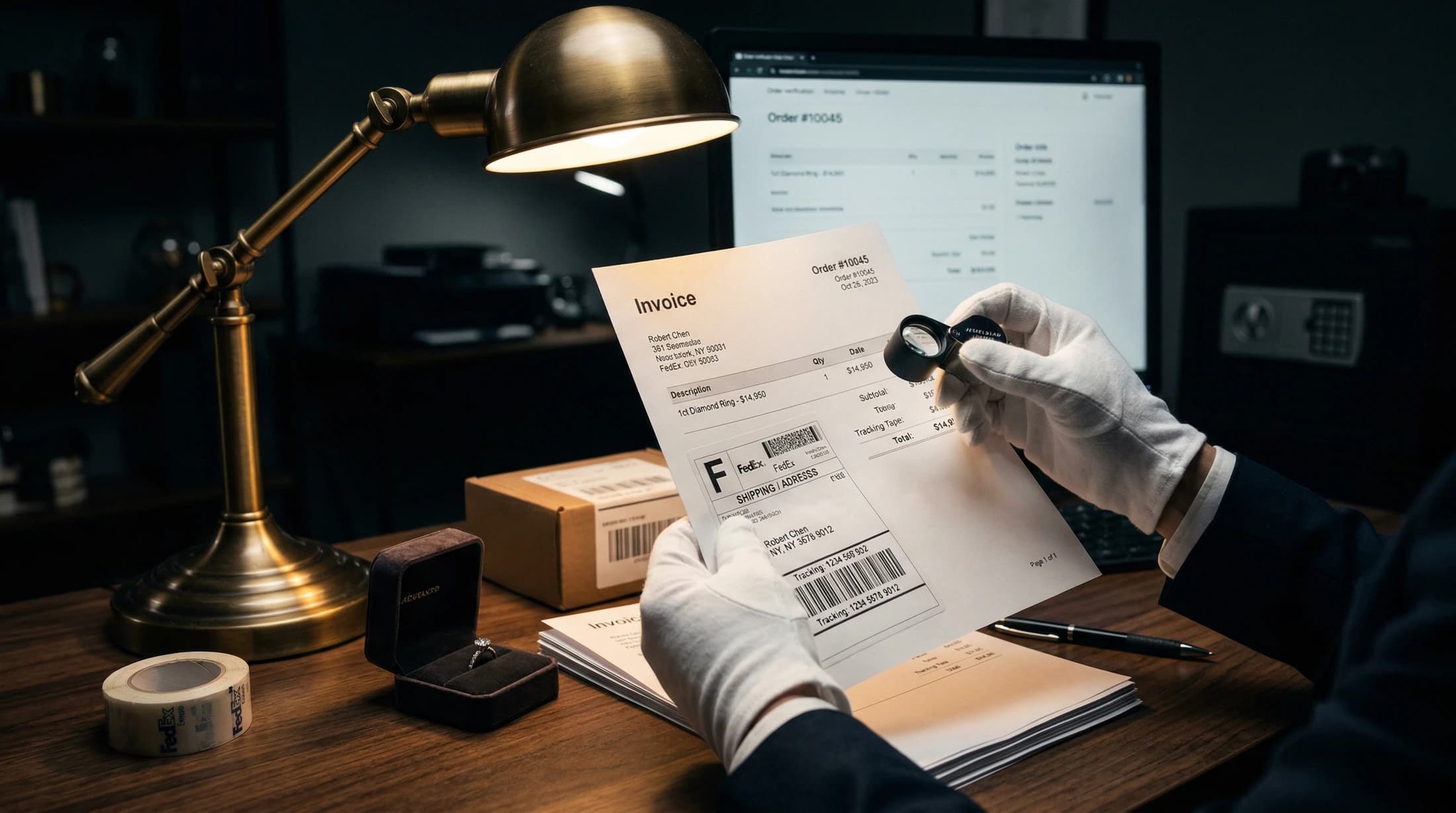
Order confirmation. Send immediately. Include expected ship date, not delivery date, because you may need a day to prep and insure the piece. Set expectations early rather than scrambling to explain a delay later.
Ship notification with tracking. Send the moment the label is created. Include the carrier, tracking number, and expected delivery window. If you use a service like Malca-Amit that doesn't offer public tracking, tell the customer that and explain why. "For security, your shipment travels via armored courier without public tracking. We'll confirm delivery directly." Transparency beats silence.
In-transit updates. For pieces over $5,000, consider a personal text or call when the package is out for delivery. "Hi Sarah, your ring is out for delivery today. Someone will need to sign, so just wanted to give you a heads up." This takes 30 seconds and turns a transactional moment into a personal one.
Delivery confirmation. Follow up within 24 hours of delivery. Ask if everything arrived safely and if they have questions about care or sizing. This is your chance to catch a problem before it becomes a chargeback or a negative review.
White-glove delivery. For ultra-high-value pieces ($50,000+), arrange personal delivery by a staff member or a bonded courier. The cost is real, but for a six-figure sale, hand-delivering the piece to the client's home or office is a brand experience that no shipping label can match.
Returns and Repairs: Reverse Logistics for Luxury
Shipping a piece out is one thing. Getting a $50,000 watch back for service is another. Reverse logistics is usually where there is no system at all.
Pre-paid, pre-insured return labels. Never ask a client to figure out how to ship a high-value piece back to you. Send them a pre-paid FedEx or UPS label with declared value already set, adult signature required, and specific packing instructions. Better yet, send them a pre-packed return kit: an outer box, inner padding, tamper-evident seal, and printed step-by-step instructions.
Chain of custody. When a client sends a watch in for service, confirm receipt immediately by phone or text, not just email. "We have your Rolex Submariner in hand, ref 124060, serial confirmed. Here's what happens next." This eliminates the anxiety of handing a valuable piece to a shipping carrier and waiting.
Service communication. While the piece is with you, send updates at least weekly. "Your watch is with our watchmaker, crystal replacement is complete, pressure testing is scheduled for Thursday." Silence during a repair breeds distrust. The client starts imagining the worst.
Return shipment. Ship the repaired piece back using the same protocols as the original sale. Double-box, insured, signature required. Include a service summary card documenting what was done. This card matters because it becomes part of the watch's provenance documentation.
What to Put on Your Website
Your shipping policy page isn't legal boilerplate. It's a trust signal that directly affects conversion. Buyers considering a $10,000 purchase online will read your shipping page. If it's vague, generic, or missing, they'll hesitate. Or they'll buy from the retailer who made them feel safe.
Your shipping page should answer:
- How do you ship? Name the carriers and service levels. "All orders ship via FedEx Priority Overnight with adult signature required" is specific and builds confidence.
- How are items insured? "Every shipment is fully insured for the purchase price through Jewelers Mutual" tells the buyer their purchase is protected from checkout to doorstep.
- How is the item packaged? Describe the double-box method and branded presentation. "Your piece arrives in our signature presentation box, secured inside a plain, unmarked outer carton for discreet delivery."
- What happens at delivery? Explain the signature requirement and what to expect when the driver arrives.
- What if something goes wrong? State your process for damaged or lost shipments. Clients want to know you have a plan before they need one.
- What about returns? Link to your return policy with clear timelines and explain how the return shipping process works for high-value items.
Add trust badges from your insurance provider and carriers. A Jewelers Mutual or Parcel Pro badge on your checkout page reduces cart abandonment for high-value orders. If you offer free shipping above a certain threshold, state it clearly, but don't lead with it. The confidence that the piece will arrive safely matters more to a luxury buyer than saving $25 on shipping.
Build a Shipping Experience That Matches the Product
Your logistics should feel as considered as your merchandising. Every contact, from checkout confirmation to the moment a client opens the box, either reinforces or undermines the brand you've spent years building. The retailers who get this right turn shipping into a competitive advantage. The ones who don't lose clients to competitors who do.
If your current shipping setup is a liability rather than a brand asset, talk to H&CO. We help jewelry and watch retailers build end-to-end customer experiences that convert online browsers into repeat buyers.

About the author
Hagop Imasdounian
Hagop Imasdounian is the founder of H&CO. Raised around his family’s jewelry businesses, he brings more than 15 years of digital marketing experience to helping jewelry and watch brands improve their websites, reach buyers and connect marketing with sales.