
Paid Ads for Jewelry and Watch Retailers
Paid Ads for Jewelry and Watch Retailers That Sell Online and Across the Counter
Google Ads and Meta campaigns built for retailers who carry Omega, Breitling, TAG Heuer, and others. Every dollar tracked from ad click to register transaction, co-op reimbursement handled, brand compliance built in.
For authorized dealers and independent retailers running $3K to $50K/month in paid media across Google, Meta, and beyond.
Talk to the StrategistWhat Is Paid Advertising for Jewelry & Watch Retailers?
Paid advertising for jewelry and watch retailers means running Google, Meta, and paid social campaigns for authorized dealers and independent stores, then proving what those campaigns actually sold. Most retail ad spend optimizes for clicks. Jewelry and watch retail requires attribution that follows the buyer from an ad into a physical store and connects the transaction back to the campaign that started it.
81% of luxury watch purchases happen in-store. 63% of jewelry purchases happen in-store. If your tracking stops at the website, your ad platforms are optimizing toward the wrong people, and you're paying for traffic that researches on your site and buys somewhere else.
Trusted by retailers across North America



.png&w=3840&q=75&dpl=dpl_F9VC8kL9BYT5TLDMfbYGkX7NpYqV)

-1.png&w=3840&q=75&dpl=dpl_F9VC8kL9BYT5TLDMfbYGkX7NpYqV)


.png&w=3840&q=75&dpl=dpl_F9VC8kL9BYT5TLDMfbYGkX7NpYqV)
.png&w=3840&q=75&dpl=dpl_F9VC8kL9BYT5TLDMfbYGkX7NpYqV)

.png&w=3840&q=75&dpl=dpl_F9VC8kL9BYT5TLDMfbYGkX7NpYqV)

What's Wrong With Most Retail Ad Programs
The Problems With Paid Ads for Jewelry and Watch Retailers
Your ads optimize for clicks. Your revenue happens in-store.
81% of luxury watch purchases happen in-store. If the algorithm doesn't know which clicks produced in-store buyers, it optimizes toward the wrong people. We built Felix to fix this: server-side GTM, first-party cookie tagging, POS integration, and post-purchase email capture. Google and Meta learn which clicks produce actual buyers, not window shoppers.
You're leaving co-op money on the table.
$14 billion in co-op marketing funds go unused every year. We manage co-op submissions for 10-12 brands including Omega, Breitling, TAG Heuer, Chopard, IWC, Panerai, and Roger Dubuis. For a retailer carrying three or four brands, co-op can offset 30-50% of your ad spend. We handle the paperwork.
Every brand has different creative rules, and your agency doesn't know them.
Omega's requirements differ from Breitling's. Chopard's are different from IWC's. If your agency doesn't know these guidelines, the ad gets rejected (and the co-op claim with it), or watered down to something generic. We produce creative for 10-12 brands and design within the guidelines from day one.
Most agencies optimize for a 7-day window. Your customers take months.
Engagement ring buyers research for one to three months. Watch enthusiasts take six months or longer. A 7-day window tells the algorithm anyone who doesn't convert within a week is worthless. We extend windows to 30, 60, or 90 days and build retargeting around The Consideration Ladder: early research, active comparison, and purchase-ready phases.
You can't compete on price, and you shouldn't try.
Grey market dealers undercut you by 20% or more. Amazon sells watches below MAP. We build campaigns that sell the value of buying from an authorized retailer: warranty, authenticity, in-house service, and the experience of trying a watch on your wrist. No "SALE" language. The ad positions your store as where serious buyers go.
Your budget is a fraction of the chains, and most of it is wasted.
Chain retailers spend $500K to $2M per year per market. You're spending $10K to $20K. That gap doesn't close by spending more. With Felix attribution, "we spent $5,000 on Google Ads and got 200 clicks" becomes "we spent $5,000 on Google Ads and produced $47,000 in in-store revenue." That's a number you can take to the bank.
You've probably done this before
You hired an agency. They ran Google Ads, maybe some Facebook campaigns. Every month you got a PDF with clicks, impressions, cost-per-click, and a recommendation to increase budget. What you never got was a straight answer about what sold. How many of those clicks turned into someone walking through your door? Which campaign produced the $12,000 Seamaster sale last Tuesday? Nobody could tell you, because the tracking stopped at the website.
That's the standard playbook, and it doesn't work for jewelry and watch retail. The purchase happens in your store, not on your website. Any agency that can't connect ad clicks to register transactions is guessing, and charging you for the privilege.
What Does Working With H&CO on Paid Ads Look Like?
Step 01
1. Audit and Attribution Setup
We review your current ad accounts, tracking setup, and brand relationships. Most existing campaigns are optimizing toward the wrong signals, with no connection between ad clicks and register data. We map out what needs to change.
Step 02
2. Felix Implementation
We integrate server-side tracking, set up first-party cookie tagging, connect to your POS and CRM, and configure offline conversion feeds for Google and Meta. This usually takes 2-4 weeks. Once it's live, the ad platforms start learning from real purchase data.
Step 03
3. Co-op Review and Campaign Architecture
We pull the co-op guidelines for every brand you carry and build the campaign structure around them. Media buys are planned so they qualify for reimbursement. Creative is produced within brand guidelines. The architecture serves both performance and compliance.
Step 04
4. Campaign Launch
Google Ads and Meta campaigns go live. Search, Shopping, Display, YouTube, Facebook, Instagram, each channel gets a strategy matched to where the buyer is in their research process. The Consideration Ladder retargeting structure activates across all channels.
Step 05
5. Optimization Against Revenue, Not Clicks
As purchase data flows back through Felix, we shift budget toward campaigns that produce actual buyers. Most agencies optimize for cost-per-click because that's the only data they have. We optimize for cost-per-buyer because Felix gives us the full picture.
Step 06
6. Monthly Proof
You get a report that ties ad spend to in-store and online revenue. Phone calls attributed to campaigns. Direction requests. Appointment bookings. Co-op reimbursements filed. You verify it against your own books. If the numbers don't match, we figure out why.
Channel Strategy
Where Each Channel Fits
Not every ad platform does the same job. Here's how we deploy each one for jewelry and watch retailers.
Google Ads
Captures people who already know what they want. Someone searching "Omega Seamaster authorized dealer near me" has purchase intent. Google Shopping puts your inventory in front of those searches with images and pricing. We also run brand-plus-city campaigns to own the local search results before chains and grey market sellers do.
Meta (Facebook & Instagram)
Where you reach people before they start searching. Visual product storytelling, lifestyle imagery, and retargeting sequences that keep your store top of mind during long research cycles. When Felix feeds buyer data back to Meta, we build lookalike audiences modeled on your actual customers, not just website visitors.
Underused by most jewelry retailers, which is why it works. The platform skews toward high-intent purchase planning, especially for engagement rings and bridal jewelry. Users save and revisit pins over weeks and months, which matches the long consideration cycle perfectly. CPCs run lower than Meta for these categories.
Programmatic Display
Handles retargeting across the broader web. When someone visits your site, browses three Omega models, and leaves, programmatic display follows them across news sites, blogs, and apps with your creative. Frequency controls prevent ad fatigue during what can be a months-long research process.
Featured Work
What Our Paid Programs Have Produced
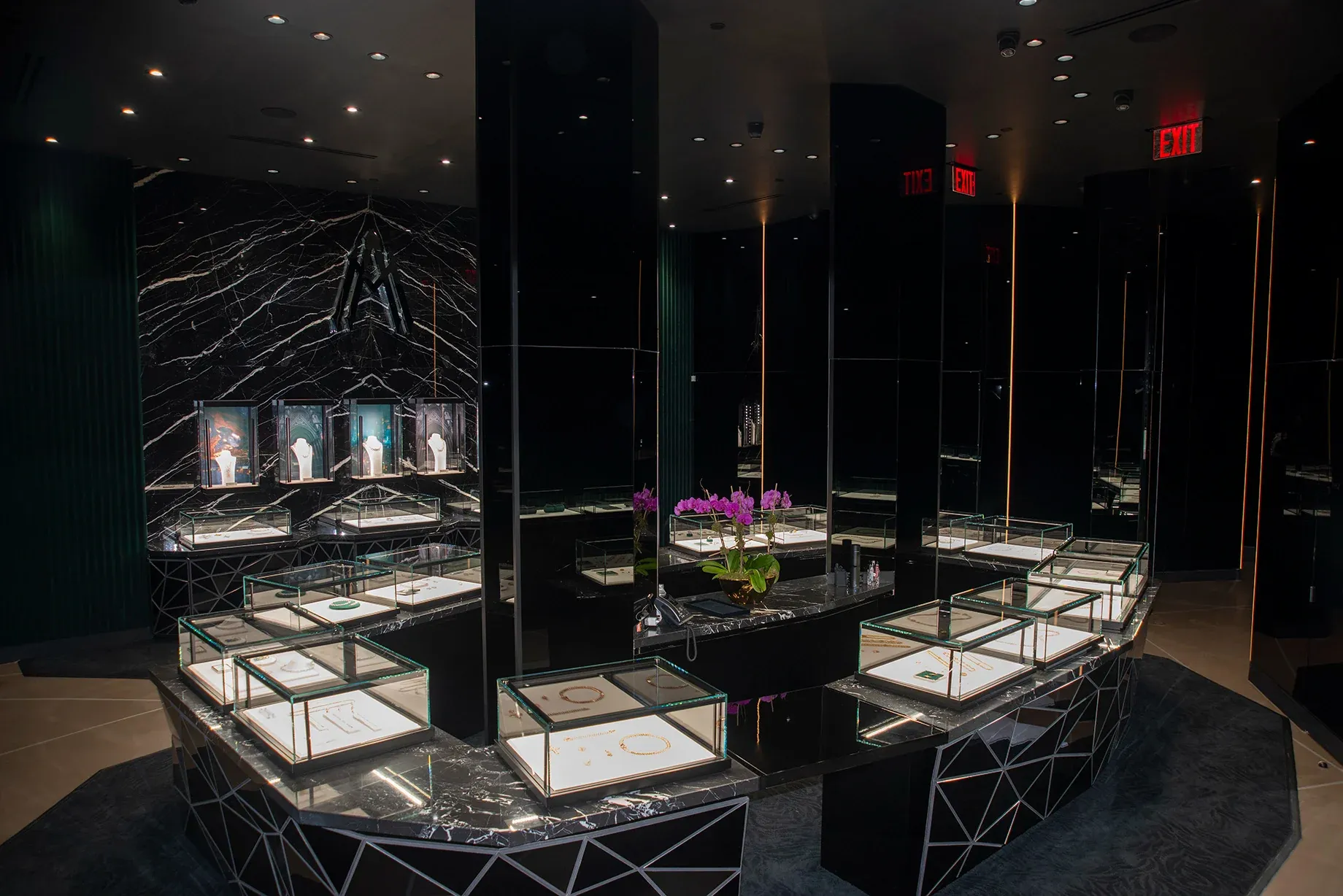
From Custom Jeweler to Global Luxury Brand: The Alex Moss NY Story
$0 to Millions Online
Read Case Study
Transforming Paloma Blanca’s Digital Presence
5K to 20K Monthly Visitors
Read Case Study
Turning a Luxury Retail Website into a Sales Engine for L’ORO Jewellery
700 to 12K Visitors
Read Case Study