SEO for Jewelry and Watch Retailers
SEO for Jewelry and Watch Retailers That Drives Online Sales and Store Visits
Authorized retailers can outrank the brand's own website for local searches. We've done it repeatedly. Our SEO programs capture brand demand, prove it drove store visits, and report revenue, not traffic.
For authorized dealers, multi-brand boutiques, and independent watch and jewelry retailers across the US and Canada.
Get a Free SEO AuditWhat Is SEO for Jewelry and Watch Retailers?
SEO for jewelry and watch retailers is the process of building organic search visibility around the brands an authorized dealer carries, the products in their cases, and the local market they serve. The goal is to capture buyers during a research process that lasts weeks or months, so they find the retailer's store before a grey market dealer or the brand's corporate site. It requires unique content for each brand, technical handling of manufacturer product data, and local search dominance in the retailer's city.
Here is the proof point that matters most: for local searches like "Omega Seamaster Dallas" or "Breitling authorized dealer Toronto," an authorized retailer's website can and should outrank the brand's own site. The brand's corporate site doesn't have a page about buying in your city. Your site will, if it's built correctly. We have done this consistently across brand + city terms, moving stores from page two to the top three for the products sitting in their cases.
Trusted by retailers across North America



.png&w=3840&q=75&dpl=dpl_F9VC8kL9BYT5TLDMfbYGkX7NpYqV)

-1.png&w=3840&q=75&dpl=dpl_F9VC8kL9BYT5TLDMfbYGkX7NpYqV)


.png&w=3840&q=75&dpl=dpl_F9VC8kL9BYT5TLDMfbYGkX7NpYqV)
.png&w=3840&q=75&dpl=dpl_F9VC8kL9BYT5TLDMfbYGkX7NpYqV)

.png&w=3840&q=75&dpl=dpl_F9VC8kL9BYT5TLDMfbYGkX7NpYqV)

What You're Up Against
The Real SEO Problems Facing Jewelry and Watch Retailers
The brand's site outranks you for the products you sell
Someone in your city searches "Omega Seamaster" and the brand's corporate site takes the top spot. A grey market dealer takes second. Your store, the one with the actual watch in the case, sits on page two. We fix this with locally-optimized brand pages built around your city, your inventory, and the experience of buying from an authorized dealer.
Grey dealers are stealing your customers through search
A customer tries on a TAG Heuer in your store, walks out "to think about it," then Googles the reference number. A grey dealer shows up offering it 20% cheaper. We build content that ensures your store dominates those searches. They find your page, your GBP, your reviews, not a discount operation shipping from a warehouse.
Every authorized dealer has the same product copy
Omega gives you the same product description they give every other authorized retailer. Google sees identical copy across dozens of sites and has no reason to rank yours over anyone else's. We create unique, locally-relevant content for every brand and product category you carry, written for how your customers actually search.
Authorized retailer constraints limit what's even possible
MAP compliance restricts how you display pricing. Brand portals dictate which images and descriptions you can use. Co-op eligibility can be jeopardized if your site doesn't meet brand guidelines. We build SEO programs that work within these constraints, not around them, while still producing content Google treats as unique.
Your traffic is mostly people who already know your name
The majority of your organic traffic comes from people searching your store name. That's fine for proving you exist, but it means your website isn't finding new customers. We track the Discovery Ratio, the split between branded and non-branded traffic, and shift it so non-branded discovery brings in the larger share.
Your Google Business Profile is an afterthought
46% of all Google searches have local intent. When someone searches "jewelry store near me," your GBP is what determines whether you show up in the map pack. We treat GBP as a primary SEO channel: weekly posts, monthly photos, systematic review generation, Q&A management, and product catalog integration.
AI is answering the questions your customers used to Google
45% of consumers now use AI tools to evaluate local businesses, up from 6% one year ago. When someone asks ChatGPT "best Omega dealer in Toronto," the AI pulls from structured content. Our client L'ORO earns 300-400 AI citations per month with a visibility score of 35, nearly double the industry average of 21.
Thin brand pages cost you rankings to the manufacturer's site
Most authorized retailer brand pages have two paragraphs of manufacturer copy and a grid of product images. The brand's corporate site has hundreds of pages of original content. Google picks the corporate site every time. A proper brand page covers your collection, your buying experience, your city's relevance, and content that answers buyer questions.
You've probably tried SEO before
If you've worked with an SEO agency and came away skeptical, you're not unusual. The pattern is predictable: they treated you like a general retailer, sent monthly keyword ranking reports, published blog posts nobody read, and nothing changed in-store. Traffic may have gone up on paper, but foot traffic didn't, and nobody could tell you which organic visitors became buyers.
That happened because general-purpose SEO doesn't account for the realities of authorized retail. MAP compliance, brand portal restrictions, co-op requirements, the six-month buyer journey, the fact that 81% of luxury watch purchases still happen in-store. SEO for authorized retailers requires a different approach, one built around the brands you carry, the city you operate in, and the ability to prove that organic search moved someone from a screen to your store.
What Does Working With H&CO on SEO Look Like?
Step 01
1. Technical Audit and Competitive Analysis
We tear apart your site's technical foundation: crawl errors, site architecture, page speed, schema markup, duplicate content from manufacturer descriptions, canonical tags, mobile rendering. We map your competitive position for every brand you carry, identifying where you rank, where the brand's corporate site ranks, and where grey dealers are capturing traffic. We check your Discovery Ratio to establish a baseline for new customer discovery versus existing customers.
Step 02
2. Brand Page and Content Build
We create dedicated, locally-optimized pages for every brand and product category you carry. Each page targets the specific search terms your customers use during their research process: "[brand] [city]," "[brand] authorized dealer [city]," "[watch model] review," "[watch model] vs. [watch model]." Content is unique to your store, not repurposed manufacturer copy. Every page respects your MAP obligations and protects your co-op eligibility.
Step 03
3. Local SEO Infrastructure
Google Business Profile optimization across every location. Review generation systems. Local citation building. NAP consistency across directories. Geo-targeted content that connects your store to your specific market. We post to your GBP weekly and add photos monthly to keep it active and competitive.
Step 04
4. Authority and Backlink Development
We build your site's authority through earned backlinks from relevant industry publications, local business directories, and brand-adjacent content. The goal is to close the domain authority gap between your site and the brand's corporate site for local searches.
Step 05
5. AI Visibility and Answer Engine Optimization
We structure your content with the formatting, schema markup, and question-answer patterns that AI tools pull from when recommending local businesses. FAQ sections, structured data, and content that directly answers the questions buyers ask AI assistants.
Step 06
6. Monthly Reporting Tied to Revenue
You don't get a keyword ranking spreadsheet. You get organic traffic broken down by Discovery Ratio, direction requests from Google Business Profile, phone calls from organic search, and AI citations. For clients on our full attribution stack, Felix ties organic sessions to CRM data and offline conversions. We compare against your actual sales data so you know what organic search produced.
How We Measure It
What Agencies Report vs. What Authorized Retailers Need
Most jewelry SEO agencies report on the wrong things. Here's what actually matters for an authorized retailer.
Revenue, not rankings
Keyword positions are nice. Revenue from organic visitors, verified against your books, is the only metric that justifies the spend.
Discovery Ratio, not raw traffic
Total organic traffic is misleading when most of it is people searching your store name. We track non-branded growth as the real signal of new customer discovery.
Local pack visibility, not DA scores
Domain authority is a vanity number. Showing up in the local pack for brand + city queries puts buyers in your store.
Calls and directions, not blog views
Foot traffic from Google Business Profile direction requests and phone calls is what closes the loop between SEO and revenue.
AI citations, not backlinks
Visibility in ChatGPT, Gemini, and Perplexity is the new equivalent of ranking. We track citations and visibility scores monthly.
Pages that outrank brands, not pages published
"Content published" is an input metric. Unique brand pages that outrank the manufacturer's own site for local queries is the output that matters.
Featured Work
We Took L'ORO From 700 to 12,000 Monthly Visitors
Luxury Jewelry
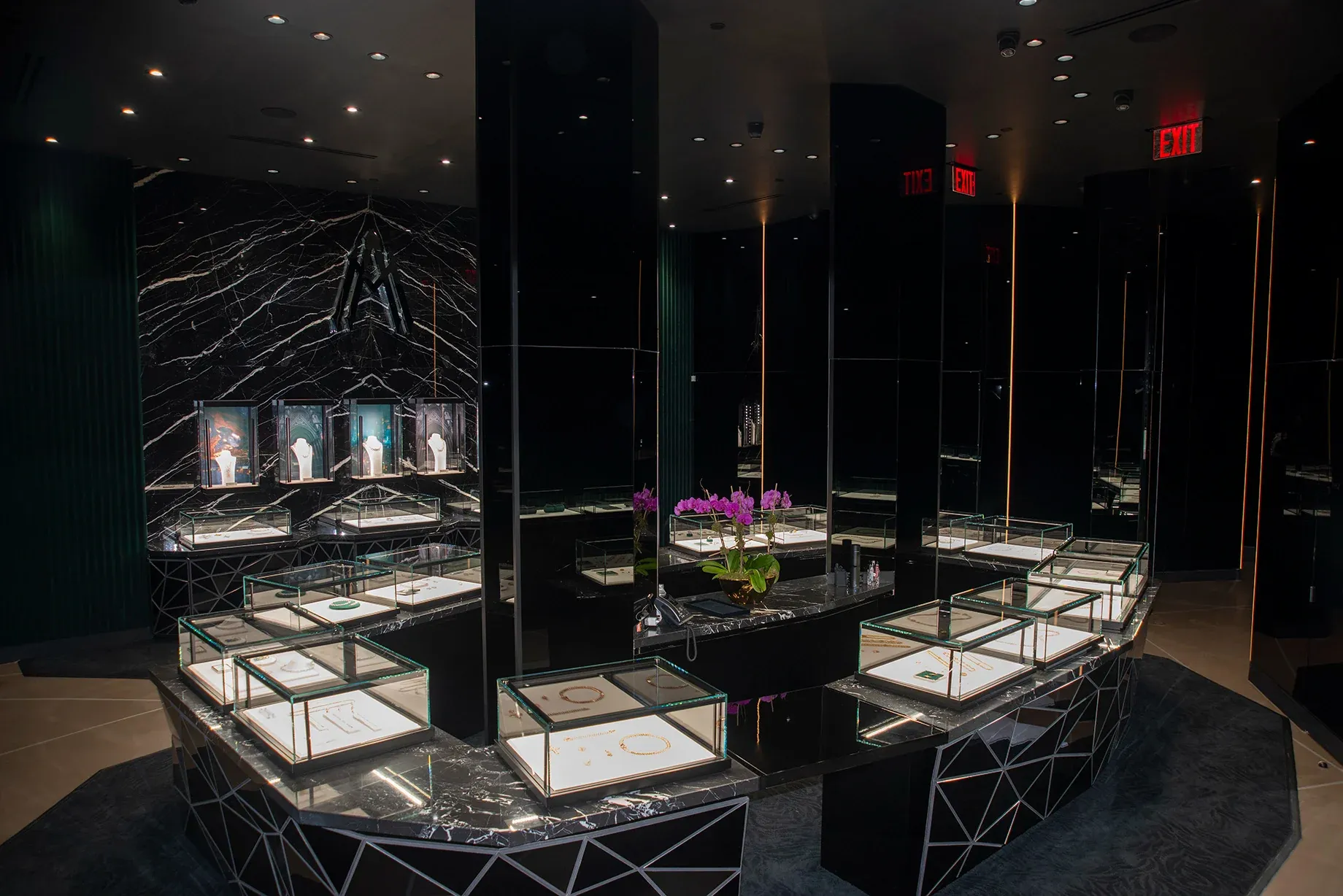
From Custom Jeweler to Global Luxury Brand: The Alex Moss NY Story
$0 to Millions Online
We launched Alex Moss NY's first e-commerce store in 2021. They've outgrown it twice since, not because it broke, but because the business scaled faster than anyone expected. What started as a custom jeweler known to hip-hop royalty is now a luxury brand with a SoHo flagship, named collections, global collaborations, and millions in online revenue.

Bridal Fashion
Transforming Paloma Blanca’s Digital Presence
5K to 20K Monthly Visitors
Paloma Blanca and Mikaella Bridals had two separate, outdated websites that weren't generating search traffic. We unified them under one domain and quadrupled monthly visitors from 5,000 to 20,000, every one of them a potential bride walking into a partner boutique asking for the dress by name.

Luxury Retail
Turning a Luxury Retail Website into a Sales Engine for L’ORO Jewellery
700 to 12K Visitors
L'ORO's website averaged 700 monthly visitors, and most of them were just searching the store name. We turned it into a revenue engine: 12,000 monthly visitors, over 1,000 referring domains, and an AI visibility score nearly double the industry average.