
Jewelry & Watch Retailer Web Design
Web Design for Jewelry and Watch Retailers as Polished as Your Showroom, Built to Generate Leads and Sales
We build websites for jewelry and watch retailers using data from millions in ad spend. Every page, layout, and CTA is informed by what actually converts in this industry, not a designer's best guess.
For authorized dealers and independent retailers who need a website that fills the showroom, not just decorates the internet.
Talk to the StrategistWhat Is Web Design for Jewelry & Watch Retailers?
A jewelry retailer's website is structurally different from a general retail site. It must handle authorized brand compliance across multiple manufacturers, convert high-intent visitors into in-store appointments rather than cart checkouts, and support catalogues where a single item can cost more than a general retailer's entire inventory page. That combination demands purpose-built architecture.
63% of consumers still prefer to purchase jewelry in-store. 81% of luxury watch purchases happen in-store. Your website exists to fill your showroom, not replace it. Most agency-built sites treat the website as a design project. We treat it as revenue infrastructure, because that's what it is.
Trusted by retailers across North America




.png&w=3840&q=75&dpl=dpl_F9VC8kL9BYT5TLDMfbYGkX7NpYqV)

-1.png&w=3840&q=75&dpl=dpl_F9VC8kL9BYT5TLDMfbYGkX7NpYqV)


.png&w=3840&q=75&dpl=dpl_F9VC8kL9BYT5TLDMfbYGkX7NpYqV)
.png&w=3840&q=75&dpl=dpl_F9VC8kL9BYT5TLDMfbYGkX7NpYqV)

.png&w=3840&q=75&dpl=dpl_F9VC8kL9BYT5TLDMfbYGkX7NpYqV)

What's Wrong With Most Sites
The Six Problems With Most Jewelry Retailer Websites
1. The Template Trap
You paid $10K-$40K for a site that looks like every other jewelry store online. Same hero slider, same grid of brand logos, same "Visit Us" button buried in the footer. That's a brochure, not a marketing asset. We've spent millions on advertising for jewelry retailers and know which page structures produce phone calls and which CTAs get clicked. Our sites are designed from conversion data, not mood boards.
2. Pretty Doesn't Mean Profitable
The most common complaint we hear from new clients: "We have a beautiful website and it does nothing." The CTA is in the wrong spot. The phone number requires two clicks to find. The form asks for eight fields when it should ask for three. We design for the action you need the visitor to take: a phone call, an appointment request, a direction lookup, a walk-in.
3. Your Site Doesn't Work for the Brands You Carry
Omega's rules differ from Breitling's. Chopard's are different from IWC's. Most web agencies don't know these guidelines exist. They build one design, apply it uniformly, and you spend the next six months fielding compliance emails from your brand reps. We build sites that accommodate multiple brand guidelines within a cohesive store identity.
4. Your Website Lives in a Silo
Your web agency built the site. Your marketing agency runs the ads. Nobody talks. Landing pages don't match ad copy, tracking breaks every plugin update, and nobody can tell you which page produces revenue. Because H&CO also runs paid ads, SEO, and attribution, the website is built as part of the full marketing system. Server-side tracking is configured from day one.
5. Your Site Is Slow, and It's Costing You
Most jewelry websites load in 4-6 seconds on mobile. Google penalizes slow sites in search rankings. Visitors leave. We separate the frontend from the backend so pages load fast regardless of backend complexity. Product databases with thousands of SKUs, multiple brand catalogues, appointment booking, none of it slows down what the customer experiences. Our builds consistently score 90+ on Core Web Vitals.
6. No Attribution, No Proof
Your current site has Google Analytics and maybe a Meta pixel. Both fire from the browser, so Safari blocks them after 24 hours and ad blockers strip them entirely. We build server-side tracking into the site from the start. Felix extends tracking beyond browser limitations and imports offline purchase data back into the ad platforms. You see which pages produce revenue, not just which pages get traffic.
You've probably bought a website before
An agency took your money, gave you a beautiful design, and disappeared after launch. The site doesn't drive calls. The forms don't convert. Your tracking has been broken for months and nobody noticed. When you ask which pages actually produce revenue, nobody can answer, because nobody set the site up to measure that in the first place.
A jewelry retailer's website is the center of its marketing operation. It's where ad traffic lands, where search traffic converts, where product research happens, and where someone decides to call, book an appointment, or drive to your store. Treat it like a design project and you get a brochure. Treat it like revenue infrastructure and you get a sales channel.
What Working With H&CO on a Website Build Looks Like
Step 01
1. Discovery and Audit
We review your current site's performance data, your analytics, your ad account history, and your competitive position. We interview your team about what's working, what isn't, and what your customers actually do on the site. If you're running ads, we pull conversion data to identify which pages perform and which don't. About two weeks.
Step 02
2. Architecture and Wireframes
We map out the full site structure: every page, every conversion path, every brand section, every product category. This is where brand compliance gets built in, not bolted on. Wireframes show layout, content hierarchy, and CTA placement before any visual design begins. You approve the architecture before we touch a pixel.
Step 03
3. Design
Visual design happens within the approved architecture. We design for your brand identity while meeting the guidelines of every manufacturer you carry. Mobile gets equal attention, not a scaled-down afterthought. You see full mockups and give feedback before development starts.
Step 04
4. Development and Tracking
We build the site on the platform we agreed on during discovery. Server-side tracking, call tracking, and attribution infrastructure go in during development, not after launch. If you're running ads during the build, we coordinate launch timing so campaigns point to the new site without downtime.
Step 05
5. Launch
The site goes live with full QA across devices, browsers, and tracking systems. Redirects are in place, tracking is verified, and your team has been trained on content management.
Step 06
6. Post-Launch Monitoring and Optimization
We run a 30-to-90-day post-launch monitoring period. We watch for technical issues, monitor performance against your ad campaigns, and improve based on what you discover once the site is live. If H&CO is also running your marketing, the website continues to evolve. The site is never "done."
Tech Stack
Our Technology Stack
We don't force every client onto the same platform. We pick the right tool for the job based on what your business actually needs.
Headless Shopify
Decoupled frontend for speed, Shopify backend for e-commerce. Best for retailers with large product catalogues who need fast page loads and full e-commerce. You keep Shopify's inventory management, payment processing, and app ecosystem without the performance penalty of a Shopify theme.
Headless WordPress
WordPress for content management, custom frontend for performance. Best for retailers whose site is primarily a marketing asset (driving calls, appointments, foot traffic) with content-heavy needs like blogs, brand pages, and location pages.
Standard WordPress
For retailers who need a solid, professionally built site without the complexity of a decoupled architecture. Lower build cost, still optimized for conversion and search.
Payload CMS (Headless, Open-Source)
Our own site runs on Payload. It's a headless CMS that gives us complete control over the frontend, the data structure, and the editing experience. Best for retailers who want something genuinely custom without being locked into a proprietary platform. No monthly platform fees. You own the code.
POS, Integrations, and Ownership
Your website doesn't operate in isolation. We build direct integrations with The Edge POS (the dominant system in jewelry retail) so inventory, pricing, and product data stay synchronized. When a piece sells in-store, it comes off the site. When you add new inventory, it appears online without manual entry.
For retailers running e-commerce on Shopify, we build custom Shopify apps when native functionality falls short. The big one is serialized inventory tracking. Watches and high-end jewelry carry serial numbers, and Shopify doesn't handle them out of the box. We've built custom applications that track individual pieces by serial number from intake through sale, both online and in-store. If you carry Rolex, Omega, or any brand where every piece has a unique serial, this solves a real operational gap.
You own your website. That applies to every platform we build on. The code, the content, the data, and the design assets are yours. If you host with us, you can move hosting at any time. If we part ways, we hand over everything: source code, credentials, documentation. No hostage situations, no proprietary lock-in. We put this in writing before the project starts.
Featured Work
Sites We've Built for Retailers Like You
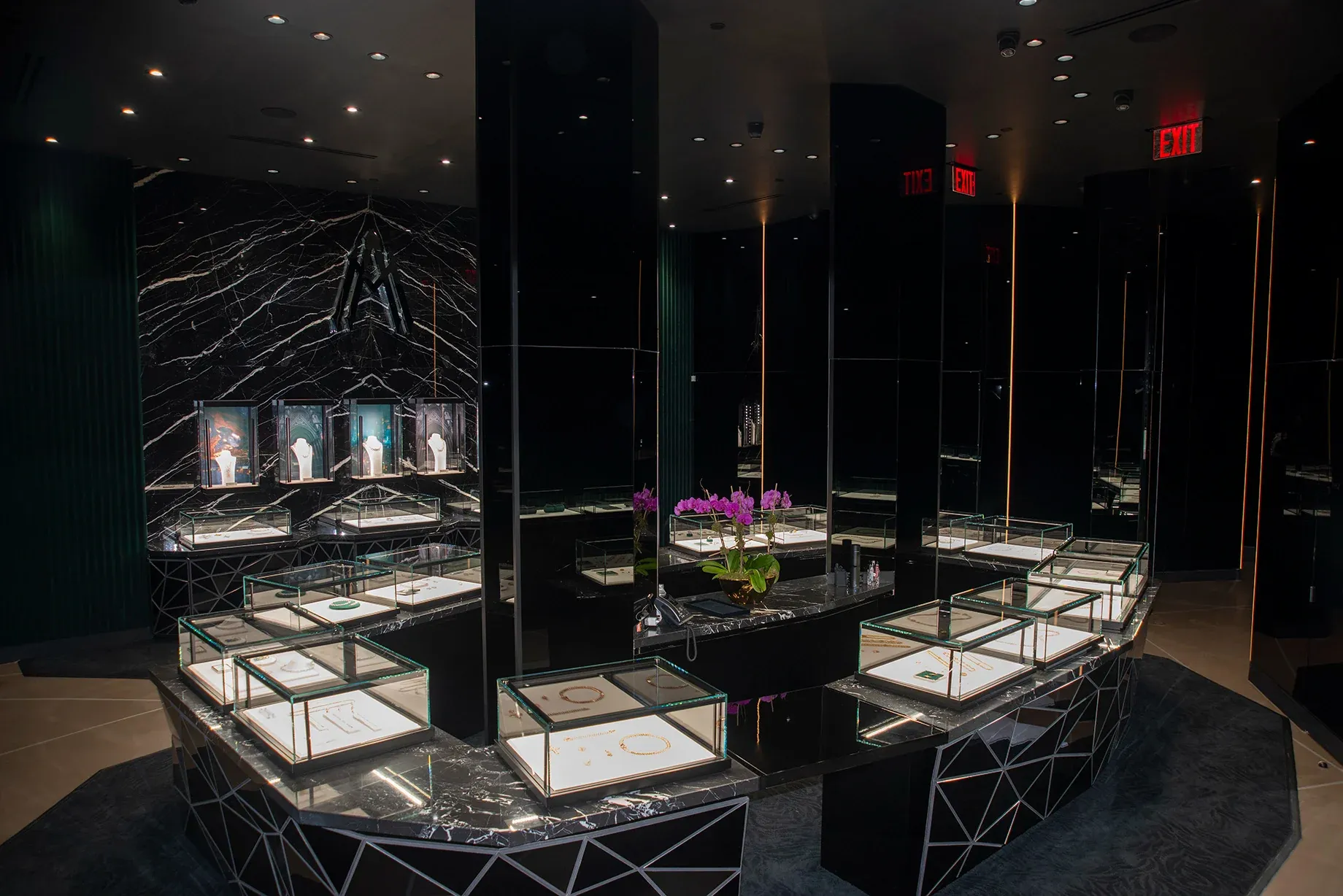
From Custom Jeweler to Global Luxury Brand: The Alex Moss NY Story
$0 to Millions Online
Read Case Study
Transforming Paloma Blanca’s Digital Presence
5K to 20K Monthly Visitors
Read Case Study
Turning a Luxury Retail Website into a Sales Engine for L’ORO Jewellery
700 to 12K Visitors
Read Case Study