
Why Does Your About Page Matter More Than Your Product Pages?
For jewelry and watch retailers, the About page isn't a corporate formality. It's the page where a buyer decides whether to walk into your store or keep scrolling. At the $10,000+ price point, the product's quality is a given. A Rolex is a Rolex whether you buy it from Dealer A or Dealer B. The buyer is comparing the trust they have in you versus the store across town.
H&CO is a digital marketing agency for luxury jewelry and watch retailers. We've redesigned dozens of About pages, and the pattern is always the same: the old page reads like a Wikipedia stub. A few sentences about "serving the community since 1985," maybe a stock photo of a watch on a velvet pillow. No faces, no story, no reason to visit.
Your About page is often the second or third most-visited page on your site. If it doesn't answer "Why should I trust you with my money?", you're leaving revenue on the table.
According to recent consumer studies, 32% of luxury consumers will abandon a brand after just ONE negative experience. With 45% of shoppers now using AI to evaluate a business before visiting, your "About" page is the first line of defense against being filtered out.
How Does a Strong About Page Drive Foot Traffic?
According to Fortune Business Insights, 81.4% of sales happen in-person. Your website's job is to make that in-person visit feel like a safe bet. The About page is where that safety gets established.
Think about the buyer journey. Someone searches "authorized Rolex dealer [city]." They land on your site, browse a few watches, then, before they pick up the phone or drive 30 minutes to your store, they click "About." They want to see who they're dealing with.
A page that tells a real story makes you a destination. A generic page makes you one of three tabs they'll compare and forget. This is the same trust dynamic we cover in The High-End Lead Bridge, where the conversion isn't a cart checkout but a phone call or a store visit. Your About page is what tips the scale.
What Should a High-Trust About Page Include?
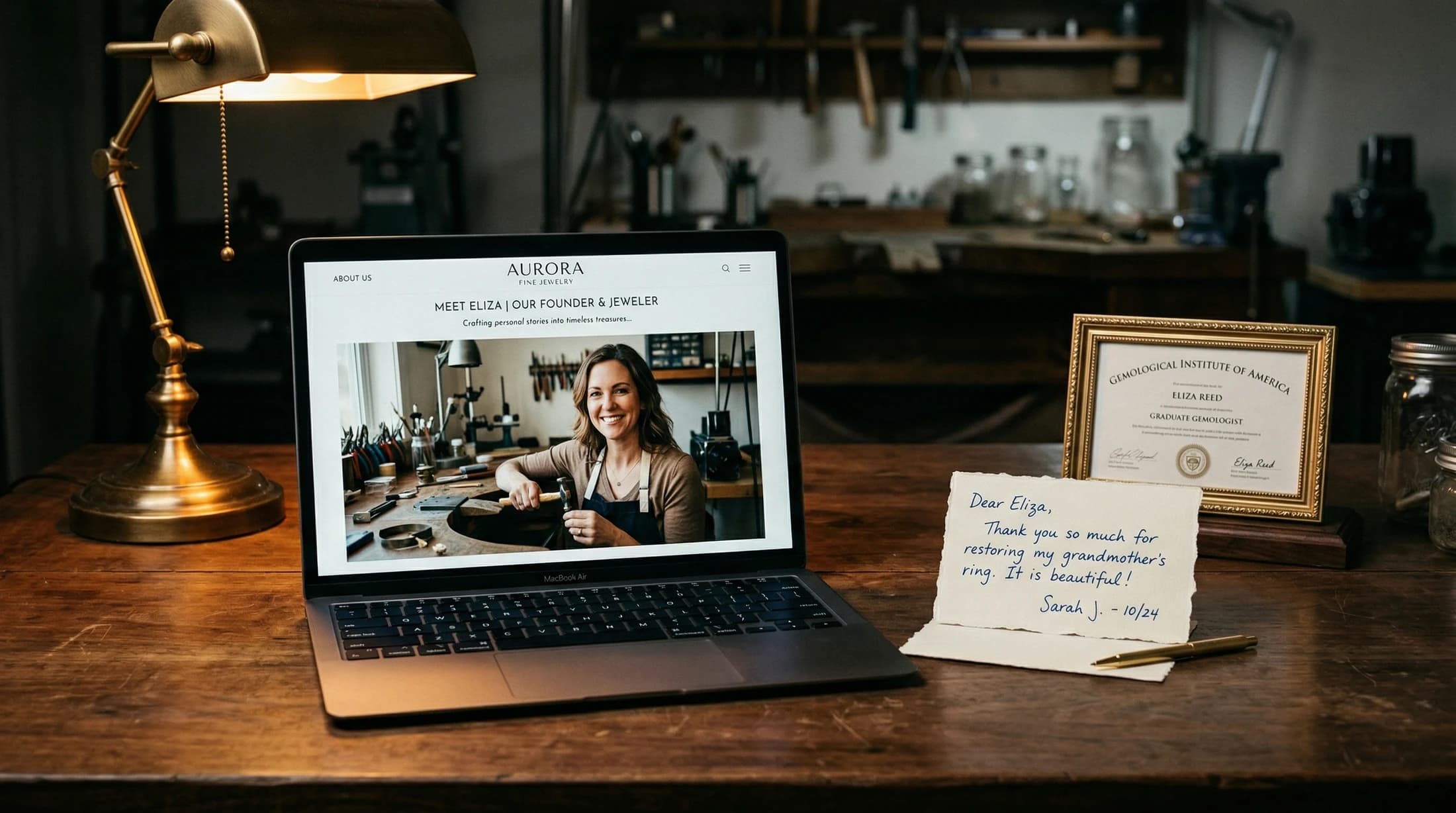
- Show Your Face: Stop using stock photos. Put real photos of the owner, the team, and the store interior. People buy from people they can see. A headshot of the owner in the showroom, surrounded by cases, communicates more trust than any paragraph of copy.
- Heritage and Story: If your store has been family-owned for three generations, say that, and show it. Photos of the original storefront, the founder, the first location. If you're newer, lean into the "why." Why did you open this store? What's your obsession with watches? Authenticity beats tenure.
- Proof of Authority: List your credentials: AGS membership, GIA certifications, brand authorizations. Don't just list them, explain what they mean. Your customer does not know what "AGS" stands for. A sentence like "We're one of only 12 AGS-certified jewelers in [state], which means our gemologists meet the industry's highest standards for grading accuracy" does more than a logo grid.
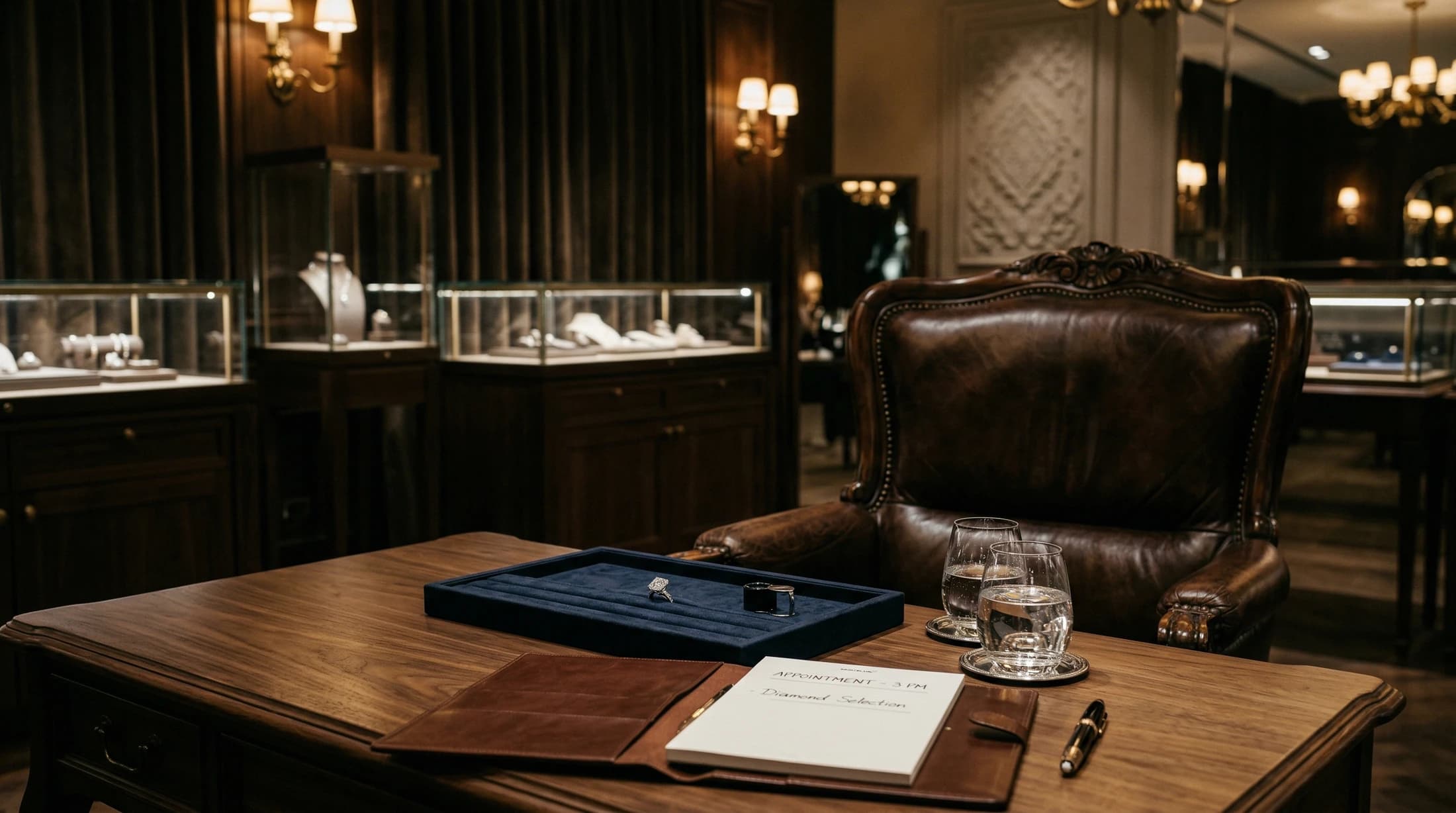
- The Showroom Experience: High-quality interior photos of your showroom. Show the private consultation room, the watch lounge, the cases under proper lighting. The buyer is mentally rehearsing their visit. Give them something to look forward to.
- Community Connection: Mention local involvement. Sponsor a charity gala? Partner with a local museum? These details signal that you're rooted in the community, not a transient operation.
What Is E-E-A-T and Why Does It Matter for Your About Page?
E-E-A-T stands for Experience, Expertise, Authoritativeness, and Trustworthiness. It comes from Google's Quality Rater Guidelines, the document Google uses to train the human evaluators who assess search result quality. While E-E-A-T isn't a direct ranking algorithm, it shapes how Google's systems evaluate content quality, especially for "Your Money or Your Life" (YMYL) topics like luxury purchases.
For a jewelry store, E-E-A-T on your About page means:
- Experience: Show that you've actually handled, sold, and serviced these pieces. Photos of your watchmaker at the bench. A timeline of your store's history with specific brands.
- Expertise: Credentials, certifications, training. Your GIA graduate gemologist should have a bio, a photo, and a link to their profile.
- Authoritativeness: Brand authorizations, press mentions, industry awards. If Rolex trusts you enough to give you an allocation, say so.
- Trustworthiness: Real reviews, real customer stories, transparent policies. A link to your Google reviews. A clear returns and service policy.
Implement Person Schema markup for each team member on your About page. This structured data tells Google who the experts are on your site, which strengthens your authority in your SEO strategy. Include their name, job title, credentials, and a link to their headshot image.
Your About page is a trust page. A page that does not earn trust costs you sales. We'll fix it.
- Google Developers: E-E-A-T and Search Quality Rater Guidelines.

About the author
Hagop Imasdounian
Hagop Imasdounian is the founder of H&CO. Raised around his family’s jewelry businesses, he brings more than 15 years of digital marketing experience to helping jewelry and watch brands improve their websites, reach buyers and connect marketing with sales.