
What Is a Lead Bridge, and Why Do High-Ticket Retailers Need One?
A Lead Bridge is the digital infrastructure that replaces "Add to Cart" with conversation-starting touchpoints, like "Talk to an Expert" or "Book a Private Viewing," designed specifically for products where the price tag demands human reassurance before purchase. H&CO is a digital marketing agency for luxury jewelry and watch retailers. We built the Lead Bridge model because standard ecommerce best practices were costing our clients qualified buyers.
If you are selling a $25 t-shirt, an "Add to Cart" button is the pinnacle of efficiency. It's a low-friction, high-speed path to a transaction. But if you are selling a $15,000 Patek Philippe or a $50,000 diamond engagement ring, that same button is a conversion killer.
The biggest mistake jewelry and watch retailers make today is following "ecommerce best practices" that were designed for Amazon, not for boutiques. In the high-ticket world, the buyer isn't looking for the fastest checkout; they are looking for the deepest reassurance.
If your website is built like a vending machine, don't be surprised when people only stop by for the free air conditioning. If you want to close high-ticket sales, your website needs to be a bridge, not a basket.
Why Does "Add to Cart" Fail for Luxury Products?
At a certain price point, usually around the $2,000 to $5,000 mark, the psychology of the buyer shifts from convenience to consequence.
When a buyer sees "Add to Cart" on a $10,000 watch, it triggers a subtle but powerful friction.
- It Devalues the Product: It suggests that a masterpiece of horology is a commodity to be bought as easily as a book or a pair of socks.
- It Creates Isolation: It tells the buyer, "You are on your own for this transaction." It removes the salesperson, the very person whose expertise and reassurance the buyer needs most at this stage.
- It Triggers "Buyer's Remorse" Early: A large charge on a credit card via a digital form is an anxiety-inducing event. A wire transfer or an in-store swipe after a personal viewing is a celebratory event.
Luxury is about the experience of acquisition. By trying to force a high-ticket item through a standard ecommerce checkout, you are stripping away the very thing that justifies the price tag.
How Many Touchpoints Does a Luxury Buyer Actually Need?
According to our internal data and supported by broader industry research, the average luxury buyer will interact with your brand across a minimum of 8+ digital and physical touchpoints before they ever reach out to you.
They are doing their homework. 78% of consumers research luxury products online before ever setting foot in a showroom. They are comparing you to the AD in the next city. They are checking your reviews. They are reading your SEO content to see if you actually know what you're talking about.
The decision-making window for a $10k+ purchase is measured in weeks or months, not minutes. If your only conversion option is "Buy Now," you are ignoring the vast majority of buyers who are in the "Research" or "Consideration" phase. You are telling them, "Unless you're ready to spend $10,000 right this second, I don't want to talk to you."
How Do You Build a Lead Bridge That Converts?
The Lead Bridge is about offering "Soft Conversions" that build trust and move the relationship forward without demanding a five-figure commitment immediately.
- Talk to an Expert12.3
- No Direct Engagement3.1
Here is what a high-conversion Lead Bridge looks like:
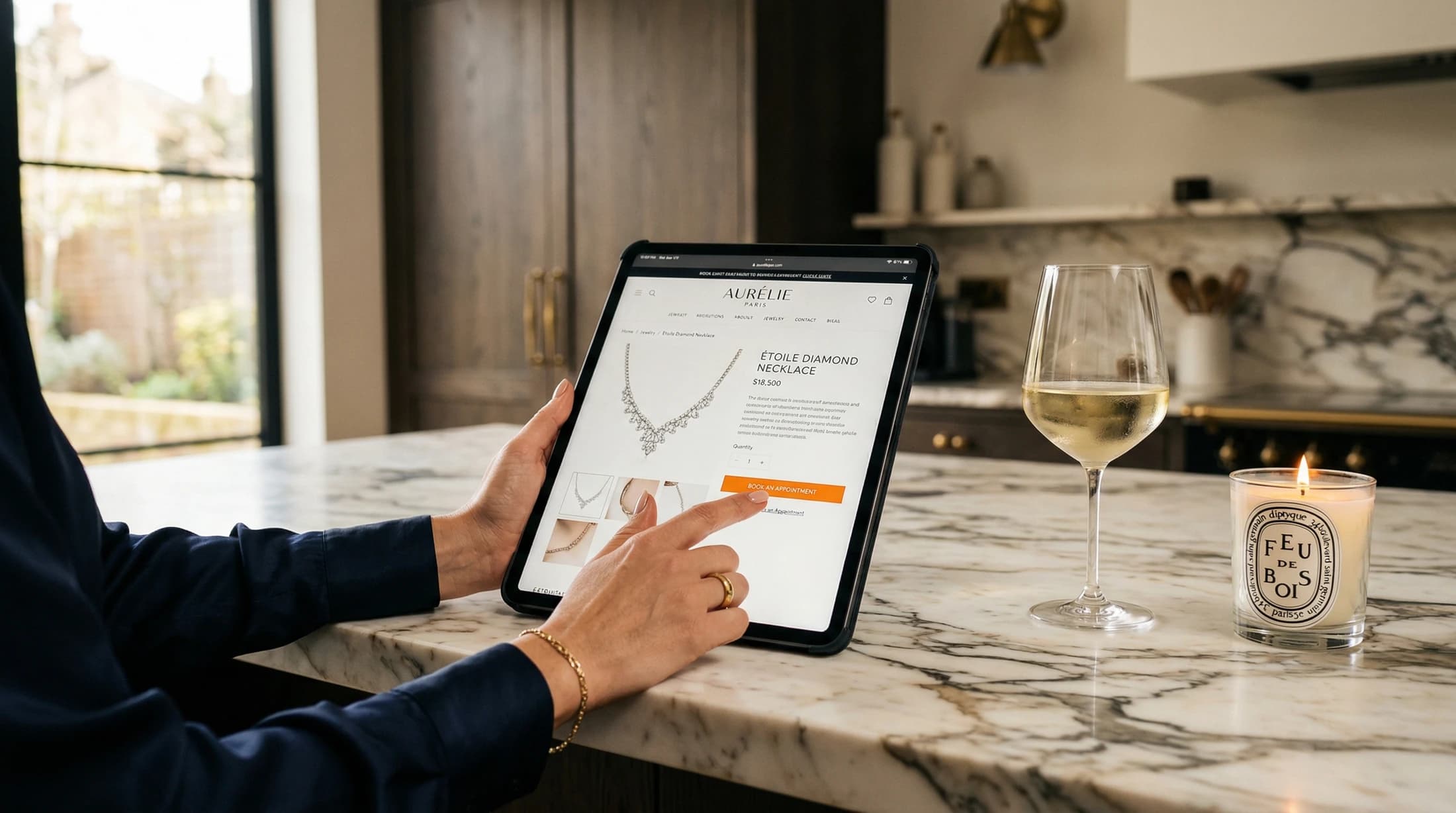
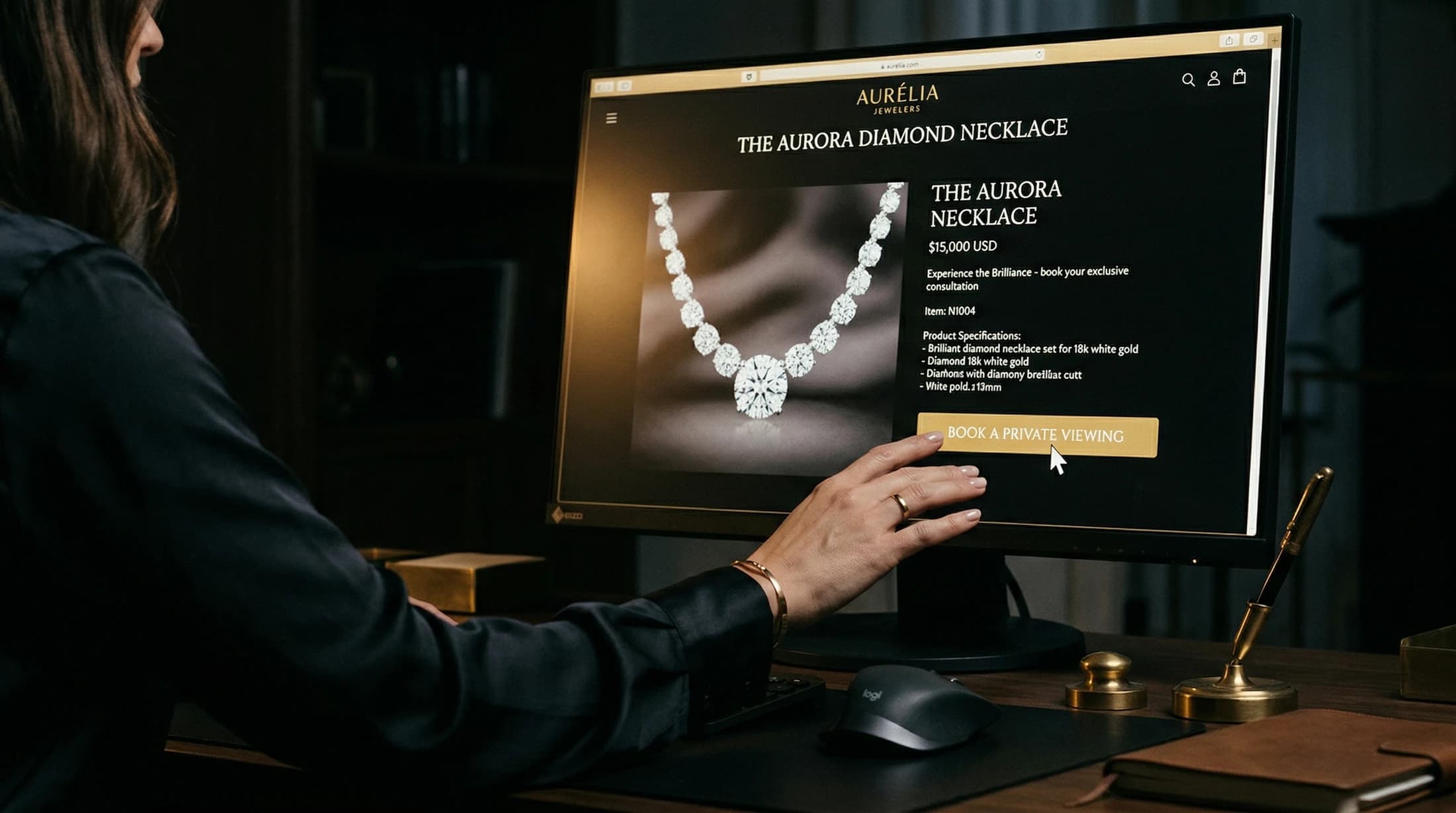
1. Replace "Add to Cart" with "Talk to an Expert"
Instead of a cold checkout, offer a direct line to a human. This button should lead to a clean, simple form or a high-end chat interface. In H&CO client data, human-led chats for high-ticket items convert at 12.3%, compared to 3.1% for sites without a direct engagement option. This signals that there is a person, an expert, waiting to help them.
2. "Book a Private Viewing"
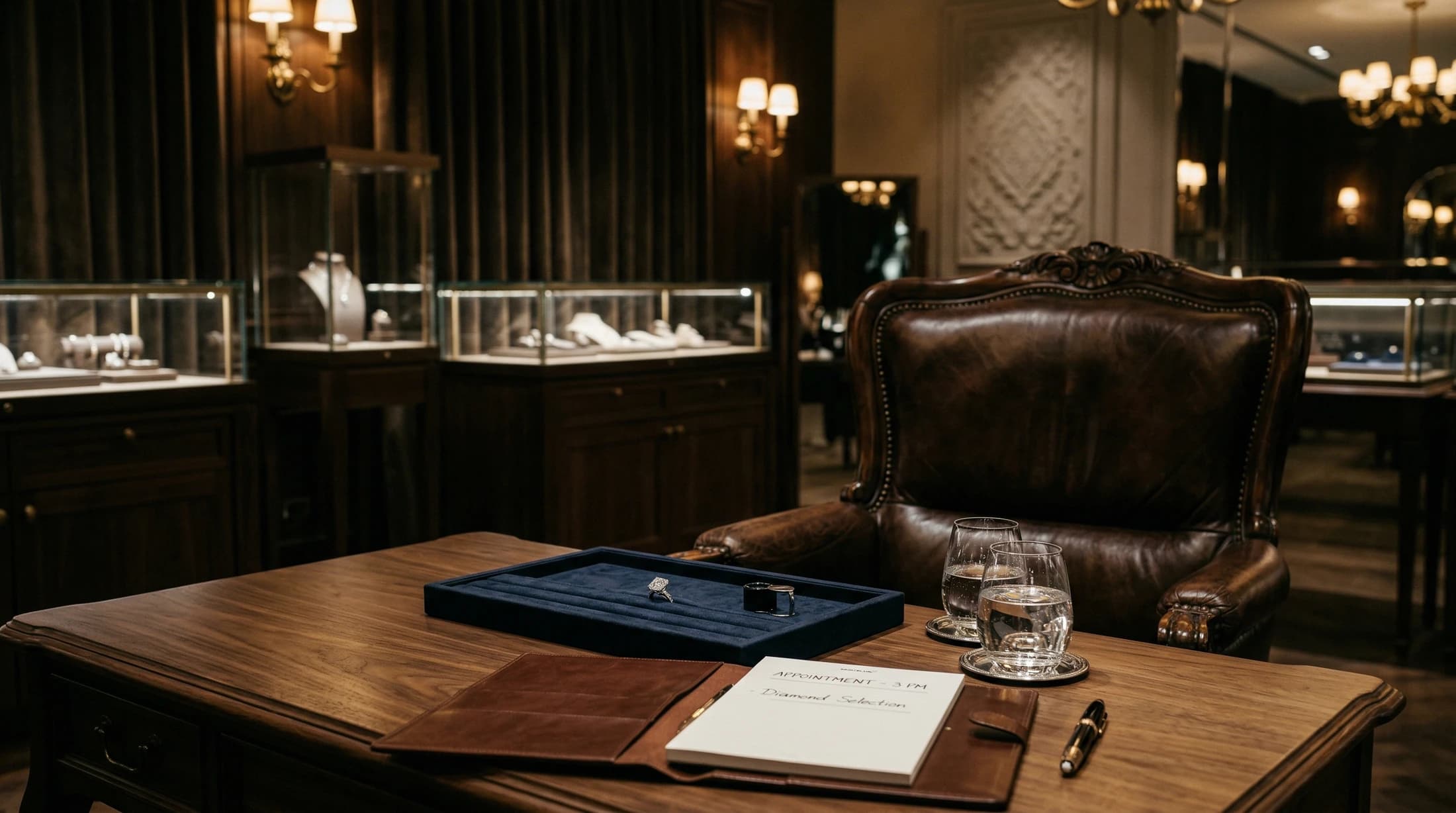
This is the ultimate Lead Bridge. It moves the digital visitor toward the physical store. While the vast majority of luxury sales still happen offline, the bridge is what ensures those shoppers choose your showroom over the competition.
3. "Reserve for In-Store Viewing"
This is a low-friction way to capture a lead. "We will hold this piece for you for 48 hours while you come in to see it." It creates a sense of urgency (scarcity) and a reason for the customer to visit.
4. Direct Access: WhatsApp and Phone
In luxury retail, the "Contact Us" page is often a graveyard of forgotten leads. A high-net-worth individual who has a question at 9 PM doesn't want to wait for a "we'll get back to you in 24 hours" email. Integrated WhatsApp or a prominent "Call or Text Us" button provides the immediate, high-touch service they expect.
What Metrics Should You Track Instead of Ecommerce Conversion Rate?
If you implement the Lead Bridge, your "Ecommerce Conversion Rate" will drop to near zero. And that's a good thing.
The metrics that actually matter for a luxury boutique are:
Lead-to-Visit Rate: How many people who filled out a form actually showed up in the store?
Average Lead Value: What is the total potential revenue sitting in your inbox?
Attribution Path: How many times did a buyer visit the site before they called the store?
By shifting your focus from "clicks to sales" to "clicks to conversations," you connect your digital presence directly to your physical business model. You stop trying to be a bad version of Amazon and start being a great version of yourself.
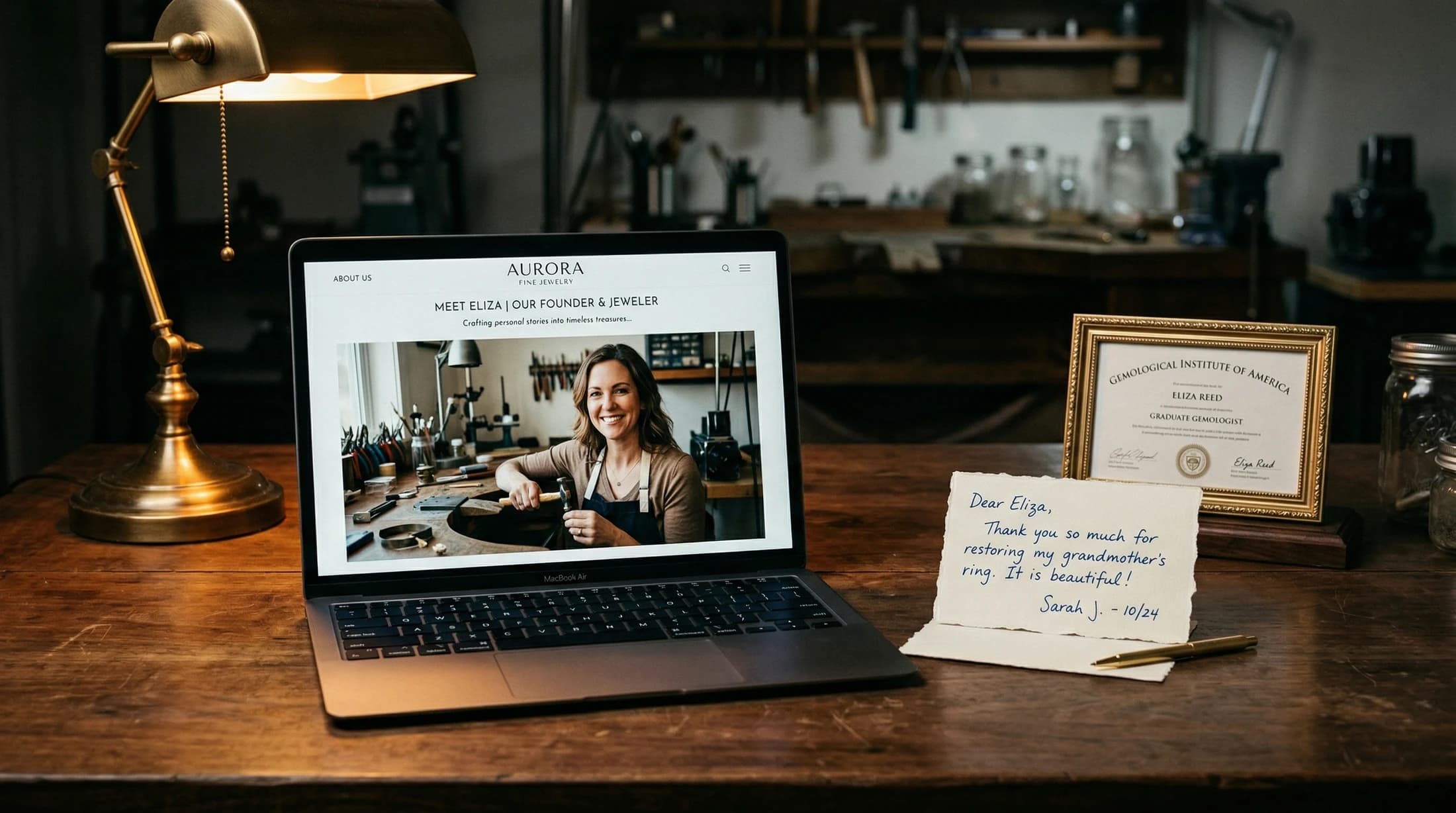
Your website should be the most productive salesperson on your team. It shouldn't just be a catalog; it should be a relationship-starter. When you build a Lead Bridge, you aren't just improving your conversion rate, you are protecting your brand equity. You are telling the world that your products are worth a conversation.
If you are selling something that costs more than a used car, stop asking people to put it in a "cart." Build a bridge to your showroom, and let your expertise do the closing.
Is your website scaring away high-end buyers with a transactional UX? We can help you build a Lead Bridge that turns digital lurkers into in-store buyers. Here's how to fix your conversion path.
Research & Sources
- Bain & Company: Luxury Market Study 2024, 78% of luxury consumers research online before purchasing; 84% take action after engaging with interactive digital catalogs.
- Think with Google: Local Search Statistics, 46% of all Google searches have local intent; 76% of local mobile searches result in a physical store visit within 24 hours.
- BrightLocal: Local Consumer Review Survey 2026, AI tool usage for local recommendations surged from 6% to 45% in a single year.
*For more on how to connect your digital and physical presence, see our Luxury Retail Marketing Playbook.*
About the author
Hagop Imasdounian
Hagop Imasdounian is the founder of H&CO. Raised around his family’s jewelry businesses, he brings more than 15 years of digital marketing experience to helping jewelry and watch brands improve their websites, reach buyers and connect marketing with sales.