
The "Add to Cart" Insult
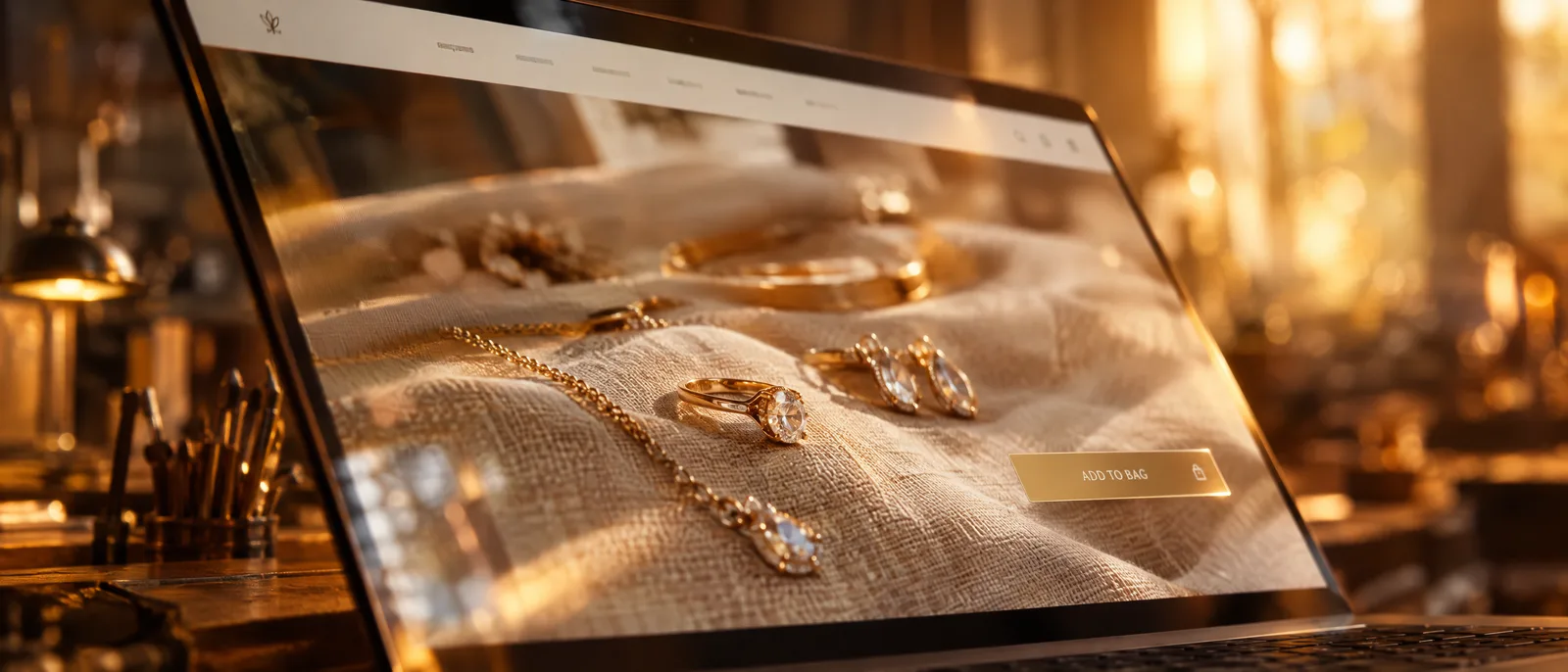
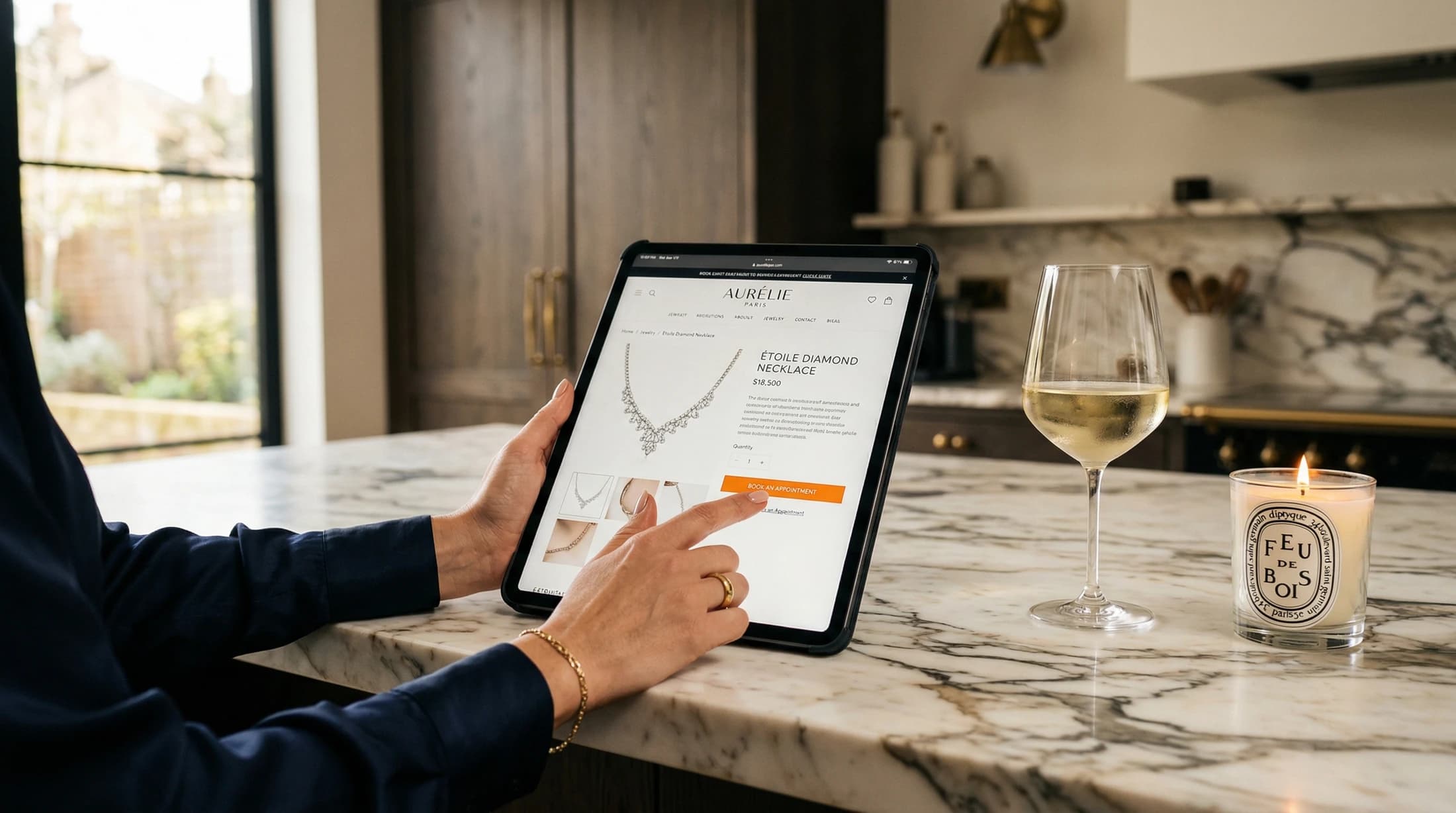
When you're selling an $18,000 diamond or a $25,000 luxury watch, an "Add to Cart" button is more than just ineffective, it's an insult to the buyer's intelligence. Luxury is about the experience, the emotion, and the personal connection. It is about a journey that doesn't end with a "Confirm Purchase" screen, but begins with a consultation.
The global luxury market is projected to reach 1.44 trillion euros in 2025, with a significant 3% growth attributed specifically to the "experience-based" sector. Buyers today aren't just looking for an object; they are looking for a story and a relationship.
The reality of the luxury market is that while digital discovery is global, the transaction remains local. According to Fortune Business Insights, 81.4% of luxury sales still happen in physical stores. This is because average jewelry e-commerce conversion is a mere 1.19%. High-ticket buyers aren't just looking for an object; they are looking for a story and a relationship. Your website exists to start conversations, not close transactions. The "Book Appointment" button is the most powerful conversion tool in your arsenal because it moves the buyer from anonymous browser to committed visitor, and that shift changes everything about your close rate.
The Psychology of the Appointment
Why has the appointment model returned with such force? It comes down to the 20 to 22-day research window that we document in our Luxury Retail Marketing Playbook. For a high-ticket purchase, the buyer spends weeks vetting you. They aren't looking for a "checkout" button; they are looking for a reason to trust you. "Creative participation" journeys, where the client is involved in the design via an appointment, see higher conversion rates than standard retail sales.
1. The Trust Premium
An appointment builds trust through personal interaction. This matters most for your VICs, the top 2% of your customer base who drive 45% of total luxury revenue. An e-commerce checkout assumes trust already exists. For a client who found you through a paid ads campaign, an appointment provides the space for you to demonstrate your expertise and authority before they commit five figures of their capital.
Without that in-person moment, you're asking a stranger to wire you the price of a car based on product photos alone.
2. The Experience Economy
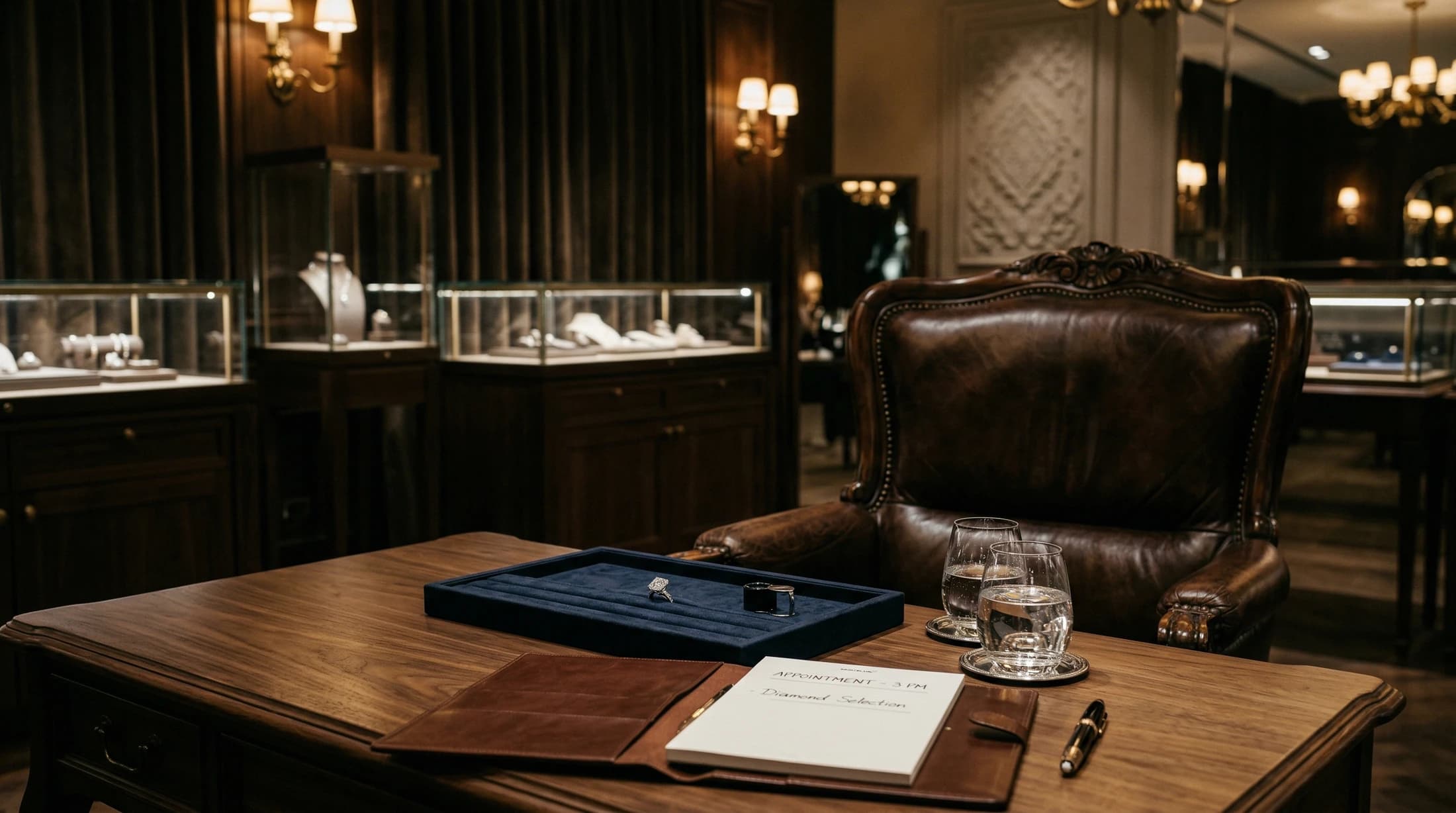
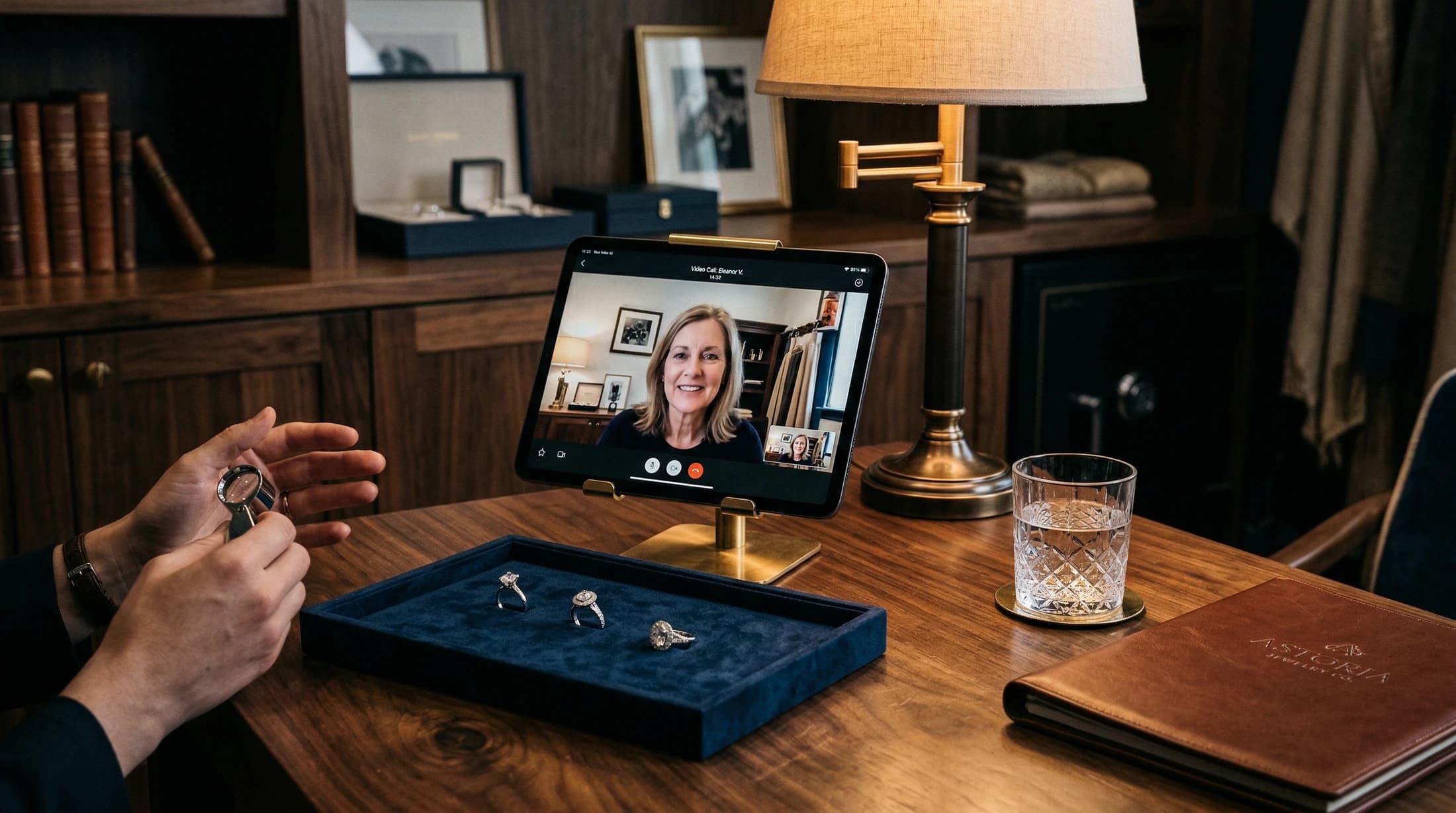
Luxury buyers today value the experience as much as the product. A private viewing, a glass of champagne, and the undivided attention of a master gemologist: these are things that cannot be delivered via FedEx. By framing your conversion action as an "Appointment," you are promising an exclusive experience that justifies your price point.
3. The Friction Advantage
"Add to Cart" implies friction. What if the shipping goes wrong? What if the ring doesn't fit? "Book an Appointment" removes that friction. It says, "Come in, try it on, and we will take care of everything." For items above $5,000, this single UX change routinely doubles the conversion rate from product page to qualified lead.
The Technical Setup: Converting Clicks to Consultations
To make the appointment model work, your digital infrastructure has to hold up. This is where a strong SEO strategy for jewelry and watch retailers meets conversion rate optimization.
1. The 55% Visual Search Impact
When a user is in the "research" phase of their research window, they are often using visual search tools like Google Lens to identify pieces. By optimizing your product images for "Machine Gaze," we have seen a 55% lift in visual search visibility. If that visual search leads directly to a "Book a Private Viewing" button on your site, you have captured the lead at the moment of highest inspiration.
2. The Conversion Architecture
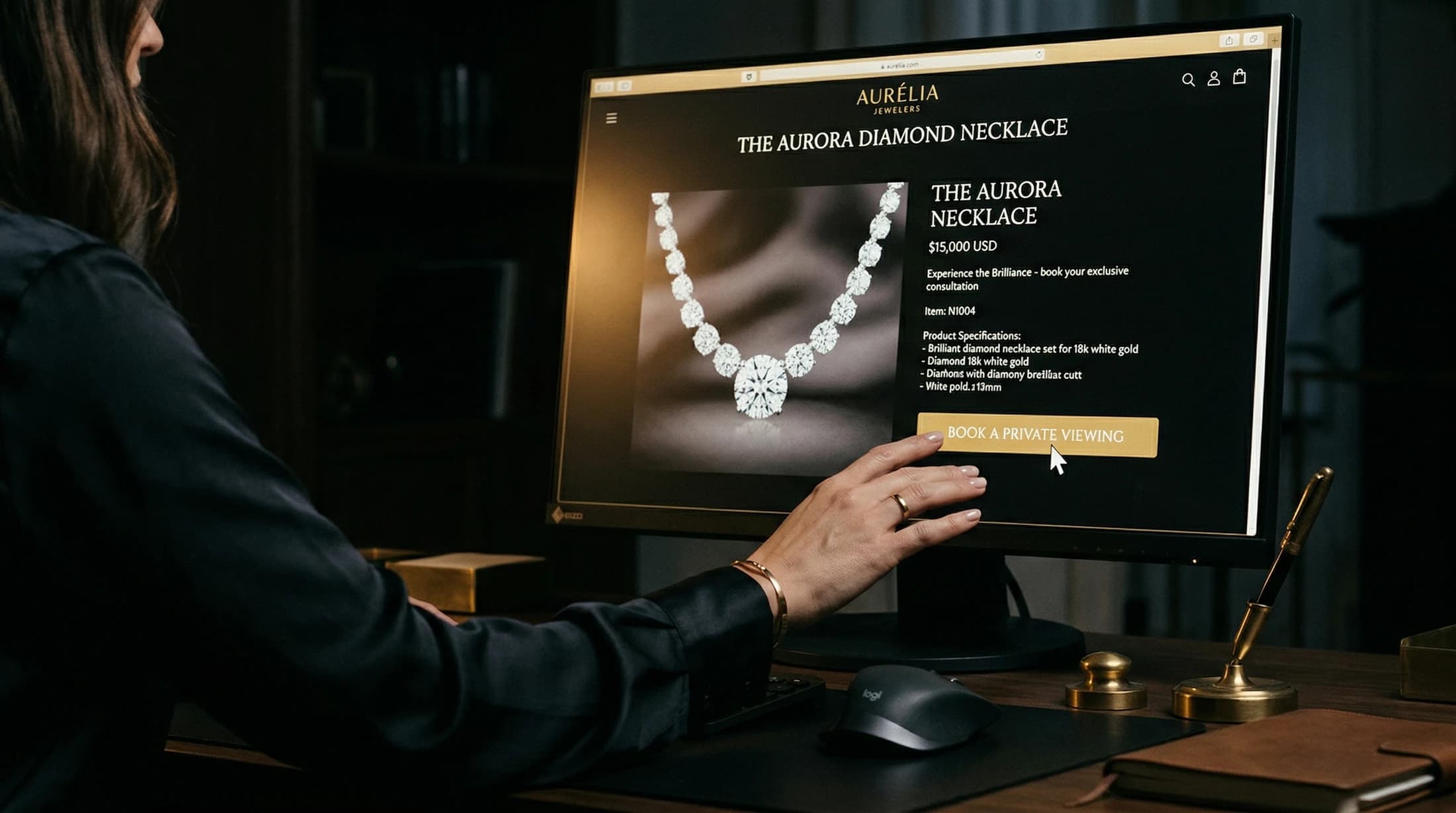
Every primary product page should feature a "Book a Private Viewing" CTA prominently. This shouldn't lead to a generic contact form. It should lead to a real-time scheduling tool (like Calendly or a built-in CRM scheduler) that shows your actual showroom availability. This immediacy is critical. If a user has to wait 24 hours for a "confirmation email," they will keep searching and book with your competitor instead. Speed here is the difference between a $15,000 sale and a lost lead.
3. Schema and the AI Citation Lift
Search engines and AI models (ChatGPT, Gemini) need to know that your primary "Action" is an appointment. By using specific `potentialAction` schema (specifically `ReserveAction`), you signal to AI crawlers that your store is a high-touch, service-oriented business. This technical alignment contributes to a , ensuring you are the store the AI recommends when a user asks for a private consultation.
Redefining Your KPIs
The shift from e-commerce to appointments requires a shift in how you measure success. If you are still judging your digital marketing by "online revenue," you are missing 81.4% of the picture.
The metrics that matter now:
- Appointment Booking Rate: How many users who land on a product page schedule a visit?
- Booking Form Abandonment Rate: Where are people dropping off in your scheduler?
- Revenue per Appointment: What is the average value of a sale that started with a digital booking?
This is how you close the silent revenue gap. By capturing the lead as an appointment, you create a direct, attributable link between your digital ad spend and your in-store register. That attribution is what lets you invest confidently in the channels that actually produce revenue, rather than guessing which half of your marketing budget is working.
The Future Is High-Touch
The retailers who win in the next five years will be the ones who understand that "digital" is simply the bridge to the "physical." The "Add to Cart" button is for commodities. The "Book Appointment" button is for luxury. Every dollar you spend optimizing your booking flow will return more than a dollar spent optimizing your checkout page.
We'll build the digital booking infrastructure that turns your website into a high-performance showroom scheduler. Let's talk.
Research & Sources
- Bain & Company: *Global Luxury Goods Market Study 2024.* Insights on the 1.44 trillion euro market valuation and the 3% growth in experiential luxury.
- Fortune Business Insights: *Luxury Goods Market Analysis.* Benchmark for the 81.4% in-store purchase rate.
About the author
Hagop Imasdounian
Hagop Imasdounian is the founder of H&CO. Raised around his family’s jewelry businesses, he brings more than 15 years of digital marketing experience to helping jewelry and watch brands improve their websites, reach buyers and connect marketing with sales.