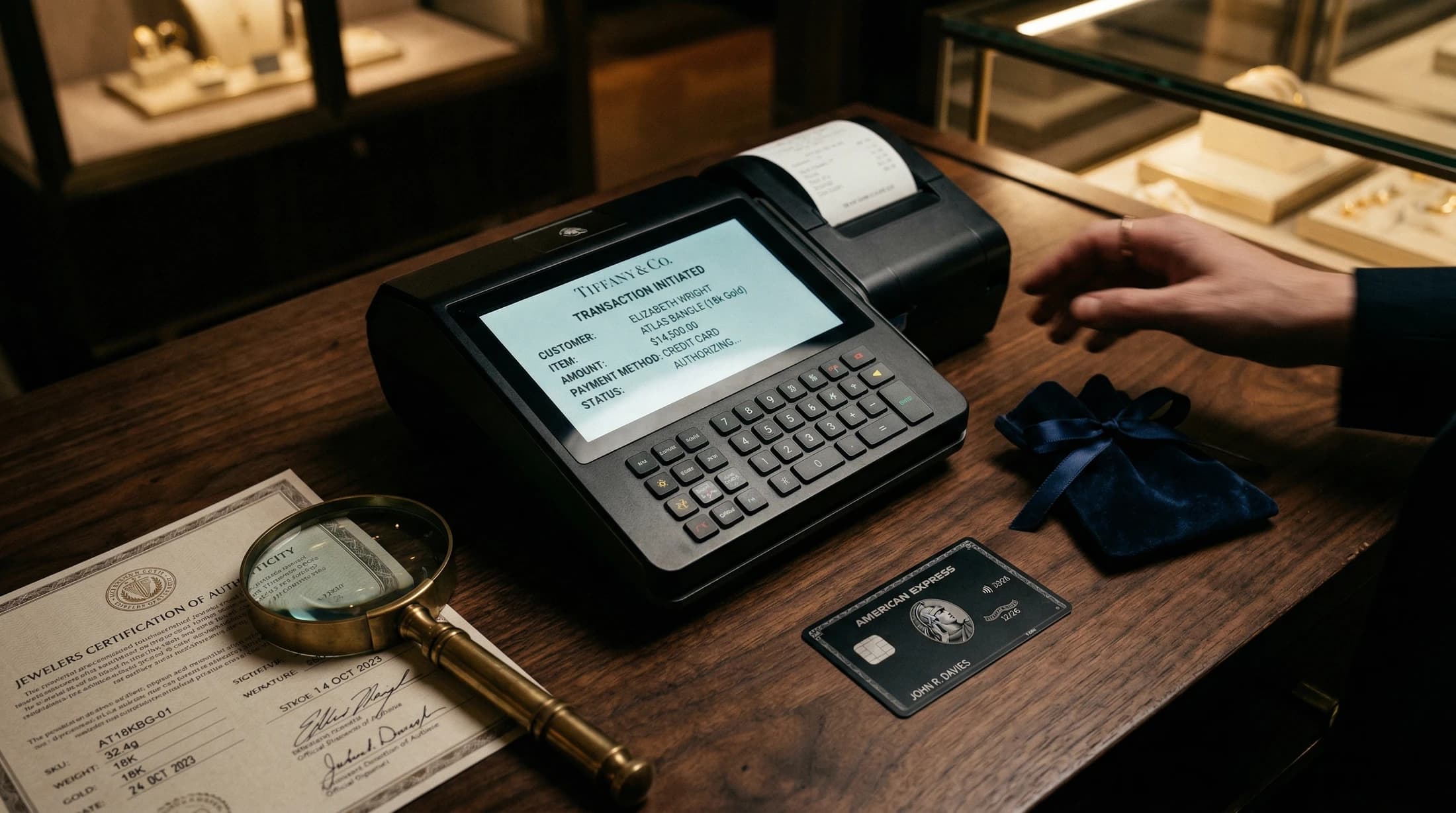

If you've been in the jewelry industry for more than a week, you know the "Paper Problem." A client buys a $20,000 diamond, you give them a GIA certificate and a paper appraisal, and three years later, they've lost both. When they want to upgrade, resell, or insure the piece, they're back at square one, and you're digging through filing cabinets or old POS records to prove the piece is what you say it is.
At H&CO, we specialize in the "so what" of luxury technology. We don't care about blockchain because it's a buzzword; we care about it because it solves the trust gap that costs you sales. While 81.4% of luxury sales still happen in physical stores, the decision-making process is digital, and the secondary market is exploding (Euromonitor, 2025).
Your clients aren't just buying jewelry anymore; they are buying an asset class. And an asset without a verifiable, permanent, and digital "deed" is a liability in the eyes of the modern consumer.
What Is Blockchain Authentication for Jewelry?
Major players are already making their move. The European Commission is mandating Digital Product Passports (DPPs) by 2026, ensuring every luxury item sold in the EU has a verifiable digital footprint. LVMH (Cartier, Prada, Bulgari) launched the Aura Blockchain Consortium, which already has over 70 million products registered on-chain, effectively setting the global standard for luxury provenance. De Beers has Tracr. If the biggest brands in the world are betting on this, it's because they know that trust is the ultimate differentiator in a crowded market.
Why Consumers Expect Digital Provenance in 2026
The purchase journey for a high-end item is long: in H&CO client data, 20 days of research for watches and 22 for custom jewelry. During those three weeks, the buyer is obsessing over one thing: *Is this real, and is it worth the price?*
1. The CPO and Resale Explosion
The secondary market for watches and jewelry is growing faster than the primary market. Whether it's a Rolex GMT or a custom-designed engagement ring, buyers want to know the resale value. A piece with a blockchain-backed digital certificate commands a premium because it eliminates the risk of counterfeits for the next buyer. If you can't provide that, you are selling a "depreciating asset" instead of an "investment."
2. The Ethical Imperative
Younger luxury buyers (Millennials and Gen Z) are demanding transparency. They want to know that their diamond isn't just "conflict-free" but traceable to the specific mine. Blockchain provides the "chain of custody" that a paper certificate simply can't prove.
3. Closing the Revenue Gap
There is a first-time revenue gap where potential buyers drop off because of a "trust plateau." They like the piece, they like the price, but they aren't 100% sure about the retailer's authority. Offering a digital certificate of authenticity, verifiable on a public or private blockchain, is the "trust bridge" that closes that gap. Digital marketing revenue attribution is how you measure whether that trust bridge is actually converting browsers into buyers.
How Does Blockchain Work for an Independent Jeweler?
You don't need a team of developers to implement this. The infrastructure is already being built for you.
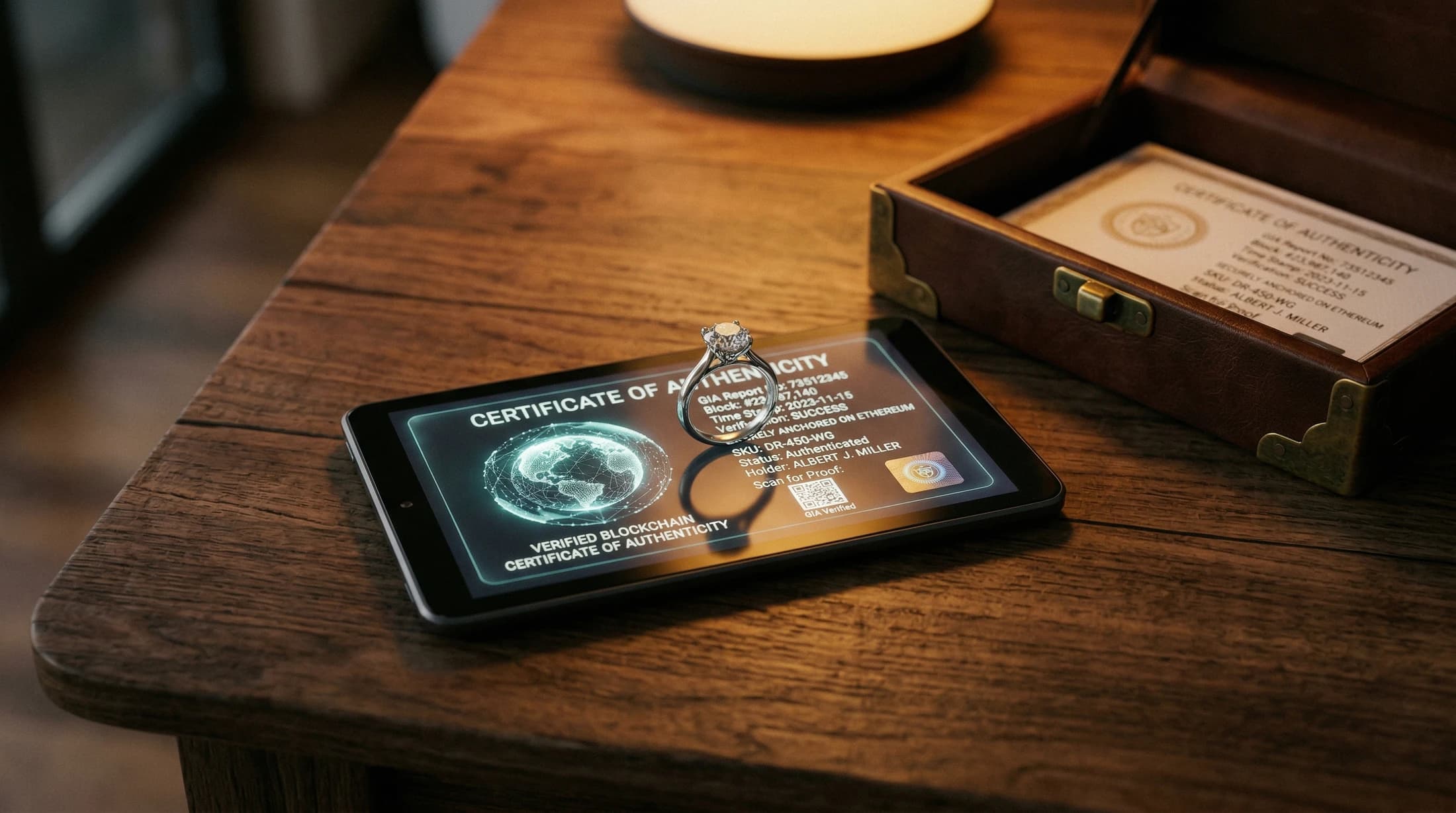
- Stone Certification Links: GIA and other major labs are moving toward digital-only reports. Linking these directly to a blockchain record of the finished piece is the logical next step.
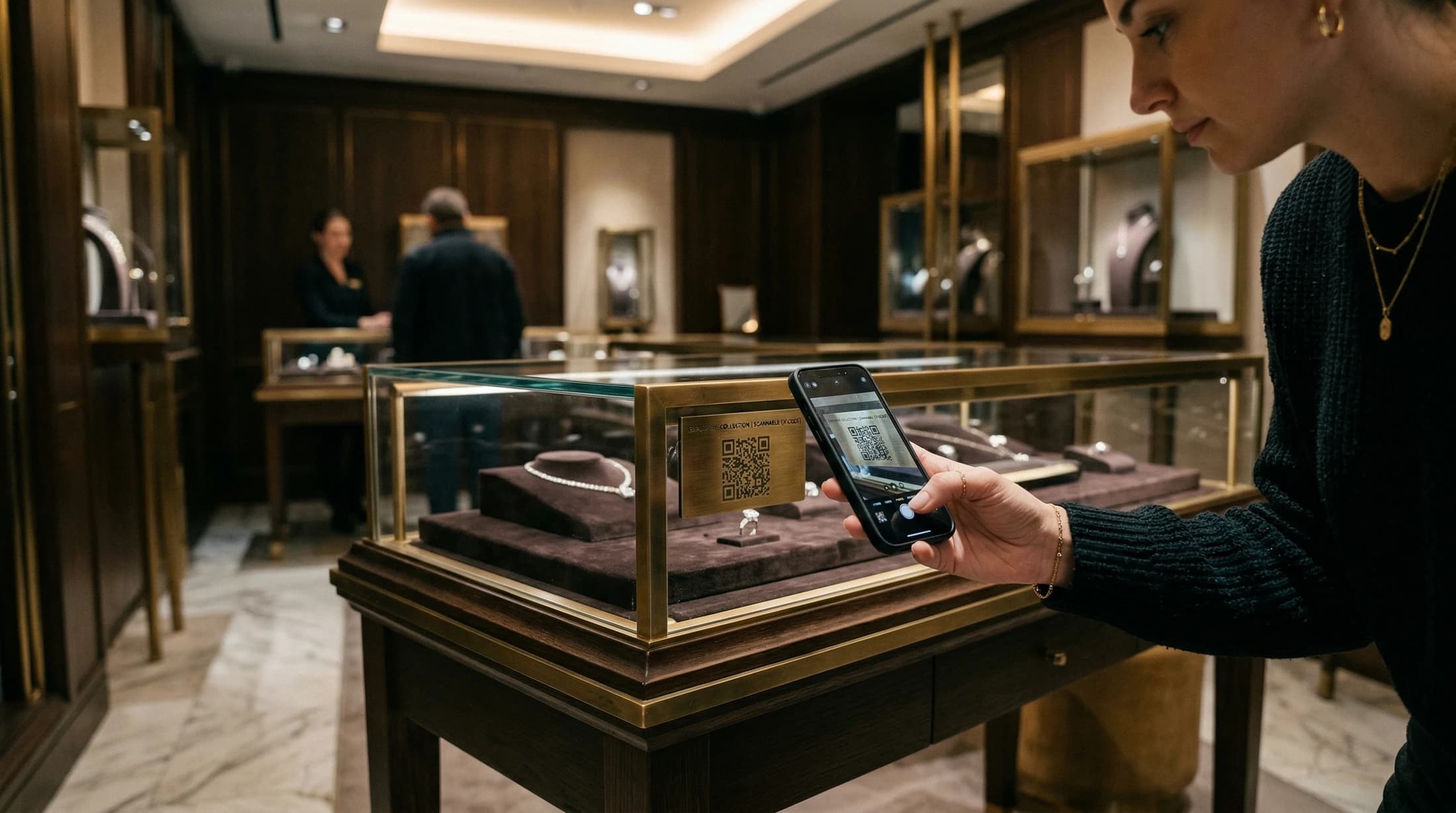
- NFC and QR Integration: Jewelers are now embedding NFC tags into the jewelry box or even the piece itself (for larger items). A quick scan with a smartphone pulls up the full digital provenance, high-res 360-degree videos, and the GIA report.
- Transfer of Ownership: When a client buys a piece, you "push" the certificate to their digital wallet. If they ever sell it, they transfer the certificate to the new owner. You, the original retailer, stay attached to the piece's history forever, reinforcing your brand authority.
The Marketing and SEO Play: Owning "Trust"
Implementing blockchain isn't just a security move; it's a powerful SEO strategy.
Google and AI search engines (like Gemini and Perplexity) are increasingly looking for "Signals of Trust." By creating a dedicated page on your site about your "Digital Authentication and Provenance Standards," you are feeding the AI specific data points it needs to recommend you.
"Where to buy authenticated jewelry in [City]" or "Blockchain verified diamonds" are emerging search terms. By being the first in your market to optimize for these, you are positioning yourself as the authoritative leader before the competition even knows what a digital wallet is. This is a core pillar of our 2026 Luxury Retail Marketing Playbook.
These authentication pages also perform well in AI search engines, where specificity and verifiable data earn citations over generic marketing language.
The Watch Retailer Angle
For authorized dealers, blockchain changes the terms of the "Authorized Dealer vs. Gray Market" war. The gray market can't offer a factory-backed digital provenance. If you sell watches, this technology is your best weapon to justify your MSRP.
Digital certificates aren't about the technology; they are about the psychology of the high-net-worth individual. They want security, they want exclusivity, and they want proof. In a world of deepfakes and mass-produced clones, the "immutable record" is the new standard of luxury.
Don't wait until your competitors are doing it. In the luxury world, if you're second, you're just another retailer. If you're first, you're an authority.
"Your buyers are starting to ask for digital proof. We'll help you build the authentication story into your brand and your website. Let's talk."
Research & Sources
- European Commission: *Sustainable Products Initiative & Digital Product Passport (DPP) Mandate 2026.*
- Aura Blockchain Consortium: *2024 Ecosystem Report.* Verification of 70M+ products on-chain for member brands including LVMH, Prada Group, and Cartier.
- Bain & Company: *Global Luxury Goods Market Study 2024.* Insights on the shift toward "asset-class" purchasing in luxury jewelry.
Hagop's Notes
I've had jewelers tell me "my clients don't care about blockchain." They're wrong. Their clients care about *authenticity* and *resale value*. Blockchain is just the most efficient way to deliver those two things. If you're still relying on a piece of paper that gets lost in a move, you're leaving your clients, and your reputation, vulnerable.
About the author
Hagop Imasdounian
Hagop Imasdounian is the founder of H&CO. Raised around his family’s jewelry businesses, he brings more than 15 years of digital marketing experience to helping jewelry and watch brands improve their websites, reach buyers and connect marketing with sales.