
In the luxury world, the product is only half of the purchase. The other half is the feeling of acquisition. If you're shipping a $10,000 custom engagement ring in a generic mailer with a standard velvet box, you are being lazy and calling it efficient. More importantly, you're leaving money on the table.
Jewelers with high first-time retention earn it with an intentional post-purchase experience. If your client doesn't feel like they've just received something extraordinary the moment it hits their doorstep, they won't be back for the anniversary bands.
At H&CO, we view packaging not as an expense, but as a content production system that fires every time you make a sale.
The Peak Emotional Moment: Why Unboxing Matters
The moment a client opens their package is the peak emotional point of the entire buyer's journey. They've spent weeks in the luxury retail marketing playbook channels, researched for weeks, and finally pulled the trigger. When the box arrives, they reach for two things: the ring and their phone.
If your packaging is intentional, every single sale becomes a piece of high-converting social proof. If it's forgettable, that moment, and the potential reach of that client's social network, is lost forever.
The Math of the $15 Content Factory
Let's look at the economics. A premium unboxing experience (branded box, ribbon, tissue, handwritten note, and care card) costs roughly $10-$20 per order.
Now, consider the cost of equivalent social media content. If you hired a photographer to style a shoot, it would cost hundreds. If you ran Meta ads to reach 500 local people, it would cost $50. But when a client posts an organic unboxing video to their Instagram Story, they are providing authentic social proof to an audience of people who actually trust them.
You aren't spending $15 on a box. You're spending $15 to "buy" an authentic endorsement that is more effective than any ad we could ever run for you.
The "Invisible" Billboard: Packaging in the Wild
Packaging is the only marketing material that lives in your client's home. A well-designed jewelry case doesn't go in the trash; it sits on a dresser or in a safe for years. Every time they see your logo, it reinforces the brand equity.
When you scale your business, this "invisible" marketing becomes essential. Your logo on a high-quality shopping bag or a distinctive travel pouch turns every client into a brand ambassador. It's the difference between being a "commodity jeweler" and a "luxury brand."
What Should Be in the Box? (The Anatomy of UGC)
To maximize the chances of a client sharing their purchase on social media, you need to layer the experience.
1. The Outer Shell
The shipping mailer should be discreet for security, but the moment that mailer is opened, the brand should scream. A clean, sturdy outer box with your logo embossed, not just printed, sets the tone.
2. The Reveal (The "Tissue" Layer)
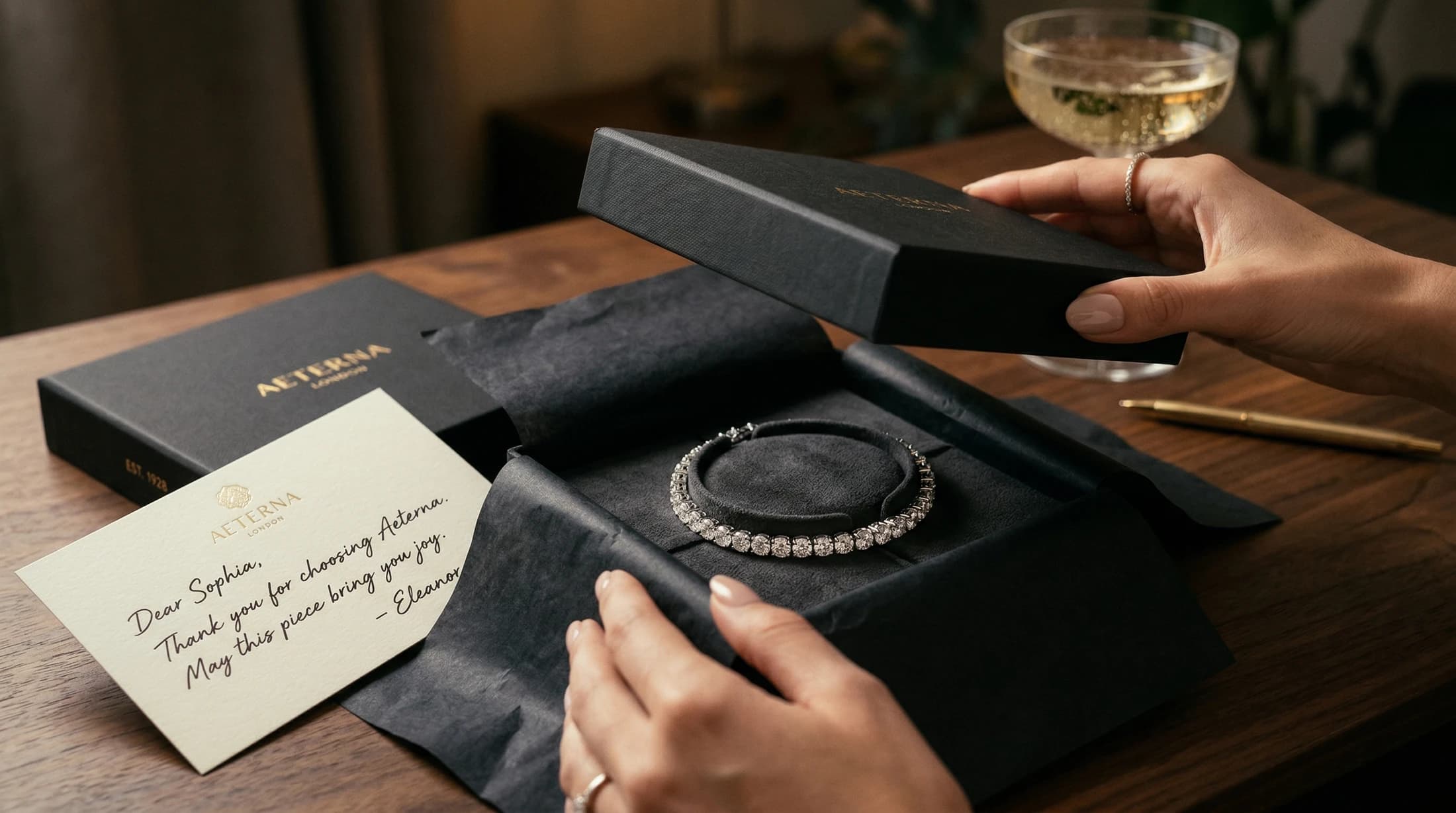
Don't let them see the jewelry case immediately. Use high-quality tissue paper, a wax seal, or a branded ribbon. This adds "friction" to the unboxing process, which actually increases the perceived value of the item inside. It also gives them time to start their video recording.
3. The Handwritten Note
This is the most photographed part of the unboxing experience. A single, personalized sentence from the jeweler, "I loved the way this sapphire caught the light on the bench", makes the client feel like they've bought from a person, not a factory. This is the "soul" that large-scale retailers can't replicate.
4. The Social Prompt
Don't be aggressive, but do be helpful. A small, beautifully designed card that says "Tag your moment @YourBrand #YourMoment" gives them the permission (and the hashtag) they need to share.
Turning Unboxing into a System
To make this work at scale, you can't treat it as a special project. It must be a standardized part of your fulfillment process:
- Standardize the Kit: Have your "unboxing kits" pre-assembled so that whoever is packing the order can do it in under 60 seconds.
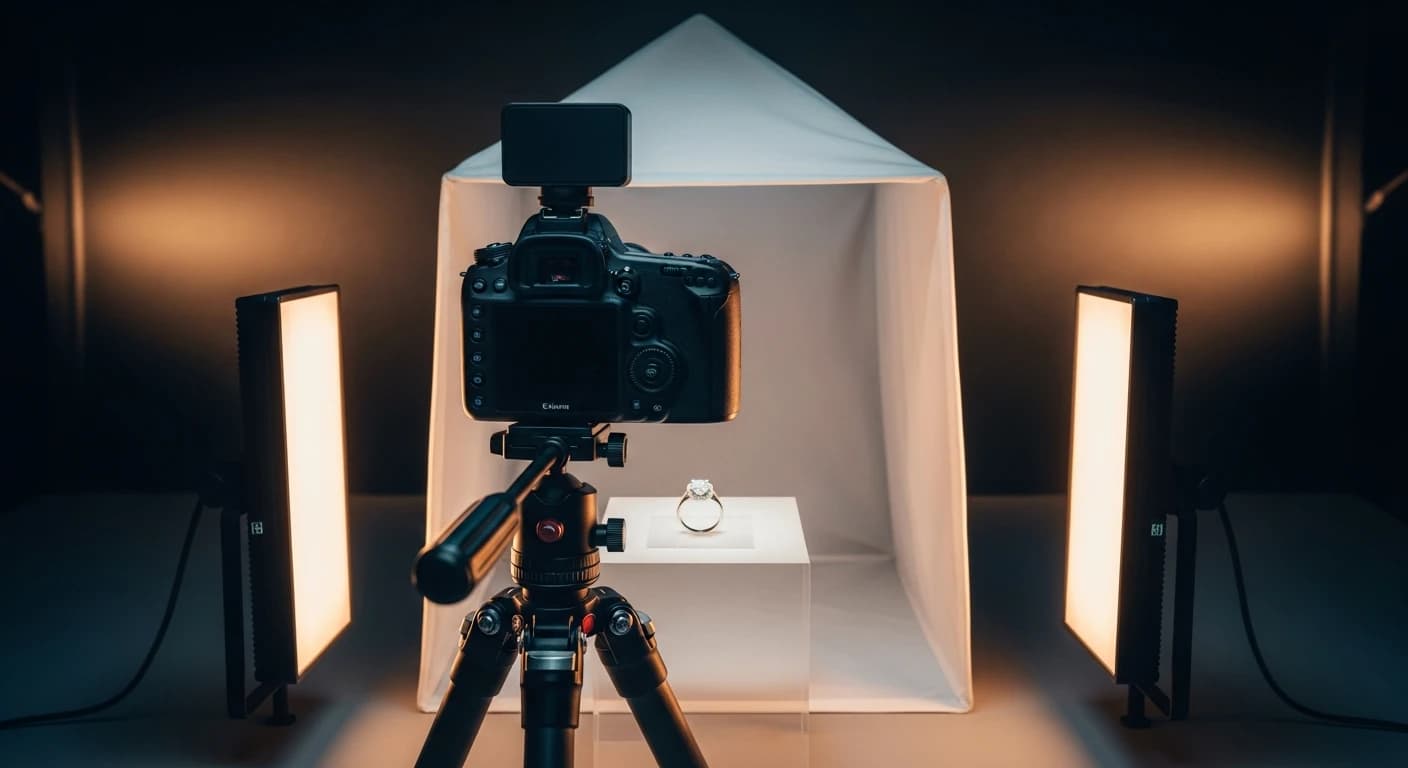
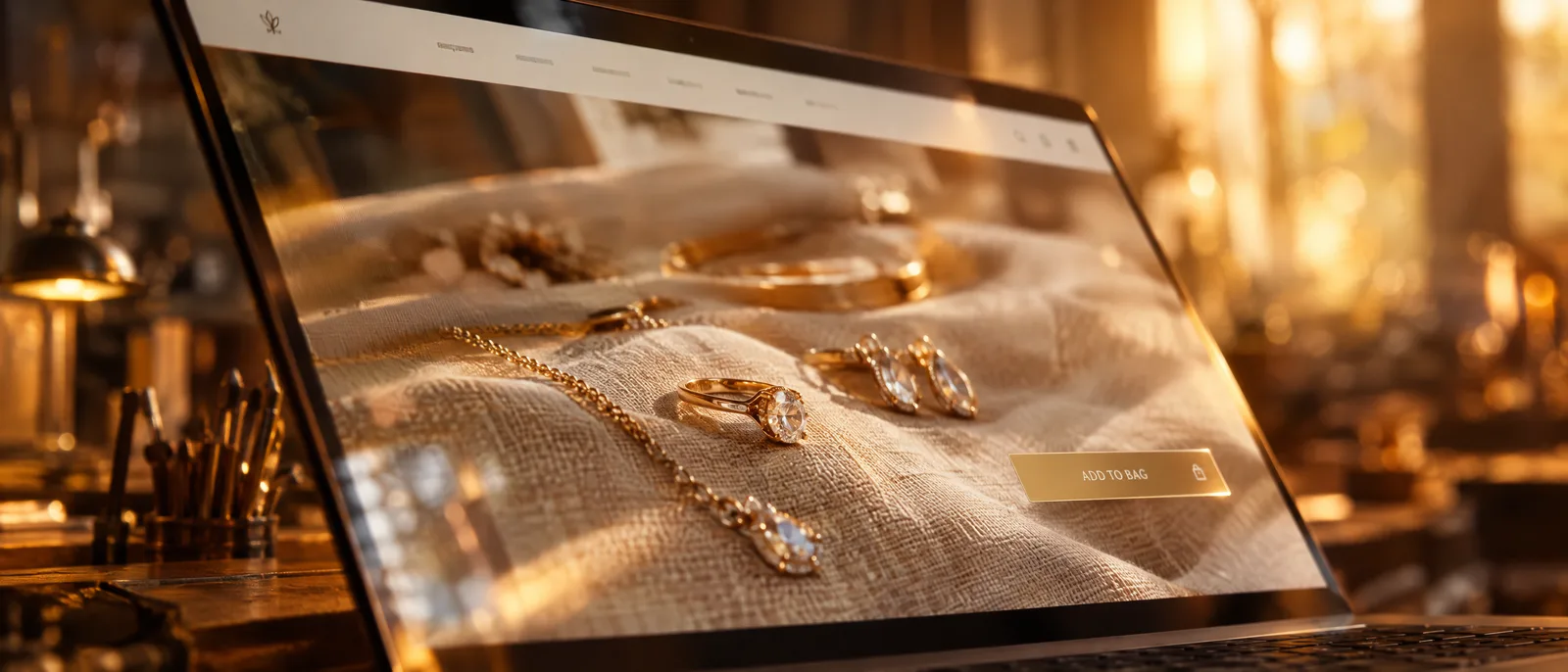
- Photograph Your Packaging: Ensure your website shows what the client will receive. This reduces "purchase anxiety" and increases conversion rates.
- The Repost Strategy: When a client tags you, don't just "like" it. Repost it to your Stories. Tag them back. Thank them publicly. This creates a cycle where new clients see that "people like me buy things like this here."
The ROI of Retention
Remember that revenue gap. It is significantly cheaper to sell an anniversary band to a happy engagement ring client than it is to find a new engagement ring lead. The unboxing experience is your first "re-marketing" moment. It's where you prove that you care about the relationship as much as the transaction.
If you treat packaging as an afterthought, you are telling your client that once the money has changed hands, the relationship is over. In luxury, that's a death sentence.
"Every order you ship is a marketing campaign in a box. If it is not worth photographing, do not ship it. We'll help you build an end-to-end client experience that generates its own social proof. Let's talk."
Hagop's Notes
*I've seen jewelers spend $5,000 a month on ads and $0 on their packaging. It's madness. Your packaging is the only part of your marketing that 100% of your customers are guaranteed to see. Treat it with the same respect you treat your bench work.*

About the author
Hagop Imasdounian
Hagop Imasdounian is the founder of H&CO. Raised around his family’s jewelry businesses, he brings more than 15 years of digital marketing experience to helping jewelry and watch brands improve their websites, reach buyers and connect marketing with sales.