

The Myth of the Unified North American Market
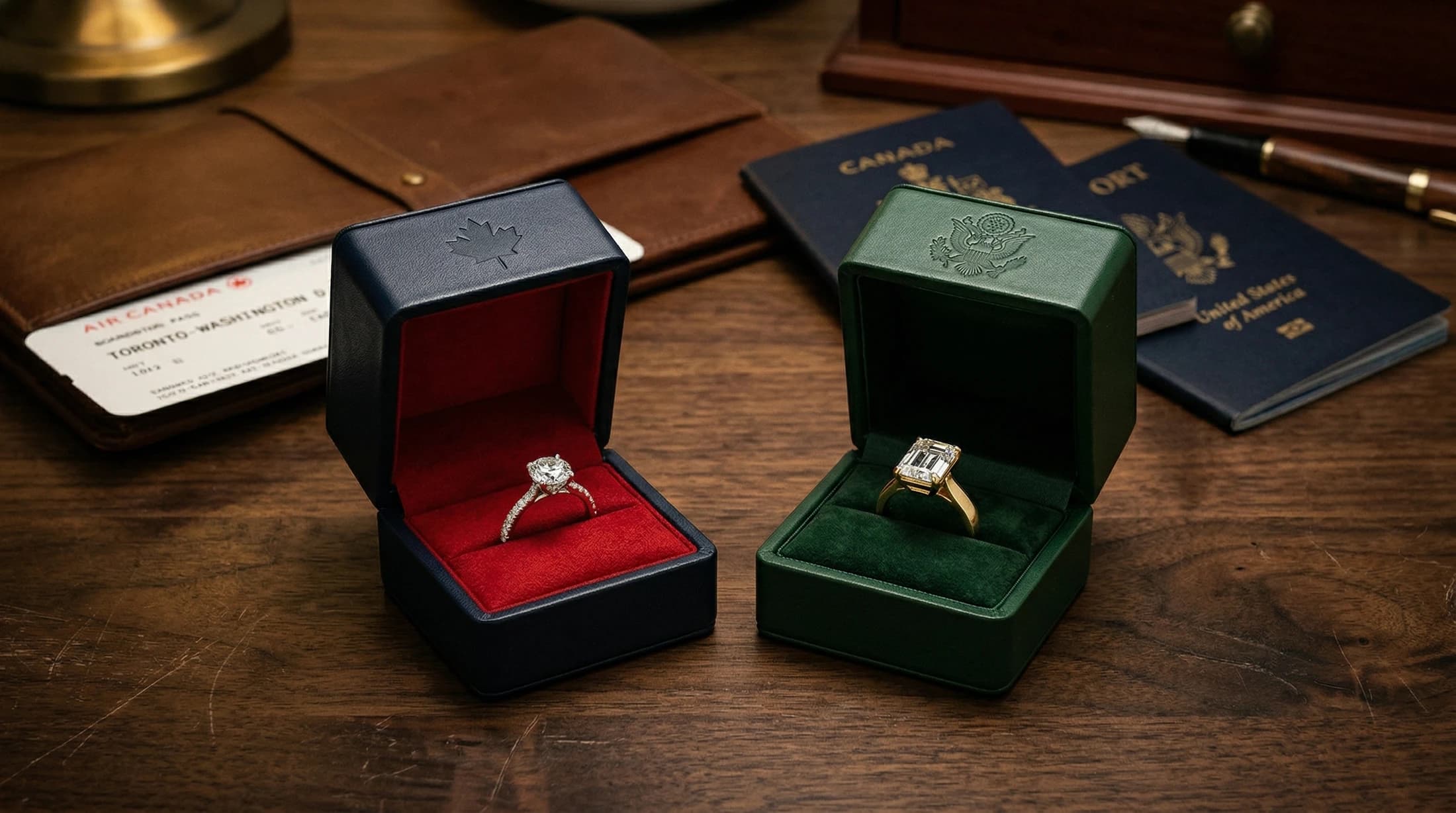
If you think marketing a $20,000 Patek Philippe in Toronto is the same as marketing it in New York City, you're already losing market share. The border between the US and Canada isn't just a line on a map. It's a psychological, logistical, and digital chasm that rarely gets bridged.
At H&CO, we operate from offices in both Los Angeles and Toronto. We don't just "study" the cross-border market; we live in it. We see the data every day: the missed opportunities when US jewelers treat Canadian leads like an afterthought, and the budget bleed when Canadian stores try to compete in US ad auctions without a localized strategy.
The potential for growth in the North is massive. Canada is the fastest-growing luxury market in North America, with a projected compound annual growth rate (CAGR) of 7.47%. By 2033, the market is expected to reach $61 billion (Deep Market, 2025).
The reality of the luxury industry is that while digital discovery is global, the transaction remains stubbornly local. Even in a cross-border scenario, Fortune Business Insights puts 81.4% of luxury watch sales offline. The website's job isn't to sell the ring. It's to build enough trust to overcome the friction of international shipping, duties, and currency conversion. If you're not engineering that trust for both sides of the border, you're leaving six figures on the table every year.
How Do Google Ads Differ Between US and Canadian Markets?
The biggest mistake we see is the "North America" checkbox in Google Ads. It is the fastest way to set your budget on fire.
1. The CPC Disconnect
Canadian luxury jewelry CPCs are typically 30-50% lower than equivalent US markets. However, the search volume is also significantly lower. If you apply US bidding strategies to a Canadian campaign, you will overpay for every lead. Conversely, Canadian jewelers entering the US market are often shocked by the auction intensity. In New York or LA, you aren't just competing with other jewelers; you're competing with massive national brands with bottomless budgets. The practical impact: a Canadian jeweler entering the US market without recalibrating their bids will burn through their monthly budget in a week and have nothing to show for it.
For more on structuring paid campaigns that actually convert in luxury, the mechanics of bid management and audience segmentation matter more than raw spend.
2. Geographic Targeting and Currency
You cannot run one campaign for both countries. Google Ads treats the US and Canada as distinct ecosystems. You need separate campaigns, separate budgets, and separate currencies. Bidding in USD for Canadian traffic effectively overpays by the exchange rate before the auction even begins.
3. The Border Radius Problem
If you are a jeweler in a border city like Buffalo, Detroit, or Seattle, your "near me" ads will inevitably trigger for users on the other side of the border. Without specific radius exclusions and localized ad copy, you are paying for clicks from people who may not have a passport or the patience for customs. That's budget that could have driven a local buyer into your showroom.
Logistics: The Friction That Kills High-Ticket Sales
Luxury is about the absence of friction. The moment a client has to think about a "Customs Broker" or "Import Duties," the romance of a $15,000 diamond disappears. This friction is compounded by the security risks of cross-border trade: global eCommerce fraud is projected to reach $56 billion in 2025 (Juniper Research), and North American transactions represent 42% of that global fraud value.
For the US jeweler selling to Canada, the de minimis threshold is a trap. While the US allows $800 USD to enter duty-free, Canada's courier threshold for US shipments is a measly $40 CAD for tax and $150 CAD for duty (and just $20 CAD by mail). This means almost every luxury purchase sent to Canada will be hit with GST/HST (5-15%) and duties.
The H&CO Strategy: We recommend DDP (Delivered Duty Paid) pricing for cross-border luxury. You must absorb the duties or calculate them upfront and build them into the price. If your client receives a call from FedEx demanding $2,000 in taxes before delivery, they won't just be annoyed; they'll never buy from you again. And the word-of-mouth damage in a tight-knit luxury community will cost you far more than the duties ever would have.
SEO: Jewellery vs. Jewelry
The linguistic divide is real. If your SEO strategy doesn't account for the "u" in "jewellery," you are invisible to half of the Canadian market. But it goes deeper than spelling.
Google serves different results for `google.ca` and `google.com`. To dominate both, you need a technical SEO setup that includes hreflang tags to signal country-specific content. Without this, Google may penalize you for "duplicate content" or simply show the wrong version of your site to the wrong user.
In H&CO client data, the luxury research window averages 20 to 22 days. Cross-border buyers often extend this window even further as they vet the legitimacy of an international seller. If you don't rank for "[Brand] Authorized Dealer" in their specific region, you are just another "random website" asking for five figures.
The Trust Gap: Why Canadians Research Longer
Canadian buyers are historically more research-intensive and less impulse-driven than their American counterparts. In our Luxury Retail Marketing Playbook, we describe the silent revenue gap. This gap is amplified in cross-border sales.
A US buyer might respond to aggressive, "scale-based" marketing: celebrity endorsements and massive media mentions. A Canadian buyer, however, responds to "local" signals. They want to know you understand their market. This is why localized paid ads strategy must include trust signals like "Insured Shipping to Canada" or "All Duties Included." Without those signals, your click-through rates in Canadian markets will crater, and you'll assume the market isn't there when the real problem is your messaging.
French Canada: The $10 Billion Blind Spot
If you are ignoring Quebec, you are ignoring a market with a GDP larger than several European countries. Quebec law requires French-language marketing for businesses operating in the province. Beyond the legalities, a bilingual approach in Montreal or Quebec City isn't just "nice to have," it's a requirement for entry into the high-society circles that drive luxury jewelry sales. Every dollar you don't spend on French localization is a dollar your Quebec-based competitor pockets instead.
Why Cross-Border Success Requires a Dual Perspective
The goal of cross-border marketing isn't to "cast a wider net." It's to build a bridge of trust that makes the border irrelevant to the buyer. Whether you are a Canadian store looking to capture US "big spender" revenue or a US brand looking to dominate the less-saturated Canadian markets, you need a partner who understands the nuances of both.
We know that the gray market vs. authorized dealer dynamics shift significantly when you cross from Buffalo into Fort Erie. We know that the AI citation lift (which we've seen reach 45%) only happens when your local citations are consistent across both US and Canadian directories.
"We operate in both markets from offices in Toronto and Los Angeles. We know the differences because we live them. Stop treating two countries like one and start capturing the revenue you're leaving at the border. Let's talk."
Research & Sources
- Statista / Retail Council of Canada: *Luxury Retail Market Forecast 2024-2033.* Analysis of Canada's projected $61B luxury market and its 7.47% CAGR.
- Juniper Research: *Global eCommerce Fraud Forecast 2024-2028.* Projection of $48B global fraud and North America's 42% share of risk.
- Fortune Business Insights: *Luxury Goods Market Analysis.* Benchmark for the 81.4% in-store transaction preference.

About the author
Hagop Imasdounian
Hagop Imasdounian is the founder of H&CO. Raised around his family’s jewelry businesses, he brings more than 15 years of digital marketing experience to helping jewelry and watch brands improve their websites, reach buyers and connect marketing with sales.