

The AI Translator: Why Structured Data is Non-Negotiable
While your clients see a beautiful website with high-res photography and elegant typography, search engines and AI assistants see a mess of code. They don't "see" your custom work; they *parse* it.
"Schema Markup" (Structured Data) is the translator. It is a specific set of invisible code embedded in your website that tells Google, ChatGPT, and Perplexity exactly what your business is, what you sell, and why you are the authority in your local market.
With global eCommerce fraud estimated at $56 billion in 2025 and forecast to exceed $131 billion by 2030, structured data acts as a "Trust Signal" for both search engines and humans.
Implementing a proper schema strategy leads to a 45% lift in AI citations, meaning when a user asks an AI for a recommendation, your business is the one with the source link. That translates directly into phone calls, showroom visits, and revenue.
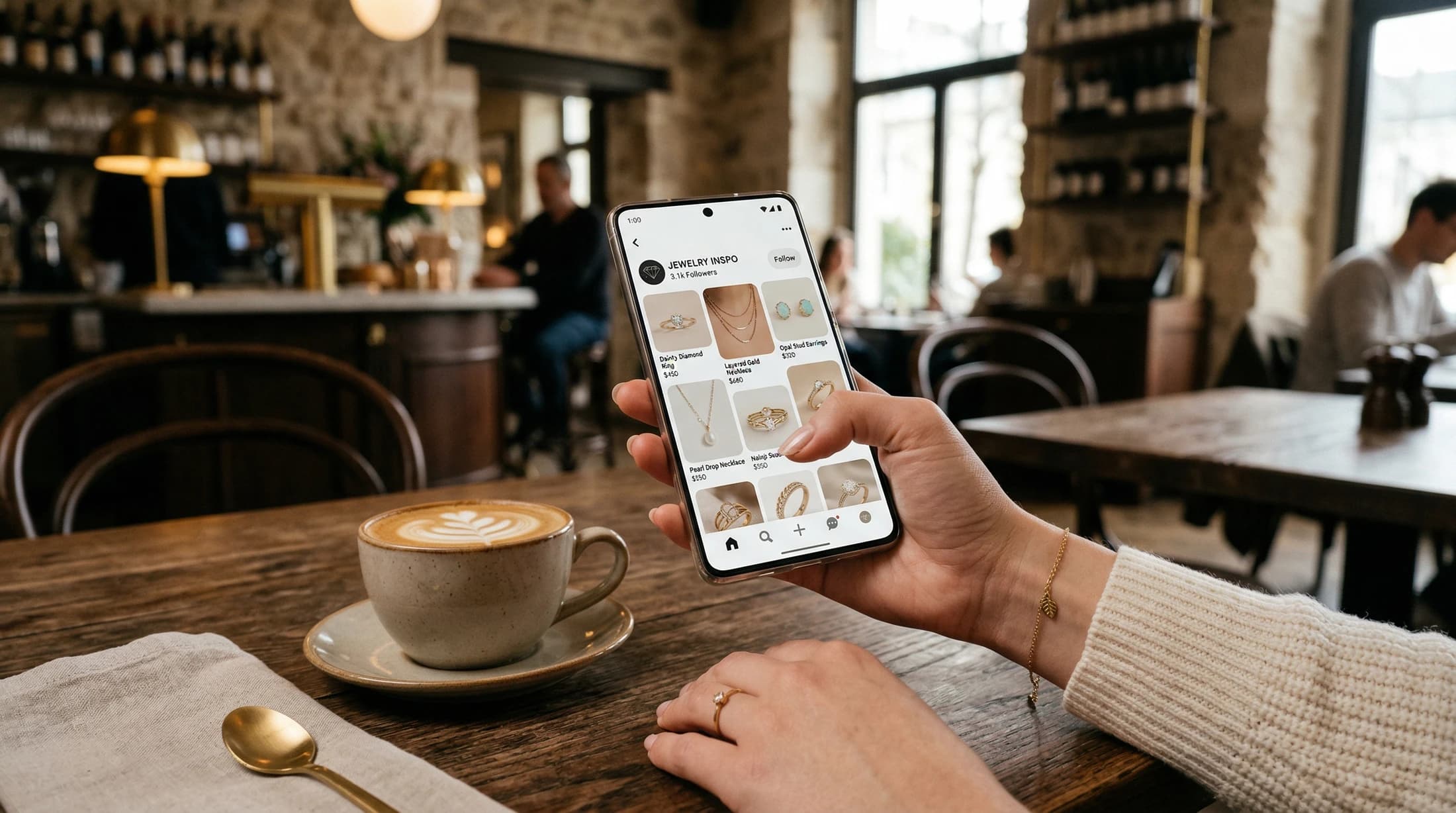
H&CO works with authorized dealers and independent jewelers to implement the technical foundations of luxury SEO. This is increasingly critical as Google Lens now handles nearly 20 billion visual searches a month (Google, 2024), and Google Lens now processes over 20 billion searches per month. Retailers who provide visual-search-optimized content see 29% higher conversion rates when their technical data is properly parsed by AI models.
The Four Pillars of Jewelry Schema
Not all schema is created equal. For a high-end jeweler, these four types are the baseline for visibility.
1. LocalBusiness / ProfessionalService Schema
This is the heart of your GEO (Generative Engine Optimization) strategy. It anchors your store to a physical location.
- NAP: Must be identical to your Google Business Profile.
- `knowsAbout`: This is a powerful, underused property. Use it to list every brand (Rolex, David Yurman) and every service (Watch Repair, Custom CAD) you offer.
- `priceRange`: This tells the AI if you are a "budget" or "luxury" option. Use symbols like `$$$$` to signify high-end status.
2. Product Schema
To be truly "AI personal shopper" ready, you must implement deep JSON-LD for `Product`, `Offer`, and `ImageObject`. This is what enables rich results in Google (star ratings, price, availability). For every piece in your portfolio, the schema should include:
- `material`: Platinum, 18K Yellow Gold.
- `color`: The metal or gemstone color.
- `brand`: Essential for authorized dealers. If you are selling a Submariner, the brand must be "Rolex."
- `offers`: This includes price and stock status. Even if you don't show the price on the page, you can use `priceRange` within the product schema to signal luxury positioning.
3. FAQPage Schema
AI search engines are "answer engines." They love FAQ schema because it provides them with pre-structured question-and-answer pairs they can lift and cite.
- Technical Questions: "How long does a custom engagement ring take?"
- Brand Questions: "Are you an authorized dealer for Omega in Toronto?"
- Trust Questions: "Do you offer a warranty on lab-grown diamonds?"
4. Person & Organization Schema
This is the core of your E-E-A-T strategy. It connects your brand to real people with real expertise.
- Founder Profile: Link to the founder's LinkedIn or industry certifications.
- `sameAs`: This property links your website to your social profiles and any third-party press mentions.
The 45% AI Citation Lift: How Schema Drives AI Visibility
Generative search engines (Google SGE, Perplexity, ChatGPT) do not "rank" websites. They "synthesize" information. To minimize "hallucinations" (making things up), these AIs prioritize sources that provide structured, verifiable facts.
Our internal research across our jewelry client base shows that websites with correctly implemented schema receive 45% more citations in AI-generated answers compared to those relying on text alone.
When a buyer asks, "Who is the most trusted watchmaker for vintage restoration in Dallas?", the AI looks for a `ProfessionalService` schema with a `knowsAbout` property containing "vintage watch restoration." The schema provides the "ground truth" the AI needs to recommend you with confidence. Schema also pairs directly with visual discovery optimization, where your `image` schema property ensures your product photos surface in visual search results alongside the structured data that gives them context.
Implementation: How to Build a Technical Foundation
You don't need to be a developer to win at schema, but you do need the right tools.
- For Shopify Jewelers: Use apps like JSON-LD for SEO. They automate the generation of Product and LocalBusiness schema without touching your theme code.
- For WordPress Jewelers: Plugins like Schema Pro or Rank Math allow you to map custom fields to schema properties easily.
- Future-Proofing: Be aware that 82% of retailers support the move to GS1-standard 2D/QR codes, with the industry's Sunrise 2027 target for checkout readiness. Integrating these into your physical showrooms and linking them to your digital schema allows for "AR try-ons" that actually work, a feature luxury consumers increasingly expect.
- Verification: Always use Google's Rich Results Test to ensure your code is valid. One missing bracket can break your entire structured data profile.
Closing the Loop: Marketing Attribution
Why does a marketing agency care about invisible code? Because data drives revenue attribution.
When your schema is properly implemented, it tracks the journey of a client from a "how-to" question answered by an AI back to a specific product page on your site. This allows you to measure the true ROI of your technical SEO efforts, not just in "traffic," but in qualified leads who have already spent the 20-22 day research period vetting your expertise.
Schema is the invisible foundation of your AI visibility. At H&CO, we specialize in the technical SEO that gets luxury jewelers cited, recommended, and discovered. Let's audit your site's schema today.
Research & Sources
- Google Search Central: *Documentation on Product, Offer, and ImageObject Structured Data.* Recommended implementation for AI "personal shopper" experiences.
- Google: *Lens product update, October 2024.* Google Lens processes nearly 20 billion visual searches per month.
- LexisNexis: *The True Cost of Fraud Study.* Analysis of the full cost of fraud beyond the direct loss.
- GS1 US: *The Sunrise 2027 Report.* Projection that 82% of retailers are transitioning to GS1-standard 2D/QR codes by 2027.
- Juniper Research: *Fraudulent eCommerce Transactions to Surpass $131 Billion by 2030.* Projection of $56B fraud value in 2025.

About the author
Hagop Imasdounian
Hagop Imasdounian is the founder of H&CO. Raised around his family’s jewelry businesses, he brings more than 15 years of digital marketing experience to helping jewelry and watch brands improve their websites, reach buyers and connect marketing with sales.