
The Screen-to-Showcase Shift: Why Text is Failing Jewelry
Luxury jewelry is a visceral, visual medium. Yet, for twenty years, the industry has relied on a text-based search bar to connect clients with their products. A buyer would type "18K yellow gold 2.5ct oval diamond engagement ring with cathedral setting" and hope for the best.
But there is a fundamental language gap in high-end jewelry: what a buyer *sees* is infinitely more complex than what they can *describe*.
This shift is occurring within a global luxury market projected to reach €1.44 trillion in 2025. As the market grows and becomes more sophisticated, the tools we use to navigate it must also evolve. This is where "Visual Discovery" changes everything. It is the shift from keywords to pixels, from typing to pointing. Recent data indicates that Google Lens now handles nearly 20 billion visual searches a month (Google, 2024). Retailers who provide visual-search-optimized content convert better than those relying on text alone. Whether it's Google Lens, Pinterest Lens, or AI shopping assistants, the future of jewelry retail is driven by images. Retailers who optimize for this shift are seeing a 55% visual search lift in organic traffic and discovery (H&CO client data).
H&CO works with authorized dealers and independent jewelers to bridge the gap between their physical craftsmanship and their digital marketing presence.
What is Visual Discovery and Who is Leading It?
Visual discovery isn't just "looking at pictures." It is the technology that allows a machine to analyze an image, identify its attributes (shape, metal, stone, setting), and find a match in a commercial database.
- Google Lens & SGE: With "Search what you see," Google is training users to screenshot an Instagram post and find the "buy" link instantly. Google Lens now processes over 20 billion searches per month, making it a primary discovery tool for the modern shopper.
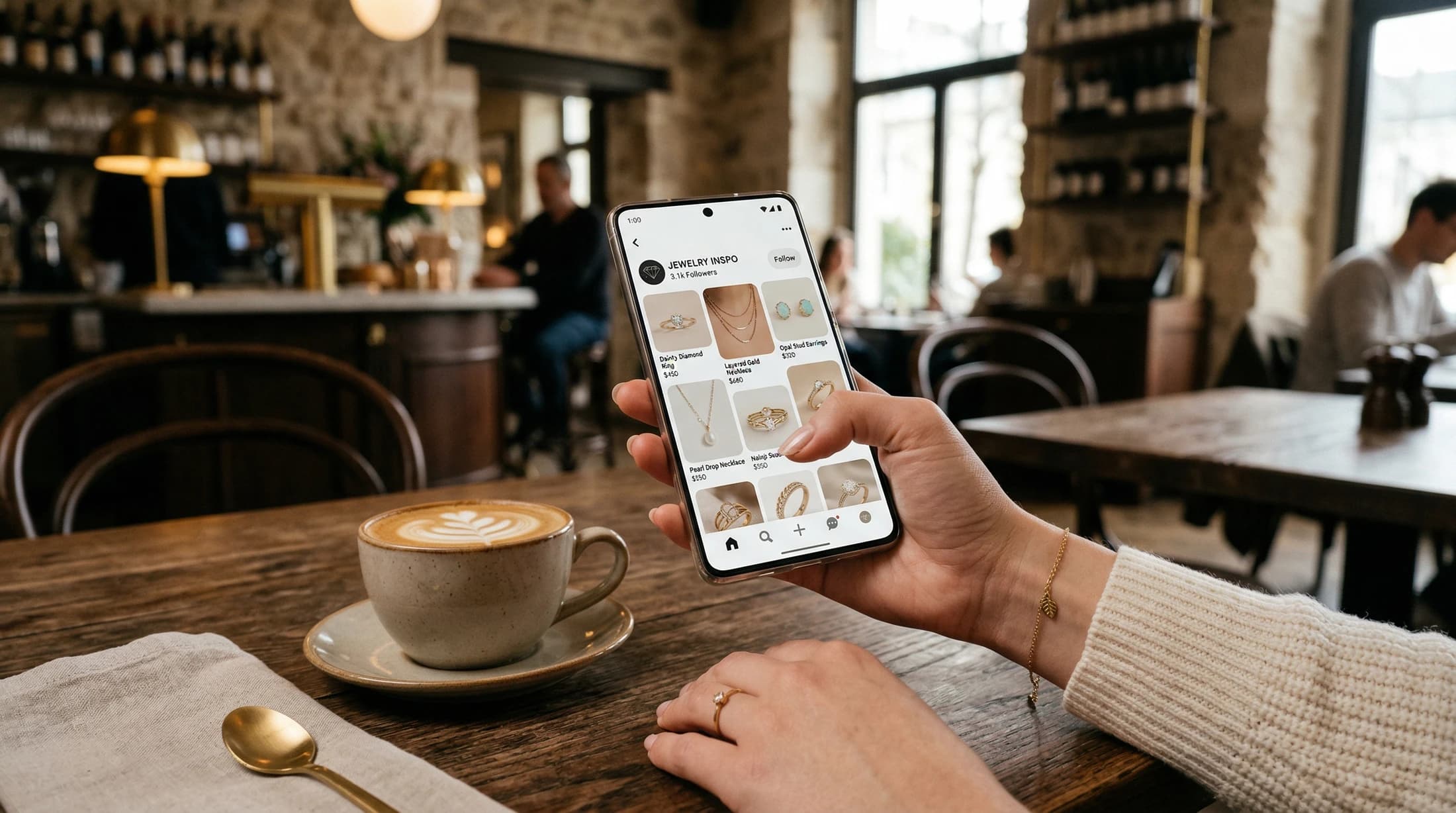
- Pinterest Lens: Pinterest is no longer a social network; it is a visual search engine. 85% of users go there to plan a purchase. If they pin a photo of a vintage-style emerald ring, Pinterest's algorithm suggests "Shop similar" from retailers whose images are indexed correctly.
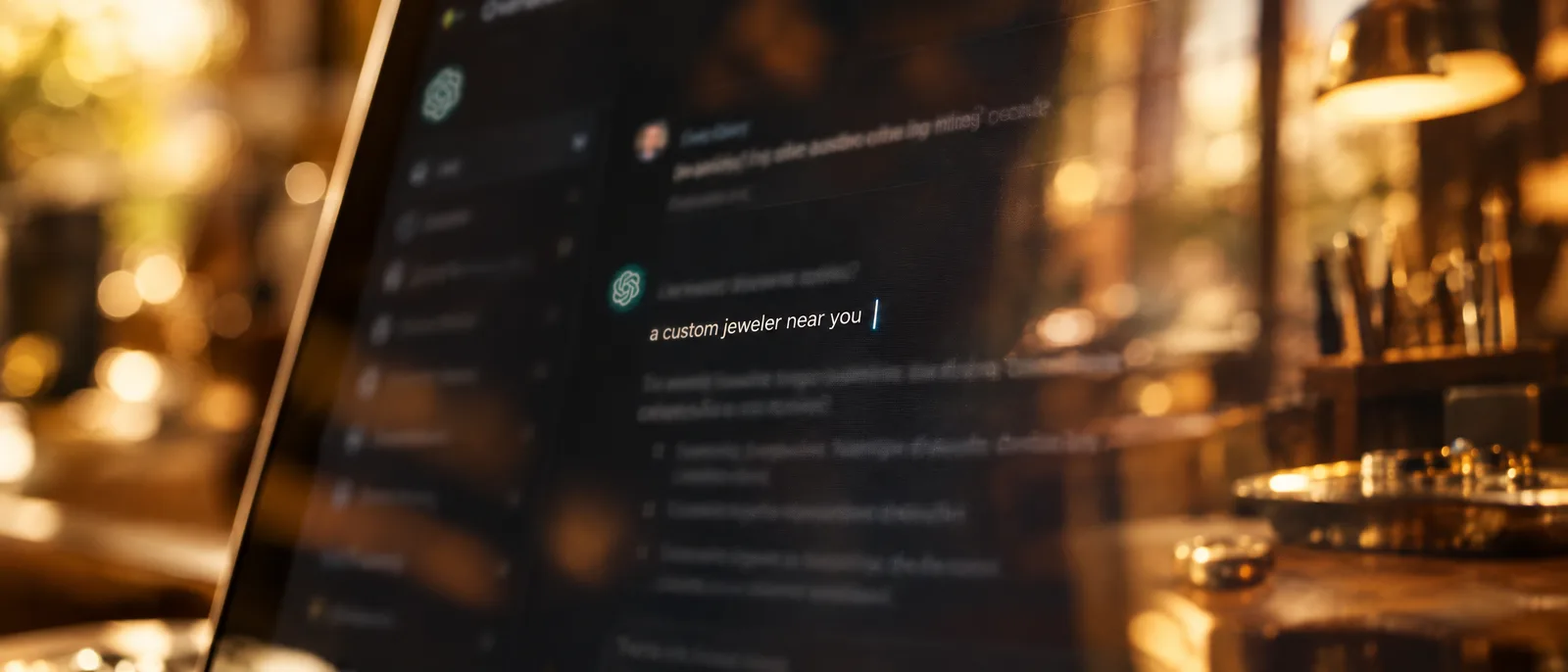
- AI Vision Models: Tools like ChatGPT-4o and Perplexity can now "see." A buyer can upload a photo of their grandmother's heirloom and ask, "Where can I find a jeweler in Chicago who can recreate this in platinum?" If your images aren't machine-readable, you don't exist in the AI's response.
The Photography Standard for Machine Readability
To capture that 55% visual search lift, your product photography needs to be more than "pretty." It needs to be indexable by an algorithm.
1. The "Clean" Index Image
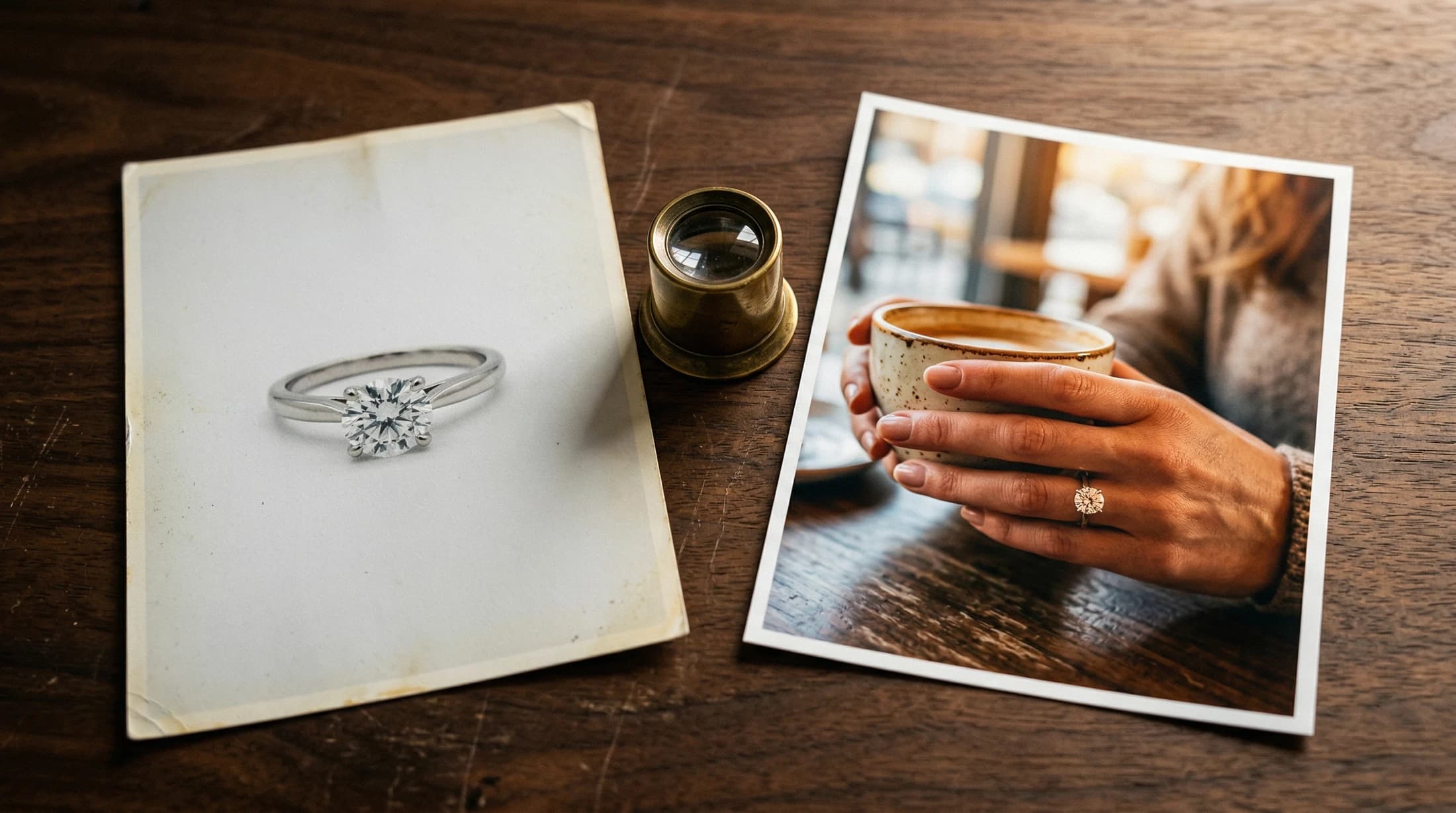
While lifestyle shots (a ring on a hand at a vineyard) are great for Instagram, they are difficult for visual search algorithms to parse. You need a "clean" index shot for every piece:
- Pure White Background: Zero shadows, zero clutter.
- Top-Down & Profile: The algorithm needs to understand the 3D geometry of the piece from 2D images.
- Consistent Lighting: This helps the machine identify the exact color of the metal (Yellow vs. Rose gold) without being tricked by ambient warm lighting.
2. Macro Detail as a Data Point
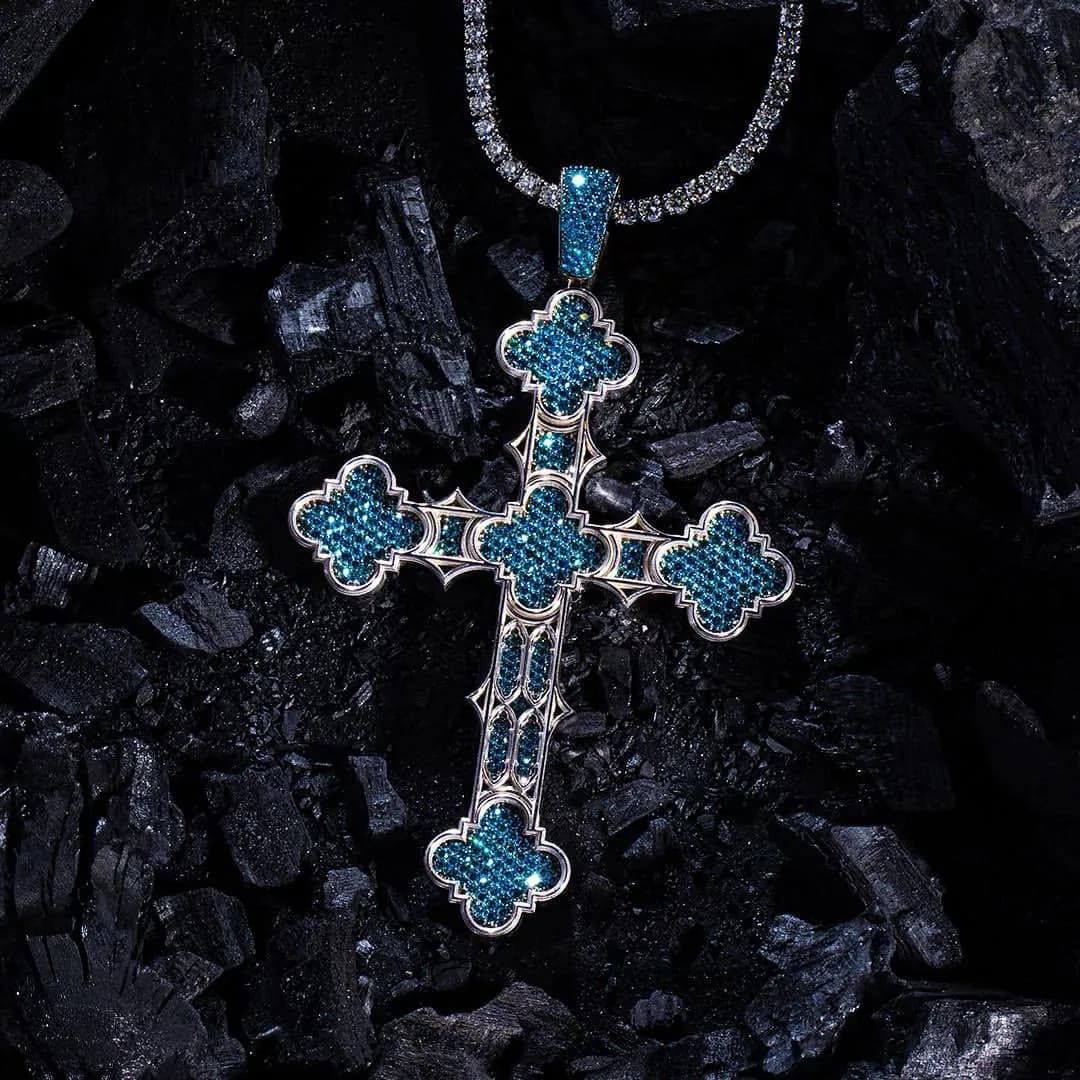
Visual search engines match texture and setting styles. Close-up "macro" shots of a pave band or a milgrain edge provide the high-resolution data points the machine needs to distinguish your custom work from mass-produced inventory.
Image Metadata: The "Hidden" SEO
The machine reads the pixels, but it validates the pixels through metadata.
- Filename Structure: `IMG_4392.jpg` is a dead link. Use descriptive, technical names like `custom-2ct-oval-yellow-gold-engagement-ring-dallas.jpg`.
- Alt Text specificity: Instead of "diamond ring," use "2-carat oval diamond engagement ring with 18K yellow gold hidden halo and pave band."
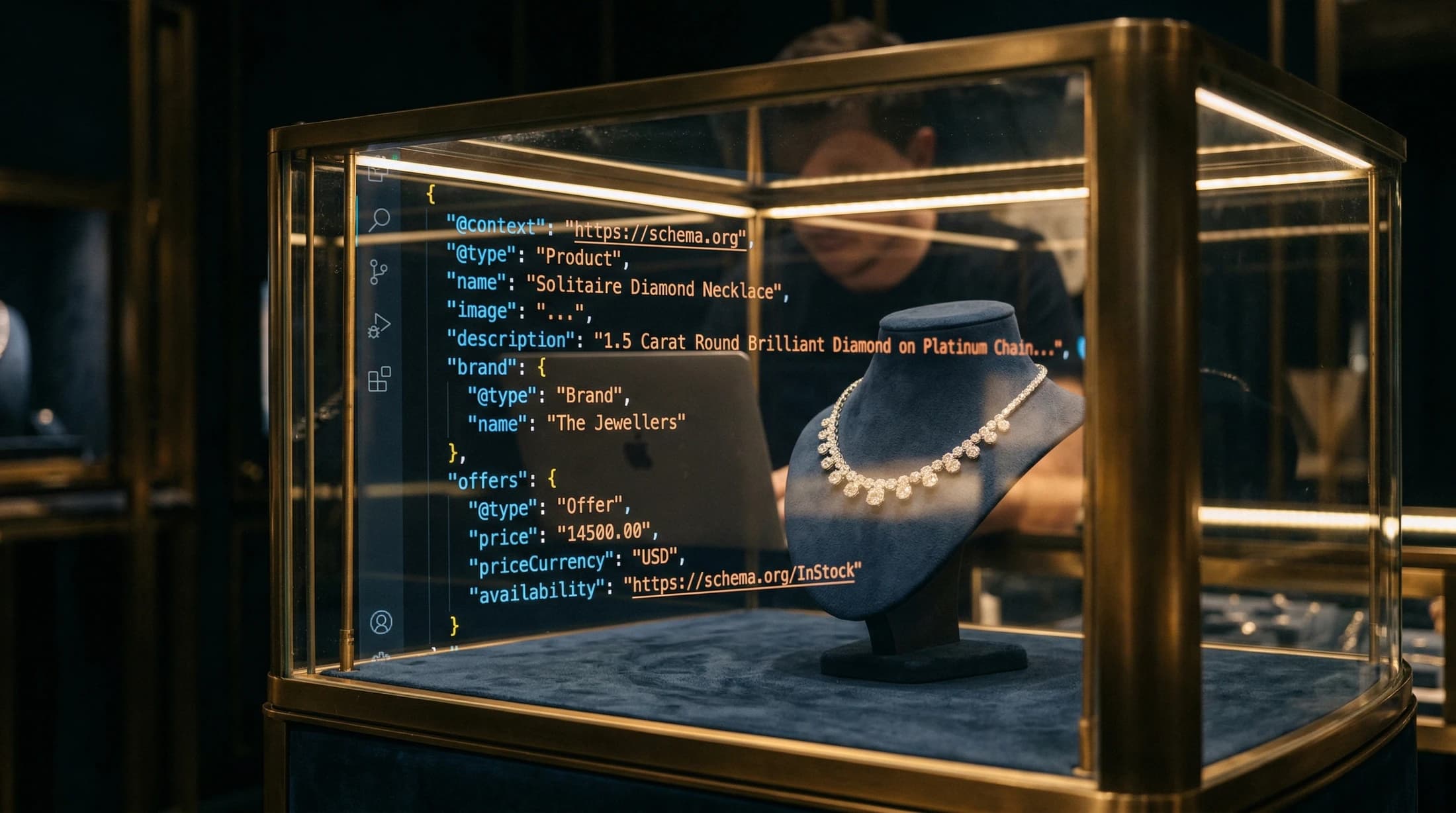
- Schema Markup: This is the most critical technical layer. Your schema markup strategy must include the `image` property with a direct link to your cleanest index shot. Proper schema is the invisible bridge between your photography and the AI search engines that recommend you.
Pinterest: Your Primary Visual Search Acquisition Channel
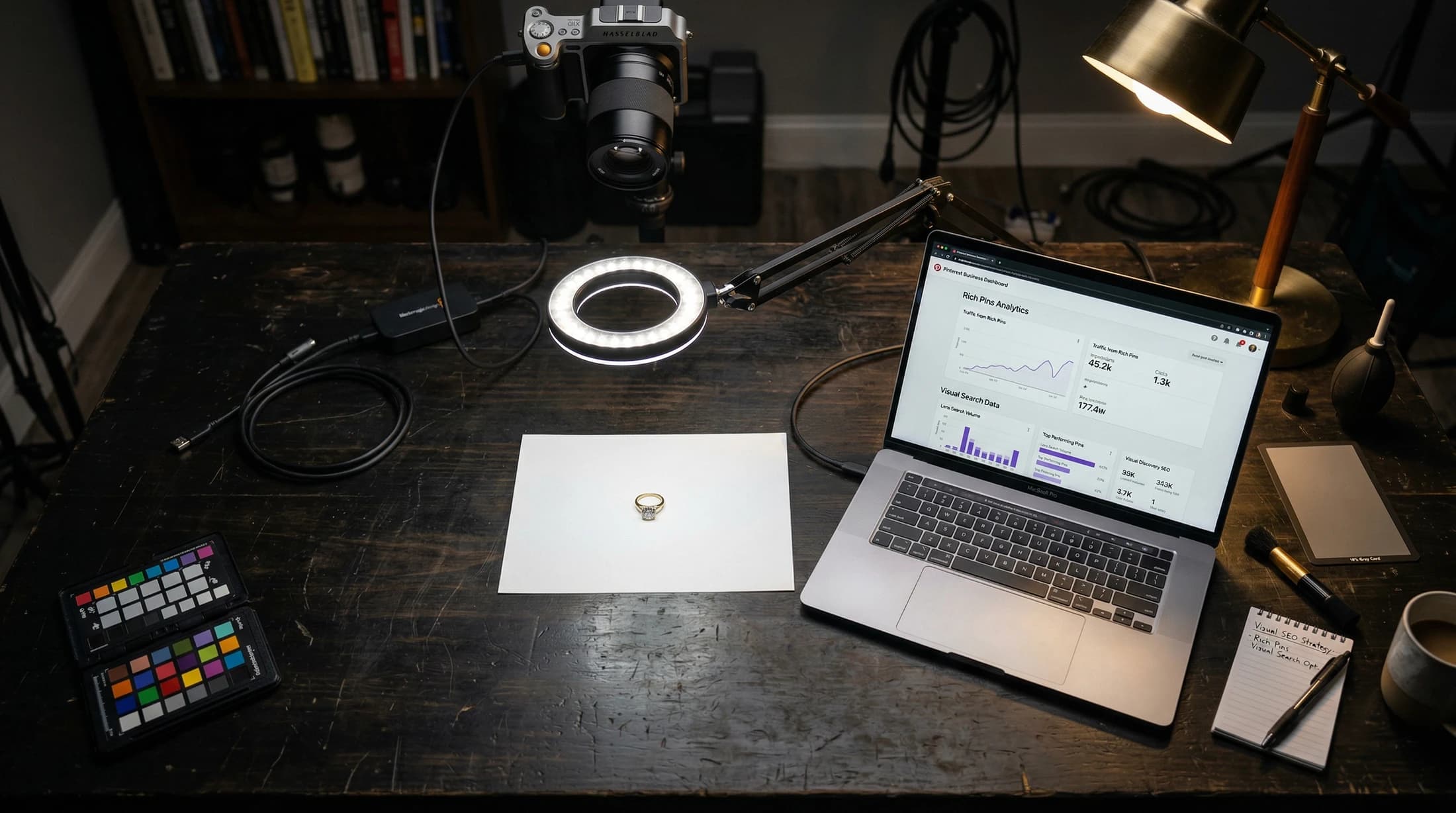
Pinterest isn't for "inspiration." It's for acquisition. At H&CO, we treat Pinterest as a secondary visual search engine that feeds your local SEO strategy. The platform is projected to reach 700 million active users by 2026, and its audience is uniquely qualified for high-end retail: Pinterest shoppers skew toward high-ticket purchases more than users on any other social platform.
- Rich Pins: These automatically pull price and availability from your website.
- Visual Mapping: Organize your boards by visual attribute (e.g., "Oval Cut Engagement Rings," "Art Deco Style") rather than collection names ("The Meridian Collection"). Buyers search by style, not by your internal marketing names.
- Cross-Platform Indexing: Google indexes Pinterest images heavily. A well-optimized pin of a custom piece often outranks your own website in Google Image search results.
The Future: AI-Generated Shopping Recommendations
As AI models become the "concierge" for HNW buyers, they will increasingly rely on visual matching. When a buyer says to their AI, "I want a watch that looks like a Cartier Tank but is under $5,000," the AI scans every indexed image on the web.
If your product pages are built with high-res, machine-readable images and backed by structured data, the AI will cite your business. If your site is a collection of blurry, poorly-tagged photos, you are invisible to the next generation of buyers who are skipping the search bar entirely. That means lost revenue, plain and simple.
The search bar is dying, but your jewelry's visibility shouldn't. At H&CO, we specialize in visual search optimization that puts your pieces in front of buyers at the moment of discovery. Here's how to set up visual search.
Research & Sources
- Google: *Lens product update, October 2024.* Google Lens processes nearly 20 billion visual searches per month.
- Pinterest Business: *2026 Growth Projections & Luxury Insights.* Data on 700M active user projection and the 27% higher luxury purchase intent (Pinterest Business, 2024).
- Adobe Analytics: *2024 Conversion Study.* Data on the 29% conversion lift for visual-search-optimized retail content.
- Bain & Company: *Global Luxury Goods Market Study 2024.* Insights on the €1.44 trillion market valuation and the rise of digital discovery.

About the author
Hagop Imasdounian
Hagop Imasdounian is the founder of H&CO. Raised around his family’s jewelry businesses, he brings more than 15 years of digital marketing experience to helping jewelry and watch brands improve their websites, reach buyers and connect marketing with sales.