
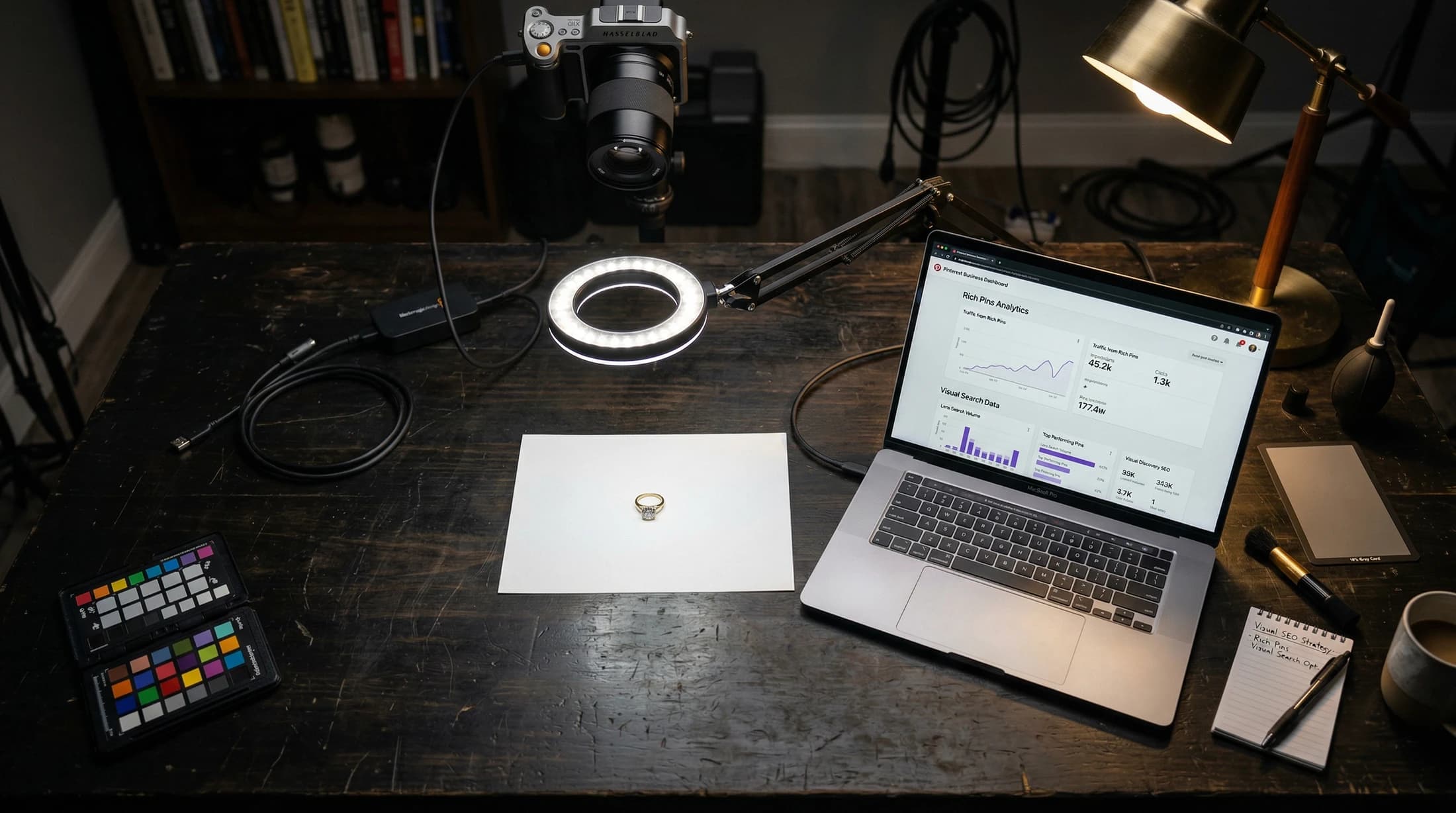
Your Buyers Aren't Just Typing Anymore
Google still works. People still type "custom engagement ring near me" and find you that way. That's not going away. But a growing number of buyers are also searching with their camera, and you are almost certainly not showing up for those searches.
According to latest data, Google Lens now handles nearly 20 billion visual searches a month (Google, 2024), and Google Lens processes over 20 billion visual searches per month. Pinterest reports that 85% of its users come to the platform to plan a purchase, and visual search through Pinterest Lens is how a growing share of them discover new products. When a bride-to-be screenshots a celebrity's engagement ring and uploads it to Google Lens, the algorithm scans every indexed jewelry image for a visual match.
If your product photography is optimized, your custom piece shows up next to that celebrity's ring. This is high-stakes: visual-search-optimized content sees a 29% higher conversion rate than non-optimized content. If you aren't visible, you're missing out on buyers who are actively looking for exactly what you make.
Why Does Visual Search Matter More for Jewelry Than Any Other Category?
Jewelry buying is visual by nature. A buyer rarely types "18K yellow gold 2.5ct oval diamond engagement ring with cathedral setting and hidden halo" into Google. They point their phone at a ring and say "find me something like this." The language gap between what a buyer sees and what they can describe in words is enormous in jewelry. Visual search eliminates that gap entirely.
The platforms making this real right now:
- Google Lens is built into every Android phone and the Google app on iOS. Visual searches are growing faster than text searches in shopping categories.
- Pinterest Lens is the dominant visual discovery platform for bridal. Pinterest is projected to reach 700 million active users by 2026, and its audience is uniquely qualified: Pinterest shoppers skew toward high-ticket purchases more than users on other social platforms.
- AI shopping assistants (ChatGPT with vision, Perplexity, Google SGE) can now analyze a photo and recommend where to buy similar items. A buyer uploads a photo of their grandmother's ring and asks "where can I find a jeweler who can recreate this in platinum?" If your images aren't machine-readable, the AI can't recommend you.
For custom jewelers, visual search is an additional discovery channel that's growing fast. Ignoring it means missing buyers who are already looking for pieces like yours.
How Do You Show Up in Visual Search Results?
Your SEO strategy stops at text keywords. But for visual search, your "keywords" are pixels. The algorithm matches shape, proportion, color, texture, and setting style. It doesn't read your product title. It reads the image itself.
The "Clean Index Image" Standard
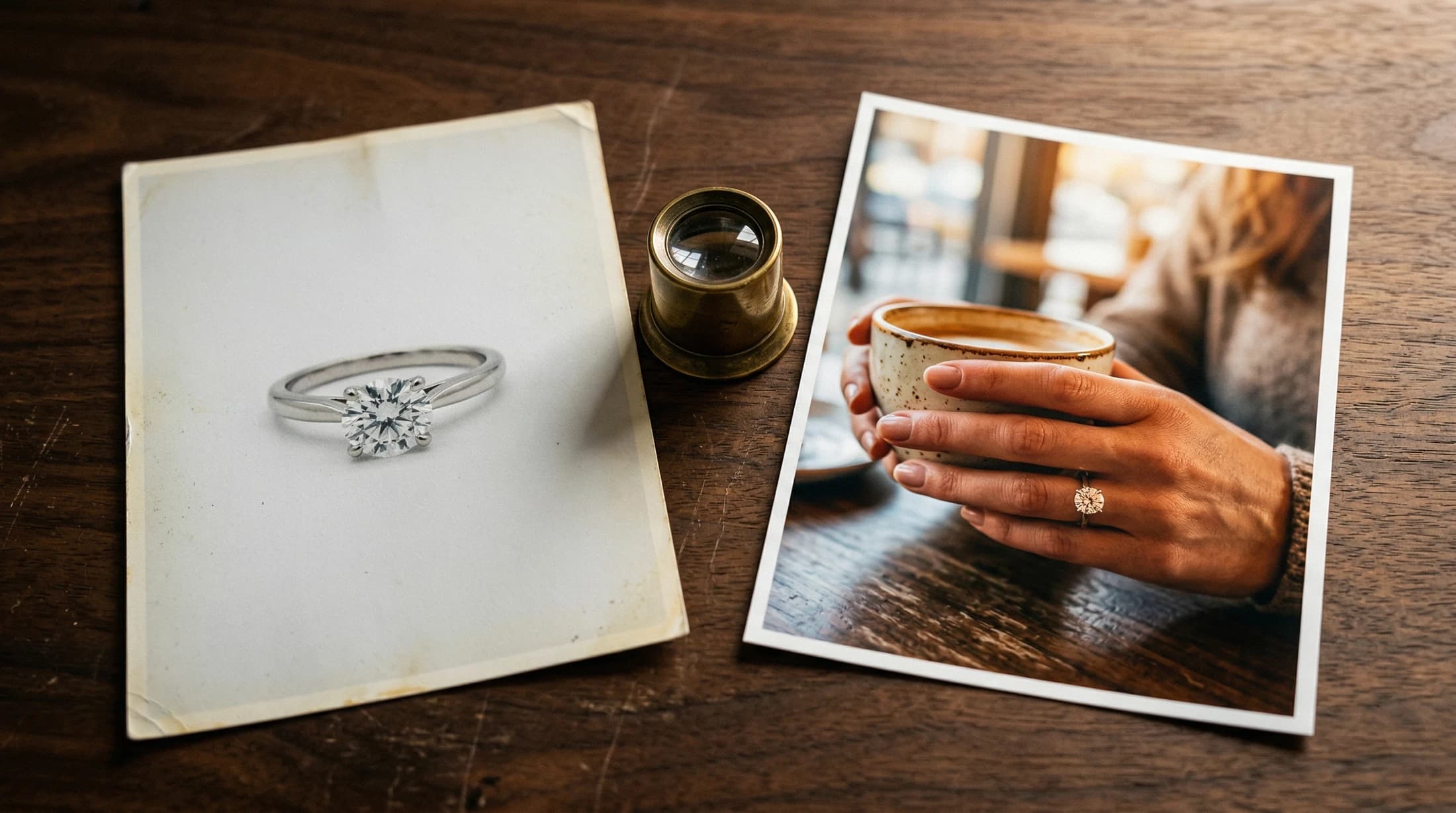
While lifestyle shots (a ring on a hand at a vineyard) perform well on social media, they are difficult for visual search algorithms to parse.
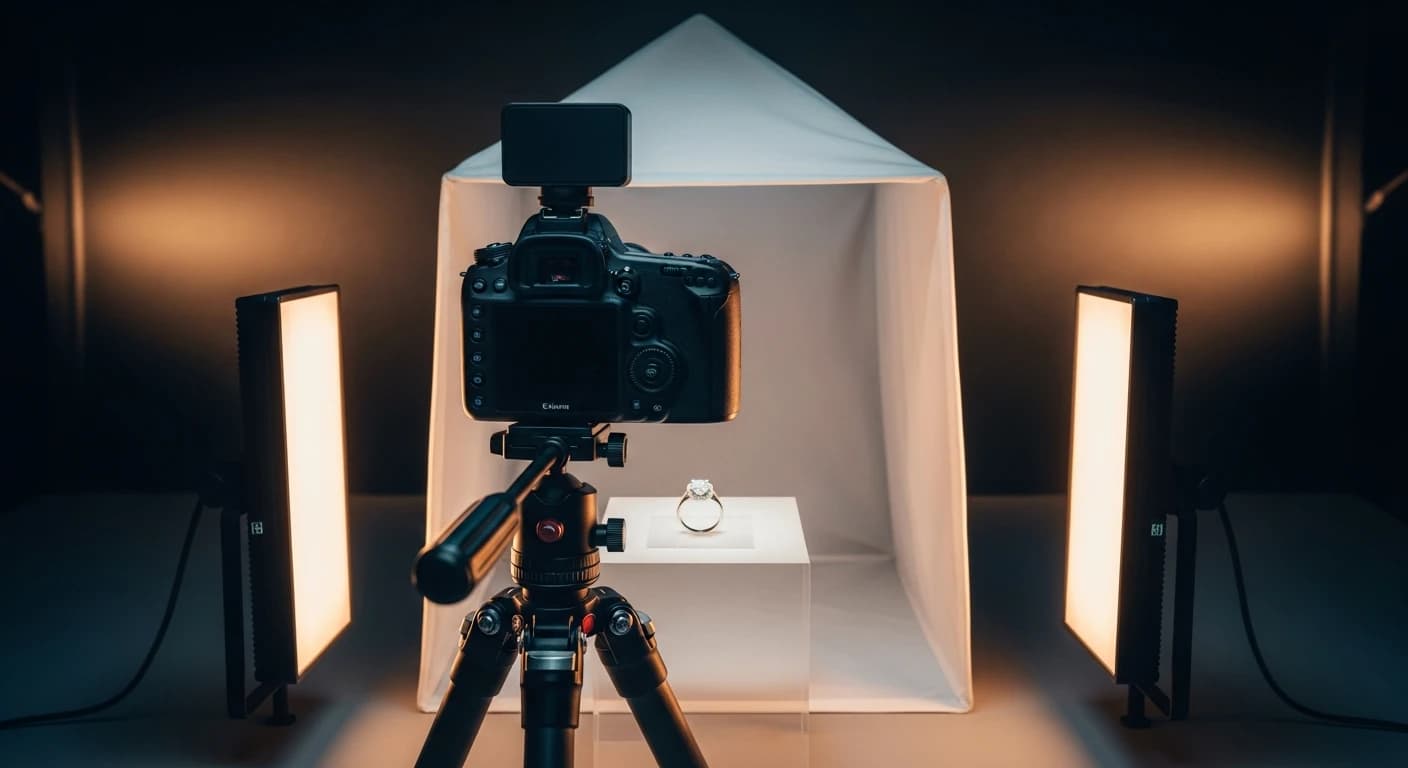
For every piece in your portfolio, you need at least one set of "index images":
- Pure white or neutral background. Zero shadows, zero props, zero clutter.
- Top-down, profile, and three-quarter angles. The algorithm needs to understand the 3D geometry from 2D images. A single top-down shot is not enough.
- Macro details of the setting. Close-ups of pavé work, prong styles, and stone seats give the algorithm more data points to distinguish your custom work from mass-produced inventory.
- Consistent lighting across your portfolio. This helps the machine identify the exact color of the metal (yellow gold vs. rose gold) without being tricked by warm ambient lighting.
You can still shoot all the moody, artistic lifestyle content you want for Instagram. But for Google to index you, you need the clean shots. One set for the humans, one set for the machines.
The Metadata Layer
The algorithm reads pixels, but it validates the pixels through metadata. This is where it usually falls apart.
- File names: `IMG_4392.jpg` is invisible. Use `custom-2ct-oval-engagement-ring-18k-yellow-gold-hidden-halo.jpg`. This tells Google what the image contains before it even analyzes the pixels.
- Alt text: Not "diamond ring." Use "2-carat oval diamond engagement ring with 18K yellow gold hidden halo and thin pavé band." Descriptive, technical, specific.
- Schema markup: Product schema with the `image` property linked to your cleanest index shot tells search engines this image represents a purchasable product from a specific retailer. Without it, your image is just a photo. With it, your image is inventory.
Pinterest as a Visual Search Engine
Pinterest is not social media for jewelers. It is a visual search engine with purchase intent.
According to Pinterest Business, engagement and wedding content is consistently among the top-performing categories on the platform. Rich Pins (which auto-populate product data from your website) turn your portfolio into a searchable catalog.
Optimize your Pinterest presence:
- Rich Pins enabled: Product data pulls from your site automatically.
- Boards organized by visual attribute: "Oval Engagement Rings," "Art Deco Settings," "Nature-Inspired Designs", not "The Meridian Collection." Buyers search by style, not by your internal naming.
- Every pin links to a specific portfolio page. Not your homepage. Not your Instagram. The portfolio page for that exact piece, with a "Book a Consultation" CTA.
Google indexes Pinterest images heavily. A well-optimized pin of a custom piece often outranks your own website in Google Image search results.
What Happens When AI Can See Your Products?
The next wave is AI assistants that can see. When a buyer sends a photo to ChatGPT and asks "where can I buy something like this near me?", the AI scans indexed product images, matches visual features, and recommends retailers.
If your product pages have:
- High-quality, cleanly lit images
- Descriptive alt text and file names
- Product schema with brand, material, and availability
- LocalBusiness schema tying the product to your physical store
...you're in the recommendation set. If your images are blurry, poorly tagged, or on pages without structured data, the AI will recommend your competitor who did the work.
This is not theoretical. According to Adobe Analytics, AI referral traffic to retail shopping sites grew 4,700% year over year by mid-2025, off a low base, but the trajectory is clear. The only question is whether your images show up when they do.
What Should Your Conversion Path Look Like?
Visual search traffic is bottom-funnel. Someone searching for a specific ring style is already past "inspiration" and deep into "where do I buy this." The conversion path from visual match to consultation needs to be frictionless:
- The visual match lands on a specific portfolio page (not your homepage, not a generic gallery)
- The page shows the piece from multiple angles with a detailed description in your voice
- The CTA is "Book a Consultation" or "Text Us About This Piece", not "Add to Cart"
- Related pieces appear below so the buyer who doesn't love this exact one stays on your site
With proper attribution tracking, you can trace the full path from a Google Lens search to a $15,000 commission deposit.
Your portfolio is your visual search inventory. If it is not optimized for machines, the next generation of buyers will not see it. Let's fix that.
Research & Sources
- Google: Google Lens now handles nearly 20 billion visual searches per month, about one in five of them shopping-related.
- Pinterest Business: *Luxury Consumer Report 2024.* Pinterest shoppers are 27% more likely to buy luxury products than users on other social platforms.
- Statista: *Pinterest Global User Forecast.* Projection to reach 700 million active users by 2026.
- Adobe Analytics: *Generative AI Shopping Data 2025.* 4,700% YoY growth in AI referral traffic to retail sites.
Hagop's Notes
I've had jewelers argue that white background shots are "boring" and "not on-brand." I tell them: your brand is built on being found. You can have all the moody, artistic photography you want on your Instagram, but for Google to index you, you need to follow the rules. One set for the humans, one set for the machines. Don't let your ego get in the way of your SEO.

About the author
Hagop Imasdounian
Hagop Imasdounian is the founder of H&CO. Raised around his family’s jewelry businesses, he brings more than 15 years of digital marketing experience to helping jewelry and watch brands improve their websites, reach buyers and connect marketing with sales.