


We don't gatekeep anything that helps improve your business and marketing strategies. We've figured out these tips all on our own, and we're lowkey pissed no one told us before. That's why we're revealing these 7 on our website to make your life easier.
1. Know who came to your website without requiring a form submission
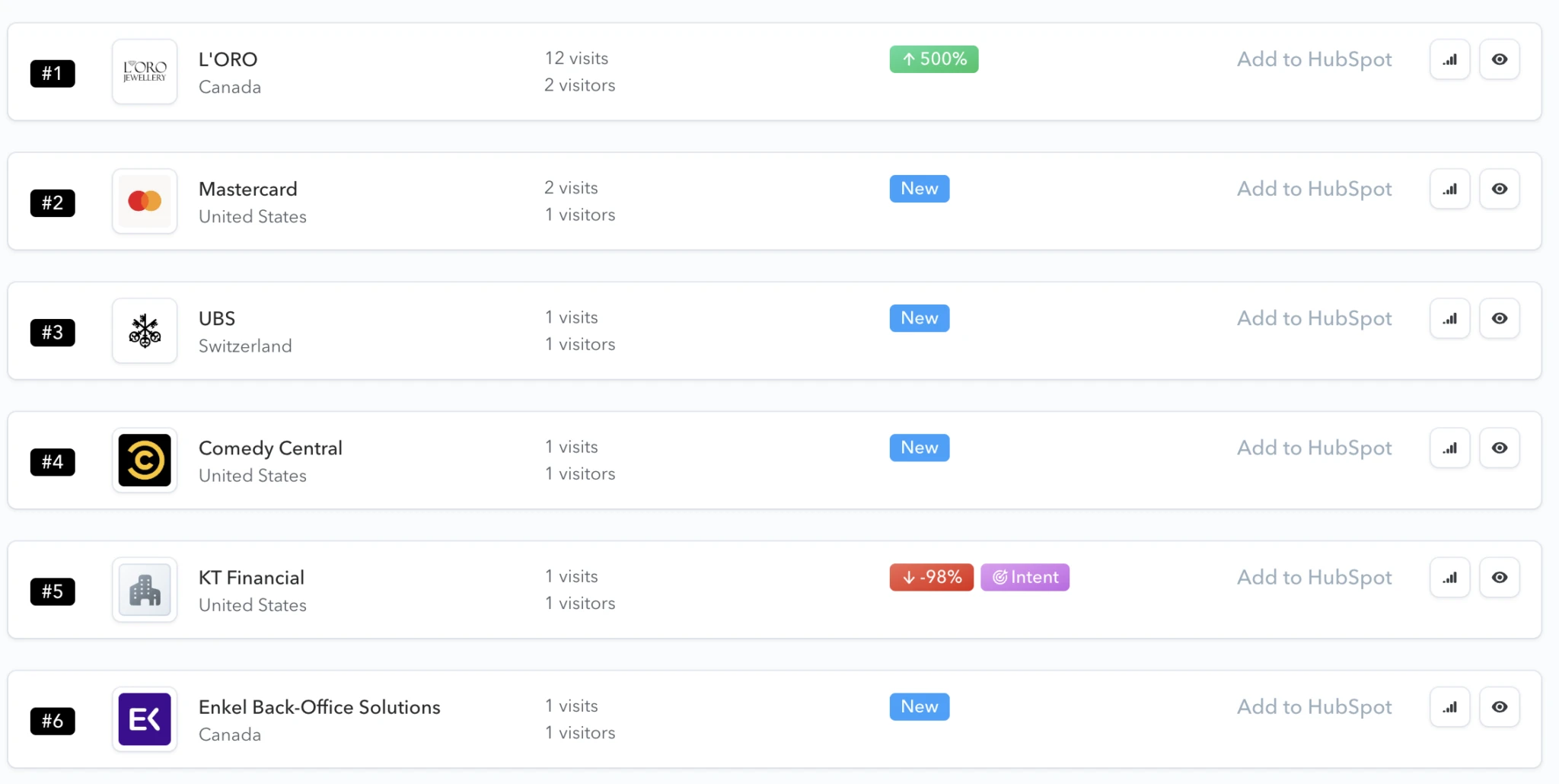
How? By leveraging IP-to-company tools like Snitcher, Breeze Intelligence (formerly Clearbit), ZoomInfo and others, you can identify anonymous website visitors by matching their IP addresses to these databases. This method works ONLY for B2B companies with long sales and lead nurturing cycles. This technique provides information about the companies visiting your site and, coupled with other data points, can give you a more accurate picture of what's working offline.
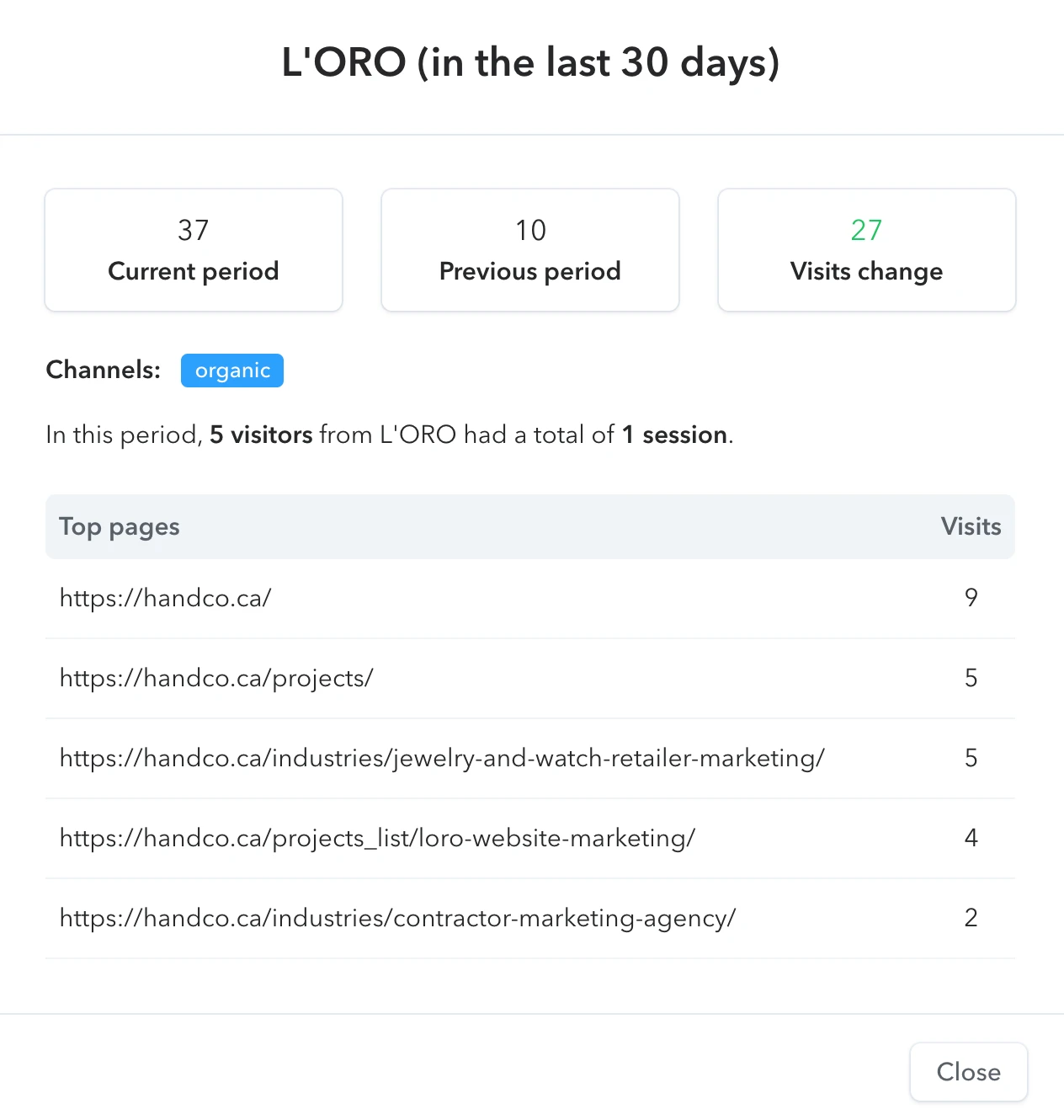
With these tools, you can see which companies were intrigued enough to visit your website after a cold call, a site visit, or a presentation. You can see what service pages, blog posts, or case studies they visited and from there, you can make more strategic sales decisions related to how you approach the sale.
It's like a marketing crystal ball, allowing you to prioritize and tailor your follow-ups and pitches based on the specific interests these visitors showed on your site.
2. Know which previous leads/customers are back on your website
Another use for your CRM is as a tool for strategic follow-up. Once someone completes a form on your website (newsletter, contact form, or other), you can track their later visits, including which pages they explore. This integration easily identifies which cold leads to re-engage and helps craft personalized follow-up emails tailored to the interests they displayed on your site.
Leads notice when you reach out right after they revisit your site, sometimes their first visit in months. The timing is what makes it work.

3. Advertise to everyone attending a conference or event with geofencing
Imagine you're tasked with expanding the customer base for a B2B jewelry wholesaler. Use geotagging and geofencing to put your ads in front of people while they are at the event. Watch conferences, jewelry trade shows.
This marketing/targeting strategy enables you to engage with a highly targeted audience at specific industry events. You can significantly enhance your brand presence, showcase new products, and interact with prospective clients or partners by delivering personalized advertisements and promotions within the event space.
Our geotagging campaigns work when the message gives the attendee something they can use that day. Relevance alone does not earn a reply.
4. Customize the messages a visitor sees based on personalization
Your customers expect their experience on your site to be personalized. Though technically straightforward, the challenge lies in discerning which personalization will provide value to your business, and which won't.
For example, one of our jewelry e-commerce clients personalized the shopping experience based on the province of origin (Ontario), and the destination province to highlight potential tax savings. Due to differing tax rates, customers in provinces like Manitoba, British Columbia, and Quebec could enjoy lower taxes when purchasing from our Ontario-based client. By displaying these savings directly on product pages for visitors from non-HST provinces, we bring this clear financial benefit to the forefront to enhance a visitor's likelihood of purchase.
5. You can track exactly where your site purchases come from
If there's one thing we've learned the hard way, it's that there's more to your sales data than meets the eye. Imagine seeing not just where your online sales are coming from, but tying them back to your offline efforts and CRM data. That is what integrating these data sources does. You get a complete picture of how your customers behave.
Tracking where purchases originate on your site is just the beginning. Pull offline purchase data and CRM data into your ad platforms and you get one view of customer behavior. The platforms finally know who actually bought, so they bid on the right people. This approach allows businesses to marry offline interactions with online analytics and advertising efforts, unlocking valuable insights for more targeted and effective marketing strategies.
This matters most with high-value products. For instance, one of my clients runs a campaign that generates significant revenue despite costing thousands of dollars annually and yielding only a few conversions. Each conversion typically exceeds $15,000. Without the insights provided by a detailed analysis of the average order value from these campaigns, we might have prematurely halted it based on the sheer number of conversions alone.
6. Record your visitors on your site (their screens, relax)
Fun fact: Exploring user behavior on websites goes beyond what Google Analytics can offer. Microsoft Clarity and Crazy Egg show you how people actually use the page: the navigation, the content, the forms. Businesses can gain a much deeper understanding through features like heatmaps and session recordings.
That tells you what to change in a redesign, which pages leak conversions, and where the content is losing people.
There is a cost. You have to handle privacy properly, store more data than you want to, and read it against how the site performs overall.
7. Talk to your customers
Talk to your customers. Then talk to the leads who did not buy, because that is where you find out what your site failed to answer. Engaging these groups can reveal significant insights into the perceived value of your offerings versus the actual value your customers experience.
Sometimes, all it takes to get this feedback is a simple request. Other times, you might need to offer a small incentive, like a bottle of wine, to encourage their participation. This direct communication can uncover critical gaps in your value proposition and help tailor your approach to meet market needs.
Want help implementing these strategies for your business? Book a strategy call.

About the author
Hagop Imasdounian
Hagop Imasdounian is the founder of H&CO. Raised around his family’s jewelry businesses, he brings more than 15 years of digital marketing experience to helping jewelry and watch brands improve their websites, reach buyers and connect marketing with sales.